
SAN FRANCISCO, April 24, 2026, 13:05 PDT
Ouster Inc climbed Friday after announcing that its BlueCity traffic management platform will be rolled out at over 30 intersections around Atlanta, covering locations close to Mercedes-Benz Stadium. This move comes as the area readies itself for the 2026 FIFA World Cup. The initiative is in partnership with the Georgia Department of Transportation and distributor Southern Lighting & Traffic Systems.
This deal hits at a critical moment for Ouster, handing the company a tangible win in smart infrastructure just days ahead of its first-quarter earnings report. Ouster shares climbed roughly 6.7% to $28.17 during the afternoon session on Nasdaq, after reaching as high as $29.40 earlier.
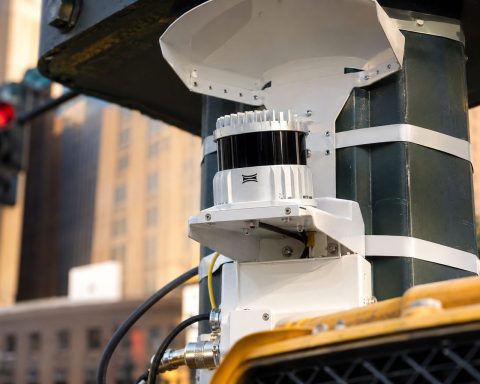
San Francisco-based Ouster said its BlueCity system is now up and running at six intersections downtown, clustered around the Georgia World Congress Center in Atlanta. With this rollout, local agencies are targeting a high-traffic stretch, aiming to streamline movement for cars, cyclists, and people on foot—just as the city braces for the World Cup’s surge in visitors.
BlueCity relies on lidar—a laser-driven sensing tech that gauges distance and movement—paired with Ouster’s AI software. According to the company, this system can supply data to traffic signals, monitor road users, and transmit V2X alerts, those digital safety messages linking road infrastructure with connected cars.
For Ouster, breaking into Atlanta marks what VP of smart infrastructure products Asad Lesani called a “significant milestone.” The firm now has contracts for over 700 BlueCity deployments—spanning intersections, mid-blocks, highways. Lesani added Ouster will continue partnering with GDOT to “improve mobility and safety” not just for the World Cup, but beyond. Business Wire
The deal hands Ouster a fresh example to point to, as lidar players scramble to demonstrate traction beyond drawn-out auto projects. In its latest annual report, Ouster listed Aeva, Hesai Technology, and Luminar Technologies as key competitors. The lidar sector is pushing into vehicles, robotics, industrial settings, and public infrastructure.
Ouster closed out 2025 with momentum, posting $169 million in revenue for the year—a 52% jump. Lidar sensor shipments topped 25,000 units, and the GAAP net loss improved to $60 million compared to last year. For the first quarter of 2026, Ouster projects revenue between $45 million and $48 million, with results due after the bell on May 5.
Ouster’s rally hasn’t gone unnoticed by analysts. Cantor Fitzgerald’s Andres Sheppard pointed to the company’s “top line/bottom line beat” and highlighted the growing focus on “physical AI,” according to Barron’s coverage of the March numbers. That same article flagged a pickup in guidance from rival Aeva, a sign that lidar investors are watching for evidence that demand is shifting from test phases to real production. Barron’s
Plenty of risks remain. Ouster points out that customer contracts might get canceled or pushed back, product launches could stumble, and lidar uptake is tough to predict. The stock is also vulnerable to shifts in operating results, competitor activity, analyst coverage, and regulatory filings.
Atlanta faces a straightforward hurdle right now: BlueCity needs to integrate smoothly with GDOT’s signal systems, and the World Cup project could either stay a one-off or become a case study for wider public-infrastructure deals. Investors waiting for clarity might have to hold out until May 5, when Ouster reveals if actual deployments and sensor demand are showing up in its revenue numbers.