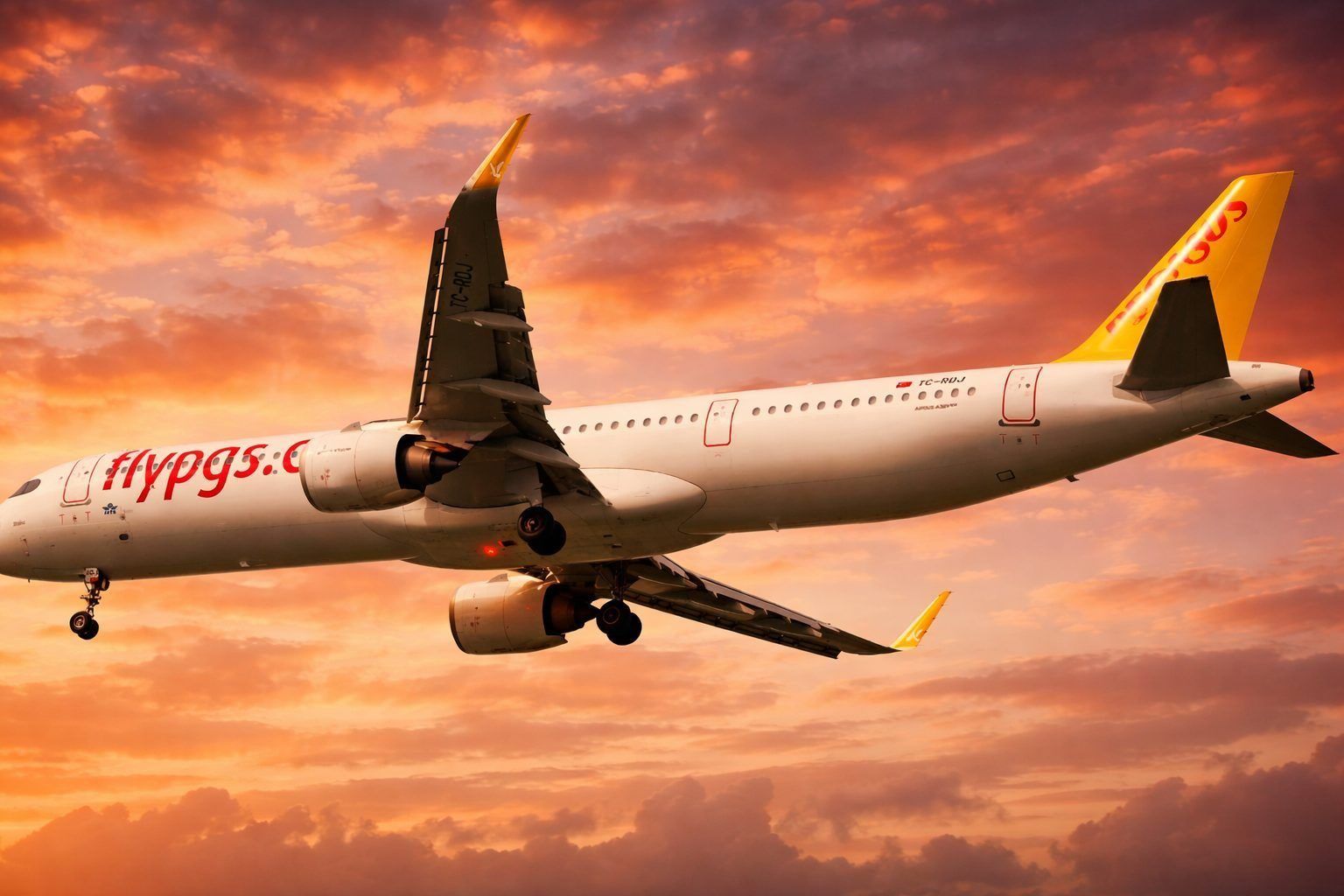

Pegasus Airlines has restarted direct flights between Istanbul and Sulaymaniyah (Süleymaniye) in Iraq’s Kurdistan Region, restoring a key air link that had been disrupted for more than two years and giving Istanbul Sabiha Gökçen International Airport (SAW) what local aviation outlets are calling its “last route opening of the year.” Kurdistan24 – کوردستان 24+2HavaSosyalMedya+2
The resumption is more than a new line on a departure board. It comes after Türkiye lifted restrictions affecting Sulaymaniyah International Airport, a move that has triggered the return of multiple Turkish carriers and raised expectations of renewed business, family, and tourism travel between Istanbul and the Kurdistan Region.
What’s new: Direct SAW–ISU service is back, three times a week
Airport authorities in Sulaymaniyah said Pegasus restarted service on Saturday, December 27, 2025, confirming the route would run three times per week.
Turkish aviation outlets reporting from Istanbul describe the route as launching from Istanbul Sabiha Gökçen Airport—Pegasus’s main hub—linking SAW with Sulaymaniyah (ISU) and positioning the city as Pegasus’s fourth destination in Iraq from Sabiha Gökçen.
Planned frequency and days: Pegasus’s schedule has been widely reported as three weekly rotations on Monday, Wednesday, and Friday (both directions).
How long is the flight? Pegasus’s own destination information describes Istanbul–Sulaymaniyah flights as taking around two and a half hours (flight times vary by day and operational conditions).
A small ceremony in Istanbul underscored the bigger meaning
To mark the first departure, Istanbul Sabiha Gökçen Airport hosted a modest send-off event at the terminal. Local aviation media reported that passengers were greeted with small treats—including Turkish delight—and souvenir photos, a familiar airport ritual that signals a route’s symbolic value beyond its seat count.
In day-to-day terms, the route adds a direct option for travelers who previously faced detours via third airports. In political and commercial terms, it signals that air connectivity—often one of the first “real economy” indicators to fall during tensions and the first to rebound during normalization—is moving back toward routine. Kurdistan24 – کوردستان 24
Why this route disappeared in the first place
The Istanbul–Sulaymaniyah connection was one of several services impacted after Türkiye moved in spring 2023 to restrict air access associated with Sulaymaniyah International Airport.
In an April 2023 statement carried by Euronews, Türkiye’s Foreign Ministry spokesperson Tanju Bilgiç said Turkish airspace had been closed to aircraft using Sulaymaniyah for takeoffs and landings, citing flight safety and security concerns tied to alleged militant activity.
Regional reporting at the time also described Ankara’s position as being linked to allegations that the PKK had increased activity and “infiltrated” the airport—claims that local officials have contested—turning a commercial aviation issue into a prolonged diplomatic and security dispute. Kurdistan24 – کوردستان 24+2rudaw.net+2
What changed in 2025: Türkiye lifted the restrictions, and airlines returned
Kurdistan24’s reporting on the relaunch ties Pegasus’s return directly to Türkiye’s decision to lift the flight ban in October 2025, after restrictions dating back to April 2023.
An especially telling element of the debate has been how officials framed the underlying rationale. In a May 2025 interview cited by Kurdistan24, Türkiye’s Consul General in the Kurdistan Region, Erman Topçu, rejected the idea the policy was political, saying it was “purely” about security concerns. Kurdistan24 – کوردستان 24
That distinction matters to travelers and businesses, because it implies decisions could still be influenced by security assessments—while also suggesting both sides have incentives to keep normal air links operating if conditions allow.
Pegasus isn’t the only Turkish carrier moving back into Sulaymaniyah
Pegasus’s restart is part of a broader return of Turkish aviation links to the city.
Turkish Airlines’ communications leadership signaled in October that the flag carrier planned to bring Sulaymaniyah back into its network, with its spokesperson Yahya Üstün describing the resumption as part of the airline’s wider mission and indicating a high-frequency plan.
Meanwhile, industry schedule tracker AeroRoutes reported that AJet planned a Sabiha Gökçen–Sulaymaniyah route starting December 2, 2025, with four weekly flights and published flight-number/timing patterns typical of late-night departures from Istanbul.
For passengers, the practical implication is straightforward: as multiple carriers rebuild capacity, travelers may see more departure-time options and potentially more competitive pricing—especially on dates aligned with holiday travel, diaspora visits, or business demand.
Why Sabiha Gökçen is leaning into routes like Sulaymaniyah
The return of the Sulaymaniyah route lands at a moment when Sabiha Gökçen’s growth is drawing international attention.
According to Anadolu Agency, the airport handled 44.2 million passengers from January to November 2025, surpassing the airport’s prior annual record, and Türkiye’s Transport and Infrastructure Minister Abdulkadir Uraloğlu attributed part of the capacity increase to infrastructure upgrades including the second runway and related airside projects.
On the European industry side, ACI EUROPE said Istanbul Sabiha Gökçen was Europe’s fastest-growing “major airport” (40+ million passengers category) in August 2025 and again in September 2025, highlighting growth driven in part by low-cost carrier expansion and strong leisure and “VFR” (visiting friends and relatives) travel patterns. aci-europe.org+1
That context helps explain why a three-times-weekly connection to Sulaymaniyah can matter: it fits the SAW playbook—point-to-point, diaspora- and commerce-friendly routes that deepen the airport’s regional relevance.
What travelers should know before booking
If you’re considering Istanbul–Sulaymaniyah now that direct service has returned, a few practical points can prevent surprises:
- Verify your airport: Reporting around this relaunch repeatedly references Istanbul Sabiha Gökçen (SAW) as the Istanbul endpoint for Pegasus’s service.
- Check operating days: Pegasus’s route has been reported as operating Monday/Wednesday/Friday (subject to seasonal adjustments).
- Confirm flight duration and local transport: Pegasus’s own destination guidance puts flying time at roughly 2.5 hours and notes Sulaymaniyah Airport’s proximity to the city.
- Review entry requirements carefully: Visa and documentation rules can change quickly and vary by nationality; always check official government guidance and your airline’s latest passenger-information pages before departure.
The bigger picture: a route that connects trade, families, and timing-sensitive travel
Aviation headlines often focus on aircraft types, frequencies, and airport ceremonies—but the Istanbul–Sulaymaniyah route is ultimately about restoring a reliable bridge between two commercial ecosystems and two communities with deep personal ties.
Kurdistan24’s reporting notes that observers expect the return of Turkish carriers to support the region’s economy and make travel easier for residents and businesspeople. Kurdistan24 – کوردستان 24 And for Sabiha Gökçen, ending the year by adding (or restoring) a strategically meaningful regional connection aligns with the airport’s broader growth momentum that European and Turkish institutions have been documenting throughout 2025.
As 2026 approaches, the key question won’t just be whether Istanbul–Sulaymaniyah flights are operating—it will be whether capacity and schedules expand further, and whether the route becomes a stable fixture in the regional network rather than a barometer of political weather.