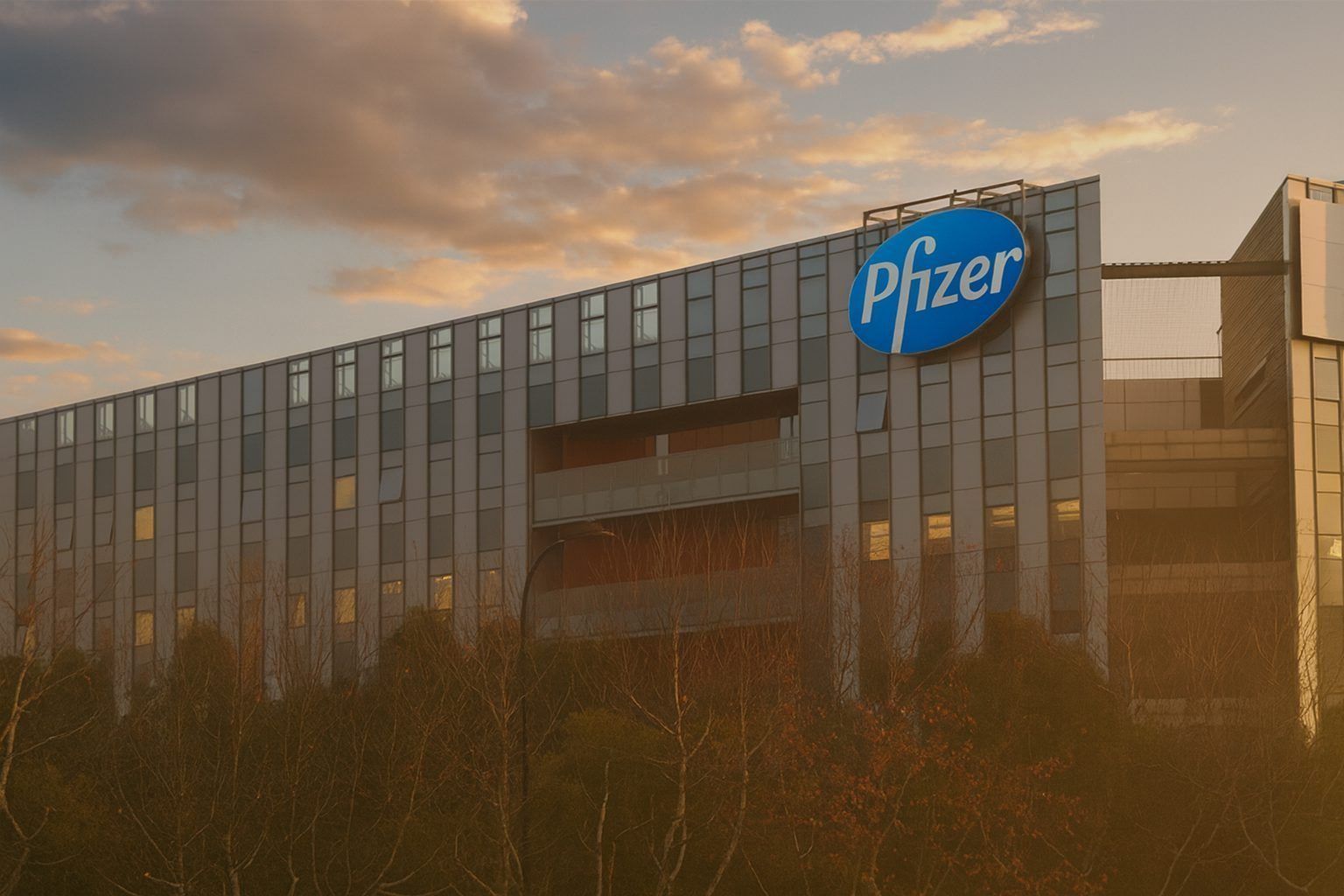
As of December 11, 2025, Pfizer Inc. (NYSE: PFE) is trying to rewrite its post‑COVID story. The stock trades around $25.66 per share, after a choppy year of guidance upgrades, obesity-drug M&A, aggressive cost cuts and fresh regulatory wins in oncology and rare disease.
Since November 21, 2025, a cluster of headlines — from an FDA approval in bladder cancer to a new GLP‑1 weight‑loss deal and expanding cost‑saving measures — has shifted how analysts and investors think about Pfizer’s earnings power going into 2026 and beyond.
Pfizer stock today: price, yield and recent performance
- Latest share price: about $25.66 (Dec. 11, 2025).
- Price on Nov. 21, 2025: Pfizer closed at $25.04, up 2.62% that day, outperforming peers and ending a two‑day losing streak.
- 52‑week high: roughly $27.69 (hit in early October).
- Dividend: Annualized $1.72 per share, or a ~6.7% yield, based on the current price.
Pfizer’s board declared a $0.43 per‑share dividend for the fourth quarter of 2025, continuing an uninterrupted dividend streak that now spans 348 consecutive quarterly payments.
That rich yield is precisely why Pfizer features on lists of the highest‑yielding dividend stocks in the S&P 500, where it’s often flagged as an income opportunity — but also as a name where investors must watch payout sustainability closely.
On valuation, consensus adjusted EPS for 2025 sits around $3.1–$3.2 per share, implying a forward P/E near 8 at current levels — a discount to many large‑cap pharma peers.
What changed on and after November 21, 2025?
1. November 21: FDA approval for PADCEV + Keytruda in bladder cancer
On November 21, 2025, Pfizer and Astellas announced that the U.S. FDA approved PADCEV (enfortumab vedotin) plus Keytruda as a perioperative (pre‑ and post‑surgery) treatment for adults with muscle‑invasive bladder cancer who are ineligible for cisplatin chemotherapy.
Key points from the pivotal EV‑303 / KEYNOTE‑905 trial, highlighted in the press release:
- The combo cut the risk of disease recurrence, progression or death by 60% versus surgery alone.
- It reduced the risk of death by 50% compared with surgery alone.
- It’s the first approved antibody–drug conjugate (ADC) plus PD‑1 inhibitor regimen in this perioperative MIBC setting.
For Pfizer shareholders, PADCEV is co‑commercialized with Astellas in the U.S., so this label expansion should deepen oncology revenue over time and bolsters the narrative that Pfizer’s non‑COVID portfolio is the core growth engine going forward.
2. Zacks flags Pfizer as a “trending stock”
Also on November 21, Zacks Investment Research published a note titled “Is Trending Stock Pfizer Inc. (PFE) a Buy Now?”, describing investor interest and assigning a positive sentiment tag in at least one secondary research aggregation. Zacks+2Zacks+2
While the full Zacks report isn’t accessible here, the meta‑data and snippet indicate the piece focused on:
- Strong recent trading volume
- Measured optimism about guidance and valuation
- A balanced risk profile that stopped short of a screaming “strong buy”
In other words, Nov. 21 was a day when both the fundamental story (through the PADCEV approval) and market sentiment (via Zacks and price action) tilted incrementally in Pfizer’s favour.
Obesity strategy 2.0: Metsera acquisition and the YaoPharma GLP‑1 deal
Metsera: Pfizer’s $10 billion ticket back into weight loss
Pfizer’s renewed obesity push began earlier in the fall with its hard‑fought acquisition of Metsera, finalized on November 13, 2025.
Highlights:
- Deal value: Up to ~$10 billion, including cash and contingent value rights.
- Strategy: Re‑enter the GLP‑1 obesity market after discontinuing earlier in‑house candidates for safety or efficacy reasons.
- Key assets:
- MET‑097i, a once‑weekly or once‑monthly injectable GLP‑1 agonist heading into Phase 3.
- MET‑233i, a monthly amylin analog, being studied as monotherapy and in combination with MET‑097i.
- An oral GLP‑1 candidate plus preclinical nutrient‑stimulated hormone drugs.
Pfizer itself describes the deal as transformative for its Internal Medicine portfolio and explicitly positions the company to “lead in one of the most dynamic and high‑growth therapeutic areas” — a clear reference to the obesity market that some forecasts peg at $150 billion annually by early next decade. Pfizer+1
Reuters and other commentators note the acquisition is expected to be dilutive through 2030, reflecting heavy R&D investment before meaningful revenue arrives.
December 9: YaoPharma collaboration adds an oral‑type GLP‑1 candidate
On December 9, 2025, Pfizer announced an exclusive global collaboration and license agreement with YaoPharma, a subsidiary of Shanghai Fosun Pharmaceutical, for YP05002, a small‑molecule GLP‑1 receptor agonist in Phase 1 for chronic weight management.
Deal economics and strategy:
- $150 million upfront to YaoPharma.
- Up to $1.935 billion in milestones, plus tiered royalties on sales if approved.
- YaoPharma will complete the ongoing Phase 1 trial; Pfizer gains worldwide development and commercialization rights.
- Pfizer plans combination studies of YP05002 with its GIPR antagonist PF‑07976016 (already in Phase 2) and other internal assets, aiming for differentiated efficacy and tolerability profiles.
Fierce Biotech summarized the move as evidence that Pfizer’s obesity ambitions “clearly haven’t been satiated” by the Metsera deal, underlining cardiometabolic disease as a declared strategic growth driver for the company. Fierce Biotech
For PFE stock, these moves collectively:
- Turn obesity from a missing piece in the pipeline into a core strategic pillar.
- Increase R&D spending and near‑term dilution, but also expand Pfizer’s potential share of one of the fastest‑growing pharma markets.
Pipeline momentum beyond obesity: hemophilia and oncology
HYMPAVZI (marstacimab): Strong Phase 3 data in inhibitor‑positive hemophilia
On December 6, 2025, Pfizer released detailed Phase 3 results from the BASIS study of HYMPAVZI (marstacimab) in adults and adolescents with hemophilia A or B who have inhibitors, a difficult‑to‑treat subgroup.
Key findings:
- HYMPAVZI reduced the mean treated annualized bleed rate by 93% versus on‑demand treatment with bypassing agents.
- Median annualized bleed rate fell to 0 on HYMPAVZI, compared with 16.42 on prior therapy.
- Improvements were seen across spontaneous, joint and target‑joint bleeds, and patient‑reported quality‑of‑life measures.
HYMPAVZI is already approved in over 40 countries for certain hemophilia patients without inhibitors; Pfizer has now submitted these new data to regulators in the U.S. and EU for label expansion to the inhibitor population.
If regulators agree, HYMPAVZI could become an even more important long‑duration rare disease franchise, contributing to non‑COVID growth and supporting long‑term free cash flow.
Oncology: PADCEV + Keytruda approval as a new standard in MIBC
The PADCEV + Keytruda approval discussed earlier is not just a medical milestone; it’s a commercial one. The EV‑303 trial’s strong survival data — including a 60% reduction in event‑free survival risk — positions the regimen as a potential new standard of care for cisplatin‑ineligible muscle‑invasive bladder cancer.
For Pfizer, this:
- Strengthens its oncology portfolio in partnership with Astellas (and, indirectly, Merck for Keytruda).
- Supports the idea that pipeline‑driven growth can eventually offset patent cliffs and shrinking COVID revenue.
Earnings, guidance and cost‑cutting: can Pfizer grow beyond COVID?
Q3 2025: Earnings beat and higher EPS guidance
Pfizer’s third‑quarter 2025 earnings, reported November 4, set the financial backdrop for everything that followed:
- Q3 2025 revenue: $16.7 billion, down 6–7% year‑over‑year, mainly due to sharply lower Paxlovid and Comirnaty sales.
- Non‑COVID portfolio revenue: +4% operational growth, driven by Eliquis, Vyndaqel and migraine drug Nurtec/Vydura.
- Adjusted EPS: $0.87, beating consensus by a wide margin.
- 2025 revenue guidance reaffirmed at $61–64 billion.
- 2025 adjusted EPS guidance raised and narrowed to $3.00–$3.15.
Reuters emphasised that this was the second consecutive quarter of EPS guidance upgrades, even as COVID products declined, underlining early benefits from Pfizer’s cost‑cutting program and product diversification.
Multi‑year cost‑savings plan and fresh layoffs in Switzerland
Pfizer launched a multi‑year cost‑reduction initiative in 2023 and has since lifted its total savings target to about $7.7 billion by 2027, expecting around $4.5 billion in net savings by the end of 2025.
A new chapter of that plan hit the headlines on December 11, 2025, when Fierce Pharma reported that Pfizer will cut hundreds of jobs in Switzerland, reducing its local workforce from about 300 employees to roughly 70 by year‑end.
Management framed the move as part of a global effort to:
- Streamline and realign resources
- Reduce complexity
- Optimize operations in areas with the greatest impact
For investors, the cost program is a double‑edged sword:
- Positives: Higher margins and more room to fund acquisitions and pipeline investments without over‑levering the balance sheet.
- Negatives: Ongoing restructuring charges, execution risk, and potential impact on morale and innovation if cuts go too deep.
Portfolio reshaping: from COVID cash pile to targeted bets
Selling down the BioNTech stake
On November 13, 2025, Reuters reported that Pfizer had slashed its stake in BioNTech by over half, to about 1.66 million ADS. The sale came years after the duo’s hugely successful COVID‑19 vaccine collaboration.
The divestment:
- Frees up capital as Pfizer pivots away from COVID‑dependent earnings.
- Fits a broader pattern of redeploying pandemic windfalls into M&A and pipeline assets, including Seagen (oncology), Global Blood Therapeutics (sickle cell), Biohaven (migraine) and now Metsera (obesity).
Activist Starboard exits Pfizer
In another structural shift, activist hedge fund Starboard Value disclosed it had fully exited its Pfizer stake — roughly 8.5 million shares sold in Q3 2025, concluding a campaign that began in 2024.
Starboard had previously pressed Pfizer’s board to unlock more shareholder value. Its exit suggests:
- Either satisfaction that Pfizer is now sufficiently focused on cost and capital discipline, or
- A decision that the risk/reward profile no longer matched Starboard’s strategy.
For remaining shareholders, one implication is that external pressure is now lower, putting more emphasis on internal execution and upcoming 2026 guidance.
What Wall Street is saying: forecasts, ratings and the dividend debate
Consensus rating: a cautious “Hold” with moderate upside
Across multiple data providers, Pfizer currently attracts:
- A consensus “Hold” rating, with only a minority of analysts recommending an outright “Buy”. StockAnalysis+2Ticker Nerd+2
- A 12‑month average price target in roughly the $28–$30 range, implying ~10–15% upside from current levels:
- MarketBeat: ~$28.56 average (range $23–$35).
- StockAnalysis: $28.3 average, $24–$35 range.
- Investing.com: about $29.0 average target.
- ValueInvesting.io: ~$29.7 target, suggesting ~15% upside.
- 24/7 Wall St: $28.92 consensus, 13% implied upside.
Citigroup’s latest update on December 2, 2025 set a $26 price target, effectively neutral versus today’s price — one of the more conservative near‑term calls.
Earnings forecasts
- 2025 consensus EPS: around $3.1–3.2, consistent with Pfizer’s own guidance range of $3.00–$3.15.
- Analysts see low‑single‑digit revenue growth in the near term as COVID sales shrink, offset by non‑COVID launches and price/mix dynamics.
Several recent analyst and commentator pieces frame Pfizer as a “turnaround plus income” story:
- A DirectorsTalk article from December 8 highlighted Pfizer’s ~6.6% dividend yield, but cautioned that the payout ratio is near 100%, making future dividend decisions sensitive to execution and earnings stability.
- A recent Kiplinger roundup of high‑yield S&P names notes Pfizer’s 6.6% yield and points out that high yields can be a sign of value or distress; it stops short of a clear verdict but underscores that analysts still see upside from here.
Seeking Alpha: “the most powerful drug pipeline in pharma”?
In a widely‑read piece this week, a Seeking Alpha contributor argued that Pfizer may have “the most powerful drug pipeline in pharma”, pointing to: Seeking Alpha+1
- A broad late‑stage pipeline in oncology, hemophilia, cardiovascular and metabolic disease.
- Robust free cash flow and disciplined capital allocation, even after large acquisitions.
- Management’s goal of generating $20 billion in risk‑adjusted incremental revenue by 2030 from new launches.
Another Seeking Alpha analysis asserted that “the market is still wrong” about PFE, focusing on the disconnect between guidance and valuation, while acknowledging execution and obesity‑competition risks. Seeking Alpha
Overall, the sell‑side and independent analyst community show a “cautiously optimistic but not euphoric” stance: upside exists, but it’s conditional on the new obesity and specialty‑drug bets paying off and on cost‑cutting not hurting growth.
Key risks investors should keep in mind
Even with all the recent positive headlines, Pfizer’s risk profile is far from trivial:
- Obesity arms race
- Metsera’s GLP‑1 and YaoPharma’s YP05002 will compete against entrenched leaders like Novo Nordisk and Eli Lilly, which already have blockbuster products and strong brand equity.
- Development or safety setbacks could derail Pfizer’s obesity thesis and prolong the revenue gap opened by COVID normalisation.
- Patent expirations and pricing pressure
- Several key brands, including some cardiovascular and oncology drugs, face patent cliffs over the coming years.
- Pfizer has also signed agreements with the U.S. government to lower certain drug prices in exchange for tariff or reimbursement clarity, adding pricing headwinds.
- Dividend sustainability
- With a payout ratio near 100% of adjusted earnings, any earnings disappointment or higher‑than‑planned R&D spend could force tough decisions on the dividend in later years.
- Restructuring execution
- The $7.7 billion cost‑savings plan, including Swiss layoffs, may improve margins but carries cultural and operational risk if cuts disrupt key R&D or commercial capabilities.
Bottom line: what the post‑November 21 news flow means for Pfizer (PFE) stock
Since November 21, 2025, the narrative around Pfizer has evolved from a COVID‑hangover story to something more balanced:
- Positive drivers
- A major new oncology approval in bladder cancer (PADCEV + Keytruda).
- A re‑engineered obesity franchise, anchored in the Metsera buy and expanded by the YaoPharma GLP‑1 deal.
- Encouraging hemophilia data for HYMPAVZI that could deepen Pfizer’s rare‑disease footprint.
- A high dividend yield (~6.7%) that pays investors to wait, assuming the payout is maintained.
- Offset by
- Persistent COVID revenue declines and looming patent expirations.
- Execution risk in obesity and cardiometabolic programs that are still years from market.
- A cost‑cutting campaign that must be carefully managed to avoid impairing long‑term growth.
For investors, PFE today looks like:
- A high‑income, moderate‑upside, medium‑risk pharma name,
- Trading at a discount valuation with a pipeline‑driven upside case,
- But requiring patience and tolerance for execution risk in obesity and beyond.