NEW YORK, December 31, 2025, 16:08 ET
- Egypt said it received $3.5 billion under a Qatar-backed Mediterranean coast development deal.
- The payment is part of Doha’s $7.5 billion investment pledge to Cairo, Egypt’s cabinet said.
- Qatar is pairing investment with conference diplomacy and an expanded Doha air hub as Gulf rivals compete for influence.
Egypt has received $3.5 billion under a Qatar-backed development deal for a luxury real estate and tourism project on its Mediterranean coast, a cabinet statement said on Tuesday.
The payment matters now because Egypt has been pressing for hard-currency inflows and long-term foreign investment as it navigates heavy debt and a widening budget gap, while meeting targets tied to its International Monetary Fund programme.
For Qatar, it is a concrete step in a broader push to expand economic reach into Africa and compete with regional rivals — not just with capital, but with Doha’s role as an aviation and conference hub.
Egypt’s cabinet said the transfer is part of Doha’s $7.5 billion investment pledge to Cairo. https://www.reuters.com/world/middle-east/egypt-receives-35-billion-under-qatar-backed-mediterranean-coast-development-2025-12-30/
The two sides signed the partnership in November for the Alam Al-Roum project, and Egypt’s Prime Minister Mostafa Madbouly said the negotiations were “long and bitter,” according to a Reuters report at the time. https://www.reuters.com/world/middle-east/egypt-qatar-develop-real-estate-project-mediterranean-coast-2025-11-06/
Reuters reported the $3.5 billion land payment forms part of a planned $29.7 billion investment by Qatari Diar, described as the real estate arm of Doha’s sovereign wealth fund, into a project that would include golf courses and marinas on an undeveloped 7-km stretch of coastline about 480 km northwest of Cairo.
Egypt is also due to receive housing units valued at $1.8 billion and 15% of the project’s profits after Qatari Diar recovers its investment costs, Reuters reported.
Egypt’s finance minister told Reuters the $3.5 billion would be “fresh foreign direct investment (FDI)” — long-term project money rather than central bank deposits — and would be used to lower debt and improve economic indicators.
The Qatari-backed project has been framed as a counterweight to Gulf competition for marquee assets in Egypt, including the United Arab Emirates’ Ras El-Hekma development, Reuters reported.
Doha has also leaned into what officials and local media describe as “convening power,” hosting a busy calendar of international events in 2025 — from the Web Summit Qatar technology conference to the Doha Forum and a U.N. anti-corruption meeting — to pull in government and business delegations. https://thepeninsulaqatar.com/article/30/1…
That mix of conferences and connectivity is part of how Qatar is trying to differentiate itself in Africa, where it has faced stiff competition from Gulf peers, The Africa Report wrote this week. https://www.theafricareport.com/403290/qat…
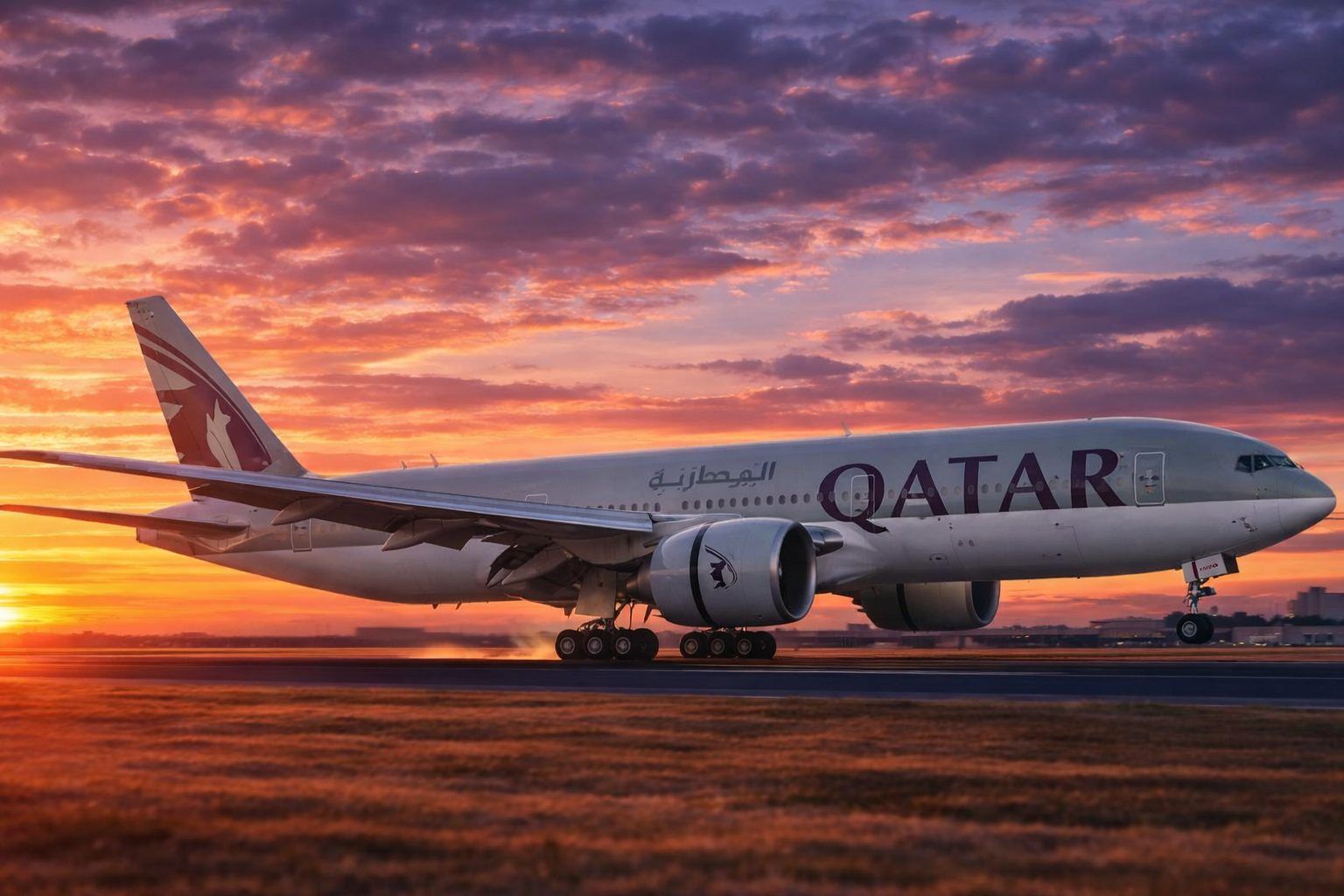
Aviation sits at the centre of that pitch. Middle East carriers are projected to lead global profitability in 2026, and Doha expects the regional upswing to feed Qatar’s aviation ecosystem, The Peninsula reported, citing International Air Transport Association (IATA) projections; IATA is the global airline industry trade group. https://thepeninsulaqatar.com/article/29/1…
The same report said Hamad International Airport’s concourse expansion lifted annual capacity to 65 million passengers, with further optimisation aimed at boosting throughput — a key metric for any hub built on connecting flights, where “load factor” refers to how full planes are on average.
Doha’s hub ambitions put it in direct competition with other Gulf gateways such as Dubai and Abu Dhabi, while Saudi Arabia is also investing heavily to build out its own aviation and tourism platform.
Travel industry publication Travel and Tour World said Qatar’s expanding airline sector is reinforcing Doha’s status as a global travel gateway for passengers — a theme Gulf airlines and airports are now racing to monetise as 2026 traffic forecasts rise. https://www.travelandtourworld.com/news/ar…