Published: December 5, 2025
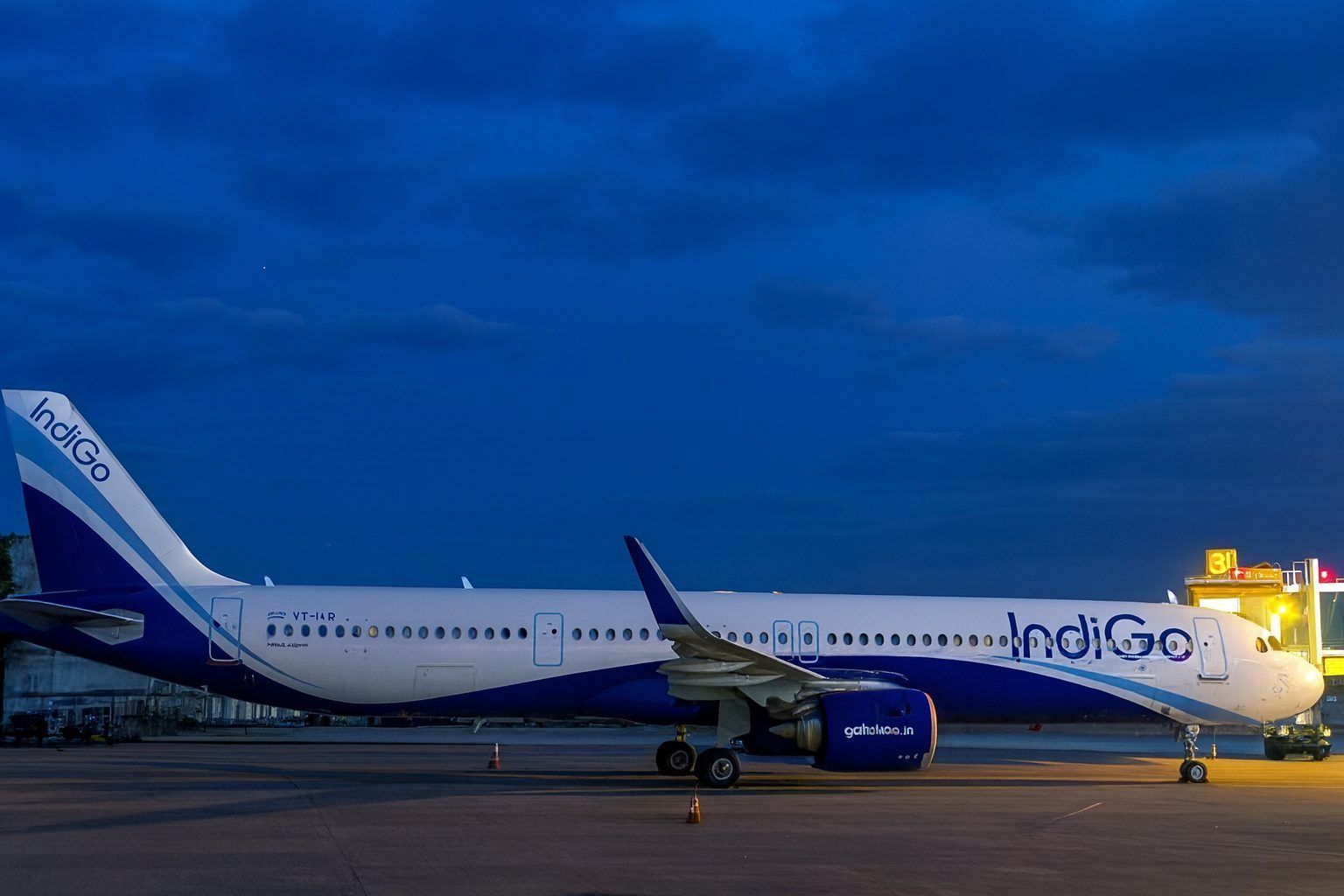
India’s busiest airline, IndiGo, is in the middle of one of the worst operational crises in its history. For a fourth consecutive day, the carrier has cancelled hundreds of flights, paralysing travel across the country and triggering a high‑level government probe, temporary regulatory rollbacks and political heat in Parliament. Reuters+1
At the centre of this storm is Rahul Bhatia – the low‑profile billionaire who controls IndiGo through the InterGlobe group. On most days he is described as the man who quietly built India’s largest airline; today he is also the man whose business decisions are under intense scrutiny.
This article breaks down who really owns IndiGo, how big the airline is, what Rahul Bhatia’s net worth looks like in 2025, and what the current meltdown means for the company’s future.
1. Who Owns IndiGo Airlines in 2025?
A listed airline controlled by the InterGlobe group
IndiGo is operated by InterGlobe Aviation Limited, a publicly listed company on the NSE and BSE under the ticker INDIGO. Bajaj Broking+1
The airline brand “IndiGo” sits within a wider conglomerate, InterGlobe Enterprises, founded and led by Rahul Bhatia. He is:
- Group Managing Director of InterGlobe Enterprises, and
- Promoter and Managing Director of InterGlobe Aviation (IndiGo). InterGlobe+1
Current shareholding: who actually controls IndiGo?
Recent shareholding data for InterGlobe Aviation show: Enrich Money+1
- Promoter group holding:
- Fell from 43.54% to 41.58% in the September 2025 quarter, largely due to stake sales by co‑founder Rakesh Gangwal.
- Within that promoter block:
- InterGlobe Enterprises Pvt Ltd (Bhatia family vehicle): ~35.7%
- Rahul Bhatia (individual): ~0.01%
- Kapil Bhatia (Rahul’s father): ~0.01%
- Rakesh Gangwal: ~4.53%
- Chinkerpoo Family Trust (Gangwal family trust): ~1.32%
Foreign institutional investors and domestic mutual funds hold a large chunk of the remaining shares, meaning IndiGo is tightly controlled at the promoter level but widely held in the market. Bajaj Broking
In governance terms, Vikram Singh Mehta serves as Chairman of InterGlobe Aviation, while Pieter Elbers, former KLM chief, has been CEO since 2022. Moneycontrol+1
From Delhi to the benchmark indices
IndiGo’s importance to India’s capital markets has grown sharply:
- On 30 September 2025, InterGlobe Aviation joined the Nifty 50, replacing IndusInd Bank as part of the index’s semi‑annual reshuffle. The Economic Times
- The stock is also slated to join the BSE Sensex on 22 December 2025, making it part of both marquee benchmarks – a rare distinction for an airline in India. The Economic Times
Index inclusion has been one factor behind the run‑up in the stock over the past year – and also explains why this week’s meltdown matters to so many institutional and retail investors.
2. Rahul Bhatia: The Man Behind IndiGo
Rahul Bhatia was born in 1960 and studied electrical engineering at the University of Waterloo in Canada. InterGlobe+1
He returned to India to join his family’s travel business and in 1989 formally established InterGlobe with air‑transport management as its core. Under his leadership the group has expanded into: InterGlobe+1
- Aviation: IndiGo
- Hospitality: InterGlobe Hotels and international hotel partnerships
- Logistics: MOVIN (a joint venture with UPS)
- Technology and airline management
- Pilot training and aircraft maintenance education
In 2006, Bhatia teamed up with US‑based airline executive Rakesh Gangwal to launch IndiGo as a low‑cost carrier focused on three simple ideas: a young, standardised fleet; on‑time operations; and low fares. Indian Net Worth+1
The formula transformed Indian aviation. IndiGo became the country’s largest carrier by market share by 2011 and has stayed in that position ever since. Bajaj Broking+1
Bhatia keeps a low public profile but has been recognised with major awards, including Ernst & Young “Entrepreneur of the Year” and The Economic Times “Entrepreneur of the Year” in 2011, and a place on Forbes’ “Global Game Changers” list in 2016. IndiGo
3. Rahul Bhatia Net Worth in 2025
How rich is the IndiGo promoter?
Estimates vary slightly by source, but they all agree on one point: Rahul Bhatia is now firmly in the $10‑billion club.
- A July 2025 analysis using Bloomberg data estimated that Bhatia’s wealth had jumped nearly 25% in the first half of 2025 to about $10.8 billion. Moneycontrol
- Forbes‑based rankings of the richest people in Delhi put Kapil & Rahul Bhatia’s combined net worth at around $10.1 billion (₹89,607 crore), ranking them 25th among India’s 100 richest in 2025 and among the top five in Delhi. The Indian Express+1
- A 2025 profile on Indian Net Worth pegs Rahul Bhatia’s individual net worth at “over $10 billion,” reflecting IndiGo’s rising valuation and his diversified holdings through InterGlobe. Indian Net Worth
Put together, major trackers place his and his immediate family’s wealth in a band of roughly $10–11 billion (around ₹83,000–90,000 crore), making him one of the richest aviation entrepreneurs globally.
How the IndiGo share price feeds into that fortune
As of December 5, 2025, InterGlobe Aviation’s market capitalisation is about ₹2.1 trillion (roughly $23–25 billion depending on the exchange rate). Bajaj Broking+1
With InterGlobe Enterprises and the Bhatia family controlling around 35.7% of the company, their stake alone is worth roughly ₹75,000 crore (about $8.5–9 billion at recent exchange rates), before adding their interests in hotels, logistics, technology and other assets. Enrich Money+1
That explains why each sharp move in IndiGo’s share price shows up almost immediately in estimates of Bhatia’s net worth.
4. How Many Flights Does IndiGo Operate – and How Big Is It?
Before the current disruptions, IndiGo’s scale was staggering even by global standards.
Daily flights, passengers and destinations
Recent data from stock exchanges, company disclosures and regulators show that IndiGo: AviationOutlook+3Moneycontrol+3AP News+3
- Operates about 2,200–2,300 flights every day
- Carries around 380,000 passengers daily
- Controls about 64–65% of India’s domestic air travel market
- Serves over 130 destinations (about 90–91 domestic and 40+ international) and connects more than 600 city pairs
- Has a fleet of around 434 aircraft, including:
- Airbus A320ceo & A320neo
- Airbus A321neo
- ATR 72‑600 turboprops for regional routes
- Wet‑leased Boeing 787‑9s for interim long‑haul needs
By daily departures, IndiGo is now among the largest airlines in Asia and ranks as one of the top carriers globally. AviationOutlook+1
Market dominance and growth ambitions
IndiGo’s domestic market share stood at 64.2% in August 2025, dwarfing the merged Air India–Vistara group at about 27.3%, with Akasa Air (~5%) and SpiceJet (~3%) far behind. AviationOutlook+1
To support this scale and future growth, the airline has built an enormous order book and infrastructure pipeline: AviationOutlook
- A record order for 500 Airbus A320-family aircraft placed in 2023, one of the largest single aircraft orders in aviation history.
- Orders for 69 Airbus A321XLR jets, with deliveries beginning in 2026, aimed at long‑thin international routes to Europe, East Asia and Australia.
- A widebody order for Airbus A350s to power long‑haul expansion.
- Construction of a 31‑acre MRO (maintenance, repair and overhaul) facility in Bengaluru, expected to cut maintenance costs by 8–10% and turnaround times by about 30% once completed around 2028.
This is the machine Rahul Bhatia’s fortune is tethered to – and the same machine that has hit turbulence this week.
5. The December 2025 Flight Cancellation Crisis
What triggered the meltdown?
The current chaos has its roots in new Flight Duty Time Limitations (FDTL) rules – stricter crew‑rest regulations introduced by India’s aviation regulator, the DGCA, to address pilot fatigue and enhance safety. These rules:
- Mandate longer rest periods for pilots and cabin crew
- Limit night‑time flying hours and the number of night landings per week
While other Indian airlines managed a relatively smooth transition, IndiGo underestimated the impact on its crew roster, leading to a sudden shortage of available pilots once Phase 2 of the rules took effect in November. Reuters+2AP News+2
The scale of cancellations
Over the past four days, the numbers have been brutal:
- Around 500 flights cancelled on December 5 alone, with all IndiGo departures from Delhi cancelled until midnight and all departures from Chennai halted until 6 p.m. Reuters+1
- Hundreds more flights cancelled or heavily delayed across Mumbai, Bengaluru, Hyderabad, Goa, Jammu & Kashmir and other key airports. mint+1
- IndiGo’s on‑time performance at six major metro airports plunged to just 8.5% on December 4, as per the Civil Aviation Ministry. mint
At airports, scenes of passengers sleeping on floors, missing weddings, funerals and even parliamentary duties have dominated social and traditional media. Senior citizens, students and foreign dignitaries have all reported being stranded with little information and very high last‑minute fares on rival airlines. mint+1
Regulatory and political response
The government has moved quickly – and controversially – to contain the fallout:
- The DGCA temporarily suspended some of the new FDTL rules for IndiGo, including the most restrictive night‑flying provisions, to stabilise operations. Reuters+2AP News+2
- The Civil Aviation Ministry placed parts of the weekly‑rest order in abeyance and said it expects schedules to stabilise within a day and fully normalise within about three days. mint
- A four‑member high‑level committee has been set up to examine what went wrong at IndiGo, assign accountability and recommend safeguards to prevent a repeat. mint
IndiGo CEO Pieter Elbers has issued multiple public apologies, promising full refunds and free rescheduling for all bookings between December 5 and 15, and indicating that cancellations should fall below 1,000 flights on Saturday with normalisation between December 10 and 15. mint+1
Impact on IndiGo’s share price – and on Bhatia’s wealth
Markets have reacted swiftly:
- InterGlobe Aviation’s stock has fallen about 10–11% over six trading sessions, erasing roughly ₹25,000 crore in market capitalisation. Moneycontrol+1
- The shares are trading near a six‑month low, and technical indicators now show a bearish setup, with multiple analysts advising investors to avoid or even sell the stock in the near term. The Economic Times
Given the Bhatia family’s large stake, that market‑cap erosion translates into a multi‑billion‑dollar hit to their paper wealth in just a week, even though their underlying control of the company remains unchanged.
6. What Do the Latest Financials Say About IndiGo’s Health?
Despite the current crisis, IndiGo’s recent financial results paint a more nuanced picture of its underlying business.
Q1 FY2026: Profitable growth
For the quarter ended June 2025 (Q1 FY2026), IndiGo reported: AviationOutlook
- Total income: ₹215.4 billion, up 6.4% year‑on‑year
- Net profit: ₹2,176 crore (about $260 million), though down from the previous year’s strong base
- Passenger ticket revenue: up 11.2% YoY
- Ancillary revenue: up 14.2% YoY
- Capacity growth: +16.4% YoY
This suggested robust demand and solid execution in a relatively benign operating environment.
Q2 FY2026: A big accounting loss, but not a collapse
The story changed in Q2 FY2026 (July–September 2025): AviationOutlook+1
- Revenue from operations: ₹185.6 billion, up 9.3% YoY
- Total income: ₹196.0 billion, up 10.4% YoY
- EBITDA: ₹34.7 billion, up 85% YoY, with an EBITDA margin of 18.7%
- Reported net loss: ₹2,582 crore
Management and analysts attribute the loss largely to foreign‑exchange movements on lease liabilities, not to a collapse in the core business. Adjusting for currency effects, IndiGo would have posted an underlying profit of about ₹104 crore for the quarter. AviationOutlook+1
So heading into December, IndiGo remained:
- Operationally profitable on a cash basis
- Growing capacity, especially on international routes
- Benefiting from strong load factors (above 83%) and still‑resilient yields The Economic Times
But it was also:
- Dealing with high fuel costs
- Exposed to foreign‑exchange volatility
- Running at utilisation levels that left little margin for error once the new crew‑rest rules hit.
Market views: from “buy the story” to “avoid for now”
The investment community is split:
- Goldman Sachs and other fundamental analysts maintain a “Buy” rating, with a target price around ₹6,000, citing strong long‑term demand, dominant domestic market share and powerful international growth. The Economic Times
- Technical analysts, however, see a weak chart: the stock has broken below key moving averages and support zones, prompting “Sell” or “Avoid” calls until the price stabilises and the operational mess clears. The Economic Times
For Rahul Bhatia, this means his wealth is still anchored to a structurally strong franchise – but one whose near‑term sentiment has turned sharply negative.
7. Forecasts and Strategic Outlook for IndiGo and Rahul Bhatia
A detailed strategic report published on December 4, 2025, describes IndiGo as standing at a critical inflection point: still the backbone of India’s aviation market, but now grappling with complex operational and reputational risks. AviationOutlook
Short‑term (next 3–6 months): stabilisation and scrutiny
Key themes through early 2026 are likely to be:
- Operational recovery
- Restoring schedules under revised FDTL norms once temporary relaxations end around February 10. Reuters+1
- Aggressive hiring of pilots and cabin crew and rebuilding buffers into rosters. AviationOutlook+1
- Regulatory follow‑through
- The DGCA’s inquiry could lead to stricter oversight, mandated contingency buffers, or even penalties, depending on the committee’s findings. mint
- Brand repair
- IndiGo built its reputation on punctuality; with on‑time performance dropping into single digits at major metros during the crisis, regaining passenger trust will be a priority. AviationOutlook+1
Medium term (2026–2028): growth with new aircraft and infrastructure
Assuming IndiGo can stabilise operations, its medium‑term strategy remains powerful: AviationOutlook+1
- International expansion using A321XLRs and A350s to open longer non‑stop routes to Europe, East Asia and Australia.
- Fleet modernisation with fuel‑efficient Airbus neos to keep costs low and emissions lower.
- In‑house MRO capacity in Bengaluru to reduce maintenance costs and reliance on third‑party providers.
- Technology partnerships, such as long‑term avionics and connectivity deals with Thales, to enhance operational reliability and predictive maintenance.
Analysts expect international capacity growth to outpace domestic, with IndiGo capitalising on India’s huge diaspora and growing outbound tourism. The Economic Times+1
Long term (towards 2030): riding India’s aviation boom
India’s aviation market itself is forecast to roughly double by 2030, with domestic passengers potentially reaching 300 million and total passengers around 600 million annually, supported by a network of 350–400 airports by 2047. AviationOutlook
If IndiGo manages to hold even 50% domestic share, it could be handling around 300 million passengers a year by the end of the decade – vaulting it into the top tier of global airlines by passenger volume. AviationOutlook
That scenario would almost certainly keep Rahul Bhatia’s net worth climbing, even with periodic shocks like the one now unfolding.
8. What It All Means for Travellers and Investors
For passengers
In the immediate term:
- Expect continued disruptions for several days, even if cancellations start declining.
- Rebooking choices may be limited and fares on alternative airlines elevated on busy routes, as already seen on Delhi–Bengaluru where some tickets spiked to around ₹40,000–80,000 for last‑minute travel. mint
In the longer run, this crisis could paradoxically lead to:
- More robust rostering and better fatigue management for crews
- Stronger regulatory safeguards
- Possibly higher structural fares if airlines need to carry more spare capacity and crew to stay compliant.
For investors
Nothing in this article is investment advice, but several signposts matter:
- Speed and quality of operational recovery
- Do cancellations fall sharply and on‑time performance return to pre‑crisis levels by mid‑December, as management suggests? mint+1
- Post‑February compliance
- Once FDTL relaxations lapse around February 10, can IndiGo run a nearly 2,300‑flight‑per‑day schedule while fully complying with the stricter rules? Reuters+1
- Regulatory outcomes
- The findings of the DGCA’s four‑member committee could influence IndiGo’s cost structure, buffers and even growth path. mint
- Competitive response
- The Air India group, Akasa Air and foreign airlines will all seek to capture disgruntled IndiGo passengers – especially on premium and international routes. AviationOutlook+1
- Valuation versus growth
- Even after the recent correction, IndiGo trades at a high earnings multiple (P/E above 40 as of December 5), pricing in strong future growth. Bajaj Broking
For Rahul Bhatia, the stakes are clear: stabilise operations quickly, protect IndiGo’s brand and execute on the long‑term strategy – or risk seeing both his airline and his net worth lose altitude.