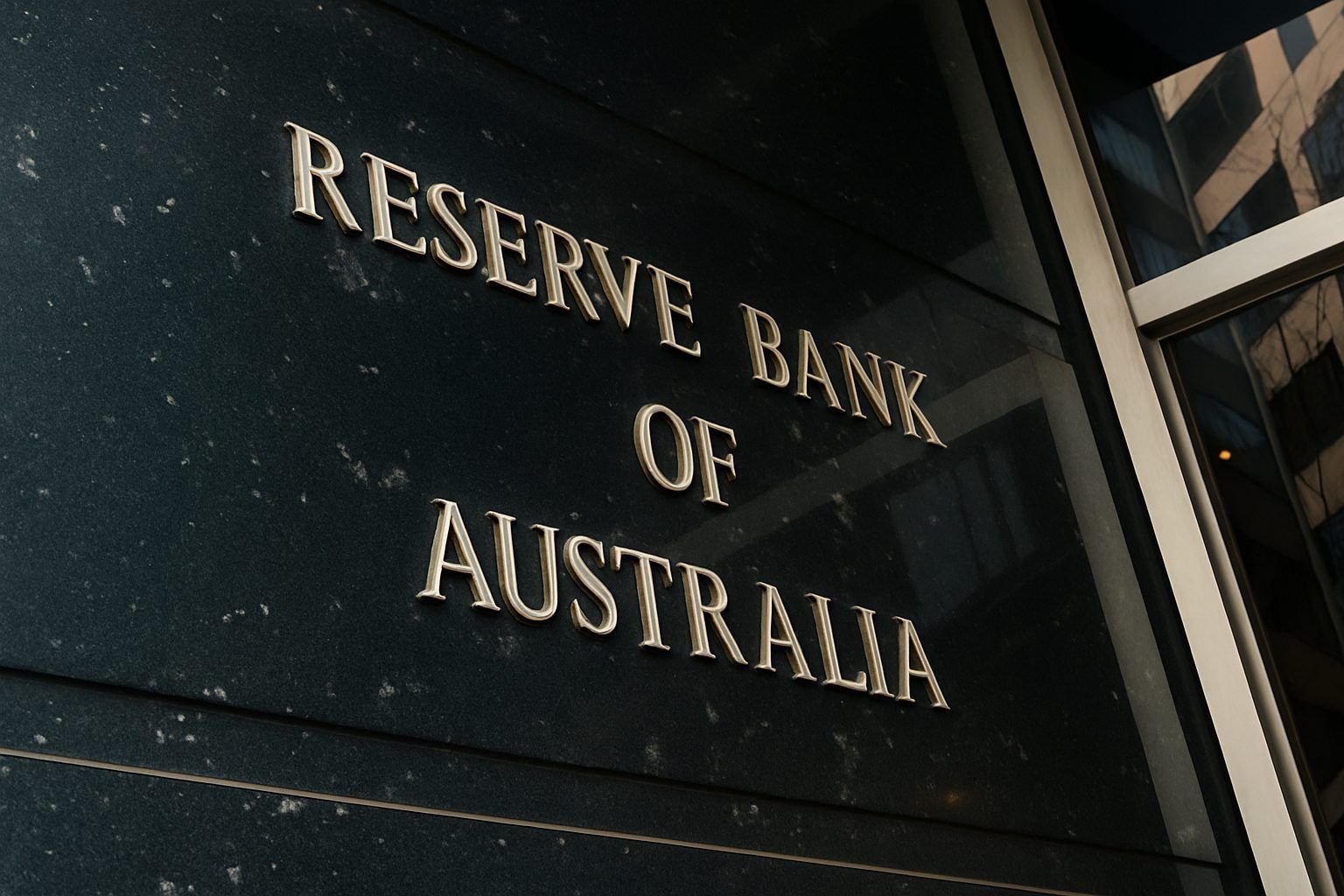

The Reserve Bank of Australia has left the cash rate at 3.6% at its final meeting of 2025, signalling the end of a brief easing cycle and warning that the next move in interest rates could be up. Here’s what that means for inflation, mortgages, markets and the outlook for 2026.
RBA freezes cash rate at 3.6% in final decision of 2025
The Reserve Bank of Australia (RBA) has kept the official cash rate unchanged at 3.60% at its December 9 meeting, the final policy decision of 2025.
In its post‑meeting statement, the Monetary Policy Board said that while inflation has fallen “substantially” from its 2022 peak, it has picked up again in recent months. The Board now sees the risks to inflation tilted to the upside, and says it needs more time to judge whether these renewed price pressures are temporary or more persistent.Reserve Bank of Australia+1
The decision was unanimous and follows a year in which the RBA cut rates three times (February, May and August) before shifting to a holding pattern in September, November and now December.
Crucially for households and markets, Governor Michele Bullock has now ruled out further rate cuts for the “foreseeable future” and openly acknowledged that the next move in interest rates could be upwards if inflation fails to cool.The Guardian+1
Why the RBA is nervous: inflation is creeping back up
The RBA’s December decision comes against the backdrop of a clear turn in the inflation data:
- Headline inflation rose to 3.8% in October, up from 3.6% in September, according to the Australian Bureau of Statistics’ new monthly CPI series.
- Core (trimmed mean) inflation is running at about 3.3%, still above the RBA’s 2–3% target band.
In its statement, the Board suggested that some of the recent increase in underlying inflation may reflect temporary factors, and it explicitly flagged uncertainty about how much weight to put on the monthly CPI numbers, given the series is relatively new. Even so, the RBA sees signs of a broader and potentially persistent pick‑up in prices, and says this will “bear close monitoring.”Reserve Bank of Australia+1
The inflation worry is compounded by surprisingly strong activity:
- Growth in private demand – both household consumption and business investment – has strengthened.
- The housing market is re‑accelerating, with home prices at record levels and housing credit growth picking up again.
- Labour market conditions remain “a little tight”: unemployment has drifted up over the past year but underutilisation remains low and capacity utilisation is above its long‑run average.Reserve Bank of Australia+1
- Broader measures of wage growth remain solid and unit labour costs are still elevated, adding to concern that inflation could get stuck above target.
Put simply: the RBA now faces a less balanced trade‑off. Earlier in 2025, falling inflation and a softening labour market justified easing. Now, inflation is re‑accelerating while the economy looks surprisingly resilient, limiting appetite for more stimulus.
The shortest easing cycle in three decades
One of the most striking takeaways from today’s commentary is that Australia appears to have just lived through its shortest interest‑rate cut cycle in 30 years.
Here’s how the 2025 easing phase unfolded:
- February 2025: Cash rate cut by 25 basis points to 4.10%, the first reduction since 2023.
- May 2025: Another 25‑basis‑point cut to 3.85%, as inflation continued to moderate.
- August 2025: A third 25‑basis‑point cut brings the cash rate down to 3.60%.
Those three moves partially reversed the RBA’s 13 consecutive rate hikes in 2022 and 2023, which had taken the cash rate from near zero to well above 4%.
Governor Bullock’s message today, however, is that this easing phase is effectively over:
- She said she does not see interest‑rate cuts “on the horizon for the foreseeable future,” describing the likely choices from here as either a prolonged hold or, if inflation stays stubbornly high, another rate rise.The Guardian+1
- At the press conference, Bullock confirmed that a rate cut was not even discussed at the December meeting. The Board did not explicitly consider a hike either, but spent “quite a lot” of time on the circumstances under which rates might need to rise in 2026.ABC+2News.com.au+2
For many borrowers, that combination – a short, shallow cutting cycle following an aggressive hiking phase – will feel like too little relief arriving too late.
Mortgage holders spared today, but rate hike risk looms
For roughly 3.3 million Australian households with a mortgage, today’s decision is a mixed blessing. Repayments won’t rise in December – but the prospect of further relief has largely evaporated.
Key points for borrowers:
- The cash rate remains at 3.6%, where it has been since August. Variable mortgage rates, which are priced off bank funding costs and the cash rate, are therefore unlikely to move immediately.
- However, the RBA is now openly “uncomfortable” with current inflation and has stressed it still has an “appetite” to lift rates if necessary.ABC+1
- Economists warn that if inflation remains elevated, a rate rise in 2026 is a “live” option, with some seeing the February 2–3 meeting as the first genuine opportunity for a hike.ABC+2Reuters+2
For a typical variable‑rate borrower, even a 0.25 percentage‑point increase would translate into tens of dollars extra per month for every $100,000 borrowed, depending on loan term and product. That would be on top of the steep repayment increases already felt since the hiking cycle began in 2022.
Treasurer Jim Chalmers acknowledged that “millions of Australians would have preferred more rate relief” but stressed that the decision was widely expected and emphasised that recent inflation upticks reflect temporary factors seen in many other economies.ABC+1
Markets bet the next move is up
Financial markets quickly latched onto the RBA’s hawkish tone:
- The Australian dollar rose after Bullock’s press conference, trading around US$0.6645, as investors brought forward bets on a 2026 hike.
- Three‑year government bond yields jumped, reflecting expectations that policy rates may need to climb again if inflation stays sticky.
- Futures pricing now implies roughly two 25‑basis‑point hikes priced in over 2026, with February described by analysts as a “live” meeting if upcoming inflation data confirm the RBA’s concerns.Reuters+1
Equity markets have been more cautious. The ASX 200 slipped after the decision, as a more hawkish RBA is generally seen as negative for interest‑sensitive sectors such as housing, discretionary retail and small caps.
For currency traders, the message is clearer: so long as the RBA is seen as leaning toward tightening rather than easing, the Aussie dollar is likely to find support, particularly against currencies where central banks are already cutting.
The policy paradox: high rates and high housing costs
One of the thorniest issues highlighted in today’s coverage is the “policy paradox” around housing:
- High interest rates have helped cool some forms of demand, but rents and housing‑related costs remain a major driver of inflation, thanks to constrained supply and strong population growth.
- Economists point out that keeping rates high dampens spending and investment, but also discourages new housing construction and reduces rental supply, which can keep housing inflation elevated.
In other words, some of the most stubborn parts of inflation – rents, utilities, insurance – are not very responsive to interest rates. Tight monetary policy may even reinforce them by crimping new supply. That means the burden of the RBA’s inflation fight still falls heavily on:
- Households with variable‑rate mortgages
- Small businesses reliant on credit
- Interest‑sensitive sectors like construction and real estate development
Yet the RBA has been clear that it will “do what it considers necessary” to bring inflation back to its mid‑point target over time, even if that means keeping monetary conditions restrictive for longer.Reserve Bank of Australia+1
What happens next: all eyes on February 2026
Today’s decision was the last interest‑rate move of 2025. The next Monetary Policy Board meeting is scheduled for 2–3 February 2026, meaning the cash rate will stay at 3.6% for at least the next two months.
By then, the RBA will have:
- Two more monthly CPI prints (for November and December)
- Updated data on wages, unemployment and GDP
- A clearer read on whether October’s inflation jump was a one‑off or the start of a more worrying trend
Analysts are split:
- Some, including economists at major banks, argue that holding at 3.6% through 2026 could still be enough to guide inflation back to target as earlier rate hikes continue to work through the system.
- Others warn that if inflation remains around current levels, the RBA may need to raise rates as early as February, or soon after, to retain credibility.
Either way, Bullock has signalled that every meeting is now “live” and that the Board’s decisions will be strictly data‑dependent.
Key takeaways for households and investors
1. No rate relief, but no immediate hike either
- The cash rate stays at 3.6%, sparing borrowers from another increase before Christmas.
- However, the RBA has made it clear that further cuts are off the table for now and that hikes are firmly in the conversation for 2026.
2. Inflation is back at centre stage
- After a year of easing, inflation has ticked up again to 3.8%, with core inflation still above target. The RBA now sees the balance of risks skewed toward higher inflation, not weaker growth.
3. The easing cycle is probably over
- Three 25‑bp cuts in 2025 look increasingly like a short, tactical adjustment rather than the start of a long period of easier money.
4. February 2026 is a “live” meeting
- Markets are pricing in at least one, and possibly two, 25‑bp hikes over 2026 if inflation stays elevated. The next few CPI releases will be critical.
5. Plan for higher‑for‑longer rates
- Households, investors and businesses should stress‑test their finances for the possibility that borrowing costs stay around current levels – or rise – rather than returning quickly to the ultra‑low rates of the early 2020s.
As always, this coverage is for general information only and should not be taken as personal financial advice. Borrowers and investors should consider seeking guidance tailored to their own circumstances.
Related articles: Interest Rates