NEW YORK, January 2, 2026, 06:35 ET — Premarket
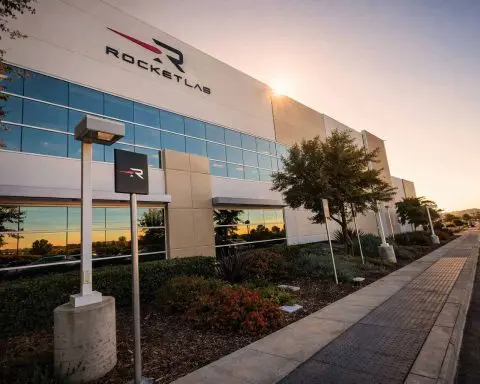
Rocket Lab Corp (RKLB) shares rose 3.5% to $72.20 in premarket trading on Friday, after ending December 31 at $69.76. The stock has been choppy since late December, when it touched $79.83 intraday on Dec. 24 before slipping below $70 into year-end, data from StockAnalysis.com showed.
The early move is an opening test of appetite for high-momentum space and defense-linked names as U.S. markets reopen after the New Year’s Day holiday. Rocket Lab has become a crowded trade for investors betting that government space spending will translate into longer-duration revenue.
Bulls see Rocket Lab as more than a small-launch provider, with its space systems business and U.S. national security work increasingly central to the story. That shift matters because satellites and components can bring stickier contracts than launches, but they also come with production and delivery deadlines.
A recent SEC filing showed Rocket Lab’s U.S. subsidiary entered into an agreement with the Space Development Agency to design, manufacture and provide operations and sustainment for 18 satellites under the agency’s Tracking Layer Tranche 3 program. The contract totals $816 million, including a $806 million base amount and options of roughly $10 million, and final delivery of the satellites for launch is expected in 2029; the agreement also allows either party to terminate for convenience, subject to conditions.
The Space Development Agency has said the Tranche 3 awards are part of a $3.5 billion order for 72 satellites split among Rocket Lab and defense primes Lockheed Martin, L3Harris and Northrop Grumman. The agency said the infrared satellites are expected to be launched into low Earth orbit — where spacecraft circle relatively close to Earth — in 2029.
Rocket Lab founder and CEO Peter Beck framed the award as part of a broader U.S. Space Force effort to counter fast-evolving threats. “Rocket Lab is honored to play a role in enabling this,” Beck said in a company statement. Rocket Lab
Neutron is the other big swing factor for 2026. Rocket Lab said in December that the “Hungry Hippo” fairing for Neutron — the nose cone that shields a payload during ascent — completed qualification testing and was headed to Virginia ahead of the vehicle’s first launch, with first liftoff scheduled for 2026. Rocket Lab
For traders, the near-term question is whether Rocket Lab can keep converting headline contract wins into steady program execution while funding Neutron’s development. Updates on test milestones such as static fires and wet dress rehearsals will be watched for signs the schedule is holding.
The contract structure is also in focus. Fixed-price work — where the contractor agrees to deliver for a set amount — can boost profitability if costs stay under control, but it can compress margins when programs run hot.
With Tranche 3 satellites expected to fly in 2029, the nearer-term financial debate centers on production ramp and milestone timing, rather than launch day. Investors will also watch for add-on work, including contract options and subsystem sales tied to the same constellation build-out.
Technically, premarket strength puts attention back on the $70 area that has drawn buyers on recent pullbacks, while the late-December highs remain the next test. Thin holiday liquidity has amplified swings, and volume returning in the regular session could cut either way.