
MILPITAS, California, May 11, 2026, 01:06 PDT
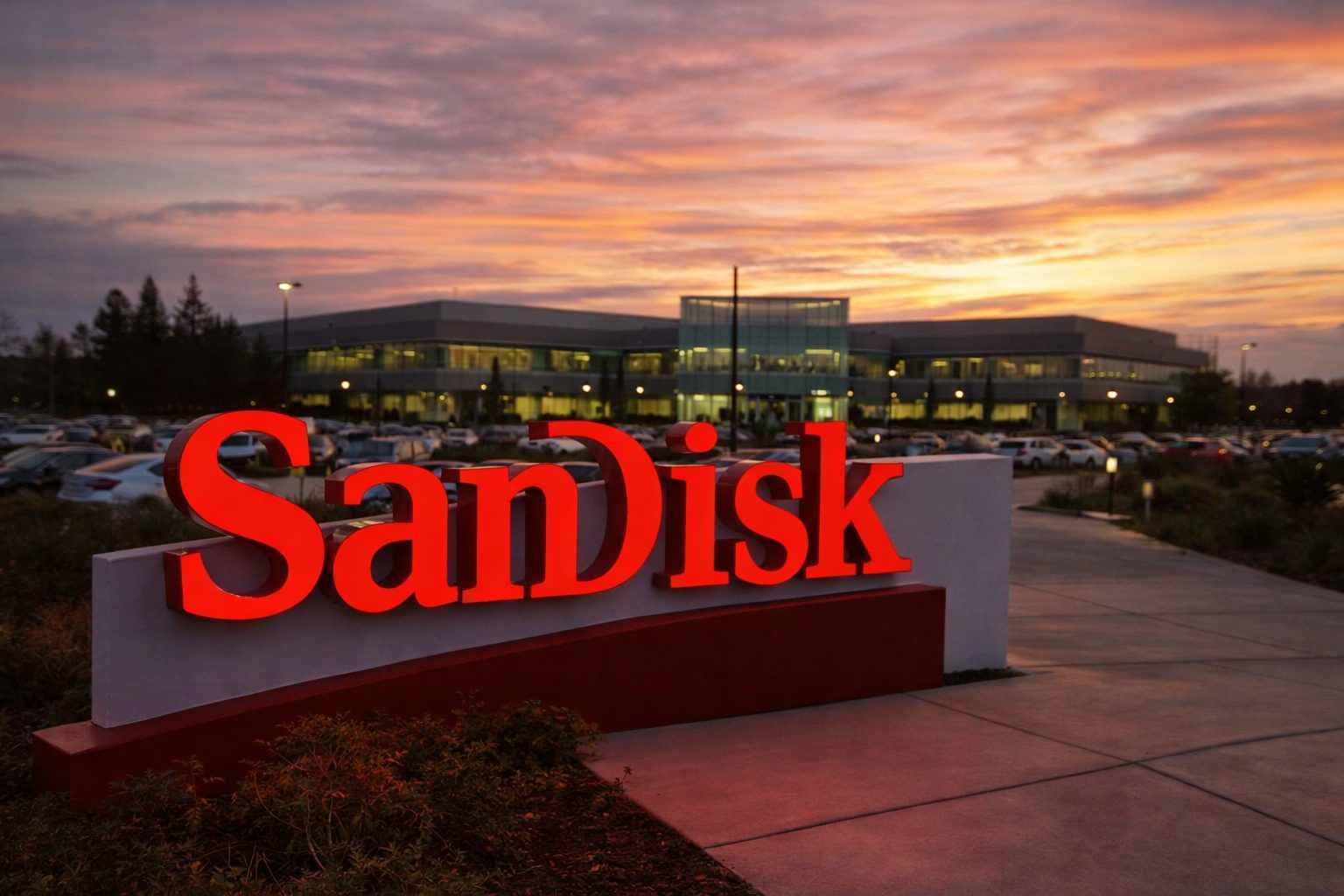
Sandisk shares finished Friday at an all-time high, pushing the flash-storage company’s market cap to roughly $245 billion, with investors continuing to snap up the stock on bets about its position in artificial intelligence data centers. As of this day, U.S. markets hadn’t opened yet for Monday.
This shift is catching attention: Sandisk isn’t trading like a typical memory-cycle stock anymore. On Wall Street, NAND flash memory—those storage chips that retain data without power, essential for solid-state drives—is getting lumped in with core AI infrastructure.
The shares finished May 8 at $1,562.34, just off the session high of $1,564.00. That’s a jump from the May 4 close of $1,255.86, according to LSEG’s data on the company. Trading volume hit 20.6 million shares Friday.
Sandisk turned in fiscal third-quarter revenue of $5.95 billion, surging 251% versus a year ago. Data-center revenue? That figure shot up 645% to $1.47 billion. For the fiscal fourth quarter, Sandisk is projecting revenue in a range of $7.75 billion to $8.25 billion, with non-GAAP diluted earnings pegged between $30 and $33 a share.
Chief Executive David Goeckeler described the quarter as a “fundamental inflection point,” crediting data centers for driving the move toward higher-value end markets. He talked up “structurally higher and more durable earnings power”—phrasing that’s stuck with investors following a stock surge that’s already shifted expectations. Sandisk Corporation
Sandisk’s latest move? Locking in big contracts. Reuters says the company secured five long-term supply deals—three of them landed last quarter, totaling at least $42 billion—as it works to steady the notoriously volatile memory market. “The bane of this industry has been the boom-bust cycle,” Goeckeler told Reuters. “We want consistent, predictable economics.” Reuters
The company followed up with a more detailed filing. Sandisk reported $41.6 billion in remaining performance obligations as of April 3—sales already contracted but not yet recognized as revenue. Of that total, it expects to recognize roughly 15% within the next year.
The surge throws the old Western Digital yardstick out the window. Sandisk—split from Western Digital in 2025—has surged past its onetime parent, leaving Western Digital at roughly $165 billion in market cap, according to the most recent data. Micron Technology, another big memory player riding the AI wave, was hovering close to $853 billion.
Numbers keep shifting on analysts’ sheets. Vijay Rakesh at Mizuho bumped his Sandisk target to $1,625, up from $1,220, citing what he called “demand outpacing supply in the NAND market,” according to TipRanks. He wasn’t just talking about Sandisk; other names in the space are seeing the same setup. TipRanks
Still, there’s a hitch in the deal. Sandisk flagged in its latest quarterly filing that these long-term agreements come with execution, financial, and market hazards—miss a delivery or spec, and it could face penalties or smaller volumes. Ongoing risks? Volatile demand, price fluctuations, and sales cycles, the company said.
Just after the stock’s strong move, a minor insider-sale filing popped up. On May 8, Director Necip Sayiner submitted a Form 144, outlining his plan to sell 579 common shares worth a total of $870,300.69. The paperwork indicated Sayiner hadn’t sold any shares in the previous three months.
Right now, scarcity, clear contracts, and demand from AI-driven storage are driving the market. The real challenge comes if NAND supply picks up, customers start dialing back purchases, or the fresh contract setup turns out softer than investors expect—then Sandisk’s margins may not hold up.