
MILPITAS, Calif., May 15, 2026, 01:09 (PDT)
Late Thursday, Sandisk Corp told shareholders to turn down an unsolicited “mini-tender” from Tutanota LLC, which wants to scoop up as many as 100,000 Sandisk shares at $1,150 each. The company cautioned that those accepting the offer risk selling shares for less than what they might fetch on the open market. Sandisk noted the offer represents under 0.07% of its outstanding common stock as of April 24. Sandisk Corporation
This warning carries weight, since Sandisk shares (SNDK) remain well above the offer price after surging on AI memory chip demand. On Thursday, Sandisk closed at $1,382.72. That puts Tutanota’s bid roughly 17% under the most recent close.
This comes during a fraught stretch for the memory market. Samsung Electronics’ union in South Korea announced plans Friday to go ahead with an 18-day strike starting May 21, despite the company’s offer of new talks, Reuters reported. “There appears to be rising concerns over delivery reliability if the strike takes place and sentiment that rivals could benefit from the uncertainty,” NH Investment & Securities senior analyst Ryu Young-ho told Reuters. Reuters
Mini-tenders target under 5% of a company’s shares, a level that sidesteps much of the disclosure and regulatory oversight required for bigger tender offers, the SEC points out. Investors, the agency warns, ought to take a hard look before agreeing to sell.
Sandisk stated that Tutanota’s bid hinges on Sandisk shares closing above $1,150 on the final trading day before the offer ends. The company added that Tutanota can push out the deadline by additional 45- to 180-day increments, potentially postponing payment. For now, the offer is set to expire at 5:00 p.m. Eastern on May 20, unless an extension is announced.
The company clarified it’s not connected to Tutanota and told shareholders who haven’t replied yet to simply hold off. Those who’ve already tendered their shares still have time to pull out before the offer runs out, according to Sandisk.
Sandisk has moved beyond its image as solely a maker of consumer flash drives. In February 2025, it finished its split from Western Digital and started trading on Nasdaq as an independent public company, ticker SNDK.
The company has moved closer to the heart of the AI infrastructure market. NAND flash—memory found in solid-state drives and similar storage—retains data even when powered off, and its footprint in data centers is growing fast. That’s as AI workloads swell, with systems juggling bigger files, sprawling code, and extended inference tasks where models generate results long after initial training.
Sandisk turned in fiscal third-quarter revenue of $5.95 billion, nearly doubling from the previous quarter. Net income on a GAAP basis hit $3.62 billion. The company’s data-center revenue soared, up 233% from the prior quarter. For the fourth quarter, Sandisk is forecasting revenue between $7.75 billion and $8.25 billion. Sensitivity to any move in memory supply or pricing has only sharpened on numbers like these.
David Goeckeler, the chief executive, told Reuters that the company is pushing to smooth out the memory sector’s notorious volatility. “The bane of this industry has been the boom-bust cycle,” he said. “We want consistent, predictable economics.” Reuters
Sandisk reported $41.6 billion in remaining performance obligations as of April 3, according to a filing—a figure mostly reflecting its long-term customer contracts. Only around 15% of that is slated to hit the top line as revenue in the coming year, per the same filing.
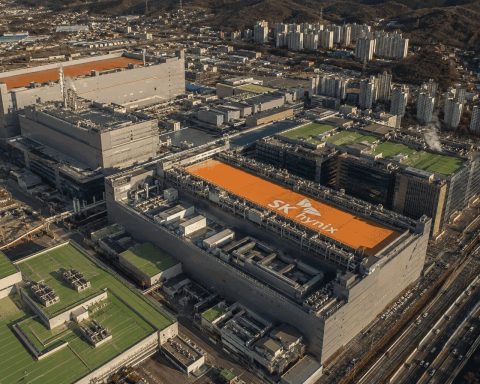
The competitive outlook remains murky. If Samsung’s workers strike, tighter supply might push up prices for competitors like Sandisk and SK Hynix—though the move could just as easily inject added volatility into a sector that’s already racing. Reuters reported that JPMorgan put the potential hit to Samsung’s operating profit from a strike at 21 trillion won to 31 trillion won.
Sandisk faces execution risk. The company’s latest 10-Q flagged that if it misses delivery targets under long-term deals, it could be hit with price cuts, penalties, damages, or even lose contracts early. Customers backing out on purchase commitments could also force Sandisk to offload inventory elsewhere—potentially at steeper discounts or slimmer margins.
Shareholders are looking at a more specific concern right now: Sandisk says Tutanota’s offer came in unsolicited, is limited in size, possibly under market value, and hasn’t been backed by the company. The broader debate for SNDK stock still centers on a familiar theme—can AI-driven demand keep memory prices propped up enough to support the stock’s recent run.
Related articles: NASDAQ:SNDK