
NEW YORK, Dec. 27, 2025, 9:21 a.m. ET — Market Closed
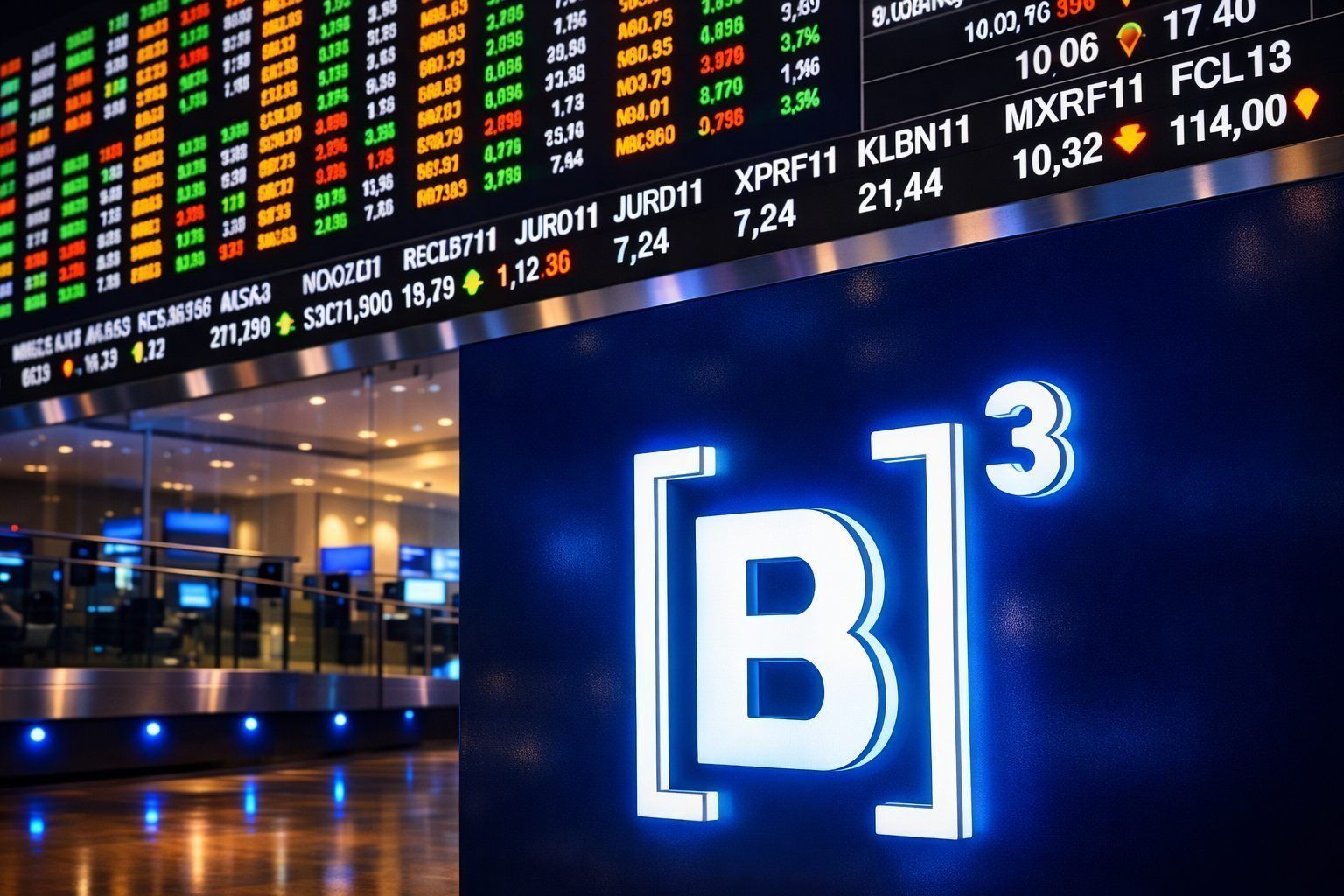
Brazil’s São Paulo Stock Exchange—officially B3 (Brasil, Bolsa, Balcão)—is closed this weekend, but investors aren’t exactly getting a quiet news cycle. The benchmark Ibovespa wrapped up the final Friday session of the week little changed, closing at 160,896.64, up 0.27%, according to Yahoo Finance’s market data.
Local market recap services characterized the close as a modest uptick led by gains in defensive and domestic sectors. Investing.com reported the Bovespa up 0.11% at the close, with Electric Power, Industrials and Consumption helping push equities higher into the weekend.
Friday’s pulse: utilities lead, volatility inches up
Friday’s winners and losers offered a classic “late-December tape” feel: selective buying, mixed breadth under the surface, and investors reacting more to idiosyncratic catalysts than broad macro fireworks.
Among the best performers cited by Investing.com were CPFL Energia (CPFE3) +3.40% (notably hitting an all-time high, per the same report), Braskem (BRKM5) +3.45%, and Cosan (CSAN3) +2.84%. On the downside: Companhia Brasileira de Distribuição (PCAR3) -2.66%, Totvs (TOTS3) -1.57%, and Rede D’Or (RDOR3) -1.25%.
That same wrap also noted a small rise in implied volatility for Brazil equity exposure—its CBOE Brazil ETF volatility gauge was up 0.26% to 26.64—and flagged the ongoing sensitivity to commodities and FX moves heading into year-end.
Petrobras strike risk: a live wire for Brazilian equities
One of the most market-relevant Brazil headlines in the past 24–48 hours is labor-related—and it sits right on top of one of the most systemically important names in the Ibovespa: Petrobras.
Late Friday, Reuters reported that Sindipetro-NF, a major union representing Petrobras workers, rejected the company’s most recent proposal to end a 12-day strike, meaning the protest is set to continue at least at some sites. Petrobras has said the strike has not impacted production so far, citing contingency staffing, but Reuters also noted sources saying the dispute could be prolonged due to complex pension-fund and payment-deduction issues.
Why this matters for B3 investors heading into Monday: Petrobras is not just “another stock.” It’s a liquidity anchor for local and international portfolios, a key driver for Brazil ETFs, and a sentiment barometer for policy and governance risk. A strike that drags on—especially one touching offshore operations—adds uncertainty that can spill into the broader index through risk premia, not only through near-term production math.
Politics is back in the pricing conversation
Brazil’s political tape also delivered market-moving potential this week. Reuters reported that former President Jair Bolsonaro endorsed his son, Senator Flávio Bolsonaro, as a pre-candidate for the 2026 presidential election, surprising markets that had expected Bolsonaro to back a different, more established contender. Reuters also reported that the real strengthened nearly 1% against the U.S. dollar after a planned interview (where the endorsement was expected) was canceled earlier in the week—an example of how political signals are still filtering directly into price action.
For equity investors, the key isn’t predicting election outcomes from weekend headlines—it’s recognizing that “Brazil risk” often reprices in steps. When politics shifts the perceived fiscal trajectory, the first instruments to react are usually the currency and the long end of the rates curve, and then equities follow via valuation and funding-cost channels.
The big macro lever: Selic at 15%—and the argument about cuts
Underneath all the daily moves is the gravitational field of Brazil’s interest rates. On Dec. 10, Brazil’s central bank held the Selic rate at 15%—its highest level since July 2006—and offered no clear signal that cuts are imminent, reiterating that conditions call for holding rates “for a very prolonged period,” according to Reuters. Reuters
Reuters also quoted Carlos Lopes, an economist at Banco BV, saying communication changed “very little,” suggesting the central bank has “low conviction” about starting cuts in January. Another Reuters-cited expert, Felipe Salles, chief economist at C6 Bank, said cuts look “a bit closer, but still not ripe,” and he expects an initial 25 bp cut in March that could potentially accelerate. Central bank chief Gabriel Galípolo has also emphasized a data-dependent approach and pushed back on the idea that policymakers need to pre-announce pivots. Reuters
This debate matters for the São Paulo Stock Exchange because high real rates act like a valuation clamp—especially for rate-sensitive domestic sectors—while the expectation of easing can re-rate equities well before the first cut arrives. In other words, “when will Copom blink?” remains a core question for 2026 positioning.
Inflation is cooling, but the runway still matters
Brazil’s inflation trend is giving markets something to work with. Brazil’s statistics agency IBGE reported that the IPCA-15 inflation preview rose 0.25% in December and that 2025 closed at 4.41% on a cumulative basis.
That dovetails with the central bank’s cautious optimism in its own forecasting horizon—Reuters reported the bank trimmed some inflation projections while still stressing inflation and expectations remain above target.
A softer inflation path is the bridge to rate cuts—but investors will still be watching whether fiscal dynamics and election-related spending pressures reshape that bridge in 2026.
Forecasts and outlook: growth near 2%, easing cycle expected in early 2026
On the macro-forecast front, BBVA Research’s December outlook expects Brazil’s growth to hover around 2% through 2027, with GDP forecast at 2.2% in 2025, 1.7% in 2026, and 2.2% in 2027. BBVA also expects a monetary easing cycle to begin in early 2026, with the Selic potentially ending 2026 around 11.50%, while warning that stronger fiscal spending ahead of elections could pose upside risks to that rate path.
Meanwhile, Reuters has also pointed to signs of softer activity: Brazil’s central bank activity gauge (IBC-Br), a proxy for GDP, showed weakness heading into Q4 in a recent release, reinforcing the narrative that tight monetary policy is cooling demand.
What investors should know before the next B3 session
With markets closed now, the practical question becomes: what can move prices before the open—and what trading mechanics will matter when liquidity returns?
1) Know the B3 clock (and where “pre-market” actually is).
B3’s equities market includes a pre-opening phase (09:45–10:00 São Paulo time), a continuous trading session (10:00–17:55), and an after-market window (18:25–18:45) for the cash market, according to B3’s published trading hours. B3
For U.S.-based investors tracking Brazil from New York, São Paulo is typically two hours ahead this time of year—so B3’s regular cash session roughly corresponds to an 8:00 a.m. to 3:55 p.m. ET day.
2) The year-end calendar matters more than usual right now.
B3’s official market calendar shows no trading session on Dec. 31, 2025 (“banks not open to the public… with no trading session”), which effectively concentrates year-end positioning into fewer sessions. B3
That makes the final days of December more sensitive to flow-driven moves—especially in heavily owned index names.
3) Weekend headline risk checklist (what can gap Monday).
- Petrobras labor negotiations: any shift toward resolution—or escalation—can move Petrobras and the broader index quickly.
- Brazil politics and fiscal signaling: Bolsonaro-family news already showed measurable FX sensitivity this week; further developments can feed into rates and equities.
- Rates narrative drift: even without a Copom meeting, market pricing for “first cut timing” can change on data, commentary, or risk events. Reuters
- FX and commodities: Brazil’s index composition still makes the Ibovespa highly responsive to oil/energy and metals-linked sentiment, plus USD/BRL swings.
The short version: the São Paulo Stock Exchange heads into Monday with the Ibovespa near 161,000, but the real action is in the cross-currents—Petrobras labor risk, election positioning, and the tug-of-war between high rates today and rate-cut expectations tomorrow.
Related articles: Stock Market