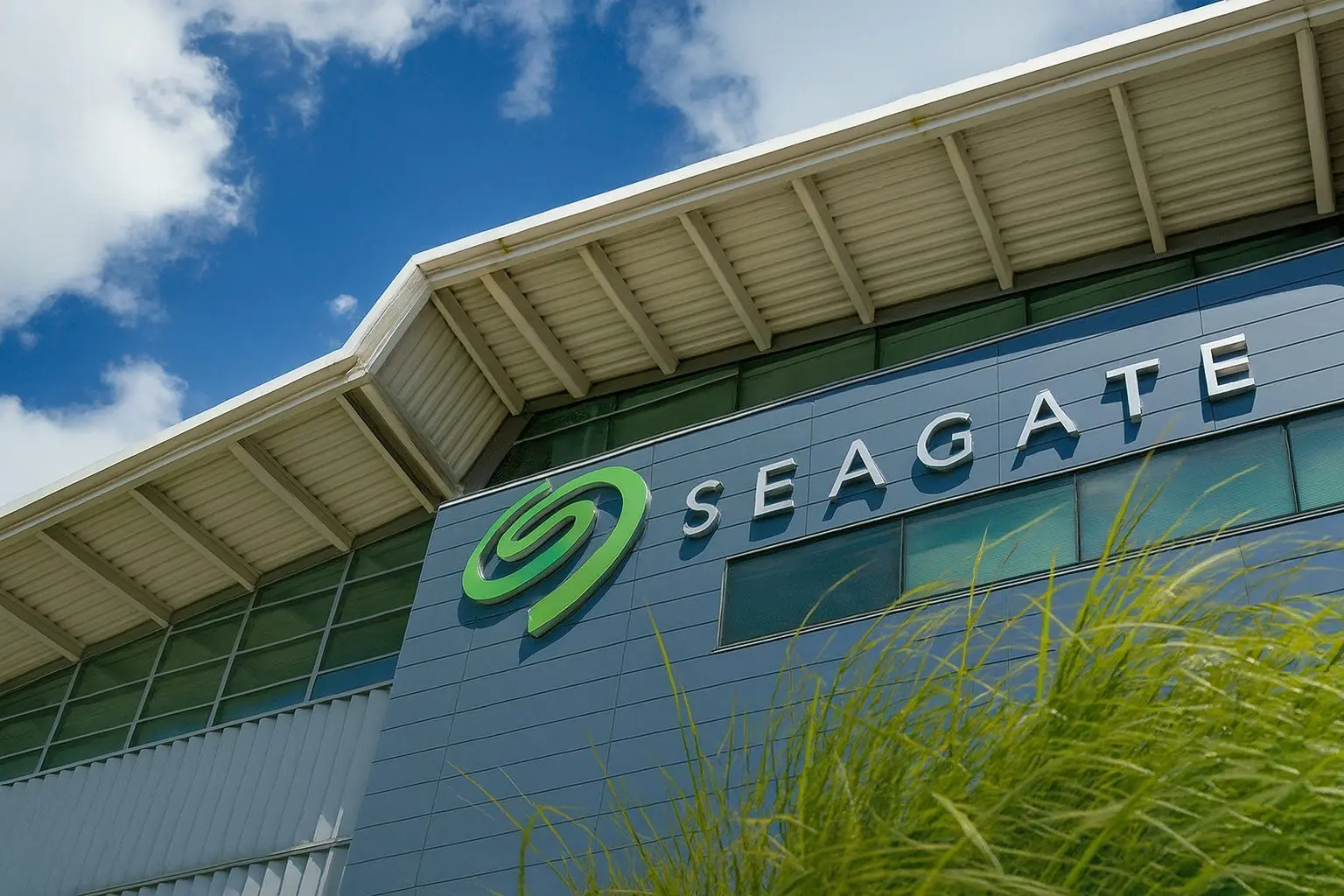
December 15, 2025 — Seagate Technology Holdings plc (NASDAQ: STX) is back in the spotlight after Nasdaq confirmed the hard-drive maker will be added to the Nasdaq-100 Index as part of the benchmark’s annual reconstitution, with the change scheduled to take effect before the market opens on Monday, December 22, 2025. Nasdaq+1
Seagate shares have been volatile in recent sessions, but remained near the $290–$292 area in Monday trading, with the session’s range stretching from the high $280s to the low $290s. StockAnalysis
For investors and traders, today’s story around Seagate stock blends three themes: index inclusion, AI-driven storage demand, and a shareholder-return profile anchored by a quarterly dividend that is about to go “ex-dividend” later this month. Nasdaq+2Seagate Investors+2
Why Seagate joining the Nasdaq-100 matters for STX stock
Nasdaq’s annual reconstitution will add six companies to the Nasdaq-100, including Seagate (STX) and Western Digital (WDC), while removing six others. Nasdaq+1
The Nasdaq-100 matters because it is not just a headline index—it is the foundation for hundreds of index-tracking products. Nasdaq said the Nasdaq-100 underpins more than 200 tracking products with over $600 billion in assets under management globally, including the widely-followed Invesco QQQ Trust (QQQ). Nasdaq
That creates a real market dynamic heading into December 22:
- Passive and benchmark-aware funds that track (or hug) the Nasdaq-100 may need to buy STX to align holdings with the new index composition.
- Liquidity can increase as a stock becomes part of a major index ecosystem.
This is not a guarantee of a sustained rally, but it is one reason stocks often see heightened attention and positioning between the announcement and the effective date.
Nasdaq also noted the index is reconstituted each December and is timed to coincide with the quarter’s “quadruple witch” expiration Friday, a period that can bring additional volume and positioning shifts. Nasdaq
Seagate stock price action: recent highs, pullbacks, and Monday’s move
Seagate hit fresh highs earlier this month. On December 11, the stock closed at $307.85, a new 52-week high at the time, according to a MarketWatch trading-day recap. marketwatch.com
But the next session brought a sharp reset: Seagate closed December 12 at $287.64 (down 6.56% on the day), before stabilizing again. StockAnalysis
On December 15, trading remained choppy, with the stock moving around the low $290s—a level that reflects both the powerful 2025 run and the market’s attempt to price what comes next (index inclusion, earnings durability, and the storage cycle). StockAnalysis
Investing.com also reported that, following the Nasdaq-100 inclusion backdrop, Seagate gained about 2% alongside other newly added names in the index reshuffle trade. Investing.com
Dividend watch: STX’s next payout and key calendar dates
Seagate’s dividend is part of the “today” narrative because the next key dates are close.
According to Seagate’s investor relations dividend history, the company’s next ordinary dividend is $0.74 per share, with a record date of December 24, 2025 and a distribution date of January 9, 2026. Seagate Investors
The company also disclosed in an SEC filing tied to its quarterly results that the dividend of $0.74 per share will be payable on January 9, 2026 to shareholders of record on December 24, 2025. SEC
This $0.74 quarterly payout was highlighted alongside Seagate’s fiscal Q1 2026 results as a dividend increase of about 3% (from the prior quarterly rate). Seagate Investors
For investors who track yield: Yahoo Finance lists Seagate’s forward dividend as $2.96 annually (which matches $0.74 × 4) and an indicated yield around ~1%, though yields move with the stock price. Yahoo Finance
The fundamental backdrop: Seagate’s last earnings and guidance
The Nasdaq-100 headline may be new, but the underlying driver behind Seagate’s 2025 rerating has been fundamentals—particularly AI-era storage demand, improved pricing, and margin expansion.
In its fiscal first quarter 2026 results (reported October 28, 2025), Seagate posted:
- Revenue of $2.63 billion
- GAAP gross margin of 39.4% and non-GAAP gross margin of 40.1% (both described as record levels)
- GAAP diluted EPS of $2.43 and non-GAAP diluted EPS of $2.61
- Free cash flow of $427 million
- $182 million returned to shareholders through dividends and repurchases, alongside the dividend increase to $0.74 Seagate Investors
Seagate’s CEO also pointed directly to “robust customer demand” for high-capacity storage, adding that the company is ramping shipments of its Mozaic HAMR products and that these products are qualified with five of the world’s largest cloud customers. Seagate Investors
Q2 fiscal 2026 guidance (the next near-term checkpoint)
Seagate guided fiscal Q2 2026 to:
- Revenue of $2.70 billion ± $100 million
- Non-GAAP diluted EPS of $2.75 ± $0.20 Seagate Investors
Reuters reported that this outlook came in above analysts’ expectations at the time, with demand linked to cloud providers expanding hardware investments for generative AI workloads. Reuters
The “AI storage” thesis: why Seagate and peers became 2025’s surprise winners
A key context point for any STX stock article in late 2025 is that Seagate and Western Digital became standout performers as investors realized that AI infrastructure is not only GPUs and networking—it also requires massive, cost-effective storage.
Reuters reported in late October that both Seagate and Western Digital shares had surged more than 200% in 2025, driven by AI-related data center buildouts and the resulting demand for storage capacity. Reuters
At the same time, the investment debate is shifting from “is demand real?” to “how long can this cycle stay tight?” and “how much is already priced in?”
A Motley Fool analysis published today underscores that point: it notes STX and WDC have surged sharply in 2025 and argues that cyclicality and substitute technologies (notably SSD/NAND) could become more important risks in 2026 if supply expands or buyers diversify storage approaches. The Motley Fool
Technology roadmap: HAMR, Mozaic, and the push toward higher-capacity drives
One reason Seagate has been able to talk credibly about cost-per-terabyte and total-cost-of-ownership improvements is its HAMR-based roadmap.
In a Seagate investor release, the company said its Mozaic 3+ HAMR platform powers high-capacity drives (including a “highly efficient 10‑platter” design) and claimed benefits such as more storage capacity in the same data center footprint, lower cost per terabyte, and a reduction in power consumption per terabyte. Seagate Investors
That same release also emphasized Seagate’s view that it can achieve areal density of 3.6TB per hard drive platter today, with a pathway to 10TB per platter over time. Seagate Investors
What analysts are highlighting now
A Zacks analysis carried by Nasdaq pointed to Seagate shipping more than 1 million Mozaic drives in the September quarter and reiterated that Seagate’s Mozaic 3+ products offer up to 36TB per drive, with further qualification progress expected into 2026. Nasdaq
Longer-range: lab milestones and the “55TB–69TB” narrative
Beyond near-term product ramps, Tom’s Hardware reported in late November that Seagate achieved 6.9TB per platter in laboratory work, a density that could make 55TB to 69TB drive capacities physically possible in the same form factor. The report also said Seagate’s roadmap suggests these 6.9TB platters would not appear in official products until around 2030, with interim platter steps before then. Tom’s Hardware
This type of roadmap doesn’t directly move next quarter’s revenue, but it matters for long-horizon investors because it speaks to whether HDDs can continue to compete on cost, scale, and power efficiency in hyperscale environments.
Analyst forecasts for Seagate stock: targets cluster near current levels, but the range is wide
Analyst outlooks on STX are unusually split—often a sign that Wall Street is wrestling with how to value a stock after a cycle-driven run.
MarketBeat’s consensus snapshot shows:
- Consensus rating: “Moderate Buy” (based on 26 analyst ratings)
- Average 12-month price target:$287.17
- High target:$465
- Low target:$150 MarketBeat
With STX trading around the low $290s today, that average target implies the Street is effectively saying: the easy money may already have been made, unless fundamentals keep surprising to the upside.
Yahoo Finance’s quote page also lists a 1-year target estimate around $289.24, which similarly sits near the current trading zone. Yahoo Finance
Recent price-target raises that still shape sentiment
While consensus averages hover near today’s price, several firms have issued aggressive upside targets in recent weeks. For example, Investing.com reported that BofA Securities raised its price target to $320 from $275 while maintaining a Buy rating, citing cloud demand, revenue/margin improvements, and the path to higher-capacity HAMR drives. Investing.com
That same report referenced other bullish targets (including $340 from TD Cowen and $400 from Cantor Fitzgerald) as the market narrative shifted toward “demand exceeding supply through 2026.” Investing.com
Separately, a Barchart commentary cited a street-high $465 target attributed to Loop Capital. Barchart.com
The practical takeaway: the upside case exists, but investors should pay close attention to whether it is supported by contract visibility, pricing power, and sustained gross margins—not just index-driven flows.
A “today” signal from quant-style research: Zacks moves STX into Strong Buy list
Adding to today’s flow of Seagate-related content, Zacks (via Nasdaq) included Seagate in its Zacks Rank #1 (Strong Buy) list on December 15, citing upward revisions in earnings expectations. Nasdaq
Zacks-driven headlines often don’t move long-term fundamentals, but they can influence near-term trading attention, especially when paired with an event catalyst like Nasdaq-100 inclusion.
Risks to watch: the storage cycle, SSD substitution, and financial structure
Even bulls generally acknowledge that storage is cyclical and that demand surges can invite supply responses over time.
Key risks highlighted in current commentary include:
- Cyclicality and pricing power: If supply catches up with demand, HDD pricing and margins can normalize quickly. (This is a central warning in today’s analysis-driven coverage.) The Motley Fool
- Substitution by SSD/NAND: Higher-performance flash storage is improving and can absorb some workloads, especially where power and speed matter. The Motley Fool
- Competitive pressure: Zacks also flags competition from Western Digital and Pure Storage in the broader data-storage ecosystem. Nasdaq
- Capital structure and dilution considerations: Seagate has been active in liability management; for instance, a Business Wire release described exchanges involving exchangeable notes, which can involve cash plus share issuance depending on structure. Business Wire
None of these risks automatically reverse the current cycle—but they help explain why the market is reluctant to assign “software-like” valuation multiples to storage manufacturers, even in an AI-led upcycle.
What investors will watch next for Seagate (STX)
Here are the next dates and catalysts that are likely to drive headlines around Seagate stock:
- Nasdaq-100 inclusion effective date: before market open Dec. 22, 2025 Nasdaq
- Dividend record date:Dec. 24, 2025; dividend payment:Jan. 9, 2026 Seagate Investors+1
- Next earnings timing: most public calendars point to late January 2026, but they disagree on the exact day—some estimate Jan. 20, 2026, while others list Jan. 27–28, 2026. Until Seagate confirms, treat these as estimates. Nasdaq+3Zacks+3Yahoo Finance+3
When earnings arrive, the market will likely focus on three things: (1) hyperscaler demand and shipment volumes, (2) gross margin durability after record levels, and (3) the pace of Mozaic/HAMR qualification and ramp.
Bottom line on Seagate stock today
On December 15, 2025, Seagate stock is being pulled by event-driven flows (Nasdaq-100 addition), income/return narratives (a near-term dividend), and fundamental conviction (AI-driven mass-capacity storage demand and a high-margin product ramp). Nasdaq+2Seagate Investors+2
Whether STX can extend its remarkable 2025 run into 2026 may come down less to the index headline—and more to whether Seagate can continue executing on pricing, supply discipline, and its HAMR roadmap while managing inevitable cycle risks. Seagate Investors+2The Motley Fool+2