
New York, Jan 16, 2026, 19:31 EST
- Chip shares pushed higher, building on a late-week rally as TSMC’s optimistic guidance bolstered bets on ongoing AI-driven demand.
- ASML’s market value surged past $500 billion, fueled by investor optimism over rising orders for its chipmaking equipment.
- A U.S.-Taiwan tariff agreement introduced a policy trigger, tying reduced tariffs to expanded U.S. chip manufacturing capacity.
Semiconductor shares closed the week stronger Friday, with the PHLX Semiconductor index (.SOX) climbing 1.2%, despite the S&P 500 and Nasdaq finishing lower for the week. Earnings season picks up next week, featuring heavy hitters like Intel set to report.
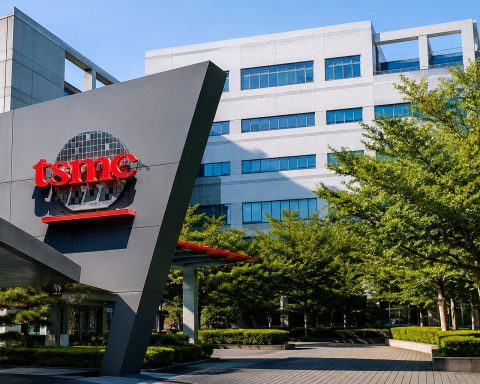
The late-week rally came after Taiwan Semiconductor Manufacturing Co, the world’s largest contract chipmaker, reported a 35% jump in fourth-quarter profit. TSMC also forecasted a nearly 30% rise in 2026 revenue in U.S. dollars and set capital spending at $52 billion to $56 billion for 2026. CEO C.C. Wei added the company was “very nervous about it.” Reuters
Chipmaking equipment stocks followed the rally, with ASML’s market cap surpassing $500 billion Thursday after TSMC’s spending plan blew past analyst forecasts. “The market has underestimated again how large is the demand for AI, and the implementation is going faster than everybody expected,” said Han Dieperink, chief investment officer at Aureus, which holds shares in ASML. The Dutch company is set to release its Q4 earnings on Jan. 28. Reuters
U.S. chip stocks gained ground Thursday as the semiconductor index climbed 1.8%. Nvidia, Broadcom, and Applied Materials all pushed higher following TSMC’s earnings release. Shares of U.S.-listed TSMC surged 4.4%. “That’s been kind of squashed this morning with the news from Taiwan Semiconductor,” said Alan Lancz, president of Alan B. Lancz & Associates, noting lingering valuation concerns in tech. Reuters
Policy news gave markets a boost. Washington and Taipei finalized a trade deal slashing broad U.S. tariffs on most Taiwanese exports from 20% down to 15%, the Commerce Department announced. The agreement also includes lower tariffs and some duty-free imports for chipmakers that ramp up U.S. production. Taiwanese firms committed $250 billion in investment, with Taiwan backing an additional $250 billion in credit. Dan Hutcheson, vice-chair at TechInsights, said the pact will likely “drive higher demand in the chipmaking supply chain.” The deal came just days after Trump slapped a 25% tariff on certain AI chips like Nvidia’s H200—but carved out exemptions for chips destined for U.S. data centers. Reuters
Taiwan presented the deal as a move to strengthen AI cooperation. Vice Premier Cheng Li-chiun expressed hope that the two sides “can become close AI strategic partners.” Taiwan’s main stock index hit a record closing high on Friday, buoyed by robust TSMC earnings and positive investor response to the tariff agreement. Reuters
The sector’s strength showed again in recent trading: the Philadelphia semiconductor index surged 2% Thursday and is now up roughly 10% year to date, according to a Reuters Trading Day column.
Investors see TSMC’s capex plans and ASML’s order forecast as a direct signal of AI expansion, with demand for accelerators—chips critical for training and running AI models—fueling both foundry production and equipment sales.
The trade-and-tariff landscape continues to inject uncertainty. The U.S. Supreme Court is set to deliver rulings on Jan. 20, with the fate of Trump’s broad global tariffs still unresolved. This keeps chip supply chains vulnerable to abrupt policy changes.
Chip stocks now face a key hurdle: will earnings and guidance along the supply chain back up the increased spending suggested by TSMC’s forecast, or push expectations back after they jumped sharply in just two sessions?
Related articles: NYSE:TSM


![US Stock Market Today 08/28/2026 [UPDATE: 00:10 EDT] [Marvell Holds 7.8% Loss Despite Raised Revenue Targets]](https://ts2.tech/wp-content/uploads/2026/08/US-market-dashboard-2026-08-28-0009-480x384.jpg "US Stock Market Today 08/28/2026 [UPDATE: 00:10 EDT] [Marvell Holds 7.8% Loss Despite Raised Revenue Targets]")



![Australia Stock Market Today 28/08/2026 [UPDATE: 13:36 AEST] [Banks and BHP Lift ASX as WAM, PEXA Sink 18%]](https://ts2.tech/wp-content/uploads/2026/08/AU-market-dashboard-2026-08-28-1334-480x384.jpg "Australia Stock Market Today 28/08/2026 [UPDATE: 13:36 AEST] [Banks and BHP Lift ASX as WAM, PEXA Sink 18%]")