Shell Plc (NYSE: SHEL) is in focus on 17 December 2025 after approving a Gulf of Mexico waterflood project, restarting efforts to sell its Schwedt refinery stake in Germany, continuing its $3.5bn buyback, expanding gas distribution in Nigeria, and appearing to step back from a key voluntary shipping decarbonisation framework.
Shell Plc (NYSE: SHEL) is navigating a packed news cycle heading into mid-December, with fresh updates spanning upstream investment, European asset reshaping, shareholder returns, and gas-market growth in Nigeria. The combined headlines offer a clear snapshot of how CEO Wael Sawan’s Shell is trying to do two things at once: extend high-margin oil and gas production where it competes best, while reducing complexity and recycling capital back to shareholders.
Below is what’s moving the story today—and what investors and energy watchers will likely track next.
SHEL stock check: where Shell shares trade today
In U.S. trading, Shell’s American depositary shares were last indicated at $70.46, down $1.77 (-2.45%) as of the latest market update available this morning (UTC timestamp).
Price moves in large integrated energy names like Shell often reflect a blend of crude and gas pricing, refining margins, and macro risk appetite—so company-specific headlines don’t always translate into immediate one-day direction. Still, today’s cluster of updates is meaningful because it touches both sides of the Shell equation: cash generation (upstream projects) and capital discipline (portfolio exits and buybacks).
Shell greenlights Kaikias waterflood to extend Gulf of Mexico production
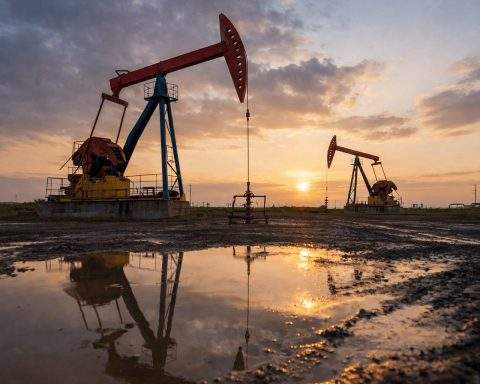
One of the most operationally significant items in the current cycle is Shell’s decision to move forward with a waterflood project at the Kaikias field in the U.S. Gulf of Mexico—an investment designed to increase recoverable volumes and keep infrastructure productive for longer.
Shell says the Kaikias waterflood is expected to boost estimated ultimately recovered resources by about 60 million barrels of oil equivalent (boe) (P50), with resources classified as 2P. The first water injection is targeted to begin in 2028, and Shell says the project is expected to extend production at the Ursa platform by “several years.” shell.com.ng
Key operational context matters here:
- Kaikias was discovered in 2014 and began production in May 2018, according to Shell. shell.com.ng
- The Kaikias production is tied back to Ursa, a deepwater host platform in the Mars Corridor. Shell notes it is the operator of Ursa with a 61.3484% interest, alongside partners bp (22.6916%) and ECP GOM III (15.96%). shell.com.ng
- Shell frames the project as consistent with its broader plan to sustain liquids output around 1.4 million boe/d through 2030. shell.com.ng
Why investors care: waterflooding is a well-known secondary recovery method, but the strategic logic is simple—higher recovery from existing assets tends to be cheaper and faster than building new greenfield megaprojects, especially when the host infrastructure already exists. For Shell, which has emphasized capital discipline and “value over volume,” extending deepwater hubs like Ursa can be a high-return lever when executed well. shell.com.ng
Germany: Shell restarts sale process for Schwedt refinery stake
On the portfolio side, Reuters reports Shell has restarted efforts to sell its 37.5% stake in Germany’s PCK Schwedt refinery, reopening a process that previously failed. The stake has become a complicated geopolitical and regulatory knot, given the refinery’s ownership structure and sanctions-related constraints. reuters.com
What’s new in the reported process:
- Shell has opened a data room for potential buyers and is said to be seeking offers by the end of January. reuters.com
- The refinery’s majority owner is Russia’s state-controlled Rosneft (54.17%). Germany stripped Rosneft of control in 2022 after Russia’s invasion of Ukraine, but the government has taken control without taking ownership, and the site remains under a renewable trusteeship that must be extended every six months. reuters.com
- Reuters also notes Germany previously reached a deal to exempt the refinery from U.S. sanctions on Rosneft, allowing operation through the end of April under the current license. reuters.com
- One party showing renewed interest is Liwathon Group, an energy trader with terminals in Estonia and the Bahamas, according to Reuters. reuters.com
- Schwedt’s refining capacity is about 230,000 barrels per day, and the site plays a major role in supplying fuels to Berlin. reuters.com
Why it matters: even if Schwedt is not a “core” Shell earnings engine, unresolved minority stakes in politically sensitive assets can consume management time and add risk. If Shell can exit at a reasonable valuation—or even exit cleanly at all—it reduces geopolitical headline exposure and simplifies the downstream footprint.
Strategy signal: Shell M&A chief left after BP deal proposal was blocked, Reuters reports
A separate storyline feeding into today’s Shell narrative is about what the company is not doing.
Reuters reports Shell’s chief of mergers, Greg Gut, left the company after CEO Wael Sawan and other top executives opposed an internal proposal to acquire rival BP earlier this year (as first reported by the Financial Times). Gut confirmed to Reuters that he left Shell in September, and Shell said it had “nothing to add” beyond its prior statement. reuters.com
The Reuters report also highlights key points that shape investor expectations:
- Shell had publicly ruled out a BP bid in June and said UK rules meant that statement would bar a bid for six months. reuters.com
- Reuters says the report suggests Shell is unlikely to pursue a BP deal once restrictions lift (noting a date of December 26 for curbs lifting). reuters.com
- Reuters quotes the framing that Sawan has repeatedly argued share buybacks are a better use of capital than a BP acquisition. reuters.com
Why this matters for SHEL stock: mega-mergers come with integration risk, political scrutiny, and potential dilution of capital discipline. Even the perception that Shell’s leadership is leaning away from “big bang” M&A can reduce uncertainty and keep attention on more tangible value drivers—execution in deepwater, LNG, trading, and disciplined shareholder distributions.
Shell buybacks: $3.5bn programme continues as shares are repurchased for cancellation
Shell’s shareholder returns remain a central plank of the current strategy, and the company’s disclosed buyback activity continues to provide steady evidence of that priority.
Shell’s investor materials describe a $3.5 billion share buyback programme announced on 30 October 2025, structured across London and Netherlands trading venues, and intended (subject to market conditions) to be completed before the company’s Q4 2025 results announcement. The programme runs up to and including 30 January 2026, and Shell states that all shares repurchased under the programme will be cancelled.
The latest “Transaction in Own Shares” disclosure for trades dated 16 December 2025 reports purchases for cancellation across two venues:
- London (XLON): 1,200,077 shares, with a volume-weighted average price of £26.3093
- Euronext Amsterdam (XAMS): 1,193,642 shares, with a volume-weighted average price of €30.0803 ml-eu.globenewswire.com
Why it matters: buybacks can support per-share metrics and signal management confidence in cash generation—especially when paired with selective investment decisions like Kaikias. They also reinforce the message from leadership (noted in the Reuters report) that Shell sees returning capital as more attractive than a large acquisition. reuters.com
Nigeria: Shell adds a new gas customer as domestic distribution grows
Away from the mega-headlines, Shell’s Nigeria-linked gas business also generated attention today, with industry reporting pointing to incremental customer growth.
Rigzone reports Shell, via Shell Nigeria Gas Ltd (SNG), has signed an agreement to supply natural gas to SG Industrial FZE, described as a steel company in the Guandong industrial zone. Shell did not disclose the contract volume or value, according to the report, and the story quotes SNG’s managing director emphasizing building a reliable and resilient distribution system.
Shell’s Nigeria website also describes SNG as a fully owned Shell company incorporated in 1998 and notes that SNG operates a growing gas transmission and distribution network of roughly 150 km, serving over 140 industrial and commercial customers (the Rigzone story cites “over 150 clients”). shell.com.ng
Why this matters: while a single industrial customer agreement may be small relative to Shell’s global cash flow, it fits a broader theme: gas monetisation and downstream gas infrastructure in growth markets, paired with global LNG scale ambitions. In today’s energy system—where power demand, industrial demand, and policy volatility remain high—gas flexibility is often treated as a strategic advantage.
Shipping emissions transparency: Shell and Chevron appear to have exited the Sea Cargo Charter
A more ESG- and shipping-focused update also hit today’s trade press: Splash247 reports that Shell and Chevron are no longer listed among reporting members of the Sea Cargo Charter, a voluntary climate-alignment and emissions-reporting framework for chartering activities. splash247.com
The Sea Cargo Charter’s own signatories page currently lists 33 charterers and operators—and the list shown does not include Shell or Chevron.
Why this matters: shipping-related Scope 3 emissions accounting and chartering transparency have become a sharper investor and regulatory focus. A retreat from a voluntary disclosure framework doesn’t automatically signal reduced decarbonisation ambition—but it does raise questions about which initiatives the largest energy traders and charterers view as most useful as mandatory rules evolve.
What to watch next for Shell (SHEL)
With multiple threads in motion, here are the near-term signposts likely to matter most:
- Schwedt sale timeline: Reuters reports Shell is seeking offers by the end of January. Any update on bidders, valuation, or German regulatory handling could shift sentiment around the downstream portfolio. reuters.com
- Execution on deepwater value: Kaikias waterflood is an execution story—engineering, timing, and reservoir performance will determine whether the projected uplift translates into real-world returns. shell.com.ng
- Buyback pace into Q4 results: The buyback programme structure runs to Jan 30, 2026, and Shell’s disclosures will continue to provide a visible cadence of capital returns. ml-eu.globenewswire.com
- Strategic discipline vs. mega-M&A: The Reuters reporting around the blocked BP proposal will likely keep questions alive about consolidation—but today’s signal is that Shell leadership remains focused on its existing strategy. reuters.com
- Gas growth in Nigeria: Watch for any confirmation of volumes, infrastructure expansions, or additional industrial offtakers tied to SNG’s distribution network. shell.com.ng
This article is for informational purposes only and is not investment advice.