SINGAPORE / RIYADH, Dec 10, 2025 — As of this week, travelers in both Asia-Pacific and the Middle East are seeing a new wave of more direct flights: a major cross-border trial of flexible “user-preferred” flight paths in the region has proven successful and is continuing, while Saudi low-cost carrier flynas has inaugurated its first direct route between Madinah and Baghdad, adding a fresh link between Saudi Arabia and Iraq.The Straits Times+ 1
Asia-Pacific locks in more direct flight paths on 70 routes
A 15‑month trial involving Singapore and five other countries has shown that allowing pilots to choose more flexible routes across borders can shave time off journeys, reduce fuel burn and cut emissions, especially when winds are favourable.The Straits Times
The Civil Aviation Authority of Singapore (CAAS) confirmed that although the trial formally ended on Oct 31, airlines will be allowed to keep filing for these optimized routes with support from the air navigation providers of all six participating states.The Straits Times+ 1
Six countries, eight airlines, 70 city-to-city links
The initiative now covers 70 city‑to‑city links across the Asia‑Pacific region and brings together:The Straits Times+ 1
- Countries: Singapore, Australia, Fiji, Indonesia, New Zealand and Papua New Guinea
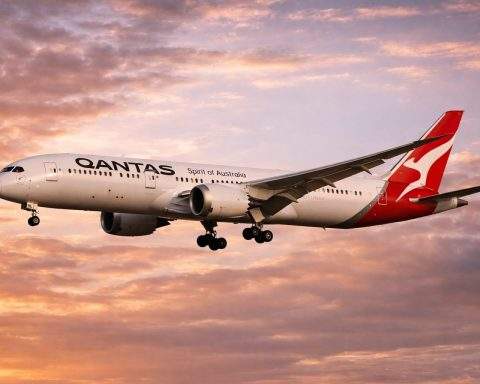
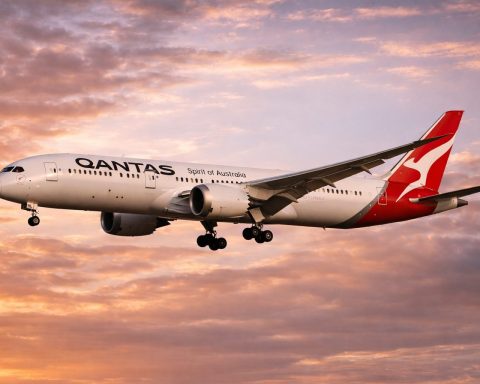
- Airlines: Singapore Airlines (SIA), Qantas, Jetstar Airways, Air New Zealand, Fiji Airways, Cathay Pacific, Garuda Indonesia and EVA Air
Initially, the project started in August 2024 with four states — Singapore, Australia, Indonesia and New Zealand — and their flag carriers, focused on 38 routes between cities in Australia/New Zealand and Singapore/Indonesia.The Straits Times+ 2CAAS – CWP+ 2
In July 2025, air navigation providers in Fiji and Papua New Guinea joined, and more airlines were added, expanding the program to the current 70 city pairs.The Straits Times+ 2Airservices+ 2
What is “user-preferred routing”?
Traditionally, aircraft follow fixed “airways” — predefined tracks in the sky that resemble invisible highways. User‑preferred routing (UPR) lets airlines propose the exact path they want to fly within a defined area, taking into account:The Straits Times+ 2Airservices+ 2
- Upper-level winds
- Weather systems and turbulence
- Restricted or congested airspace
- Airline priorities (shortest time, lowest fuel, or smoother ride)
Air traffic controllers then clear the most efficient and safe routing possible that fits with other traffic.
What’s new here is cross‑border flexibility: multiple countries are coordinating so that a pilot can stay on an optimized track all the way across their airspace, rather than snapping back to fixed routes at each boundary.
Routes where travelers will notice the difference
For now, Singapore‑linked routes using these optimized paths include flights to:The Straits Times+ 1
- Australia: Adelaide, Brisbane, Cairns, Melbourne, Sydney
- New Zealand: Christchurch, Auckland
These are operated on selected services by airlines such as Singapore Airlines and Air New Zealand , which say they intend to keep using user‑preferred routing where possible because it consistently delivers more efficient fuel burn and lower emissions.The Straits Times
Measurable savings in fuel, time and emissions
Early operational data is encouraging:
- On the Nadi–Singapore sector, using the new flexible routes has saved an estimated 300–400 kg of fuel per flight for Fiji Airways, according to CAAS.The Straits Times+ 1
- Airservices Australia reports the expanded trial across Asia-Pacific has already produced shorter travel times and reduced CO₂ emissions for participating airlines.Airservices+ 1
Beyond headline savings, pilots can also use UPR to route around known turbulence, which improves comfort and can reduce costly weather‑related disruptions.
CAAS officials say the results provide “clear and compelling” evidence that regional collaboration on air traffic management can unlock more capacity from existing airspace while benefiting airlines and passengers alike.The Straits Times+ 1
This work feeds into a broader Free Route Operations (FRTO) project, backed by ICAO and IATA, which aims to make free-route flying the default across large parts of South-east Asia and Oceania in the coming years.ICAO+ 2ICAO+ 2
flynas launches first Madinah–Baghdad service in latest Saudi–Iraq link
While Asia‑Pacific optimizes the skyways above, the Madinah–Baghdad corridor has just gained a new direct option on the map.
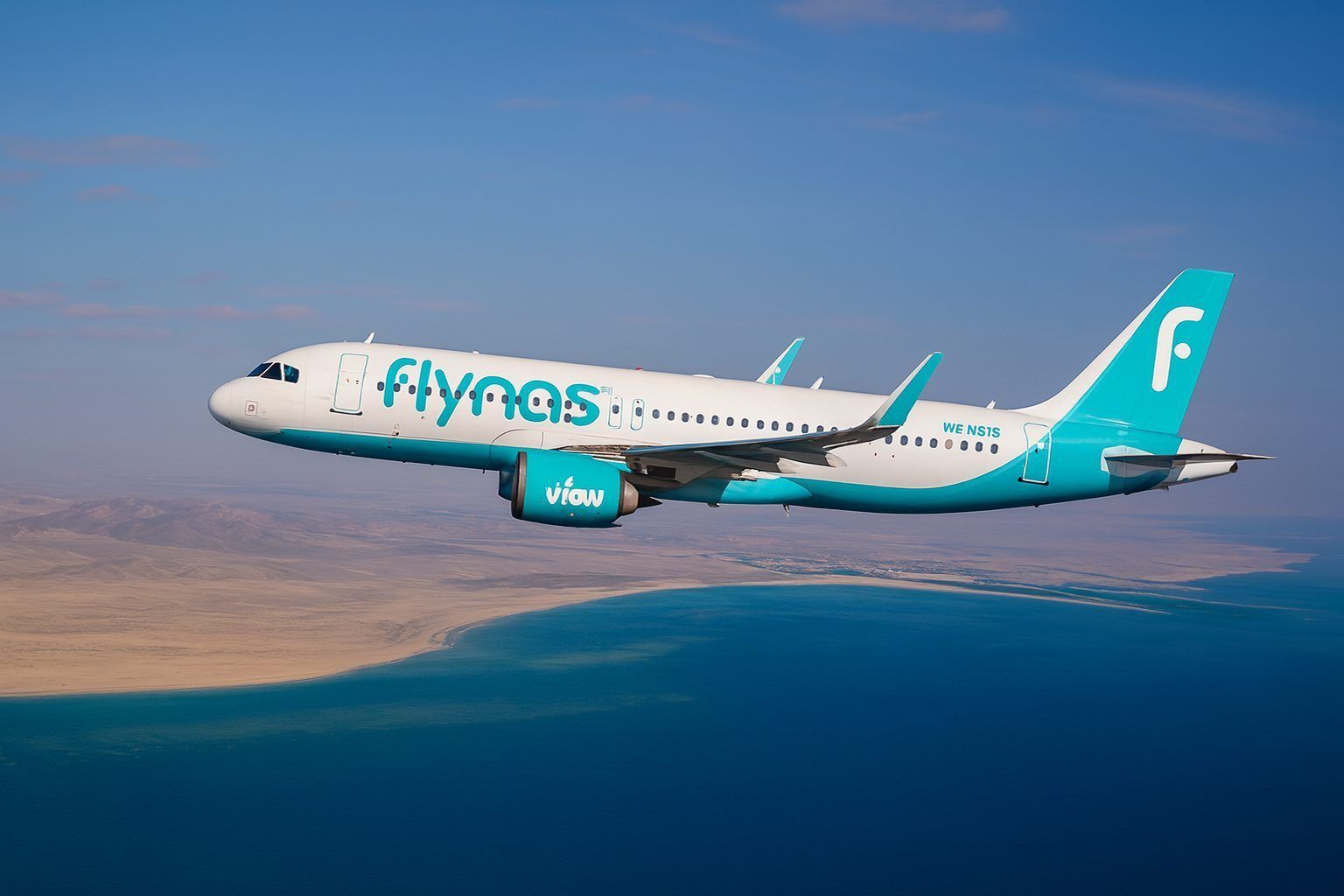
On 6 December 2025 , Saudi low‑cost carrier flynas operated its first direct flight between Prince Mohammad bin Abdulaziz International Airport in Madinah (MED) and Baghdad International Airport (BGW).flynas.com+ 1
The inaugural service was marked by a ceremony at Madinah Airport attended by representatives from Flynas and Tibah Airports Operation Company, with passengers receiving giveaways to mark the occasion.flynas.com+ 2Travel and Tour World+ 2
Twice-weekly flights, Airbus A320-family aircraft
According to the airline and industry schedule filings:flynas.com+ 2AeroRoutes+ 2
- flynas is operating two weekly flights , on Wednesdays and Saturdays
- The route is flown with Airbus A320‑family aircraft
- Timings filed for winter 2025 show early‑morning and evening departures in both directions, designed to connect with broader parts of the flynas network
The airline describes this as its first direct route between Madinah and Baghdad and an expansion of its growing Iraq network, which already includes:flynas.com+ 2Travel and Tour World+ 2
- Four weekly flights between Dammam and Najaf
- Daily flights between Jeddah and Baghdad
Other carriers, notably Iraqi Airways, already operate multiple non‑stop flights on the same city pair, so the move increases competition and capacity rather than creating the first‑ever direct connection.Google+ 1
Part of Vision 2030 and the Pilgrims Experience Program
The new route is tightly woven into Saudi Arabia’s aviation and tourism strategy:
- Under the National Civil Aviation Strategy , Saudi Arabia aims to connect the Kingdom to 250 international destinations , handle 330 million passengers , and welcome around 150 million tourists annually by 2030 .flynas.com+ 1
- flynas positions the expansion under its “ We Connect the World to the Kingdom ” initiative, framing the route as a contribution to that connectivity goal.flynas.com+ 2Travel and Tour World+ 2
- The service also supports the Pilgrims Experience Program (PEP) , designed to make travel to the Two Holy Mosques in Makkah and Madinah smoother for Hajj and Umrah pilgrims, including those coming from Iraq.flynas.com+ 1
Travel industry coverage highlights that the route is expected to serve a mix of religious pilgrims, families with cross‑border ties, and business travelers, by offering a shorter and more convenient option than itineraries requiring a connection through a third country.Travel and Tour World+ 3Travel and Tour Wo…
Fares and booking
At launch, flynas’ own booking engine has shown one‑way fares on certain December dates starting from around SAR 515 (about US$137), though prices fluctuate based on demand, date and booking class.flynas.com
Tickets are available via:flynas.com+ 1
- the airline’s website and mobile app
- its call centre
- travel agents and online travel agencies
Why both developments matter: time, money and emissions
Taken together, the Asia‑Pacific routing changes and flynas’ new route highlight two powerful trends reshaping air travel:
- Network expansion:
- In the Middle East, Saudi carriers are rapidly adding international routes and frequencies — from new Moscow links to expanded services into Iraq and beyond — in support of Vision 2030.AeroRoutes+ 3Reuters+ 3Reuters+ 3
- The new Madinah–Baghdad service fits this pattern, giving passengers another non‑stop option and building Baghdad’s role as a regional gateway as more airlines, including Aegean’s upcoming Athens–Baghdad flights, enter the market.AP News+ 2FlightsFrom+ 2
- Smarter use of airspace:
- In Asia‑Pacific, UPR and free‑route operations are about squeezing more efficiency out of existing skies rather than adding new airports or runways.ICAO+ 2ICAO+ 2
- For travelers, that can mean slightly shorter block times, fewer detours, and a smoother ride on some long‑haul routes between Singapore, Australia and New Zealand.The Straits Times+ 1
From an environmental perspective, every ton of jet fuel saved avoids roughly three tons of CO₂ emissions, so scaling up UPR and free‑route concepts across busy corridors could make a meaningful contribution to airlines’ decarbonization strategies, alongside sustainable aviation fuels and newer aircraft.aviationbenefits.org+ 2ICAO+ 2
What travelers should know right now
If you’re flying between Singapore, Australia and New Zealand
- Look out for modestly shorter flight times on some routes between Singapore and major Australian and New Zealand cities such as Melbourne, Sydney, Brisbane, Adelaide, Cairns, Christchurch and Auckland.The Straits Times+ 1
- Not every flight uses the new routings — they’re applied when traffic levels, weather and operational constraints allow. Schedules may not change dramatically, but actual time in the air can be trimmed.The Straits Times+ 2Airservices+ 2
- You won’t have to do anything special as a passenger; this is an air‑traffic management change behind the scenes.
If you’re traveling between Saudi Arabia and Iraq
- You now have an additional non‑stop option between Madinah and Baghdad , operated twice weekly by flynas, complementing existing services by Iraqi Airways and other carriers.FlightsFrom+ 3flynas.com+ 3Travel and Tour…
- For religious travelers in particular, a direct link from Madinah is likely to be attractive, especially when combined with flynas’ broader network from other Saudi cities.Travel and Tour World+ 2Travel and Tour Wo…
- As always, check visa requirements, seasonal demand (for example around Ramadan and Hajj), and fare conditions when booking.
Outlook: more direct routes ahead
The success of the user‑preferred routing trial and the rapid expansion of Middle Eastern networks suggests that more flights will either get more direct or more numerous — and often both .
- In Asia‑Pacific, industry bodies like ICAO and IATA expect free‑route operations to roll out more widely as states gain confidence from trials like the one led by Singapore and its partners.ICAO+ 2ICAO+ 2
- In the Middle East, flynas’ Madinah–Baghdad launch is one element of a broader push that includes new direct links to Moscow, more capacity into Iraq, and an evolving set of European connections into Baghdad.AeroRoutes+ 3Reuters+ 3AP News+ 3
For passengers, that translates into more choice of routes, slightly faster journeys on some long-haul sectors, and increasingly dense links to key religious and business destinations — trends that look set to continue well beyond 2025.