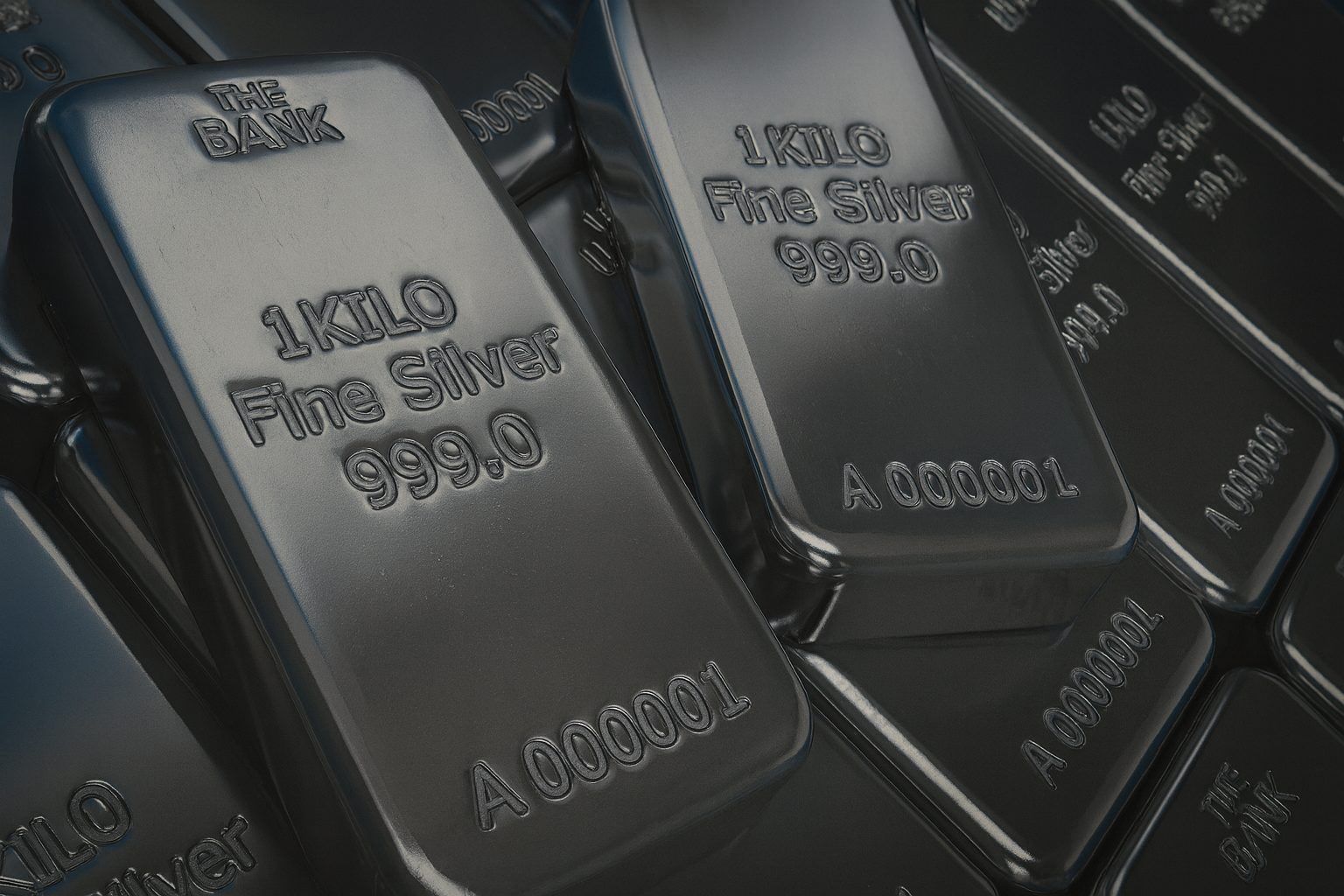
Silver prices surged above $60 and hit a record $64.64 this week, powered by Fed cuts, a global supply squeeze, and booming industrial demand. Here’s the latest news, key drivers, and a 2026 forecast outlook for silver (XAG/USD).
Published: Dec. 14, 2025
Silver just delivered one of the most dramatic weeks in modern precious-metals trading: a clean break above $60/oz, a sprint to fresh all-time highs near $64–$65, and then a sharp, late-week pullback as traders took profits into the weekend.
From December 8 to December 14, 2025, the story of silver prices has been equal parts macro (a Federal Reserve rate cut and a softer U.S. dollar), micro (tight physical availability and inventory shifts), and structural (multi‑year supply deficits colliding with relentless industrial demand—from solar and EVs to the accelerating build-out of AI infrastructure). ING Think+3Reuters+3Reuters+3
Below is a detailed recap of the week’s key developments, the most-cited forecasts and analyst views published in the Dec. 8–14 window, and the price levels investors are watching next.
Silver price recap: the key moments from Dec. 8–14, 2025
Monday, Dec. 8: Silver started the week softer as markets waited for the Fed. Spot silver was reported around $57.98/oz, after having hit $59.32 the prior Friday. Reuters
Tuesday, Dec. 9: The psychological barrier broke. Spot silver jumped above $60 and printed a new all-time high around $60.74/oz, with Reuters citing “supply constraints” and strong multi‑year demand expectations. Reuters
Wednesday, Dec. 10: After the Fed’s decision, the rally extended. Reuters reported silver hitting a new record near $61.85/oz, with prices up roughly 113% year-to-date at that point and supported by industrial demand, falling inventories, and silver’s U.S. “critical mineral” designation. Reuters
Thursday, Dec. 11: Momentum accelerated. Reuters reported spot silver up near $64.22/oz, hovering close to a record high around $64.31/oz, as the U.S. dollar weakened and investors digested the Fed’s cut and outlook. Reuters
Friday, Dec. 12: A blow-off top — and a reality check. Reuters reported silver hitting an all-time high of $64.64/oz, then falling nearly 3% to about $61.7/oz as profit-taking set in. Reuters also noted silver was up nearly 5% on the week and up about 112% in 2025. Reuters
Weekend, Dec. 13–14: With major markets closed, analysis shifted to sustainability and local-market spillovers. In India, The Economic Times reported MCX silver futures crossed Rs 2,00,000, with the March contract touching Rs 2,01,615 on Dec. 12, before a correction—underscoring how global dollar moves and domestic currency dynamics can amplify volatility. The Economic Times
For a futures-market snapshot, Investing.com’s silver futures historical data shows a sharp climb into the week’s peak and a lower close into Friday (Dec. 12). Investing.com
Why silver surged: the 4 drivers behind the $60 breakout
1) The Fed cut rates — and the U.S. dollar weakened
The week’s biggest macro catalyst was the Federal Reserve’s quarter‑point rate cut and the market’s attempt to interpret what comes next.
Reuters coverage across the week emphasized that lower rates tend to favor non‑yielding precious metals, and that the U.S. dollar’s decline helped support silver’s rally as the metal became cheaper for non‑U.S. buyers. Reuters+2Reuters+2
But the tone wasn’t purely “dovish.” Reuters also highlighted policy uncertainty and internal division, a reminder that silver can react violently if rate expectations reprice. Reuters+1
Why it matters for silver: Unlike gold, silver is both a monetary and an industrial asset. When easing financial conditions coincide with strong manufacturing and electrification demand, silver often behaves like a “high-beta” precious metal—moving more than gold in both directions. ING Think+1
2) A tightening physical market — plus tariff uncertainty moving metal around the world
A critical theme running through Dec. 8–14 commentary: the physical market looks tight, even when headline inventories appear large.
- The Financial Times pointed to an ongoing multi‑year supply deficit and described how tariff fears and policy uncertainty have helped pull inventory toward the U.S., while some regions—notably China—still show signs of shortage despite ample Comex stocks. Financial Times
- ING’s Dec. 8 analysis argued tariff uncertainty has driven metal from London to the U.S., contributing to an unusually persistent dislocation between Comex futures and London prices and elevating “lease rates” (borrowing costs). ING also noted Shanghai Futures Exchange-linked inventories fell to their lowest levels in nearly a decade, with large volumes shipped internationally in recent months. ING Think
The takeaway: Silver’s rally isn’t only a paper-market story. When participants worry about the ability to source deliverable metal—or fear import frictions—prices can overshoot quickly.
3) Industrial demand is doing the heavy lifting: solar, EVs, electronics — and now AI
Silver’s “dual-use” identity is front and center in this rally.
Reuters reported that the Silver Institute expects industrial demand to be driven higher through 2030 by sectors including solar energy, EVs and their infrastructure, and data centers and artificial intelligence. Reuters
Business Insider amplified the AI angle, arguing silver has become increasingly tied to the AI infrastructure build-out (data centers, advanced chips, and next‑gen electronics), citing commentary from strategists and industry research. Business Insider+1
Why the market cares right now: When investors believe demand is “structural” (not just cyclical), they often pay up for scarce materials—and silver’s supply pipeline is notoriously difficult to ramp quickly. ING Think+1
4) Momentum, positioning, and the “silver leads gold” narrative
Several widely shared notes this week described a market dynamic where silver is no longer simply “following gold”—it is increasingly leading.
Reuters quoted analysts noting speculative flows into silver as a “more levered play” within the precious-metals complex. Reuters
ING also pointed to renewed investor interest and a sharply lower gold/silver ratio (a sign of silver outperformance). ING Think
That’s a powerful cocktail: strong fundamentals + macro tailwinds + momentum traders.
It is also why pullbacks can be sharp.
Forecasts and analyst views published Dec. 8–14: what comes next for silver?
This week’s forecasts largely converge on one message: the long-term setup is constructive, but near-term volatility risk is rising.
Near-term: “Overheated” warnings grow louder
By Friday, as silver fell from the highs, Reuters cited a CMZ note saying the move had become “excessive,” calling for caution even while maintaining a positive longer-term view tied to industrial demand. Reuters
Technical analysts echoed that. FXStreet’s Dec. 12 coverage described silver as overbought, highlighting RSI readings and warning signals that often show up near short-term peaks. FXStreet+1
Monex (publishing an excerpt from CPM Group’s advisory) similarly said the medium-term view remains constructive, but flagged the possibility of a pause and retracement after a very fast move. Monex Precious Metals
2026 outlook: “Supported, but volatile” is the base case
Among the clearest longer-horizon calls in the Dec. 8–14 window:
- ING (Dec. 8): expects silver prices to remain well-supported, but emphasizes that volatility should persist. ING’s base case includes an average silver price around $55/oz in 2026, citing supply deficits, constrained supply growth, and a more favorable macro backdrop—while warning that a sharper global slowdown could hit the industrial side. ING Think
Other outlets framed the same outlook with different emphasis:
- The Financial Times highlighted the multi-year supply deficit and how policy/tariff uncertainty can keep markets tight and price-sensitive. Financial Times
- MarketWatch described the $60 milestone as a “make-or-break” moment for a crowded trade and stressed that silver’s history includes dramatic reversals—making risk management essential even for bulls. MarketWatch
- The Economic Times (Dec. 14) presented both bullish long-term targets and warnings that the market looks “technically overstretched,” implying corrections are plausible even within a broader uptrend. The Economic Times
Technical levels to watch after the $64.64 peak
Even long-term fundamental stories trade through short-term levels. For the week ending Dec. 14, technical coverage repeatedly highlighted a few zones:
Resistance zones
- $62.00–$62.80: a “reclaim” area after Friday’s selloff, cited as near-term resistance/support pivots by FXStreet. FXStreet+1
- $64.30–$64.65: the recent record-high region that bulls must defend on any retest. FXStreet+1
- ~$65.00 and $68.17: FXStreet pointed to $65 as a channel/psychological level and highlighted $68.17 as a higher technical target (Fibonacci extension) if momentum returns. FXStreet
Support zones
- $61.00: FXStreet flagged this as first key support after the drop. FXStreet
- $60.00–$60.09: a major psychological and technical area, also referenced as prior support. FXStreet+1
- ~$59.33: another downside reference level cited by FXStreet. FXStreet
Interpretation: The market just proved it can trade above $60. The next question is whether it can hold above $60 after the first major profit-taking wave.
The biggest risks to silver prices from here
Even the most bullish outlooks published this week carried explicit warnings. The key risks highlighted across Dec. 8–14 analysis include:
A) Macro whiplash: data that changes the Fed narrative
Reuters repeatedly pointed to upcoming U.S. data—including the non‑farm payrolls report due Dec. 16—as a near-term catalyst for rate expectations. If the dollar rebounds and real yields rise, silver can give back gains quickly. Reuters+1
B) Industrial demand slowdown or “demand destruction”
ING’s analysis warned the primary risk is industrial: a sharper global slowdown (electronics/manufacturing) could cool silver’s momentum. It also noted higher prices can eventually trigger demand destruction. ING Think
C) Policy and trade uncertainty cuts both ways
Tariff fear can tighten markets, but any policy clarity that reduces friction can also unwind squeezes. FT and ING both described how policy uncertainty has influenced physical flows and inventory positioning. Financial Times+1
D) Silver’s defining trait: volatility
ING calls silver “gold on steroids”—it tends to move more than gold in percentage terms. That’s great in a melt-up and painful in a drawdown. ING Think
What to watch next week: catalysts after Dec. 14, 2025
With the Fed decision behind the market and the weekend pause in trading, attention shifts to:
- U.S. non-farm payrolls (Dec. 16) and any data that shifts 2026 rate expectations. Reuters+1
- The U.S. dollar and yields, which have been a key tailwind for precious metals in this move. Reuters+1
- Physical tightness signals: inventory movements, regional premiums, and borrowing/lease-rate pressures described in this week’s research. ING Think+1
- Industrial headlines: especially around solar deployment, electrification, and AI/data-center buildout narratives that have increasingly become part of the “silver thesis.” Reuters+1
- Local market amplification (notably India), where currency moves and domestic demand can magnify price swings. The Economic Times
Bottom line
Between Dec. 8 and Dec. 14, 2025, silver’s breakout above $60 and sprint to $64.64 crystallized a new market reality: silver is no longer trading as a sleepy cousin of gold. It’s trading as a strategically important industrial metal and a macro-sensitive monetary asset—meaning it can rally explosively when the dollar weakens and physical tightness meets a surge in demand narratives. Reuters+3Reuters+3Financial Times+3
But the same ingredients that powered the move—momentum, positioning, and tightness—also raise the odds of sharp retracements. Most Dec. 8–14 forecasts converge on a balanced view: well-supported longer-term fundamentals, with elevated near-term volatility. Monex Precious Metals+3Reuters+3ING Think+…
Note: This article is for informational purposes and does not constitute investment advice.