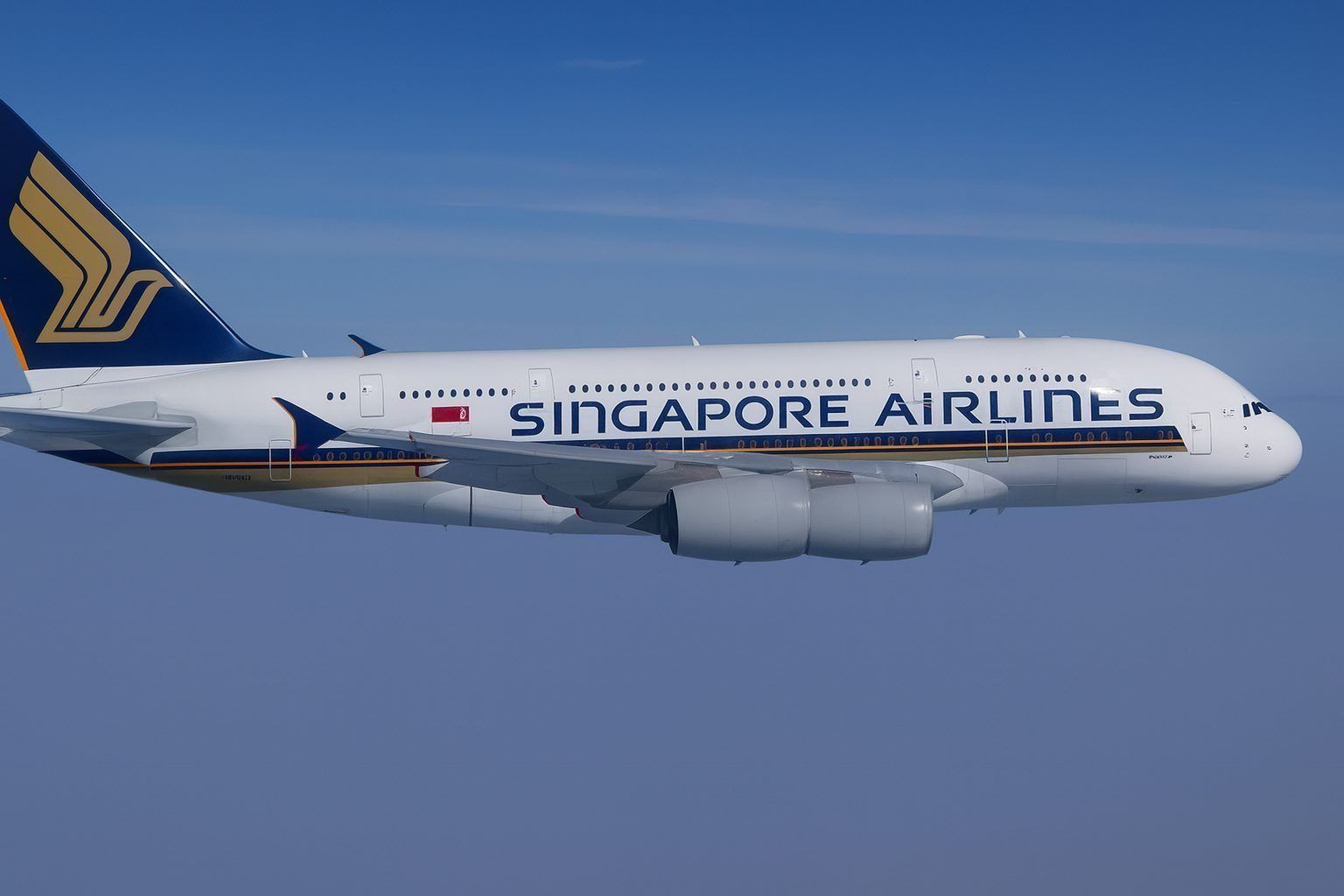
Singapore, 5 December 2025 – Singapore Airlines Limited (SIA, SGX:C6L) enters the final month of 2025 as a paradox: operationally strong, still a global premium aviation icon, yet wrestling with sharply weaker profits and investor anxiety over its loss‑making Air India stake.
As the stock trades ex‑dividend today, investors are weighing an attractive cash payout profile against a messy earnings picture and cautious analyst forecasts.
Singapore Airlines share price snapshot on 5 December 2025
As of trading on 5 December 2025, Singapore Airlines shares are changing hands at around S$6.34 on the Singapore Exchange, down from a previous close of S$6.44.Investing.com
Key price and valuation markers:
- Day range: S$6.32 – S$6.39
- 52‑week range: S$5.90 – S$7.63, leaving the stock roughly 17% below its 52‑week high and about 7–8% above its low.Investing.com
- Market capitalisation: about S$20.3 billion.StockAnalysis
- Trailing P/E ratio: around 8–9 times earnings, based on recent data providers.StockAnalysis+1
- Price‑to‑book ratio: with net asset value per share of S$4.97 as at 30 September 2025, the stock trades at roughly 1.3× book value.Singapore Airlines+1
On some platforms, Singapore Airlines appears among the top trending Singapore stocks, highlighting strong retail interest despite recent volatility.Yahoo Finance
Longer term, an investor who bought SIA shares about five years ago would still be sitting on a gain of around 125%, according to analysis of total returns – though the latest quarter has been notably weaker for shareholders.Yahoo Finance
Half‑year 2025/26 results: strong demand, weak bottom line
The tension in the SIA investment story comes through clearly in its latest half‑year results for 1H FY2025/26 (six months to 30 September 2025), released on 13 November.Singapore Airlines+1
Headline numbers:
- Revenue: S$9.68 billion, up about 1.9% from S$9.50 billion a year earlier – a new first‑half record.Singapore Airlines
- Operating profit: S$802.9 million, slightly higher (about 0.9%) year‑on‑year, underscoring resilient core operations.Singapore Airlines
- Net profit attributable to shareholders: S$238.5 million, down a steep 68% from S$742.0 million a year earlier.Singapore Airlines+1
- Basic earnings per share: 7.9 Singapore cents vs 22.9 cents previously.Singapore Airlines
The main culprit lies below the operating line. Non‑operating items swung from a gain of S$135.4 million to a loss of S$376.9 million, largely reflecting the airline’s share of losses from associated companies – most prominently Air India – and lower interest income as cash balances normalised and interest rates came down.Singapore Airlines+2The Times of India+2
Operationally, the group’s airlines carried 20.8 million passengers in the first half, up about 8% year‑on‑year, with systemwide revenue passenger kilometres (RPKs) up 4.6% and available seat kilometres (ASKs) up 3.0%.Singapore Airlines
Load factors remain very high:
- Singapore Airlines: 86.7% passenger load factor (up 1 percentage point vs last year).
- Scoot: 91.5% passenger load factor (up nearly 3 percentage points).Singapore Airlines
The flip side is that passenger yields are now falling as more airlines add capacity:
- Passenger yields at SIA declined modestly, while Scoot’s yields fell more noticeably, highlighting intensified competition in price‑sensitive leisure markets.Singapore Airlines+1
Cargo volumes are improving but yields remain under pressure as airlines redeploy capacity across trade lanes, another drag on margins.Singapore Airlines+1
Air India stake: strategic asset, near‑term earnings drag
The single biggest overhang on Singapore Airlines’ current profit profile is its 25.1% stake in Air India, held alongside India’s Tata Group.The Times of India+1
Key facts from recent reporting:
- Air India Group posted a FY2025 loss of about ₹9,568 crore, according to Indian media reports.The Times of India+1
- SIA began equity‑accounting Air India’s results from December 2024, after the full integration of Vistara into the Tata‑controlled carrier.The Times of India+1
- The group’s share of results from associated companies was roughly S$417 million lower year‑on‑year in the latest half‑year, “notably reflecting Air India’s losses,” according to SIA’s statements.The Times of India+1
- Air India is reported to be seeking at least ₹10,000 crore (about US$1.1 billion) in additional financial support from its shareholders.The Times of India+2Travel And Tour World+…
SIA describes the Air India investment as a pillar of its multi‑hub strategy, giving it exposure to one of the world’s largest and fastest‑growing aviation markets and unlocking new traffic flows through India’s domestic and international networks.The Times of India+1
For shareholders, however, the near‑term reality is that Air India’s heavy losses have wiped hundreds of millions of dollars off group net profit in the space of two reporting periods and could continue to do so until the turnaround gathers pace.Travel And Tour World+3The Times of India+…
Ex‑dividend today: interim and special dividend boost
Against this backdrop, SIA is leaning heavily into a dividend‑and‑capital‑return narrative.
Interim and special dividend in 1H FY2025/26
For the current half‑year, the Board has declared:
- Interim dividend: S$0.05 per share
- Interim special dividend: S$0.03 per share
Both are payable on 23 December 2025 to shareholders on record as of 8 December, with ex‑dividend date on 5 December 2025 – today.Digrin+3Singapore Airlines+3Singapore Airl…
In total, the first‑half dividend amounts to S$0.08 per share.
Using today’s share price of roughly S$6.34, this single half‑year payout equates to about 1.3% of the share price. If investors include the S$0.30 final dividend paid in August 2025 and the S$0.10 interim in late 2024, the trailing 12‑month dividend adds up to about S$0.40 per share, implying a trailing cash yield of roughly 6–7% at current prices.Digrin+2StocksGuide+2
Some dividend trackers put the current dividend yield near 8%, though methodologies differ and often incorporate special payouts that may not recur.StocksGuide
Three‑year special dividend plan
Crucially, SIA has announced a three‑year special dividend programme:
- It plans to return about S$0.10 per share in special dividends each year for FY2025/26, FY2026/27 and FY2027/28, amounting to roughly S$0.9 billion in total capital returns, subject to conditions and shareholder approval for later tranches.Singapore Airlines+2Singapore Airlines+2
The current 3‑cent special dividend is the first instalment under this plan; a second 7‑cent special dividend for FY2025/26 will depend on approval at the 2026 AGM.Singapore Airlines+1
This multi‑year commitment helps anchor the stock for income‑oriented investors, but it also implicitly raises the stakes: any future cut or suspension – particularly if linked to Air India capital support – could trigger an outsized market reaction.
Balance sheet and liquidity: solid but not bulletproof
Despite the hit to net profit, SIA’s balance sheet remains a relative strength:
- Debt‑to‑equity ratio: 0.70× as at 30 September 2025, improved from 0.82× at the end of March.Singapore Airlines+1
- Total assets: S$40.66 billion; equity attributable to shareholders: S$15.53 billion.Singapore Airlines+1
- Total debt: S$10.87 billion.Singapore Airlines+1
- Cash and bank balances: S$6.45 billion, plus about S$2.06 billion of longer‑dated fixed deposits and roughly S$3.3 billion in undrawn committed credit lines.Singapore Airlines+1
Convertible bonds due in December 2025 have already been largely converted, reducing outstanding debt and slightly diluting earnings per share.TechStock²
Analysts generally see this as comfortable liquidity for a capital‑intensive airline, giving SIA room to keep renewing its fleet and paying dividends, provided Air India losses and global shocks remain manageable.TechStock²+1
Fleet, network and strategic partnerships
Singapore Airlines continues to invest heavily in its network and fleet, even as profits wobble.
Recent disclosures and analysis indicate that, as of late 2025, the group operates more than 200 aircraft, including a large narrow‑body and wide‑body fleet at SIA and a growing low‑cost fleet at Scoot, with over 60 aircraft on order for future growth and renewal.Singapore Airlines+2The Smart Investor+2
SIA has:
- Deepened partnerships with Garuda Indonesia and Vietnam Airlines, adding new codeshare destinations and reciprocal lounge access to strengthen its regional ecosystem.Singapore Airlines+1
- Benefited from the closure of Jetstar Asia in July 2025, which has allowed Scoot to ramp up capacity into several Southeast Asian cities and capture displaced traffic.The Smart Investor+1
- Continued to highlight sustainability initiatives, including sustainable aviation fuel (SAF) purchases from partners such as Neste and World Energy.The Smart Investor+1
On the product side, a new in‑flight safety video created with the Singapore Tourism Board showcases Singapore landmarks like Gardens by the Bay and Sentosa, and is being rolled out across the fleet, reinforcing SIA’s brand positioning.Singapore Airlines
Independent reviews continue to rate SIA highly: recent long‑haul business‑class reviews score the airline around 9/10, underlining its reputation as one of the world’s premier carriers.Airline Ratings+2Fast Company+2
Travel demand tailwinds: Asia‑Pacific still the growth engine
The macro backdrop remains broadly supportive for premium airlines anchored in Asia:
- The International Air Transport Association (IATA) projects global airline net profit of around US$36 billion in 2025, with Asia‑Pacific the fastest‑growing region in passenger demand.TechStock²
- Passenger traffic in Asia‑Pacific is expected to grow near 9% in 2025, contributing more than half of global RPK growth.TechStock²
- Tourism media highlight Tokyo, Singapore and Seoul as leading a global tourism surge in 2025, with airlines such as Singapore Airlines and Japan Airlines benefiting from record passenger flows.Travel And Tour World
These trends are visible in SIA’s own numbers: group passenger traffic rose 4.6% in the first half, with load factors at or near record highs across both SIA and Scoot.Singapore Airlines+1
However, yields are softening as capacity returns and competition intensifies, while cargo remains exposed to trade tensions and tariffs – factors that both SIA and IATA flag as key risks.Singapore Airlines+2The Economic Times+2
Analyst forecasts and fair‑value models
Revenue and earnings expectations
Following the November earnings release, several research platforms and analyst aggregators updated their models:
- Around 14 analysts now expect Singapore Airlines to generate roughly S$19.4 billion in revenue in 2026, broadly in line with recent annual levels, according to Simply Wall St’s summary of consensus forecasts.Yahoo Finance+1
- Earnings expectations, however, have been markedly revised down after SIA missed EPS estimates by a wide margin in the latest quarter, reflecting Air India losses and normalising yields.Yahoo Finance+2Yahoo Finance+2
Price targets and ratings
Across major platforms, the message is cautious:
- GrowBeansprout / SGX consensus: average 12‑month target of about S$5.997, implying around 5–8% downside from current levels, depending on reference price.Beansprout+1
- Yahoo Finance / other aggregators: one‑year target estimates cluster around S$6.17, again slightly below the current price.Yahoo Finance+1
- ValueInvesting.io: a Peter Lynch‑style model puts “fair value” at roughly S$4.44, suggesting the stock could be trading about 30% above that intrinsic value estimate.Value Investing+1
Local broker research, as summarised by Beansprout and Ts2.Tech, shows most houses sitting on Hold or Neutral ratings, with price targets generally in the S$6.00–S$6.85 range.Beansprout+2The Business Times+2
Earlier in 2025, SIA shares dropped more than 7% in a single session after a sharp Q1 profit fall prompted analyst downgrades and target cuts, highlighting how quickly sentiment can swing when earnings disappoint.The Business Times+1
Dividend stock or value trap? Bull and bear cases
Given this mix of strengths and vulnerabilities, the SIA investment thesis is finely balanced.
Bullish arguments
Supporters of the stock typically point to:
- World‑class brand and service: SIA remains one of the world’s most awarded airlines and a premium gateway into Asia‑Pacific travel, with consistently strong customer ratings.Singapore Airlines+2Fast Company+2
- Solid balance sheet and liquidity: Moderate leverage, sizable cash buffers and committed credit lines give management flexibility to ride out downturns and keep investing.Singapore Airlines+1
- Attractive dividend profile: Combining ordinary dividends with the three‑year special dividend plan, total shareholder yield could stay in the mid‑ to high‑single digits if cash flows hold up.Singapore Airlines+2StocksGuide+2
- Structural demand in Asia‑Pacific: SIA is well positioned at Changi Airport to capture fast‑growing regional travel flows, especially from China, India and Southeast Asia.Travel And Tour World+1
- Scoot’s growing role: The low‑cost arm is expanding into routes vacated by Jetstar Asia and other rivals, deepening SIA’s reach into the price‑sensitive leisure segment.The Smart Investor+1
Bearish arguments
Sceptics are more focused on:
- Air India overhang: Large, ongoing losses at Air India have already slashed SIA’s reported profits and may require continued capital support for years, tying up cash and creating downside risk.Travel And Tour World+3The Times of India+…
- Normalising yields: As capacity returns globally, the extraordinary post‑pandemic fares are fading; both SIA and Scoot are seeing yields come down even with excellent load factors.Singapore Airlines+2TechStock²+2
- Cargo and tariff uncertainty: Trade tensions and tariffs threaten air freight volumes and pricing, an important earnings lever for SIA’s cargo operations.The Economic Times+1
- Earnings volatility vs income‑stock image: The combination of volatile profits and a high‑profile dividend promise makes the stock vulnerable if management ever needs to pause or cut payouts.TechStock²+2StocksGuide+2
- Valuation vs downside models: While the stock looks cheaper than many global peers on simple P/E and P/B metrics, more conservative fair‑value models flag potential 30% downside if markets re‑rate SIA towards book value amid persistent Air India losses.TechStock²+3Value Investing+3StockAnalysis…
Key things to watch after 5 December 2025
Heading into 2026, several catalysts are likely to shape Singapore Airlines’ share price:
- Further updates on Air India – including quarterly loss trends, any additional capital injections and the pace of integration and restructuring.TechStock²+3The Times of India+3Travel And…
- Passenger yields and load factors – especially if global growth slows or new geopolitical shocks disrupt premium long‑haul demand.Singapore Airlines+1
- Cargo performance – whether improving volumes can offset weak yields in a world of shifting trade routes and tariffs.The Economic Times+1
- Dividend decisions beyond the announced three‑year plan – markets will scrutinise how closely dividends track underlying free cash flow in a more volatile earnings environment.Singapore Airlines+1
- Fleet and technology developments – including the impact of Boeing 777‑9 delays to 2027 and regional “future of flight” technology initiatives in which SIA is participating alongside other Asian carriers.TechStock²+1
Bottom line: a high‑quality airline with a complicated earnings story
As of 5 December 2025, Singapore Airlines stock sits at the intersection of premium airline quality and messy reported earnings.
Operational performance, brand strength and balance sheet metrics remain robust, and the multi‑year special dividend plan gives the stock clear income appeal. At the same time, Air India’s losses, normalising yields and macro headwinds have turned SIA from a post‑pandemic recovery play into a more mature, yield‑anchored but risk‑aware investment case.
For investors, the trade‑off is stark: a globally admired flag carrier with solid finances and generous dividends, but with significant exposure to one very troubled associate and a cyclical industry.