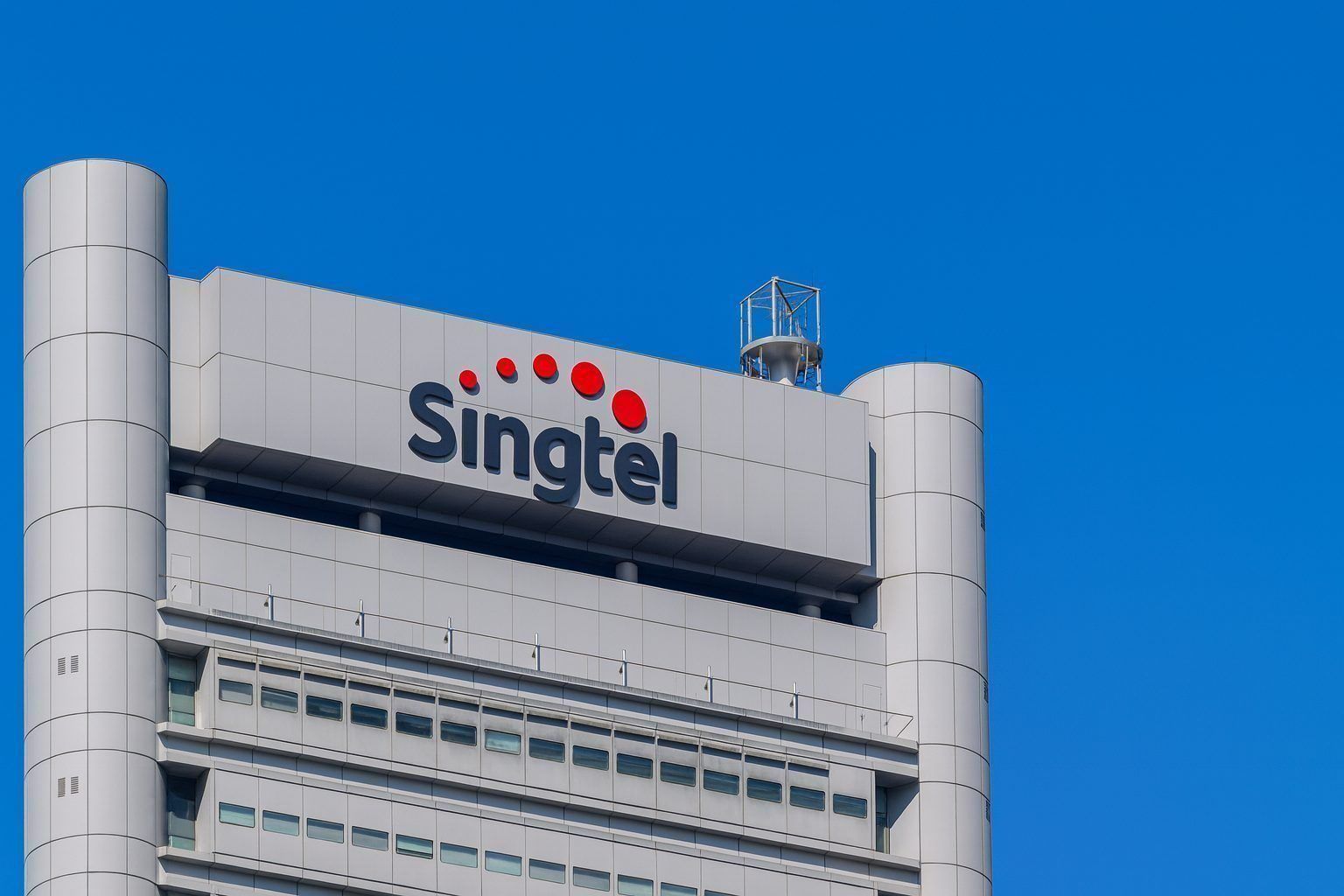
Singapore Telecommunications Limited (Singtel) stock is ending 2025 with a rare mix of momentum and messy real‑world headlines: a fresh regulatory penalty in Singapore, ongoing operational scrutiny around Optus in Australia, and a market narrative that increasingly treats Singtel as a telecom plus digital infrastructure platform. Here’s what investors are watching as of 13 December 2025 (with the most recent market close on Friday, 12 December 2025).
Singtel share price today: where SGX:Z74 stands heading into mid‑December
With Singapore markets closed on Saturday, the latest reference point is Friday’s close. Singtel (SGX:Z74) last closed at S$4.66 on 12 Dec 2025, up 2.19% on the day. The stock is trading not far below its 52‑week high of S$4.92, after a strong year in which it has delivered roughly +52% over the past 12 months (based on the same data snapshot).
DBS flagged the bigger picture behind that climb: Singtel’s share price is up about ~45% in 2025, helped by a rise in the market value of associates and a shrinking “holding company discount” (the market’s tendency to value conglomerate stakes at a discount). DBS Bank
The headline risk this week: IMDA fines Singtel S$1 million over Oct 2024 outage
The most immediate Singapore‑based catalyst (and reputational risk) is regulatory.
On 11 December 2025, Singapore’s Infocomm Media Development Authority (IMDA) announced a S$1 million financial penalty on Singtel tied to a fixed voice disruption on 8 October 2024. IMDA said the incident affected about 500,000 residential and corporate users for more than four hours, disrupting access to hotlines for some government agencies, healthcare organisations, banks and companies, and emergency call services.
What IMDA said caused the outage
IMDA’s investigation described a technical failure chain that will sound painfully familiar to anyone who has ever watched “shared infrastructure” become “shared blast radius”:
- Singtel hosted two virtualised firewalls on the same hardware—one supporting the fixed‑line voice system and another supporting a monitoring system for home broadband routers and Pay TV set‑top boxes.
- When the monitoring system faced higher traffic intensity, shared memory resources were overwhelmed, causing the voice system’s firewall to malfunction intermittently.
- An automatic failover should have redirected traffic to an unaffected site, but the failover was not seamless—leading to intermittent call drops until Singtel fully shifted traffic away from the affected system.
IMDA concluded the incident was within Singtel’s control to prevent and said it was not due to a cyber‑attack. The regulator also stated Singtel has since implemented remediation, including separating hardware for the two systems and introducing an intervention mechanism to prevent traffic “ping‑ponging” during failovers. Infocomm Media Development Authority+1
Immediate market context
The Business Times reported Singtel shares ended S$4.56 on 11 Dec 2025 (down 0.4%)—noting this was before the fine was announced. By Friday’s close, the stock had rebounded to S$4.66.
The fine is financially manageable for a company of Singtel’s size; the bigger investor question is whether this marks “one‑off accountability” or signals tighter regulatory expectations around service resilience—especially as Singapore pushes deeper into high‑availability digital infrastructure. Infocomm Media Development Authority
Australia remains a second front: Optus outages and operational scrutiny
While Singapore regulation matters, the market also prices Singtel through the lens of its wholly owned Australian unit, Optus—which has had a rough run of outage‑related attention in 2025.
Reuters reported that Optus restored National Broadband Network (nbn) services across Brisbane and parts of Queensland after an outage that affected about 95,000 customers, attributed to a network server failure at a Brisbane exchange. Optus said emergency “000” call services and its mobile network were not impacted, though some voice‑over‑internet calls could have been disrupted for customers on older equipment without mobile backup. Reuters
That Reuters report also placed the incident in a sensitive backdrop: it came after earlier emergency call outages that intensified scrutiny of Optus. For Singtel shareholders, Optus is both an earnings lever and a persistent operational/regulatory risk multiplier.
The bull thesis in one sentence: Singtel is being re‑priced from “slow telco” to “telco + digital infrastructure + regional associates”
Singtel’s 2025 rally didn’t happen in a vacuum. It has been reinforced by a combination of:
- improving operating momentum at Optus and the Singapore core,
- rising contributions and/or valuations from regional associates (notably Bharti Airtel),
- and a capital management story built around monetisation and buybacks.
The most important fundamental update: Singtel lifted FY2026 outlook after strong first‑half results
In its half‑year reporting (six months ended 30 September 2025), Reuters reported Singtel posted:
- Underlying net profit of S$1.35 billion, up 14% year‑on‑year, supported by Optus and regional associates;
- 27% rise in Optus operating earnings (per the same report);
- a raised outlook for FY2026 operating company EBIT growth (excluding associates) to between high single digits and low double digits;
- and an expectation that Nxera (Singtel’s digital infrastructure arm) could deliver >20% annual EBITDA growth over the next four years, supported by new data centre capacity.
Singtel also declared an interim dividend of 8.2 Singapore cents per share in that results cycle.
Data centres and Nxera: the growth narrative investors keep paying attention to
If you’re trying to understand why a mature telecom can rerate meaningfully, the market’s answer in 2025 has been: digital infrastructure.
DBS expects Singtel’s core business to rerate from roughly 5x 12‑month forward EV/EBITDA toward the regional average of 7x, with two operational catalysts specifically highlighted:
- doubling of data centre capacity in early 2026, and
- stabilisation of Singapore mobile ARPU (average revenue per user) in mid‑2026.
That’s the optimistic arc: stable telco cash flows funding a scaling infrastructure platform, plus associates that can throw off upside when they perform.
The big swing factor: the potential ST Telemedia Global Data Centres transaction
In November, Reuters reported that KKR and Singtel were in advanced talks to buy more than 80% of ST Telemedia Global Data Centres (STT GDC) for over S$5 billion, which would result in full ownership. Reuters also noted Singtel said in an exchange filing that there was no certainty talks would lead to a binding agreement and advised caution.
DBS’s take was nuanced: a potential stake acquisition in STT GDC “at a fair value” could be neutral near term but positive medium term, consistent with the idea that digital infrastructure scale is what earns Singtel a higher multiple. DBS Bank
Capital management: buybacks are active, and they matter for the “discount” debate
Singtel has been steadily using buybacks as part of shareholder returns and capital structure management, and the company’s SGX filings show meaningful day‑to‑day activity.
A 1 December 2025 SGX announcement shows Singtel repurchased 2.5 million shares at prices between S$4.70 and S$4.73, for a total consideration of about S$11.82 million (including costs). The filing also shows cumulative purchases under the mandate at that point of 21.216 million shares.
Meanwhile, The Business Times noted that across a late‑November stretch, Singtel led buyback consideration, purchasing 10,870,400 shares at an average price of S$4.75, lifting cumulative buybacks under the current mandate to roughly 16.816 million shares (about 0.1% of outstanding shares excluding treasury shares, per that report).
Why the market cares: buybacks (and asset monetisation) are direct tools to narrow the holding company discount—especially when investors believe underlying assets are being undervalued inside a conglomerate structure.
Asset recycling: the Airtel stake sale that helped power the rally
One of 2025’s clearest “value realisation” moments came via India.
Reuters reported that on 7 November 2025, Singtel sold 51 million shares (about 0.8%) of Bharti Airtel, raising approximately S$1.5 billion in gross proceeds as part of its S$9 billion asset recycling program. Reuters added that Singtel’s stake in Airtel had reduced to 27.5%, and that the transaction was expected to generate a gain of S$1.1 billion.
Strategically, this matters because it illustrates Singtel’s playbook: recycle value from mature/financial holdings and redeploy into areas like data centres and digital infrastructure—while still benefiting from remaining associate exposure.
Debt and funding: S$200 million notes due 2035 tied to Optus financing
Another recent corporate development sits in the “boring but important” category: funding flexibility.
Singtel disclosed the pricing of S$200 million fixed rate notes due 2035, with proceeds swapped into Australian dollars and applied by Optus toward ordinary course business funding. The attached announcement document states the notes mature on 3 December 2035 and frames the issuance as part of Singtel’s long‑term financing strategy to extend the group’s debt maturity profile.
In isolation, a S$200 million deal won’t move the equity story much. But together with buybacks, it reinforces the “active capital management” identity that Singtel has been pitching to markets in 2025. Singtel Digital+1
Analyst forecasts as of 13 Dec 2025: where targets cluster—and where they don’t
Analyst views around Singtel are notably dispersed, which is usually a clue that the market is debating the right valuation framework (telco utility vs. asset‑backed platform vs. infrastructure growth hybrid).
Consensus and “street” targets
- SGinvestors summarised that as of 13 Dec 2025, recent target prices (from research dated within the past three months on its compilation) ranged from S$4.86 to S$5.75, with a median target of S$5.14 and an average target of S$5.223 (implying low‑double‑digit upside from S$4.66).
- Growbeansprout cited a consensus share price target of S$5.21 as of 13 Dec 2025 (sourcing SGX), similarly implying roughly ~12% upside from S$4.66.
- DBS (12 Dec 2025) reiterated BUY and raised its target price to S$5.71, explicitly anchoring its thesis on a potential rerating supported by data centre scaling and ARPU stabilisation.
The “high conviction bullish” end
New Street Research lists Singtel as Buy with a model value/target of S$6.2, updated in mid‑November, with research explicitly pointing to Airtel‑related upside as part of the driver set.
The “valuation caution” end
Morningstar’s update (from November) highlighted that its fair value estimate increased to S$4.36, but it still characterised the stock as not a clear bargain at the time, reflecting “high” uncertainty in its framework. Morningstar
Put simply: the market is not arguing about whether Singtel is improving—it’s arguing about how much of the “new Singtel” should be capitalised into today’s price.
What’s the key debate now: rerating fuel vs. reliability risk
Singtel’s December setup is basically a tug‑of‑war between two forces:
1) Rerating fuel
- earnings momentum and raised guidance at the operating company level,
- Nxera/data centre growth expectations,
- value realisation through asset recycling and buybacks.
2) Reliability and regulatory risk
- the IMDA penalty and its “within your control” conclusion, Infocomm Media Development Authority
- recurring Optus outage headlines and the heightened sensitivity around network resilience in Australia.
The Edge Singapore, summarising Citi’s view, framed the recent pullback from a S$4.90 peak as improving value, while suggesting concerns around potential Australia‑related fines could be partially mitigated by capital management and liquidity‑driven inflows.
What to watch next: the near‑term catalysts into early 2026
Here are the practical signposts that tend to matter most for a stock in Singtel’s current phase:
- Next earnings window: market calendars point to an earnings date in mid‑February 2026 (data snapshot lists 16 Feb 2026).
- Any update on STT GDC: confirmation, abandonment, or repricing of the potential transaction would likely move sentiment around the Nxera infrastructure thesis.
- Network reliability narrative: after IMDA’s fine and continued Optus incidents, management commentary and operational KPIs around resilience will matter more than usual for valuation confidence.
- Capital management pace: further buyback disclosures and asset recycling updates can affect how quickly investors believe the holding company discount can compress.
Bottom line on 13 Dec 2025
Singtel stock is trading at a level that reflects real optimism: improving earnings momentum, a credible digital infrastructure growth engine, and active capital management.
But December’s news flow is also a reminder that “essential connectivity” businesses are judged harshly when reliability fails—especially when disruption touches emergency services. The IMDA penalty is a headline today not because S$1 million is existential, but because it puts resilience and governance directly into the valuation conversation. Infocomm Media Development Authority+1