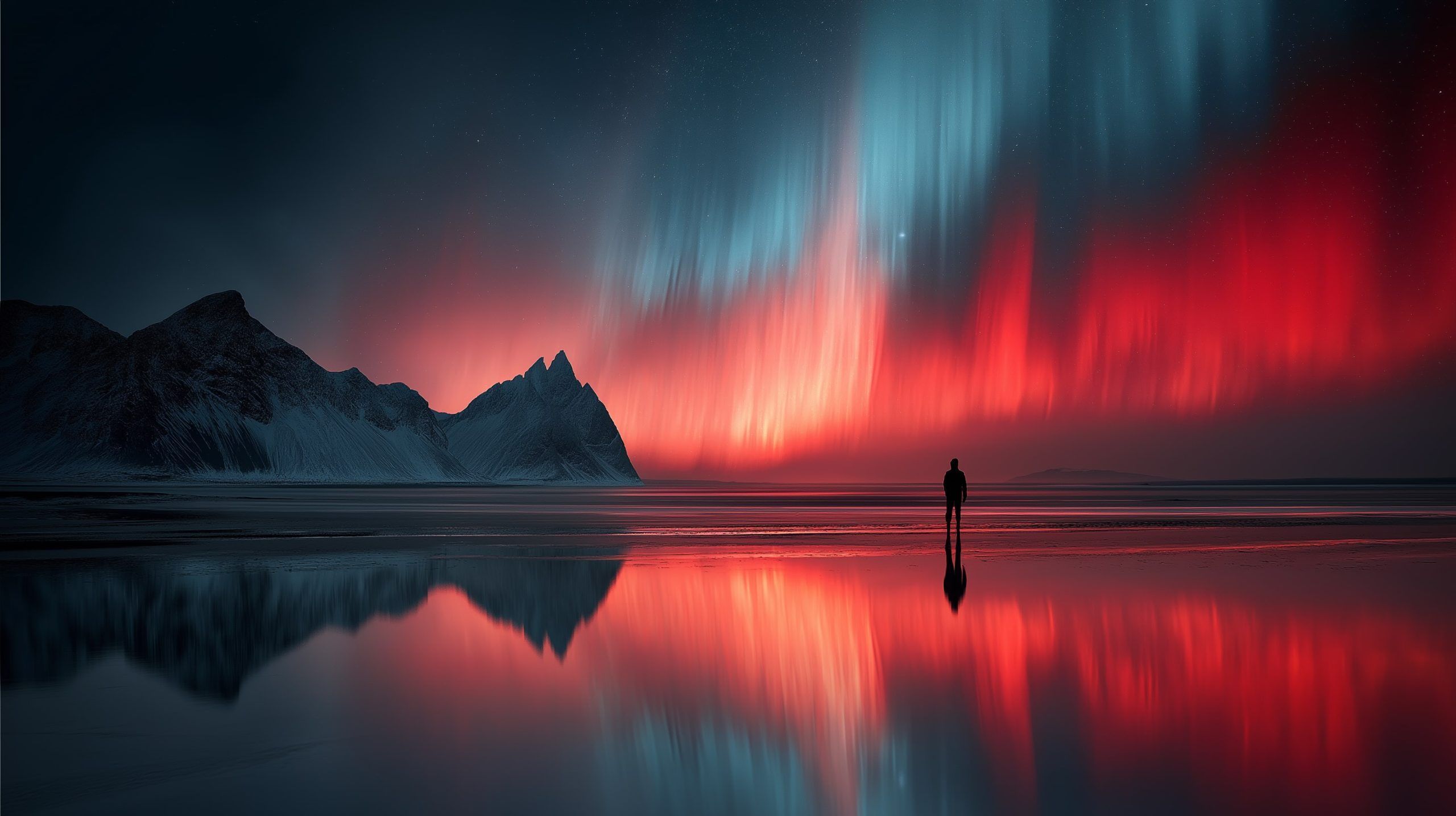

- A large negative-polarity coronal-hole high-speed stream (CH HSS) has been rotating into Earth’s line of sight since 23 June, prompting NOAA SWPC to issue a G2 geomagnetic-storm outlook for 25–26 June UTC.
- Solar wind gusts exceeding 600 km/s are expected, with the planetary K-index (Kp) peaking near 5–6.
- Solar Cycle 25 is nearing its predicted maximum in mid-2025, following multiple strong flares including an X-class event captured by NASA’s Solar Dynamics Observatory on 17 June.
- Forbes identifies a 15-state ‘Aurora Alert’ zone spanning Alaska, Washington, Oregon, Minnesota, North Dakota, Montana, Maine, Michigan, Wisconsin, Vermont, New Hampshire, New York, Idaho, South Dakota, and Pennsylvania (marginal).
- Best viewing occurs about one hour after local sunset until nautical dawn, with a local-midnight sweet spot when the auroral oval centers over North America.
- To increase chances, go dark at least 20 miles from city lights and use a wide-angle lens (14–24 mm) at f/2–f/2.8 with 3–10 second RAW exposures at ISO 1600–3200.
- Auroras display green at about 60 miles altitude, red above 150 miles, and blue-purple fringes from nitrogen.
- Tonight’s G2 storm could induce geomagnetically induced currents in high-latitude power-grid transformers and degrade HF radio, though widespread blackouts are unlikely.
- NASA’s VIIRS Day/Night-Band data now feeds SWPC’s aurora models, improving short-term forecasts by up to 30 percent.
- Real-time tracking resources include NOAA’s Aurora 30-minute forecast, SWPC Alerts via e-mail/SMS, and the crowd-sourced AuroraWatch app.
There is a strong chance that tonight’s sky will erupt in ribbons of green, purple and crimson light across much of the northern United States. A moderate (G2‑level) geomagnetic‑storm watch from NOAA aligns with unusually high solar‑wind speeds, setting the stage for auroras that could spill far south of their usual haunts. Below is a deep‑dive into the forecast, the science and the practical steps you can take to see and photograph the show—plus what it means for the power grid, satellites and the rest of 2025’s solar‑maximum fireworks.
Why the Northern Lights Are Back Tonight
A large, negative‑polarity coronal‑hole high‑speed stream (CH HSS) on the Sun has been rotating into Earth’s line of sight since 23 June, prompting NOAA’s Space Weather Prediction Center (SWPC) to issue a G2 geomagnetic‑storm outlook for 25–26 June UTC swpc.noaa.gov.
Such streams propel solar‑wind gusts well above 600 km s‑1, compressing Earth’s magnetosphere and super‑charging the auroral oval. SWPC’s three‑day forecast shows the planetary K‑index (Kp) peaking near 5–6—high enough to drive auroras hundreds of miles southwards space.com.
Solar Cycle 25 is ramping toward its predicted maximum in mid‑2025, and the Sun has already fired multiple strong flares this month, including an X‑class event captured by NASA’s Solar Dynamics Observatory on 17 June science.nasa.govcbsnews.com. NOAA and NASA scientists note that cycles often unleash their most disruptive storms both just before and after the peak, so tonight’s activity is part of a broader trend, not an isolated blip nasa.govscience.nasa.gov.
Where and When to Look: The 15‑State “Aurora Alert” Zone
Forbes first broke the news that 15 states—stretching from Alaska and Washington to New York and Vermont—are in the potential view line tonight forbes.com. Updated model runs place the following states wholly or partly under the Kp 5–6 visibility band (ordered roughly north‑to‑south likelihood):
- Alaska
- Minnesota
- North Dakota
- Montana
- Maine
- Michigan
- Wisconsin
- Vermont
- New Hampshire
- Washington
- Oregon
- Idaho
- New York
- South Dakota
- Pennsylvania (marginal) space.comcbsnews.com
Best viewing window: about one hour after local sunset until nautical dawn, with a sweet spot around local midnight when the auroral oval is centred over North America people.com.
Local‑Sky Tips
- Go dark: Drive at least 20 mi/30 km from major city lights.
- Look north: Auroras tonight will likely hug the northern horizon for mid‑latitude observers.
- Use tech wisely: Even if colour is faint to the eye, Night‑mode smartphone exposures of 3–10 s can reveal dramatic structure people.com.
The Physics in Plain English
Charged particles accelerated in the coronal‑hole stream spiral down Earth’s magnetic‑field lines and collide with upper‑atmosphere atoms. Oxygen glows green (about 60 mi up) or deep red (above 150 mi), while nitrogen produces blue‑purple fringes beaumontenterprise.com. The intensity is indexed on NOAA’s five‑point G‑scale (G1 minor → G5 extreme). Tonight’s G2 watch can still induce noticeable currents in power‑grid transformers and degrade HF radio for aviation, though widespread blackouts are unlikely swpc.noaa.govweathernationtv.com.
Real‑World Impacts to Watch
| System | Possible Effect Tonight | Why It Matters |
|---|---|---|
| Power grid | Small geomagnetically‑induced currents (GICs) may require load balancing in high‑latitude utilities | Prevents transformer overheating weathernationtv.com |
| GPS & precision agriculture | Position errors up to tens of metres during peak activity | Planting & surveying could be off‑mark beaumontenterprise.com |
| Low‑Earth‑orbit satellites | Increased drag; attitude‑control tweaks needed | Reduces collision risk & preserves orbit swpc.noaa.gov |
| HF & VHF radio | Fading/blackouts on polar routes | Routes may be shifted by airlines washingtonpost.com |
Voices of the Experts
“We’re entering the storm‑season of the solar cycle. Moderate events like this are eye‑candy on the ground but operationally they’re dress rehearsals for bigger hits,” said Bill Murtagh, SWPC program coordinator, in a recent WeatherNation interview weathernationtv.com.
Space‑weather physicist Dr. Tamitha Skov notes in her 19 June forecast video that “fast solar‑wind streams are the sleeper threat of Solar Cycle 25—they arrive with little warning and can spark multi‑night aurora runs.” spaceweatherwoman.com.
How to Photograph the Show
- Tripod + 10 s exposure @ ISO 1600–3200.
- Wide‑angle (14–24 mm) lens, aperture ƒ/2–ƒ/2.8.
- Enable RAW mode.
- Shoot bursts; colours evolve quickly in sub‑storms that can last < 60 s.
Smartphones with dedicated Night or Astro modes are surprisingly effective; CBS and NOAA both recommend a manual exposure lock of 3 s and ISO 800 for newer devices cbsnews.compeople.com.
Looking Ahead—More Fireworks in 2025
SWPC’s 27‑day outlook keeps minor‑to‑moderate storm chances elevated through mid‑July as more coronal holes rotate across the central meridian swpc.noaa.gov. NASA’s heliophysics division expects Solar Cycle 25 to either match or slightly out‑perform Cycle 24, meaning tonight is likely a preview, not the finale nasa.gov. Satellite‑based VIIRS Day/Night‑Band data is now feeding SWPC’s aurora models, improving short‑term forecasts by up to 30 % earthdata.nasa.gov.
Track It Live
- NOAA Aurora 30‑min Forecast – real‑time oval & Kp charts.
- SWPC Alerts Feed – e‑mail/SMS geomagnetic warnings.
- AuroraWatch App – crowd‑sourced reports, cloud overlays.
These resources let you adapt plans as storm strength fluctuates minute‑by‑minute space.comswpc.noaa.govcbsnews.com.
Further Reading (selected)
- Forbes, Northern Lights Forecast: These 15 States May See Aurora Tonight forbes.com
- Space.com, Northern Lights May Be Visible in 14 U.S. States on 25 June space.com
- People Magazine, How to Watch the Northern Lights for 3 Consecutive Days This Week people.com
- CBS News, Where to See the Auroras Tonight cbsnews.com
- NOAA SWPC, G2 Storming Likely 25 Jun swpc.noaa.gov
- National Geographic, 2024 Record‑Breaking Auroras & What’s Next nationalgeographic.com
- Washington Post, Solar Storm Could Bring Auroras to U.S. South washingtonpost.com
Stay safe, keep your camera batteries warm—and look north tonight!