Holiday-shortened trading weeks can be deceptively eventful for space and satellite tech stocks: lower liquidity tends to amplify moves, while “hard” catalysts like contract awards, launch milestones, and regulatory headlines still land on the tape.
Heading into the week of Dec. 22–26, 2025, investors are digesting a tightly packed stream of headlines and fresh analyst takes published Dec. 19–21—with Rocket Lab (RKLB), AST SpaceMobile (ASTS), Intuitive Machines (LUNR), EchoStar (SATS), and Planet Labs (PL) among the most-discussed names.
Below is what moved the group over Dec. 19–21, 2025, and what to watch next as space and satellite stocks set up for the final full week of December.
Market setup for the week ahead: shorter hours, thinner liquidity, bigger reactions
Before the single-stock catalysts, the calendar matters:
- Wednesday, Dec. 24, 2025: early close at 1:00 p.m. ET for U.S. equities markets.
- Thursday, Dec. 25, 2025: U.S. markets closed for Christmas Day.
For volatile, retail-heavy space names, that shortened week often means:
- Less depth in the order book
- More exaggerated intraday swings
- Greater sensitivity to breaking news (launch updates, contract chatter, analyst notes)
The biggest story from Dec. 19–21: a $3.5B missile-tracking satellite wave lands across “defense space”
Space Development Agency awards ~$3.5B for 72 tracking satellites (and Rocket Lab grabs the “prime” narrative)
The most market-moving, sector-defining headline in the Dec. 19–21 window was the Space Development Agency (SDA) award cycle under the U.S. Space Force’s proliferated architecture.
Reports and releases describe ~$3.5 billion in awards across four companies—Lockheed Martin (LMT), L3Harris (LHX), Northrop Grumman (NOC), and Rocket Lab (RKLB)—to build 72 infrared missile warning / tracking satellites, 18 per awardee, under fixed-price OTA agreements, with launches slated to begin in fiscal 2029.
Spaceflight reporting breaks out the award values as:
- Lockheed Martin:$1.1B (18 MWTD satellites)
- L3Harris:$843M (18 MW/MT satellites)
- Rocket Lab:$805M (18 MWTD satellites)
- Northrop Grumman:$764M (18 MW/MT satellites)
That mix matters: it reinforces a core theme for 2026 positioning—space is increasingly treated as a missile-defense and kill-chain domain, not only a comms or exploration category.
Why investors cared: “pureplay” upside meets prime-contractor scale
This award cycle was notable not only for its size, but for the framing:
- Rocket Lab described the SDA win as its largest single contract to date, and emphasized its “prime contractor” positioning in national security space. GlobeNewswire+1
- The company said the $816M figure includes a $806M base plus up to $10.45M in options, and highlighted the Phoenix infrared sensor payload and StarLite protection sensors.
- Rocket Lab also flagged “merchant supplier” pull-through—suggesting additional subsystem opportunities could lift total capture value toward ~$1B across the broader program. GlobeNewswire+1
On the “legacy” side of the trade, L3Harris said its $843M SDA award includes not just satellites but also ground software and sustainment functions, while reiterating it already has Tracking Layer satellites on orbit and in development across earlier tranches. L3Harris® Fast. Forward.
Week-ahead implication: Investors will likely keep defense-space exposure bid into year-end—especially names tied to SDA tranches, sensor payloads, and resilient LEO constellations—while also watching for follow-on program details and execution milestones.
Rocket Lab (RKLB): contract momentum meets launch cadence momentum (Dec. 19–21 double-header)
1) The SDA “prime” award drove a sharp stock reaction
Market coverage on Dec. 19 described Rocket Lab shares surging to a fresh high as investors priced in the contract scale and backlog implications.
Key details highlighted in coverage and releases:
- Contract described as worth up to $805M (SDA framing) / $816M including options (Rocket Lab framing).
- Rocket Lab positioned as building satellites on its Lightning platform with vertically integrated subsystems.
- Next widely watched milestone remains the Neutron reusable rocket debut, which market commentary continues to treat as the “economics unlock” catalyst. MarketWatch+1
2) Dec. 21: Rocket Lab closes 2025 with a launch record (21 Electron launches, 100% success)
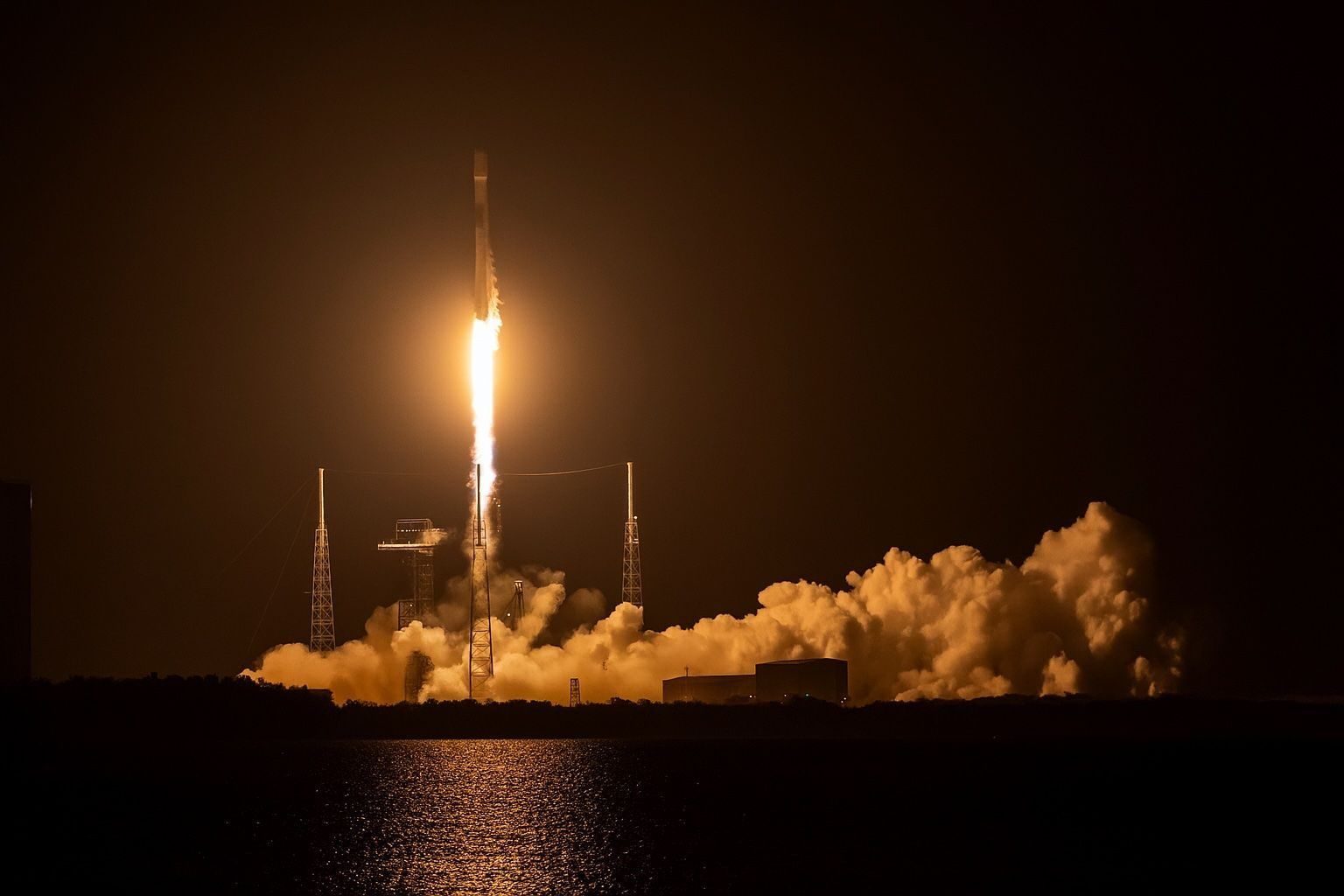
On Dec. 21, Rocket Lab added a second catalyst: it announced a successful Electron mission for Japan’s iQPS, calling it the company’s 21st Electron launch of 2025 and a 100% mission success year—its highest annual Electron cadence to date.
The company also said five more iQPS Electron launches are planned from 2026, and indicated the next Electron launch is expected early Q1 2026.
Week-ahead implication: After a catalyst-heavy burst, Rocket Lab becomes a classic holiday-week setup:
- Any incremental SDA program color (partners, payload suppliers, schedule updates) can move the stock in thin trading.
- Execution narrative (vertical integration + launch cadence) remains the bull case glue.
AST SpaceMobile (ASTS): BlueBird 6 launch timing becomes the near-term headline risk—and opportunity
AST SpaceMobile has been a focal point for investors looking for a “direct-to-device” satellite broadband pureplay, and Dec. 19–21 brought a familiar dynamic: launch scheduling and launch-date drift.
What was published Dec. 19–21
- A Zacks/Nasdaq note published Dec. 19 said AST’s BlueBird 6 was scheduled to launch on Dec. 21 on ISRO’s LVM3, describing it as the first of AST’s next-generation satellites intended to deliver mobile internet directly to standard smartphones.
- Indian media reporting (Dec. 19) cited ISRO/NSIL statements indicating the mission would be implemented on Dec. 24, with reporting also describing the satellite’s scale and payload goals.
- A Dec. 21 update from The Economic Times similarly reported an ISRO LVM3 mission carrying BlueBird Block-2 on Dec. 24 as part of a commercial deal with AST SpaceMobile.
Why the satellite matters (beyond the date)
The Dec. 19 Zacks/Nasdaq analysis emphasized the technical step-up:
- A phased-array antenna of roughly 2,400 sq. ft., described as significantly larger than earlier BlueBird satellites and designed for materially higher capacity.
- A production ramp targeting 45–60 satellites by end of 2026, alongside partnerships with major telecoms (named in the note).
Week-ahead implication: ASTS is set up as a “binary-ish” catalyst trade:
- If the launch proceeds cleanly (and communications deploy as expected), sentiment can improve quickly.
- If there’s another slip—or any anomaly—holiday-week liquidity can amplify downside.
Intuitive Machines (LUNR): analyst initiation puts “lunar services” back on the risk-on menu
LUNR is not a satellite operator, but it sits firmly in the investable “space tech” bucket—and the Dec. 19–21 window brought a strong wave of coverage and modeling around its NASA-linked business.
KeyBanc initiates coverage (Overweight, $20 target)
Multiple items in the Dec. 19 cycle referenced KeyBanc initiating Intuitive Machines with an Overweight rating and a $20 price target, pointing to improved outlook for its lunar mission cadence and longer-term contract pipeline.
An Investing.com recap also noted KeyBanc’s view that the company’s backlog is approaching $1B, and referenced the impact of a government shutdown pushing some NASA awards, as well as a more optimistic posture around the company’s next mission execution.
Week-ahead implication: LUNR can trade like a “space beta” name:
- Strong upside torque when risk appetite is high
- Sharp reversals when liquidity thins or policy headlines hit
Into year-end, investors will likely watch for:
- Any NASA procurement timing updates
- Mission schedule visibility (and execution confidence)
EchoStar (SATS): price targets rise—but regulatory and political scrutiny adds volatility risk
EchoStar has become one of the most debated “space-adjacent” public tickers in late 2025 because of its spectrum transactions and perceived relationship to SpaceX (a private company investors can’t buy directly).
The bullish side: analyst target hikes tied to spectrum and SpaceX optionality
A Dec. 19 Motley Fool recap described Deutsche Bank raising its price target to $131 from $97, maintaining a buy rating, with commentary tying optimism to spectrum-related catalysts and perceived upside from SpaceX-linked optionality.
The risk side: lawmakers press regulators to scrutinize deals
A Reuters report said two Democratic lawmakers raised concerns about EchoStar’s deals totaling $40B—including an AT&T spectrum transaction and a SpaceX spectrum transaction—and urged the FCC and DOJ to scrutinize the agreements over competition concerns.
Week-ahead implication: SATS is likely to remain headline-driven. Even without fresh filings, investors may trade it on:
- Regulatory narrative momentum
- Any incremental information flow around spectrum approvals, timing, or conditions
Planet Labs (PL): Earth observation sentiment improves as the stock tags a new high
Earth-observation names have been one of the quieter but more durable space themes in 2025, and Planet Labs drew attention on Dec. 19 as its stock hit a new high.
A Dec. 19 MarketBeat recap said Planet Labs reached a new 52-week high (noting intraday trading levels around $19.83), alongside a mix of analyst actions and a summary of recent financial performance (including revenue growth and continued losses).
Week-ahead implication: PL sits at the intersection of:
- Defense and intelligence demand for imagery
- Commercial analytics adoption
- Investor tolerance for “growth + losses” models in a rate-aware environment
In holiday trading, PL can move on relatively small incremental news—especially analyst notes.
Spire Global (SPIR): defense-IDIQ positioning and the “RF data” narrative
Spire’s Dec. 18 press release (immediately preceding the Dec. 19–21 window, and still actively discussed) said the company was awarded a place on the Missile Defense Agency’s SHIELD IDIQ contract vehicle, which carries a large program ceiling (the release cites a $151B ceiling for the broader IDIQ).
Separately, MarketBeat reported Dec. 21 that Wall Street Zen lowered its rating on Spire stock.
Week-ahead implication: SPIR remains a “theme stock” for:
- RF sensing
- Space-based reconnaissance analytics
- Defense data architectures
But it’s also a thinly traded name where holiday liquidity can exaggerate moves.
Space safety headlines: Starlink debris and close-approach worries keep regulators in the conversation
Even though SpaceX is private, the scale of Starlink means operational incidents can spill into the broader investable space/satellite narrative—especially around regulation, space traffic management, and collision-risk frameworks.
- Space.com reported Dec. 18 on a Starlink satellite anomaly leading to a loss of communication and the release of trackable objects, with the company expecting the satellite to reenter and fully demise “within weeks.” Space
- The Verge reported Dec. 19 that space-tracking firm Leo Labs detected multiple objects around the satellite, describing signals consistent with an internal energetic event rather than a collision.
Week-ahead implication: For public satellite operators and suppliers, the relevance is indirect but real:
- More scrutiny on debris mitigation and constellation coordination can shape licensing, approvals, and compliance cost over time.
A quick “watchlist” view: the space names drawing the most attention into the week
A Dec. 19 MarketBeat roundup flagged Rocket Lab (RKLB), Boeing (BA), GE Aerospace (GE), AST SpaceMobile (ASTS), and RTX (RTX) as space-related names seeing high recent dollar trading volume, underscoring how defense-adjacent space exposure continues to pull in broader aerospace tickers as well.
Bottom line for the week ahead (Dec. 22–26): catalysts are real, but liquidity will be the hidden driver
From Dec. 19–21, the sector’s narrative sharpened around three themes:
- Defense space is accelerating (SDA awards reinforcing proliferated missile tracking in LEO).
- Launch cadence and execution are being rewarded (Rocket Lab pairing contract momentum with a year-end launch record).
- Direct-to-device connectivity is back in focus (AST SpaceMobile’s BlueBird 6 launch window becoming a near-term catalyst).
Now overlay a shortened week—early close Dec. 24, closed Dec. 25—and the likely outcome is simple: headlines may matter more than fundamentals day-to-day, even as the bigger strategic shift (defense + connectivity + data) continues into 2026.
This article is for informational purposes only and is not financial advice.