CAPE CANAVERAL, Fla. / VANDENBERG, Calif. – SpaceX is opening December with a rapid-fire sequence of Falcon 9 missions. In the early hours of Tuesday, December 2, 2025 (local time), a Falcon 9 rocket launched 27 Starlink satellites from California, marking the company’s 60th mission of the year from the West Coast. Later today, another Falcon 9 is scheduled to lift off from Florida with 29 more Starlink spacecraft on the Starlink 6‑95 mission, while U.S. officials have also cleared the way for a new Starship launch pad at Cape Canaveral. [1]
Key facts about today’s SpaceX rocket launches
- Completed launch: Starlink Group 15‑10 from Vandenberg Space Force Base, California
- Time: 9:28 p.m. PST on December 1 (12:28 a.m. EST / 05:28 UTC on December 2) [2]
- Payload: 27 Starlink v2 Mini satellites to a high‑inclination low-Earth orbit
- Booster: Falcon 9 first stage B1081 on its 20th flight; successfully landed on droneship Of Course I Still Love Youin the Pacific [3]
- Upcoming launch: Starlink Group 6‑95 from Cape Canaveral Space Force Station, Florida
- Target liftoff: 3:16 p.m. EST (20:16 UTC) today from Space Launch Complex 40 (SLC‑40) [4]
- Payload: 29 Starlink v2 Mini satellites to a lower‑inclination shell serving densely populated regions
- Booster: Falcon 9 first stage B1077 on its 25th mission, aiming to land on droneship A Shortfall of Gravitas in the Atlantic [5]
- Starship development: The U.S. Department of the Air Force has formally approved SpaceX’s plan to redevelop historic Space Launch Complex 37 (SLC‑37) at Cape Canaveral for Starship‑Super Heavy launches and landings, enabling dozens of heavy‑lift flights per year. [6]
Pre‑dawn Falcon 9 launch from California: Starlink Group 15‑10
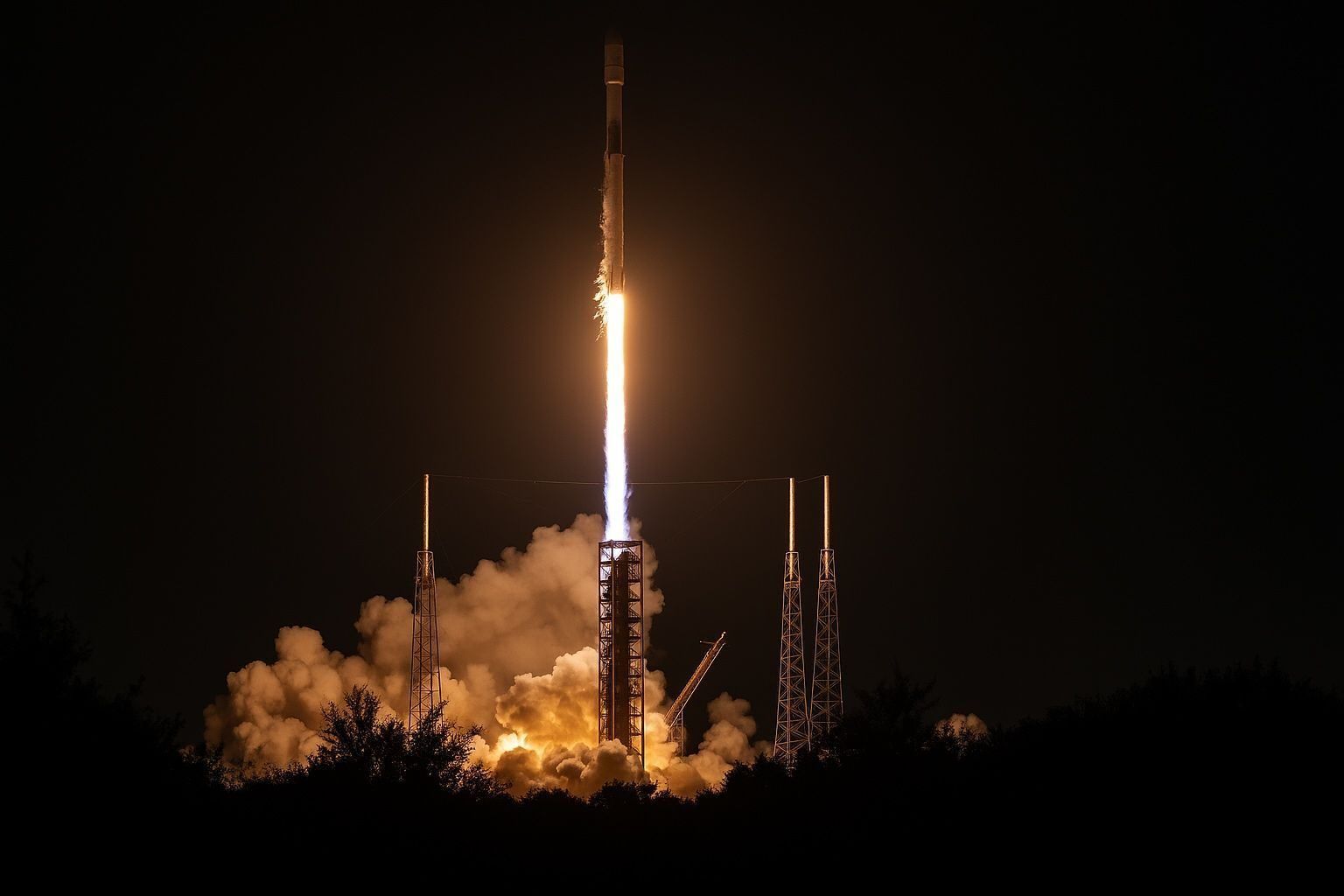
The first of today’s SpaceX missions took to the sky from Vandenberg Space Force Base on California’s central coast. A flight‑proven Falcon 9 lifted off from Space Launch Complex 4 East at 9:28 p.m. PST on Monday, December 1, which corresponds to 12:28 a.m. EST and 05:28 UTC on December 2. [7]
The mission, known as Starlink Group 15‑10, carried 27 Starlink v2 Mini satellites into a high‑inclination low-Earth orbit. This particular Starlink “shell” has an inclination of about 70 degrees, designed to enhance coverage at higher latitudes, including regions such as Alaska, northern Canada and Scandinavia, where traditional broadband infrastructure can be sparse or expensive to deploy. [8]
SpaceX reused booster B1081 for this launch, a Falcon 9 first stage that has now flown 20 orbital missions. Previous flights for B1081 include high‑profile NASA missions such as Crew‑7, CRS‑29, the PACE Earth‑science satellite and the TRACERS mission, as well as multiple Starlink batches. After stage separation, the booster returned to Earth and touched down on the droneship Of Course I Still Love You roughly 8.5 minutes after liftoff, adding yet another successful recovery to SpaceX’s reusability record. [9]
SpaceX confirmed successful deployment of all 27 satellites about an hour after launch, completing another textbook mission from Vandenberg. [10]
According to Space.com and Spaceflight Now, this flight marked SpaceX’s 60th mission of 2025 from California alone, underlining just how busy Vandenberg has become as a hub for polar‑orbit Starlink launches and government payloads. [11]
Florida’s Starlink 6‑95 launch later today
With the West Coast mission in the books, attention now shifts east to Cape Canaveral Space Force Station on Florida’s Space Coast, where another Falcon 9 is poised to fly the Starlink Group 6‑95 mission from Space Launch Complex 40 (SLC‑40). [12]
Current forecasts and launch listings show liftoff targeted for 3:16 p.m. EST (20:16 UTC), in a window that runs until about 7:16 p.m. EST (00:16 UTC). Multiple tracking sites list the launch as “Go for Launch”, with the 45th Weather Squadron estimating around 70% favorable conditions at the opening of the window, improving to 80% later as a cold front clears the area. [13]
The Starlink 6‑95 mission will carry 29 Starlink v2 Mini satellites to a shell known as Group 6, which orbits at roughly 530 kilometers (about 330 miles) altitude with an inclination of around 43 degrees. This lower‑inclination network is tailored to densely populated regions between about 43° north and south latitude, boosting capacity over megacities and suburban belts where demand for high‑speed connectivity is intense. [14]
The rocket’s first stage, booster B1077, is set to make its 25th flight, a notable milestone even by SpaceX’s reusability standards. The booster has previously supported missions including NASA’s Crew‑5 astronaut flight, a GPS III navigation satellite and a CRS cargo mission to the International Space Station, along with many Starlink launches. After today’s liftoff, B1077 is expected to aim for a droneship landing on “A Shortfall of Gravitas” in the Atlantic. If successful, it would mark the 135th landing on that particular vessel and the 543rd Falcon 9 booster landing overall. [15]
Spaceflight Now notes that Starlink 6‑95 will be the 295th orbital launch from SLC‑40 and the 350th overall orbital mission from the site, reflecting the pad’s transformation from its early Atlas days into SpaceX’s Falcon 9 workhorse base. [16]
A record-breaking year for Falcon 9
Today’s missions are part of an already record‑setting year for SpaceX. The company has now flown 60 orbital missions from California in 2025, while 94 Falcon 9 launches have already departed Florida’s Space Coast, according to tallies compiled by Space.com and Spaceflight Now. [17]
A deeper look at the launch cadence from NASASpaceflight’s recent roundup shows SpaceX on track for around 170 orbital missions in 2025, with more than 150 Falcon 9 flights already completed by late November. That figure doesn’t include suborbital Starship test flights from Starbase in Texas, which add another layer to the company’s activity. [18]
This dense manifest is particularly visible this week: in just a few days, SpaceX has lined up multiple Starlink missions from both coasts, plus additional launches scheduled later in the week from Vandenberg and a classified NROL‑77mission from Florida. [19]
Starship gets a new home at Cape Canaveral’s SLC‑37
Beyond today’s Falcon 9 flights, SpaceX’s next-generation Starship system also took an important step forward in Florida.
The U.S. Department of the Air Force (DAF) has issued a formal Record of Decision approving SpaceX’s plan to redevelop Space Launch Complex 37 at Cape Canaveral Space Force Station for Starship‑Super Heavy launch and landing operations. Local outlets and official notices report that the decision followed a comprehensive Final Environmental Impact Statement evaluating noise, lighting, wildlife and other environmental factors in the region. [20]
Documents summarizing the approved plan indicate that SLC‑37 could support up to 76 Starship launches per year, along with a similar number of static‑fire tests and landing operations. [21] A separate industry report notes that the revamped complex is expected to feature two Starship pads, each with a roughly 600‑foot‑tall integration tower, flame trench and extensive propellant and water‑deluge infrastructure, all designed for a high‑cadence launch tempo. [22]
With SLC‑37 joining LC‑39A at NASA’s Kennedy Space Center and SpaceX’s existing Starbase facilities in Texas, Florida is on course to become a major hub for Starship missions, spanning national security payloads, NASA’s Artemis lunar lander flights and commercial deep‑space projects. Aviation Week and other outlets describe the approval as a major step toward the “airport‑like operations” SpaceX has said it hopes to achieve with Starship. [23]
SpaceX CEO Elon Musk publicly thanked the U.S. Space Force for the green light in a post on X, signaling how central the new Florida pad will be to the company’s long‑term roadmap. [24]
What today’s Starlink launches mean for global internet coverage
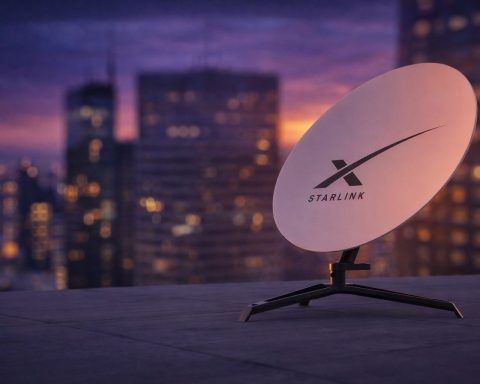
Starlink remains a core driver of SpaceX’s launch cadence. With today’s Starlink Group 15‑10 mission, more than 9,000 Starlink satellites are now in orbit, forming a broadband “megaconstellation” in low-Earth orbit. [25]
Each group of satellites targets a specific shell – a combination of altitude and orbital inclination – to optimize coverage:
- Group 15 (70° inclination): Strengthens coverage for high‑latitude regions, including northern Europe, Alaska and the Arctic, where fiber and terrestrial infrastructure are costly or logistically challenging. [26]
- Group 6 (43° inclination): Focuses on lower‑latitude, densely populated areas, boosting capacity for users across much of the Americas, Europe, Africa and Asia between roughly 43°N and 43°S. [27]
By flying back‑to‑back missions from both coasts, SpaceX can load different shells in parallel and reduce the time it takes to densify coverage in priority regions. Analysts note that this strategy also helps the company meet regulatory deployment milestones and expand its enterprise and government customer base, from maritime and aviation operators to rural communities. [28]
How to watch today’s SpaceX rocket launch
For viewers hoping to catch today’s Florida launch of Starlink 6‑95, several live streams are expected:
- SpaceX’s official webcast, typically starting about 15–20 minutes before liftoff on X and the company’s website. [29]
- Independent coverage from outlets such as NASASpaceflight and other launch‑tracking channels, many of which are already advertising live streams for the 6‑95 mission. [30]
On the ground, local tourism boards list multiple viewing spots along Florida’s Space Coast, including parks and beaches that offer clear views of the SLC‑40 launch corridor, weather and safety restrictions permitting. [31]
Why December 2, 2025 matters for SpaceX
Taken together, today’s developments show a company operating at full throttle on multiple fronts:
- Operations: One Falcon 9 has already flown from California, another is poised to launch from Florida, and more Starlink missions are lined up later in the week. [32]
- Infrastructure: Approval for Starship operations at SLC‑37 cements Florida’s role as a centerpiece of SpaceX’s heavy‑lift ambitions. [33]
- Market impact: A rapidly growing Starlink constellation and high launch cadence are enabling new commercial and government services that depend on frequent, reliable access to orbit. [34]
As the countdown continues toward the Starlink 6‑95 launch window this afternoon, SpaceX is not just adding more satellites to orbit – it is also laying the groundwork for the next phase of Starship‑powered missions that could reshape how often, and how cheaply, humanity reaches space.

References
1. www.space.com, 2. www.space.com, 3. www.space.com, 4. spaceflightnow.com, 5. spaceflightnow.com, 6. mynews13.com, 7. www.space.com, 8. www.nasaspaceflight.com, 9. spaceflightnow.com, 10. spaceflightnow.com, 11. www.space.com, 12. spaceflightnow.com, 13. spaceflightnow.com, 14. www.nasaspaceflight.com, 15. spaceflightnow.com, 16. spaceflightnow.com, 17. www.space.com, 18. www.nasaspaceflight.com, 19. www.nasaspaceflight.com, 20. www.clickorlando.com, 21. www.reddit.com, 22. wxplink.com, 23. aviationweek.com, 24. www.benzinga.com, 25. www.space.com, 26. www.nasaspaceflight.com, 27. www.nasaspaceflight.com, 28. www.nasaspaceflight.com, 29. www.spacex.com, 30. www.spacelaunchschedule.com, 31. www.visitspacecoast.com, 32. www.space.com, 33. www.clickorlando.com, 34. www.space.com