NEW YORK, January 3, 2026, 10:58 ET
- BSE and the National Stock Exchange will open for a mock trading session on Saturday, Jan. 3, even though markets are usually shut on weekends.
- Exchanges say the drill tests trading systems and backup arrangements; test trades do not create settlement obligations.
- Retail investors may see temporary price and portfolio-value changes during the drill, with live data restored after the session.
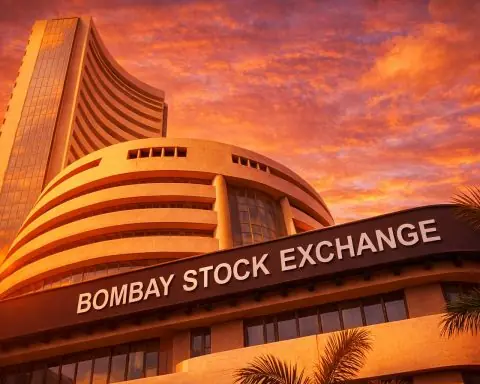
India’s two main stock exchanges, BSE and the National Stock Exchange (NSE), will open on Saturday for a mock trading session, putting parts of the market live on a day it is usually shut.
The test comes at the start of the new trading year and is meant to check whether brokers and exchange systems can handle disruptions and switchovers. It also risks confusing retail investors who may see prices and portfolio values move on their screens even though no real trades are being settled.
Mock trading is a rehearsal in which orders flow through trading and risk systems without creating actual settlement obligations, according to Money9live. Prices shown during the drill can differ from live market levels and are corrected back to the previous close once the test ends. Money9Live
BSE said the exercise is aimed at validating its trading software and risk management controls, including functions such as call auctions, trading halts and a “risk reduction mode” that curbs exposure in stressed conditions. The Securities and Exchange Board of India, or SEBI, requires exchanges to run periodic tests, and BSE said members can participate in the mock session or use a user acceptance testing (UAT) environment to test trading applications.
For equities, members can log in from 10:15 a.m. to 10:45 a.m. India time, followed by a pre-open order-collection window that starts at 11:00 a.m. Continuous trading in the T+1 segment—where trades settle the next day—is set for 11:15 a.m. to 3:30 p.m., while the same-day T+0 segment runs until 1:30 p.m. BSE asked members to send feedback by 4:30 p.m. and said some windows may close randomly in the final minute. Jagran
ET Now Digital reported that BSE has also scheduled mock trading across equity derivatives, currency and commodity derivatives segments, with no margin or pay-in/pay-out obligations arising from any test trades. For currency and commodity derivatives, it listed a log-in window starting at 10:15 a.m. and continuous trading from 11:00 a.m. to 3:30 p.m. Etnownews
NSE published its 2026 calendar of contingency drills—system tests that can include shifting trading to a backup site—starting with January 3. The exchange advised members to participate between 10:00 a.m. and 3:30 p.m. IST and then check “live re-login” between 6:30 p.m. and 7:00 p.m. IST to ensure they can reconnect for the next trading day. Nseindia
In an NSE circular dated January 2 and signed by Khushal Shah, an associate vice president, the exchange said: “Trades during mock sessions will not result in any fund pay-in or pay-out.” Nseindia
Disaster recovery, or DR, refers to an exchange’s backup data centre that can take over if the primary system fails. Exchanges typically use mock sessions to test everything from connectivity to order routing and risk checks before normal trading resumes.
Because the session is a test, brokers may show temporary prices, holdings and profit-and-loss figures that do not reflect real market exposure. Investors with standing orders or automated strategies typically receive separate guidance from their brokers for mock environments.
Weekend tests sit alongside India’s formal market-holiday calendar, which indicates the equity market will be closed on 15 weekdays in 2026, including Republic Day on Jan. 26, local media reported. Livemint Moneycontrol