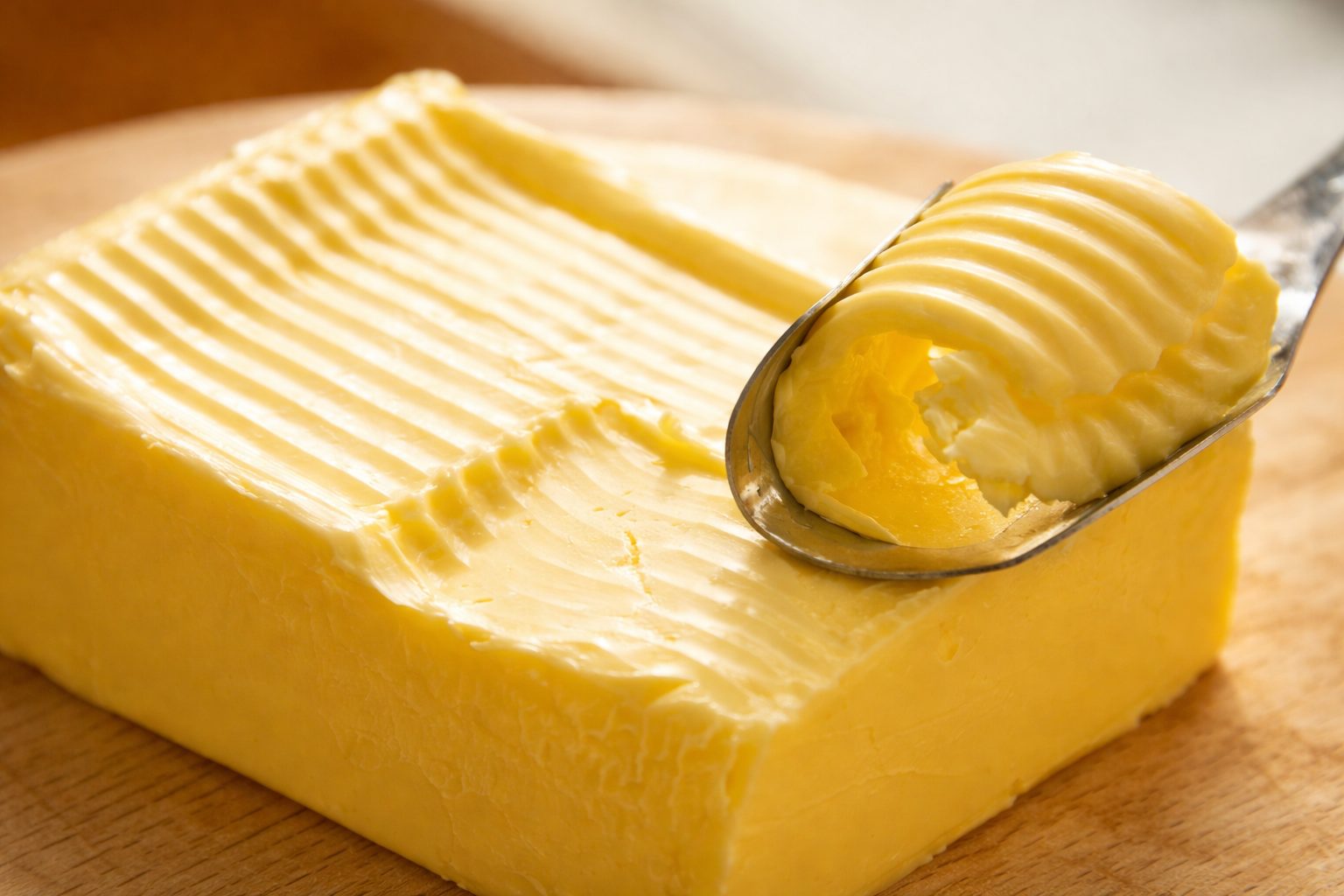
Irish shoppers will pay less for own-brand butter from today after Musgrave — the parent company of SuperValu and Centra — announced price cuts of up to 15% across its own-brand Irish creamery butter range, with Lidl confirming matching reductions on key own-label lines.
The move lands at a time when many households are still grappling with higher grocery bills, even as retailers and analysts point to a growing focus on promotions, own-label ranges and value messaging in the run-up to — and aftermath of — Christmas.
What’s changing: the new butter prices in SuperValu, Centra and Lidl
Musgrave said reductions apply nationwide from Sunday, cutting prices on its full range of SuperValu and Centra own-brand Irish creamery butter products — including salted and unsalted options in both 227g and 454g pack sizes.
Here are the headline changes reported by Irish outlets:
- SuperValu and Centra (Musgrave own-brand Irish creamery butter)
- 454g: reduced from €3.99 to €3.39
- 227g: reduced from €2.39 to €2.09
- Lidl (Dairy Manor own-brand butter)
- 454g: reduced from €3.99 to €3.39
- 227g: reduced from €2.39 to €2.09
Musgrave said the cuts will deliver savings of up to €0.60 per pack for customers.
How much will you actually save?
On the biggest-selling pack size — 454g — the cut is €0.60, which works out at roughly 15% off the previous €3.99 price.
For 227g packs, the saving is €0.30 (from €2.39 to €2.09).
What that means in real-life budgeting depends on how often your household buys butter. As a simple illustration (based on the published per-pack reductions):
- Buying one 454g pack each week would save about €31.20 over a year (€0.60 × 52).
- Buying one 227g pack each week would save about €15.60 over a year (€0.30 × 52).
Those figures won’t fit everyone’s shopping habits — but they show why retailers often target “everyday essentials” when they’re trying to demonstrate value during high-pressure cost-of-living periods. TheJournal.ie+1
What Musgrave says is behind the reduction
Musgrave framed the move as part of a broader effort to help customers manage household budgets amid ongoing cost pressures.
In statements carried by Irish media, a Musgrave spokesperson said the group remains focused on delivering value and continuing investment in its own-brand range so customers can access quality at the best possible prices.
That emphasis on own-label is consistent with wider grocery trends tracked by market researchers: Kantar’s Worldpanel division reported that own-label sales have been growing strongly, with shoppers spending more on those ranges compared with last year.
Butter prices are still under inflation pressure nationally
Even with today’s cuts, butter remains one of the grocery staples that has drawn attention in the inflation data.
Ireland’s Central Statistics Office (CSO) reported that consumer prices rose by 3.2% in the 12 months to November 2025, and noted price increases over the year for a range of everyday food items — including a pound (454g) of butter, which was up €0.55 year-on-year.
The Journal, citing CSO inflation figures, reported that the average cost of a pound (454g) of butter increased by 55 cent in the 12 months up to November 2025, and that a pound of butter now costs €4.88 on average.
That national average is not the same thing as an own-brand shelf price at a specific retailer — but it provides important context: butter has been moving higher in official price measures, even as supermarkets compete aggressively on selected staples.
How SuperValu and Centra’s new price compares with other big supermarkets
The Musgrave and Lidl reductions also sharpen comparisons with other mainstream supermarket shelf prices for own-brand creamery butter.
The Irish Times reported that, at the time of publication, Dunnes Stores’ 454g own-brand Irish creamery butter was €3.99 (with the 227g own-brand pack at €2.39), while Tesco’s 454g butter was also €3.99 (and the 227g pack €2.39).
The Journal noted that Tesco, Aldi and Dunnes Stores had been contacted for comment in relation to the butter reductions being announced elsewhere.
Why supermarkets are focusing on “essentials” like butter
Retail analysts have been tracking how Irish shoppers are balancing “treating” and thrift during the festive period — and how retailers respond.
In a December 2025 market update published by Kantar, Emer Healy — Business Development Director in Kantar’s Worldpanel division — said grocery price inflation was running at about 6.0%, easing slightly from the prior month, with shoppers seeking a mix of quality and value rather than only chasing the lowest possible price.
That same update notes Christmas dinner costs were marginally higher than last year, and that retailers have been placing emphasis on own-label ranges and promotions to help people manage budgets.
The Journal similarly reported that Christmas dinner for a family of four was expected to cost €32.28, and attributed the near-€1 year-on-year increase to grocery inflation and Worldpanel estimates.
Against that backdrop, a butter price cut is both highly visible and easy to communicate: it’s a product many households buy repeatedly, and it’s a core ingredient in baking and cooking — especially around Christmas.
The Cost of Christmas squeeze: what one study suggests households spent
The Irish Times also pointed to Switcher.ie’s latest “Cost of Christmas in Ireland” study, which found a typical family of four spent €1,792 on Christmas 2025 — up €67.90 compared with the previous year — and that Irish households would have spent 13% more shopping for Christmas food, with the average bill rising to €96.20. The Irish Times
Switcher.ie commercial director Eoin Clarke said Christmas is already the most expensive time of year for many households, while highlighting that food remains one of the biggest festive costs — and one of the areas where prices have risen sharply.
Taken together, that’s the pressure retailers are responding to when they trim prices on staples: shoppers may still indulge at Christmas, but value signals matter — and they matter loudly.
A practical shopper’s guide: how to make sure you’re getting the best value
Price cuts make headlines, but value in-store often comes down to how you compare and shop. Here are a few practical ways to make the most of lower butter prices — and avoid paying more than you need to.
Use unit pricing to compare pack sizes and brands
Ireland’s Competition and Consumer Protection Commission (CCPC) explains that certain goods must display a unit price (for example per kilogram), which helps you compare products sold in different-sized packs and identify best value regardless of brand.
Based on the newly reported shelf prices:
- A 454g pack at €3.39 works out at about €0.75 per 100g.
- A 227g pack at €2.09 works out at about €0.92 per 100g.
So, if you can use it before it spoils (or you plan to freeze it), the larger pack is often the better-value option per gram — even when both sizes have been cut.
Watch “prior price” rules on promotions
Beyond straight price cuts, many shoppers will also see “special offers” in January. The CCPC notes that when businesses run price promotions, it’s against the law to give a false or misleading previous price, and sellers must display a “prior price” in certain circumstances. CCPC
Don’t assume prices are identical everywhere
National announcements usually mean a broad rollout, but shelf labels, store formats, and local promotions can still vary. If you spot a mismatch between what’s displayed and what’s charged at the till, the CCPC notes you don’t automatically have a right to buy at the displayed price — but you can choose not to purchase if you’re told the higher price before paying.
What happens next: will other retailers follow?
Whether more supermarkets respond will depend on competition, supplier pricing, consumer demand and broader inflation trends — but the direction of travel in recent months has been clear: retailers have been using own-brand pricing (and highly visible staples like milk and butter) as a way to compete for “value” shoppers.
Earlier in 2025, SuperValu confirmed reductions in its own-brand milk, bringing 2-litre bottles down to €2.35 with pro-rata reductions across its range, following similar moves by Lidl, Aldi and Tesco.
And the CCPC, in its updated analysis of the Irish grocery retail sector, has argued there is no evidence competition is not working in the sector — noting that increased competition over the last two decades has brought benefits for consumers, including food price increases that have been below the European average.
For shoppers, the takeaway is simple: the “butter cut” is real and immediate — but the bigger wins typically come from combining these reductions with unit-price comparisons, own-brand swaps where quality holds up, and strategic shopping during promotion-heavy periods. CCPC+1