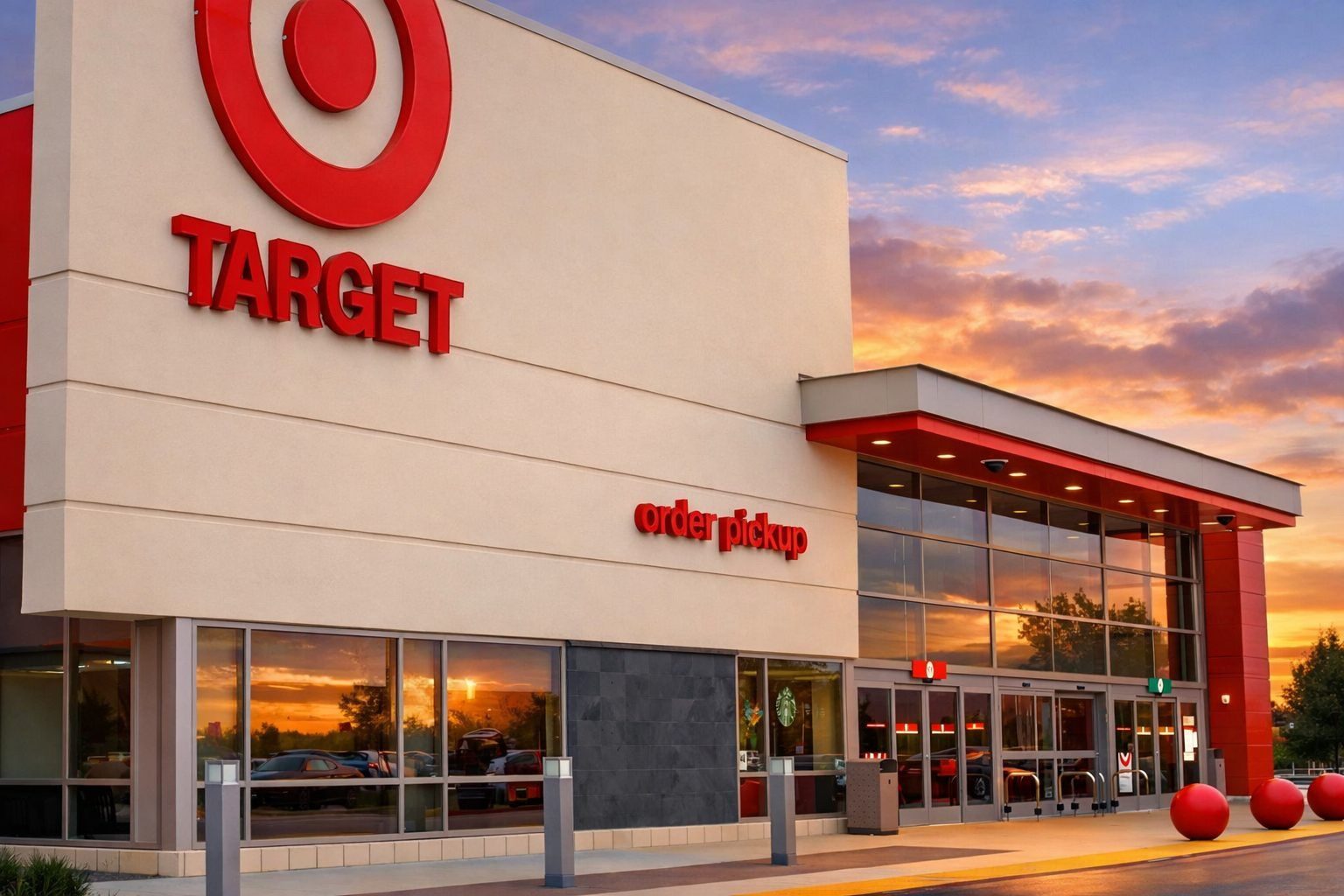
New York — Friday, December 26, 2025 (2:06 p.m. ET): Target Corporation (NYSE: TGT) shares were trading around $98.77, up about 2.3% on the day, after swinging between $96.11 and $101.30 in active midday trading.
The move comes during a thin, post‑Christmas session with major U.S. indexes hovering near all‑time highs—a backdrop that can amplify stock-specific headlines, especially in retail names that are already heavily debated heading into year-end positioning. Reuters
Why Target stock is moving today: an activist investor enters the picture
The headline driving Target today is a report that Toms Capital Investment Management (TCIM) has made a “significant investment” in the retailer, according to the Financial Times and confirmed in follow-on coverage. The stake size has not been disclosed publicly, and TCIM has not commented, but the report immediately pushed Target back into the center of the shareholder‑pressure narrative that has dogged several consumer-facing companies in 2025. Reuters+2Financial Times+2
Reuters reported Target shares rose after the news, even though the stock is still down roughly 26% in 2025, reflecting a year of weak sales momentum and heavy competition. Reuters
One reason this matters: activist interest often signals that an outside investor believes changes in strategy, operations, capital allocation, or governance could unlock value—especially when a company’s stock has lagged peers and the broader market.
The market backdrop: “Santa rally” watch, light liquidity, and a market that wants proof in 2026
Target’s pop is happening inside a market environment that’s unusual in two ways:
- Holiday-thinned trading conditions. Reuters described Friday as a quiet, post‑Christmas session with indexes near records—conditions where individual stock moves can be sharper because liquidity is lower and fewer investors are at their desks. Reuters
- A market narrative that is increasingly about execution in 2026. Reuters quoted Brian Jacobsen, chief economist at Annex Wealth Management, saying 2026 is likely a “prove-it” year for markets—meaning investors will want to see real productivity and margin gains from big themes like AI and corporate investment. Reuters
In other words: while mega‑cap tech and AI remain dominant narratives, the tape is also rewarding companies where investors can point to concrete levers for improvement. For Target, activist involvement and an incoming CEO both fit that “change catalyst” framework.
What the activist report adds to an already-eventful 2026 setup for Target
Target is heading into 2026 with two major “pressure points” already on the calendar:
1) CEO transition on February 1, 2026
Target has announced that COO Michael Fiddelke will succeed Brian Cornell as CEO, with Cornell shifting to executive chair—effective Feb. 1, 2026. Target Corporation
The Financial Times linked the activist report directly to the leadership transition, noting TCIM’s history of pushing for strategic change at other companies and describing Target’s recent underperformance versus the broader retail group. Financial Times
2) A major capital plan and operational “reset” narrative
Target has also been telling investors it plans to spend more to improve stores, technology, and fulfillment—essentially arguing it can “invest its way” back to stronger traffic, better conversion, and more resilient margins.
That matters because activists typically scrutinize whether a capital plan is (a) big enough to move the needle and (b) disciplined enough to protect returns.
Target’s fundamentals: what the company said in Q3 and what it implies for the turnaround
Target’s most recent quarterly update (third quarter fiscal 2025) provides the clearest snapshot of what is—and isn’t—working:
- Net sales:$25.3 billion, down 1.5% year over year
- Comparable sales: down 2.7%
- Digital comparable sales: up 2.4%, driven by 35%+ growth in same‑day delivery (Target Circle 360)
- Adjusted EPS:$1.78 (GAAP EPS $1.51)
- Non‑merchandise sales: up sharply, with Roundel advertising plus membership and marketplace revenues growing double digits Target Corporation+1
Target also maintained expectations for a low‑single‑digit sales decline in Q4 2025 and guided to a wide full‑year adjusted EPS range (roughly $7.00 to $8.00), explicitly pointing to a volatile environment and the impact of price actions. Target Corporation+1
Reuters added color that Target had cut prices on roughly 3,000 everyday items in November and introduced a lower-cost Thanksgiving meal kit to appeal to value‑conscious shoppers—an important detail because pricing actions can support traffic but pressure gross margin if not paired with mix and cost improvements. Reuters
The consumer context Target is operating in: cautious spending and tariff/inflation drag
A Reuters analysis earlier this month described retailers fighting a two‑front battle: inflation and tariff drag plus a consumer that is more selective even when headline holiday sales look decent. Reuters
That same Reuters piece cited multiple industry voices, including:
- Jeff Derman (Solomon Partners), who pointed to a combination of lowered expectations and consumer resilience behind some upside surprises Reuters
- Jay Woods (Freedom Capital Markets), who emphasized bargain-seeking behavior across income cohorts Reuters
- Aditya Bhave (BofA U.S. economist), who flagged category-level spending softness beneath top-line holiday numbers Reuters
- Bruce Winder (independent retail analyst), who questioned whether consumers “back off” after deal-driven bursts Reuters
For Target—more exposed to discretionary mix than some peers—that context is critical.
The big strategic debate: can Target fix comps without breaking margins?
Target’s challenge has become a classic retail balancing act:
- Win back traffic (price/value, merchandising “newness,” better in-store experience)
- Keep margins intact (reduce markdowns, shrink, and fulfillment costs; grow higher-margin ad and membership streams)
In its Q3 release, Target itself emphasized priorities like merchandising authority, shopping experience, and technology—language that aligns with the idea that execution and operational consistency must improve, not just promotions. Target Corporation
Technology and stores: why Target’s $5B capex plan is central
In late November, industry coverage reported Target would invest an additional $1 billion in 2026, taking expected capex to around $5 billion, aimed at stores, remodels, and digital/fulfillment capabilities (with AI as part of the story). Retail Dive+1
A Zacks-authored analysis published on Nasdaq went deeper on the operational side, highlighting:
- store modernization and a major “floor pad” redesign
- expanding a model that shifts digital order volumes across stores to improve speed/efficiency
- machine-learning forecasting that improved in‑stock rates by 150+ basis points for top items
- broader AI tools used internally to spot trends and refine product decisions Nasdaq
This is the kind of multi‑year investment story that can excite long‑term investors—but also attract activists who want proof of returns, tighter cost control, or changes to how capital is deployed.
Analyst forecasts and Wall Street positioning: “Hold” consensus, tight upside, wide dispersion
What do sell-side trackers show right now?
MarketBeat’s consensus snapshot (which aggregates analyst ratings and targets) currently shows:
- Consensus rating:Hold
- Average 12‑month price target:$102.62 (only low‑single‑digit upside from late‑December trading levels)
- Rating mix: 4 sells, 22 holds, 10 buys (based on 36 analyst ratings)
- Target range: high $150, low $80 MarketBeat
That range is telling: even when analysts “average out” to a Hold, the dispersion suggests Wall Street is split between (a) investors who see Target as a turnaround/value play and (b) skeptics who see a longer slog in discretionary retail.
Recent coverage also emphasizes relative performance versus Walmart and other big-box peers, arguing Target has struggled with price competitiveness and consistency while Walmart’s value/essentials focus has helped it take share. MarketWatch+1
Dividend angle: Target’s yield is back in focus—but watch the underlying business trend
Target remains a major dividend story in U.S. retail.
The company declared a quarterly dividend of $1.14 per share, payable Dec. 1, 2025 to shareholders of record Nov. 12, 2025, and noted it was the company’s 233rd consecutive dividend since it became publicly held in 1967. Target Corporation
MarketBeat’s dividend page currently lists:
- Annual dividend:$4.56
- Dividend yield: about 4.6% (varies with share price)
- Dividend growth track record:54 years MarketBeat
At roughly $98–$99 per share, that implies a yield in the mid‑4% range—appealing to income investors, especially in a market that increasingly demands real cash returns. MarketBeat
But dividends don’t exist in a vacuum. If comps remain negative for too long, management has to keep proving it can defend cash flow while funding store/tech investments and navigating promotions.
Risks investors are watching (beyond the activist headline)
Even with today’s bounce, Target is still in a headline-sensitive zone. A few risk categories stand out:
Regulatory and reputational risk
Reuters reported that the U.S. FDA sent warning letters to Target and other major retailers over continued sales of a recalled baby formula product after the recall, warning that failure to address issues could lead to legal action (including product seizures). Reuters
This type of issue is not typically “thesis-breaking” by itself, but it can create unwanted noise, costs, and reputational risk—especially when a company is already trying to rebuild trust and traffic.
Consumer demand and mix risk
Reuters’ retail analysis underscores a consumer that is still spending, but doing so more strategically—deal-driven, selective, and increasingly sensitive to essentials versus discretionary categories. Reuters+1
Execution risk on a big capex plan
A $5B investment cycle only works if it produces better in‑stocks, better guest experience, faster fulfillment, and ultimately better comps and margins. Otherwise, investors may view it as spending that delays a harder reset. Nasdaq+1
What investors should watch into the close and before the next session
The NYSE is open right now (it’s 2:06 p.m. ET in New York), and Target is trading during regular market hours.
Still, many readers will come across this story after the bell or over the weekend. Here’s what matters before the next session (the next regular session after Friday is Monday, Dec. 29, 2025):
- Any follow-up from Target or TCIM
Reuters reported Target said it maintains regular dialogue with investors and that its top priority is returning to growth—language that often precedes more formal engagement when activists appear. Reuters - Whether “activist premium” momentum holds in thin year-end trading
Reuters described the market as holiday-thinned with the S&P 500 near records and investors watching for the seasonal “Santa Claus rally” window that runs through early January. Thin liquidity can exaggerate both rallies and reversals. Reuters - Any incremental read on holiday demand
Target’s Q3 commentary framed holiday as a key test and emphasized value initiatives. Any new third-party reads on traffic, promos, or category strength can quickly shift sentiment. Target Corporation+1 - The CEO handoff timeline
With the CEO transition set for Feb. 1, 2026, investors will be watching for signs of early strategic reframing—or accelerated cost/portfolio decisions—in the weeks ahead. Target Corporation+1 - Next earnings expectations and guidance risk
Wall Street typically treats early‑March earnings as a major re‑rating moment for retailers because it includes holiday results and forward guidance. Zacks’ earnings calendar currently points to March 3, 2026 as the expected next release date (Target has not confirmed in that listing). Zacks+1
Bottom line: Target stock has a new catalyst, but the debate hasn’t changed
Target’s stock is getting a lift today because the activist report introduces a fresh catalyst into a year when the shares have lagged badly. Reuters
But the core debate remains the same:
- Can Target stabilize comps, regain discretionary momentum, and keep customers from drifting to value leaders? Reuters+1
- Can it do that while scaling a store + tech investment cycle and protecting profitability? Nasdaq+1
- And will incoming CEO Michael Fiddelke’s plan—now potentially under activist scrutiny—produce results quickly enough to shift the “Hold” consensus toward something more decisive? MarketBeat+1