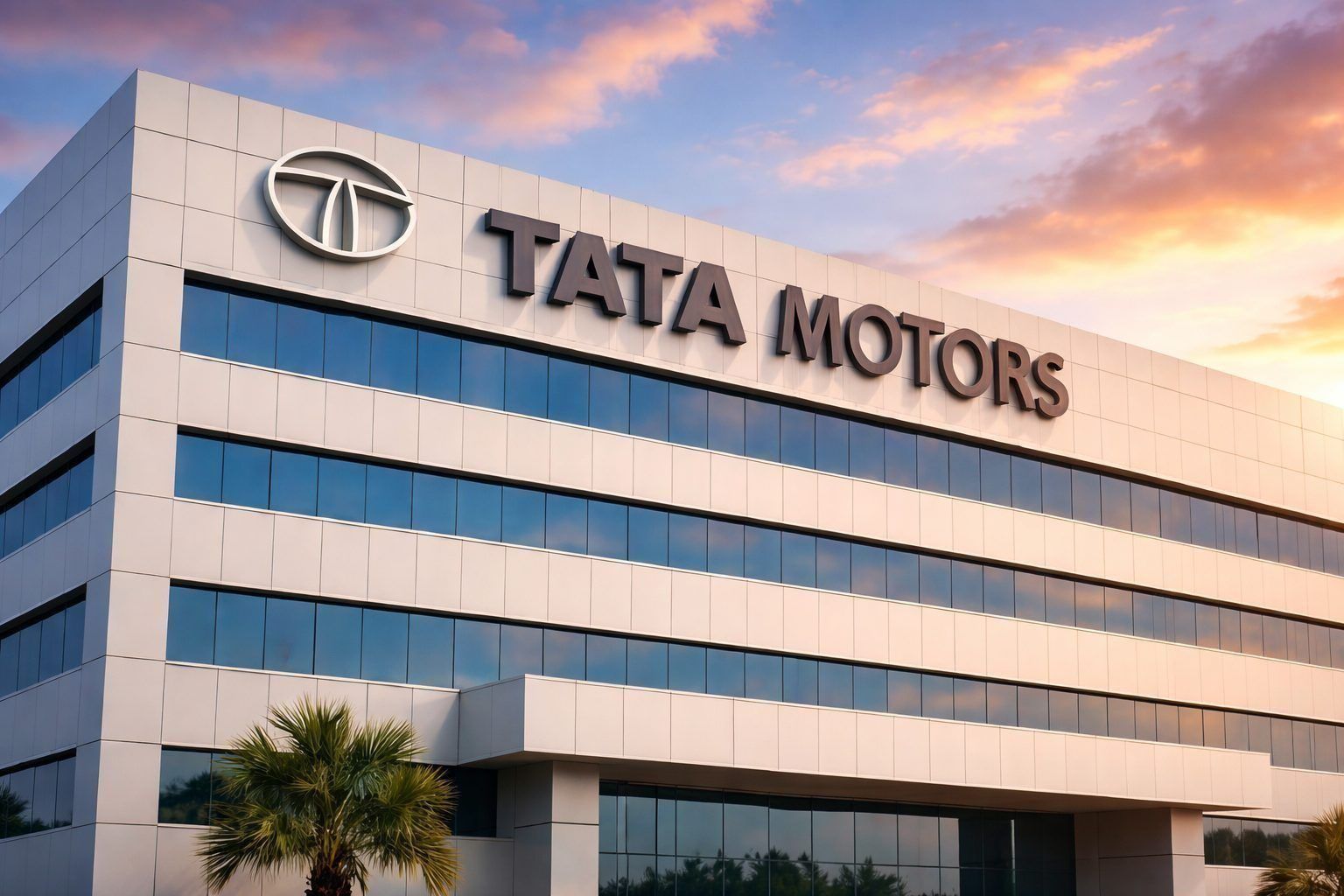

Mumbai/New Delhi | December 24, 2025 — Tata Motors’ two newly separated listed entities — Tata Motors Commercial Vehicles (TMCV) and Tata Motors Passenger Vehicles (TMPV) — are back on investors’ radar on Wednesday, December 24, driven by a one-two mix of brokerage optimism around an M&HCV upcycle and a fresh electric-vehicle (EV) expansion roadmap that sharpens TMPV’s long-term strategy.
On the market side, TMCV traded at record territory, touching a fresh 52-week high of about ₹432 in intraday trade, extending a rally that has built over recent sessions. Moneycontrol+2ICICI Direct+2 Meanwhile, TMPV shares were “in focus” after the company detailed a plan to launch five new EV nameplates by FY30, invest ₹16,000–₹18,000 crore in products and ecosystem build-out, and scale charging infrastructure to 10 lakh+ charging points nationwide. The Economic Times+2The Economic Times+2
What’s powering the spotlight is not just price action, but a clearer narrative: TMCV is being pitched as a pure-play bet on India’s infrastructure-and-freight cycle, while TMPV is positioning itself to defend EV leadership with new products, premiumisation (Avinya), and charging scale.
Tata Motors CV share price: why the stock is rallying again
The commercial-vehicle entity (now listed separately after the Tata Motors demerger) has extended gains for a third straight session in the latest run, with Business Standard noting that the stock hit ₹427.9 intraday on December 23 and had climbed sharply over the past month.
A key near-term driver highlighted by market watchers is management commentary around free cash flow visibility, lower interest costs due to deleveraging, and improving demand conditions — particularly after a GST reduction that improved affordability and utilisation for fleet operators.
Adding to the momentum: fresh analyst coverage and upgrades that effectively “reintroduce” the business to global investors as a standalone stock.
Nomura, JPMorgan, BofA: the bullish brokerage case for TMCV
Over the past week, multiple brokerages have framed a constructive thesis around Tata Motors CV — particularly the medium and heavy commercial vehicle (MHCV) cycle.
Nomura initiates “Buy,” sets ₹481 target
Nomura initiated coverage on Tata Motors Commercial Vehicles (TMCV) with a “Buy” rating and a ₹481 target price, anchored in the view that India’s MHCV segment is entering a stronger upcycle. ETAuto.com+2The Economic Times+2
Nomura’s core argument:
- MHCV volumes could grow 8%–10% YoY in FY26 and FY27
- Replacement demand builds as the average truck fleet age sits around ~10 years
- Higher freight rates and better fleet profitability support purchases
- Regulatory changes and expected price hikes could trigger pre-buying in FY27–FY28 ETAuto.com+2The Economic Times+2
It also flags TMCV’s ~46% MHCV market share (FY25) as a major lever in an upcycle.
JPMorgan and Bank of America add “Overweight/Buy” tone
According to Livemint’s roundup, JPMorgan initiated coverage with an “Overweight” rating and a ₹475 target, citing a modest recovery after a prolonged stagnation phase and pointing to pricing discipline among leading players. mint
Bank of America also reiterated a “Buy” stance with a ₹475 target in that same report, projecting a recovery in domestic and European businesses and estimating a 15% EBITDA CAGR (FY26–FY28), with a focus on margin discipline and returns. mint
Ambit: India CV + Iveco expands the “addressable market”
Livemint also reported that Ambit Capital initiated a “Buy” with a ₹430 target and argued the Iveco combination expands the total addressable opportunity and could unlock synergies over time. mint
Bottom line: A cluster of bullish calls arriving in a short span has helped lift sentiment, especially as the stock starts building a post-demerger trading history.
The MHCV upcycle thesis: GST cut, fleet replacement and infrastructure tailwinds
A major structural input into the CV bull case in 2025 has been India’s GST overhaul and its impact on vehicle affordability.
Reuters reported that India simplified GST and lowered the levy on commercial vehicles to 18% from 28% effective September 22, explicitly to spur demand. Reuters This change has been repeatedly referenced in brokerage notes and market coverage as a demand catalyst, particularly when paired with infrastructure activity.
Separately, Tata Motors’ CV leadership has guided to stronger second-half demand dynamics. In a Reuters report, Tata Motors’ MD & CEO Girish Wagh said the company expects high single-digit demand growth in H2, supported by tax cuts and a pickup in construction/mining activity.
Business Standard also cited management commentary that demand recovery was visible in the September quarter, with the GST change boosting consumption and utilisation and supporting MHCV cargo volumes, while mining and construction activity supports tippers.
Iveco deal: why Europe is now part of the Tata Motors CV story
A key element differentiating this cycle from past India-only CV upswings is Tata’s newly expanded global footprint.
Reuters reported in July that Tata Motors agreed to buy Italy’s Iveco in a €3.8 billion deal, following the disposal of Iveco’s defence business (sold separately). Reuters Brokerages have since framed this as a longer-duration strategic bet: Iveco brings presence in Europe (and beyond), while Tata brings scale and sourcing leverage.
Nomura’s published framework (as reported by ETAuto/ETMarkets) treats Iveco conservatively in valuation, assigning a lower multiple due to margins/scale, while still flagging potential synergies across supply chain, product development and markets.
Investors, however, will likely keep watch on:
- integration execution
- timing of any Europe truck-cycle recovery
- how quickly synergies translate into margins or cash flows
TMPV shares in focus on Dec 24: five new EVs by FY30, ₹16,000–₹18,000 crore capex
While TMCV’s story is cyclical and macro-linked, TMPV’s news flow on Dec 24 is decisively strategic.
ETMarkets reported that TMPV shares were expected to be in focus on December 24 after the company outlined an EV expansion plan to launch five new EV models by FY30, including the premium Avinya range, backed by ₹16,000–₹18,000 crore capex between FY25 and FY30.
The plan also targets over 10 lakh charging points nationwide, a scale-up intended to address one of the largest adoption barriers: reliable charging access.
What’s in the pipeline: Sierra.ev, refreshed Punch.ev, Avinya
Across multiple reports, the near-term launch cadence is becoming clearer:
- Sierra.ev expected in 2026
- Punch.ev updates/refreshes in the near term
- Avinya positioned as a premium EV line, targeted for launch by end-2026 The Economic Times+2The Economic Times+2
ET Bureau added that the company plans to introduce the Sierra EV in Q1 2026, followed by the Avinya EV towards the year-end, and then roll out more new EV brands between FY27 and FY30.
Charging: “one million points” goal and the ecosystem play
ET Bureau reported that Tata Motors (along with other Tata Group firms) is targeting one million charging points by 2030, including 100,000 public chargers, reflecting an ecosystem-led model rather than a product-only strategy.
This aligns with the broader messaging from management: EVs scale sustainably when product launches and ecosystem build-out move in parallel.
EV market share pressure is real — and it’s shaping TMPV’s urgency
One reason the Dec 24 roadmap matters: it arrives as competition intensifies.
ET Bureau reported that Tata’s EV share has slipped, citing data that market share fell to 41% in November 2025 from 48% a year earlier, as rivals expand lineups and new entrants prepare launches.
That competitive backdrop helps explain why TMPV is leaning into:
- a broader product ladder (entry-level to premium)
- charging density expansion
- service network upgrades, battery retail/repair centres, and ownership confidence measures The Economic Times
It’s also why the company is targeting a steady-state EV market share of 45%–50%, even in a more crowded market.
“Foreign EV companies must create jobs”: localisation becomes a public stance
Another noteworthy Dec 24 development is how openly Tata Motors is leaning into localisation and “India-first” positioning as global EV competition heats up.
The Times of India reported that Shailesh Chandra argued multinational EV players looking at India should not only pursue market demand, but also invest in local capability building, job creation, and localisation, adding that policy decisions must weigh national interest and local value addition.
The remark matters because it:
- signals what incumbent leaders expect from foreign entrants
- aligns with the company’s EV roadmap emphasis on localisation and domestic ecosystem building
- reinforces the policy narrative increasingly surrounding EV supply chains and manufacturing commitments The Times of India+1
Avinya: premium EV brand, end-2026 launch timeline
For consumer-facing interest (and Discover-friendly traction), Avinya is emerging as the headline name inside TMPV’s long-term plan.
An Economic Times report on Dec 24 said Tata Motors aims to launch Avinya by end-2026, built on a new EV architecture, and that the company may position it with a distinct retail approach (the article also discusses an early estimated price range based on reports).
Separately, ET Bureau also places Avinya toward late 2026 as part of a premium push, framed as a defence of leadership in a crowding EV market.
Risks and watchpoints: what could derail (or accelerate) the story in 2026
Even as the narrative strengthens, investors tracking Tata Motors CV and TMPV will likely watch these factors closely:
For Tata Motors CV (TMCV):
- whether MHCV demand accelerates as projected (volumes, fleet replacement timing, freight economics) The Economic Times+1
- the durability of margin gains and free cash flow as rates, commodities and competition shift Business Standard
- Iveco integration outcomes and the pace of recovery in the European truck cycle ETAuto.com+1
For Tata Motors Passenger Vehicles (TMPV):
- execution on the EV launch calendar (Sierra.ev and Avinya milestones) The Economic Times+1
- charging rollout credibility (public vs private points, utilisation, uptime) The Economic Times+1
- competitive response as rivals add models and scale manufacturing The Economic Times
And for TMPV specifically, Business Standard also flagged concerns raised by some analysts around JLR profitability and free cash flow visibility, which could add volatility depending on guidance and product cadence.
The takeaway on Dec 24: two Tata Motors stocks, two different market narratives
As of December 24, 2025, the market is effectively pricing two distinct bets:
- Tata Motors CV (TMCV): a focused play on an India MHCV upcycle (amplified by a GST-driven affordability reset) plus longer-run global expansion through Iveco — with brokerages clustering around a bullish stance and targets in the mid-to-high ₹400s.
- Tata Motors Passenger Vehicles (TMPV): a scale-and-ecosystem EV strategy, including five new EV nameplates by FY30 and a major charging push, designed to defend leadership even as EV market share becomes harder won.
With both stocks carrying fresh post-demerger identities, the next few quarters will matter less for “headline direction” and more for proof of execution — on volumes and cash flows for CVs, and on product cadence plus charging scale for passenger EVs.
Related articles: Electric Vehicles