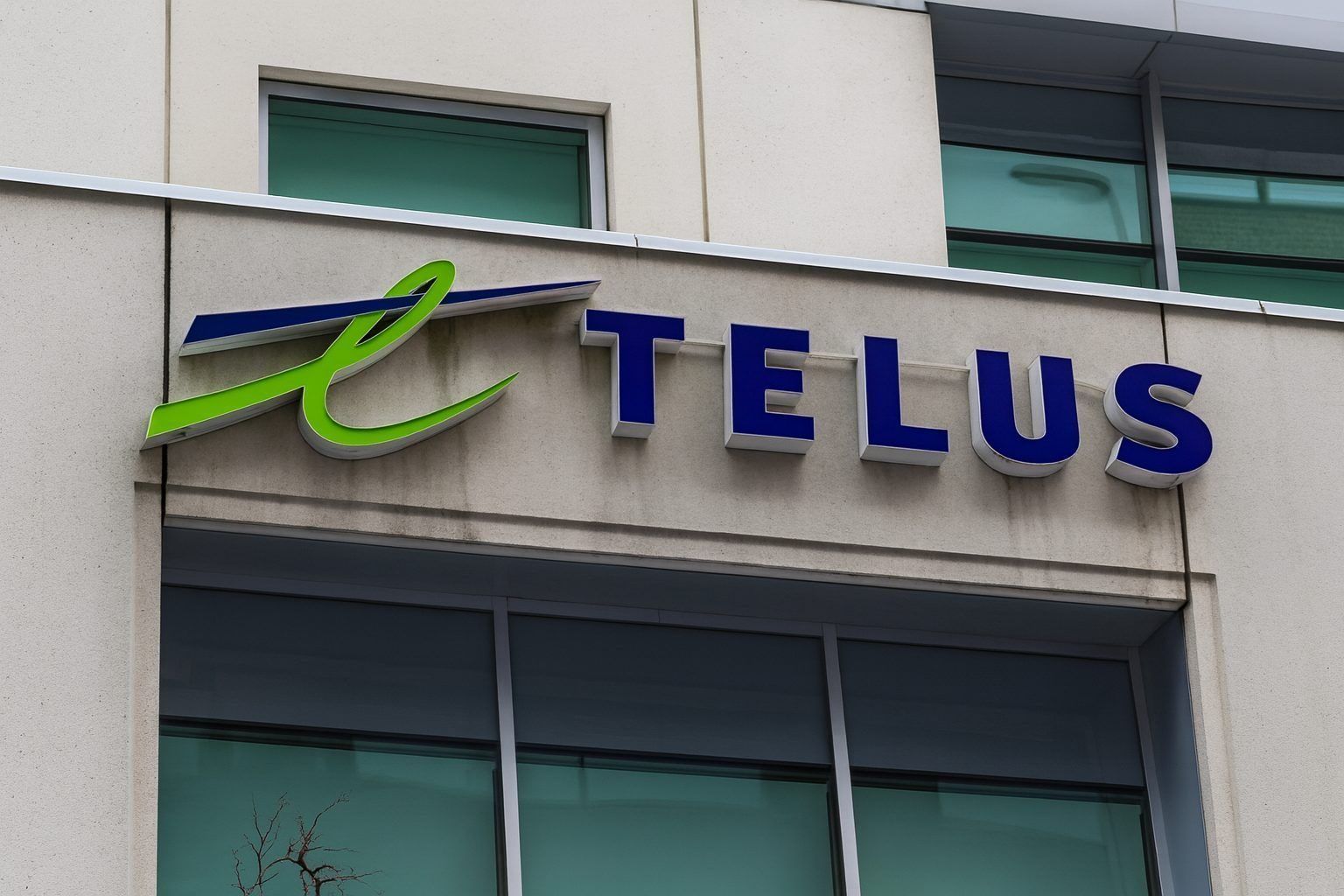

As of November 28, 2025, Telus Corporation’s dividend is back in the spotlight — and not in a comfortable way.
The Canadian telecom (TSX:T, NYSE:TU) is offering one of the richest payouts on the TSX, with a yield around 9–13% depending on the listing and metric you use.MarketBeat+1 But a wave of fresh commentary and data this week has turned that eye‑popping yield into a warning sign rather than a simple bargain.
A new Globe and Mail opinion column says Telus needs to “kick its addiction to dividend hikes,” arguing that a roughly 9% yield reflects financial strain, not strength.iask.ca+1 At the same time, a widely shared Motley Fool piece titled “Forget Telus Stock: A Dividend Giant to Buy Immediately Instead” tells income investors to look past Telus and toward Brookfield Infrastructure Partners as a more sustainable dividend play.Yahoo Finance+1
And today, November 28, the story got even more interesting:
- Rockefeller Capital Management slashed its Telus position by 81.5%, according to a MarketBeat report.
- Brookfield Infrastructure’s corporate vehicle (BIPC) is going ex‑dividend at US$0.43 per share, with the latest MarketBeat note highlighting that this payout is comfortably covered by earnings.
- Brookfield Infrastructure Partners (BIP) and Brookfield Infrastructure Corporation (BIPC) renewed their share buyback programs (NCIBs), securing TSX approval today to repurchase up to 5% of LP units and 10% of exchangeable shares over the next year.
For dividend investors trying to decide whether to hold Telus or follow the “forget Telus” narrative into Brookfield Infrastructure, here’s what the latest news and numbers tell us.
Telus: A bigger dividend, a smaller margin for error
The latest dividend hike
Telus’s board declared a quarterly dividend of $0.4184 per share in November 2025, payable on January 2, 2026, to shareholders of record on December 11.
That’s:
- Up from $0.4163 in Q3 2025
- Up from $0.4023 at the start of the year
- Part of a long‑running dividend growth program under which Telus plans semi‑annual increases of 3–8% a year from 2026 through 2028, subject to board approval and financial conditions.
On the Toronto listing, Telus’s trailing yield is close to 9% based on recent prices around $18.40 and current dividend levels.Yahoo Finance+2TELUS+2 MarketBeat’s coverage of the NYSE‑listed TU shares goes even further, calculating an annualized yield of about 12.9% at US$13 per share and noting that the current payout equals roughly 220% of earnings.
No matter which number you use, one reality is clear: Telus is paying out far more of its accounting earnings than a conservative dividend investor would usually like.
Strong operating quarter, but not a clean bill of health
There is, however, another side to the story — Telus’s own numbers.
In its Q3 2025 earnings release, Telus reported:TELUS
- 288,000 total mobile and fixed customer additions, including 82,000 mobile phone and 40,000 internet net adds
- Free cash flow up 8% to $611 million
- Net income and basic EPS up 68% year‑over‑year
- Net‑debt‑to‑EBITDA leverage improved to 3.5×, with a goal of reaching about 3× by 2027
Management argues that moderating capital intensity (toward ~10% of revenue) and ongoing asset monetizations — such as the Terrion tower partnership with Caisse de dépôt et placement du Québec — will provide the cash needed to support both network investments and the dividend growth plan.
In other words, Telus insists it can grow the dividend and de‑lever at the same time.
Why critics call it “dividend addiction”
Not everyone is convinced.
The Globe and Mail commentary by Andrew Willis, published November 25, argues that Telus’s strategy of continuously hiking the dividend despite a collapsing share price has pushed the yield to a dangerous level — around 9.1%, according to social posts summarizing the piece.iask.ca+1 The article suggests Telus should slow or freeze hikes and prioritize a stronger balance sheet and reinvestment in its network and digital businesses instead.
Independent equity research has voiced similar concerns:
- Simply Wall St notes that if Telus continues raising its dividend along recent lines, the payout ratio on forecast earnings could approach nearly 200%, which “probably can’t continue” without stressing the balance sheet.Simply Wall St+1
- A recent Motley Fool Canada series points out that Canadian telecoms are under pressure from slower revenue growth, heavy capex, and intense competition, and highlights Telus’s ~9% yield as potentially signaling future cuts rather than long‑term safety.
In short, critics see Telus’s rich dividend as a symptom of market skepticism, not a reward for strong fundamentals.
Today’s fresh red flag: big money selling Telus
Adding to the tension, MarketBeat reported today (November 28, 2025) that Rockefeller Capital Management cut its Telus stake by 81.5% in Q2, selling about 196,000 shares and holding roughly 44,700 shares afterward.
The same report notes that Telus:MarketBeat+1
- Missed recent earnings expectations, posting EPS of US$0.17 versus US$0.19 expected
- Slightly missed revenue estimates as well
- Now carries a very high payout ratio using net income as a reference
It’s just one institutional holder, and others have increased their stakes, but the timing — coming as the dividend risks hit headlines — underscores how polarized opinion on Telus has become.
Brookfield Infrastructure: The “dividend giant” alternative
While Telus is trying to defend an unusually high payout, Brookfield Infrastructure Partners (TSX:BIP.UN, NYSE:BIP) is quietly doing something very different: moderate yield, consistent growth, and aggressive reinvestment.
That contrast is exactly what the Motley Fool article “Forget Telus Stock: A Dividend Giant to Buy Immediately Instead” leans on, presenting Brookfield Infrastructure as a steadier long‑term income compounder.Yahoo Finance+1
Distribution growth: smaller yield, clearer runway
For 2025, Brookfield Infrastructure’s board has declared a quarterly distribution of US$0.43 per unit, payable on December 31, 2025, with a record date of November 28, 2025 — that’s today.
Key points:
- The annualized distribution is about US$1.72 per unit.
- At recent share prices, BIP’s forward yield sits around 4.7–5% — roughly half of Telus’s.
- Brookfield targets 5–9% annual distribution growth over time and has logged 16 consecutive yearly increases as of early 2025.
While BIP’s payout ratio looks high relative to IFRS net income, its distributions are primarily measured against funds from operations (FFO). In its Q3 2025 press release, Brookfield reported:Brookfield Infrastructure Partners+1
- FFO of US$654 million, up from US$599 million a year earlier
- FFO of US$0.83 per unit for the quarter and US$2.46 per unit over the last 12 months
Against that, an annual US$1.72 distribution implies a payout of roughly two‑thirds of FFO, leaving room for reinvestment, buybacks, and future growth.
Today’s Brookfield headlines: ex‑dividend and buybacks
November 28, 2025 is a busy date on Brookfield’s calendar:
- Ex‑dividend date
- Multiple data providers, including DividendMax and Dividend.com, confirm November 28, 2025 as the ex‑dividend date for BIP/BIPC’s US$0.43 distribution, payable December 31.
- MarketBeat coverage of BIPC’s dividend
- MarketBeat’s latest note on Brookfield Infrastructure Co. NYSE:BIPC highlights the same US$0.43 dividend and calls out a dividend payout ratio of about 30.7% for the corporate entity, suggesting the payout is comfortably covered by earnings at that level.
- Renewal of normal course issuer bids (NCIBs)
- Today, Brookfield Infrastructure announced that the TSX has accepted new NCIBs for both BIP and BIPC. BIP can repurchase up to 5% of its 461 million LP units (about 23 million units), while BIPC can buy back up to 10% of its public float, or roughly 10.6 million exchangeable shares, between December 2, 2025 and December 1, 2026.
- As of November 19, BIP had already repurchased more than 1 million LP units at an average price of about C$39.20 under the current program.
Buybacks aren’t guaranteed, but the renewed NCIBs send a clear message: Brookfield believes its units and shares are attractive enough to justify redeploying capital into its own equity, on top of its distribution.
Growth engine: AI infrastructure and global assets
Brookfield Infrastructure’s appeal isn’t just the current yield; it’s the growth runway behind that payout.
Two major 2025 developments are especially relevant for income investors:
- Brookfield’s AI infrastructure push
Brookfield Asset Management — Brookfield Infrastructure’s parent — has launched a US$100 billion artificial‑intelligence infrastructure program, anchored by a US$10 billion AI infrastructure fund backed by Brookfield, Nvidia and Kuwait Investment Authority.Reuters The program targets data centres, power, land and compute capacity, all areas where Brookfield Infrastructure and its sister entities already have deep expertise. - Ongoing acquisitions and capital recycling
Brookfield Infrastructure has been active in large deals, including its US$9 billion acquisition of Colonial Pipeline earlier this year and other energy and utility assets, while recycling capital out of mature investments.
Together, rising FFO, disciplined capital allocation, and structural tailwinds from digital and energy infrastructure make it easier for Brookfield to grow a mid‑single‑digit yield reliably, rather than stretching for a headline‑grabbing payout.
Telus vs Brookfield Infrastructure in late 2025: the dividend trade‑off
Putting the pieces together, here’s how the two names stack up right now:
1. Income today
- Telus
- Forward annual dividend ~C$1.67 per share.
- Yield around 9–13%, depending on whether you look at the TSX listing in CAD or the NYSE listing in USD.
- Brookfield Infrastructure (BIP/BIPC)
- Forward annual distribution ~US$1.72 per unit or share.
- Yield around 4.7–5% at recent prices.
2. Payout sustainability
- Telus
- MarketBeat estimates a payout ratio near 220% of net income.
- Independent research suggests the payout could exceed 180% of forecast earnings if current trends persist.
- Telus itself anchors its policy to free cash flow, with a long‑term target payout of 60–75% of FCF, but that target is clearly under pressure when earnings and cash flow diverge.
- Brookfield Infrastructure
- Distribution equals about two‑thirds of FFO, leaving a buffer for reinvestment and buybacks.
- BIPC’s dividend payout ratio around 30% of earnings (per MarketBeat) looks conservative.
- Management explicitly targets 5–9% distribution growth and has already delivered 16 consecutive annual increases.
3. Risk profile
- Telus
- Benefits from stable, regulated telecom cash flows and strong customer growth, but faces heavy capex, high leverage, and regulatory pressure on pricing.
- The Globe and Mail’s “dividend addiction” critique, plus warnings from Simply Wall St and others, highlight the risk of a future dividend cut or freeze if cash flow doesn’t keep pace with payouts.Simply Wall St+3iask.ca+3LinkedIn+3
- Brookfield Infrastructure
- Owns diversified infrastructure — utilities, transport, midstream and data — across multiple regions, generally supported by long‑term contracts or regulated frameworks.
- Uses more complex structures (LP units, corporate shares) and has meaningful leverage, but grows distributions in line with FFO, not by stretching the balance sheet for yield.
In short, Telus offers more income today but with significantly higher payout risk, while Brookfield Infrastructure offers lower current income but a track record and policy designed around long‑term sustainability.
What today’s (28.11.2025) news really signals for income investors
Taken together, the November 28 headlines and recent commentary paint a clear picture:
- Telus is at an inflection point.
The company is telling investors that free‑cash‑flow growth and deleveraging can support its 3–8% dividend‑growth program through 2028.TELUS+1 But with a yield close to double digits and payout ratios that alarm many analysts, even a modest slip in execution could force a reset. The Globe and Mail’s warning about “dividend addiction” crystallizes what many have been whispering for months: the current trajectory may not be sustainable.iask.ca+2LinkedIn+2 - Brookfield Infrastructure is quietly reinforcing its income story.
A US$0.43 distribution, an ex‑dividend date today, ongoing FFO growth, 16 straight years of increases, an AI infrastructure growth engine and a freshly renewed buyback program all point in the same direction: moderate, growing, and actively supported distributions. - Large investors are voting with their feet.
Rockefeller’s steep reduction in Telus, contrasted with Brookfield’s own decision to repurchase its units, highlights the divergence in market confidence.
For dividend‑focused investors scanning Google News or Discover on November 28, 2025, the message isn’t necessarily “sell Telus, buy Brookfield” — individual decisions depend on your risk tolerance, tax situation, and time horizon. But the risk‑reward balance between the two names has rarely been so stark:
- Telus is a high‑yield turnaround story whose dividend could either survive and reward patient holders—or eventually be trimmed if the math stops working.
- Brookfield Infrastructure is a lower‑yield compounder whose distributions are built around diversified cash flows, disciplined payout policy and structural growth in global infrastructure demand.
Either way, the events of today make one thing very clear: in late 2025, chasing the highest yield is no longer a free lunch.



![UK Stock Market Today 29/08/2026 [UPDATE: 08:49 BST] [Weekly Recap + Week Ahead: Midcaps Lead Before Bailey and Gilt Auction]](https://ts2.tech/wp-content/uploads/2026/08/UK-market-dashboard-2026-08-29-0843-480x384.jpg "UK Stock Market Today 29/08/2026 [UPDATE: 08:49 BST] [Weekly Recap + Week Ahead: Midcaps Lead Before Bailey and Gilt Auction]")