
SÃO PAULO, August 8, 2026, 19:09 BRT
- On Friday, preferred shares finished at R$17.31, marking a 1.9% decrease from the subscription price of R$17.64.
- Recurring profit for the second quarter increased by 16.2%, while provisions grew by 22.6%.
- Rights can still be exercised until September 4. Nonparticipants face dilution of up to 3.4%.
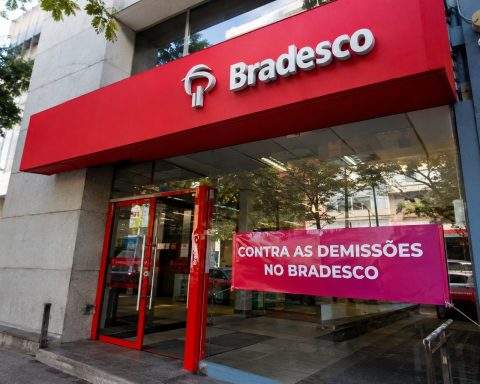
Preferred shares of Banco Bradesco finished Friday beneath the price set for its capital offering. What was meant to be a 6% discount on subscriptions instead turned into a 1.9% premium. The Brazilian cash market was not open at the time of publication due to the weekend.
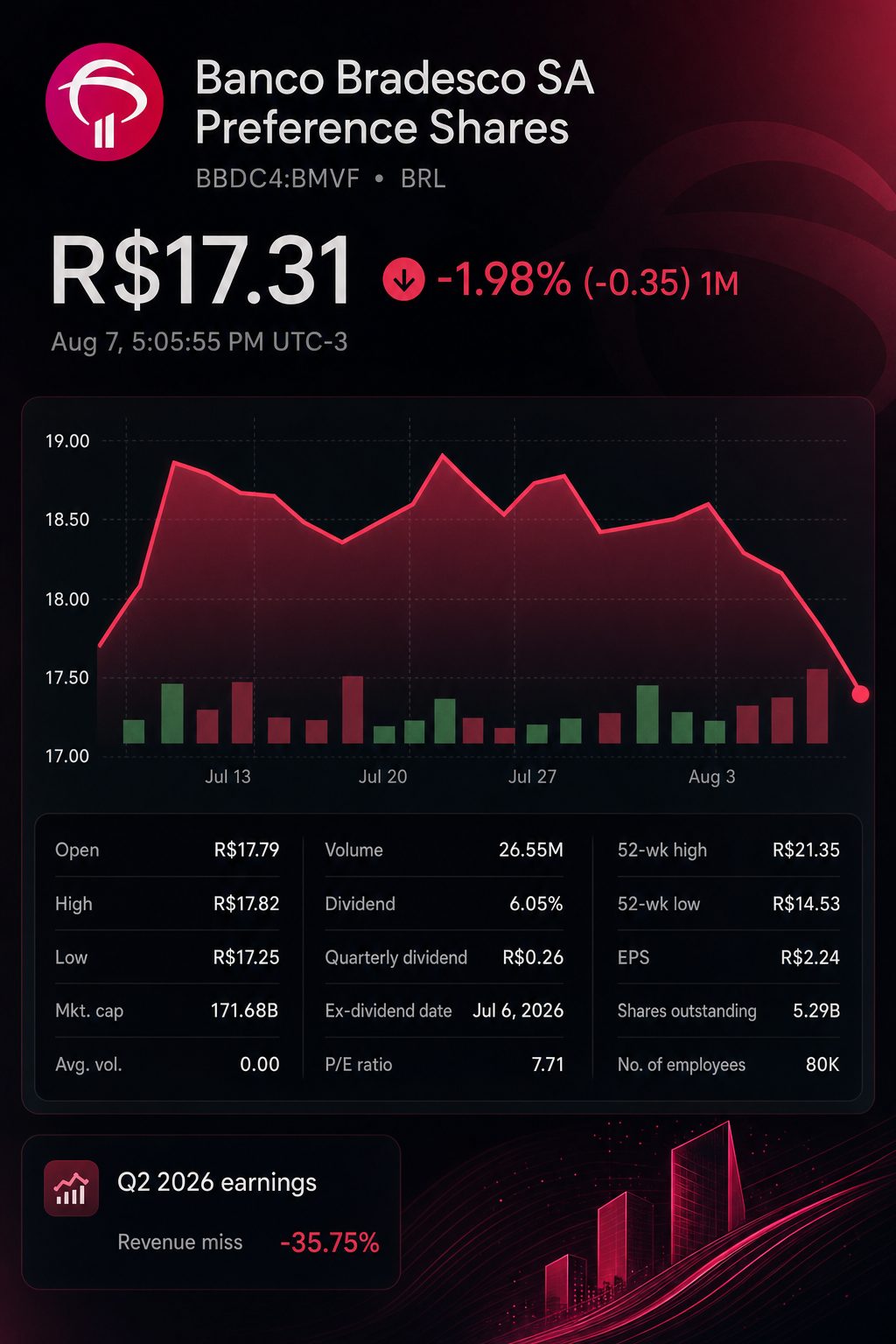
The stock declined 6.1% between July 31 and Friday. The Ibovespa slipped 3.1%, putting Bradesco three percentage points lower.
Comparison of prices and capital offers
| Metric | Reference level | Friday level | Change or comparison |
|---|---|---|---|
| BBDC4 preferred share | R$18.43 on July 31 | R$17.31 | -6.1% Google |
| Ibovespa | 177,999 on July 31 | 172,513 | -3.1% The Wall Street Journal |
| Preferred-share subscription price | R$17.64 | R$17.31 cash price | Cash price 1.9% lower Mziq API |
| Maximum capital increase | R$10.0 billion | R$171.68 billion market value | Represents 5.8% Mziq API |
Investors looking for fresh exposure found the cash market less expensive than exercising the rights. This assessment does not consider the rights’ separate market price or the remaining time value. Rights are available for trading until September 1 and may be exercised up to September 4.
Rising credit costs offset the support from stronger earnings for the shares. Client net interest income increased by 13.8% compared with the same period a year ago. Provisions expanded by 22.6%, widening the growth gap by 8.8 points.
Client NII post-provisions rose by 6.2%. The main question remains whether future losses will outpace loan growth.
Operating results for the second quarter
| Metric | Second quarter of 2026 | Year-on-year change |
|---|---|---|
| Total loan book | R$1.137 trillion | +11.6% Mziq API |
| Client net interest income | R$20.199 billion | +13.8% Mziq API |
| Expanded provisions for loan losses | R$9.985 billion | +22.6% Mziq API |
| Client NII net of provisions | R$10.214 billion | +6.2% Mziq API |
| Recurring profit | R$7.050 billion | +16.2% Mziq API |
| Loans in arrears over 90 days | 4.3% | +0.2 percentage point Mziq API |
Loan expansion has surpassed the upper end of guidance by 1.1 percentage points. Bradesco maintains its forecast of 8.5%-10.5% growth through December. As a result, the growth rate by year-end could decelerate.
Recurring profit totaled R$7.05 billion, marking its tenth consecutive quarterly rise. ROAE stood at 16.2%, and efficiency rose to 46.5%. However, loan-loss coverage dropped to 152.3% from 177.8% in the same period last year.
Rafael Reis from BB Investimentos, part of Banco do Brasil S.A. BVMF:BBAS3, described the quarter as “another important advance” in restoring profitability. The market, however, reacted more cautiously. Investors are seeking proof that credit costs will stabilize. InvesTalk
The capital increase creates a buffer to manage that risk. The full R$10 billion represents approximately 5.8% of the company’s market capitalization as of Friday. If fully approved, it would boost the pro-forma common-equity ratio by about 0.9 percentage point from 12.7%. Controllers have pledged to subscribe to as much as R$8 billion.
Rival performance highlights the trade-off. Bradesco reported the quickest profit expansion among its peers. It also saw the sharpest rise in credit charges. These figures are defined by each company and not fully comparable.
Comparison of earnings at Brazilian banks
| Company | Recurring profit | Year-on-year profit | ROAE | Credit-cost change |
|---|---|---|---|---|
| Banco Bradesco | R$7.05 billion | +16.2% | 16.2% | Provisions increased +22.6% Mziq API |
| Itaú Unibanco Holding S.A. BVMF:ITUB4 | R$12.41 billion | +7.8% | 24.3% | Cost of credit up +7.4% Stock Titan |
| Banco Santander (Brasil) S.A. (BVMF:SANB11) | R$3.01 billion | -17.6% | 12.5% | Provisions rose +6.5% Reuters |
Interest rates might offer gradual support. On Wednesday, Brazil’s central bank reduced the Selic rate by 25 basis points to 14%, marking its fourth consecutive cut. CEO Marcelo Noronha stated the policy “has driven inflation down” and said he saw “no reason” for Copom not to lower rates further, but noted the speed of future easing was still unclear. Reuters
Opinions following the results are still divided. Reis maintained a Buy rating and increased his price target to R$24 by end-2027. Neutral ratings cited softer reserve coverage. Analyst target prices below represent estimates rather than company guidance.
Analyst ratings following Q2 results
| Analyst or firm | Recommendation | Price target and horizon | Implied move from R$17.31 |
|---|---|---|---|
| Mario Pierry, Bank of America Securities, a unit of Bank of America Corp. NYSE:BAC | Buy, reiterated August 6 | BBD ADR; target undisclosed | |
| Rafael Reis, BB Investimentos | Buy | R$24, end-2027 | +38.6% InvesTalk |
| Eduardo Nishio and Alan Frydman, Genial Investimentos | Buy | R$25; horizon not specified | +44.4% Genial Analisa |
| The Goldman Sachs Group, Inc. NYSE:GS | Neutral | R$18.97, over 12 months | +9.6% InfoMoney |
Based on Friday’s closing value. Analyst targets reflect their estimates.
The coming week will reveal if the discount inversion continues. Banco BTG Pactual S.A. (BVMF:BPAC11) is set to release results Tuesday prior to the market open. Banco do Brasil will publish earnings on Wednesday, with Bradesco’s rights exercise still underway.
Looking ahead to next week
| Date | Event | Investor read-through |
|---|---|---|
| August 10-14 | Bradesco rights entitlement period ongoing | Monitor if BBDC4 trades under the R$17.64 rights price Mziq API |
| August 11 | Banco BTG Pactual to release Q2 results pre-market | Indicator for performance in wealth management and capital-markets business BTG Pactual |
| August 12 | Banco do Brasil to announce second-quarter earnings | Gauge of loan quality at a leading state-run bank Banco do Brasil RI |
Risks: Persistent stress among households or small businesses may result in provisions continuing to outpace revenue growth. A more gradual easing cycle could postpone credit relief. Shareholders who do not participate could experience dilution of up to 3.4%.