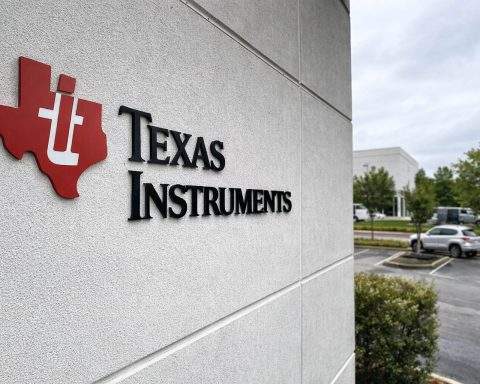
Texas Instruments Incorporated (NASDAQ: TXN) is back in focus on December 18, 2025, as fresh headlines about its U.S. manufacturing expansion collide with a still-mixed Wall Street outlook for margins and growth into 2026. The chipmaker has officially begun producing chips at its newest 300mm wafer fabrication facility in Sherman, Texas, a milestone TI says will help it scale “foundational” semiconductors used across everything from vehicles and factory equipment to consumer electronics and data centers. Texas Instruments
At the same time, Texas Instruments stock is trading in a market that continues to debate two competing narratives: a long-cycle analog recovery and supply-chain resilience on one side, and concerns about inventories, depreciation, and returns on heavy capital spending on the other—concerns that helped drive a rare “double downgrade” earlier this week. Barron’s
Texas Instruments stock price today (TXN): latest trading snapshot on Dec. 18, 2025
As of Thursday, Dec. 18, 2025 (18:20 UTC), TXN traded at $177.58, up $3.09 (+1.77%) from the prior close, with an intraday range of $175.05 to $178.89 and volume around 2.78 million shares at the time of the update.
That rebound comes after a choppy stretch for the stock—an important context because today’s “good news” on U.S. production capacity doesn’t automatically translate into near-term earnings momentum. Analysts and investors are still weighing how quickly end-demand improves (especially in industrial and automotive) versus how long fixed-cost pressure (like depreciation) remains a headwind. Barron’s
The biggest Texas Instruments news on Dec. 18: Sherman “SM1” begins production
What TI announced
Texas Instruments said it has started production at its newest semiconductor fab in Sherman, Texas, just three and a half years after breaking ground. The facility—called SM1—is designed to ramp according to customer demand and ultimately produce tens of millions of chips per day that go into a wide range of devices (including smartphones, automotive systems, medical devices, industrial robots, smart appliances, and data centers). Texas Instruments
TI also positioned the start of SM1 as part of a broader strategy: owning and controlling its manufacturing operations, process technology, and packaging to improve supply reliability “in any environment.” Texas Instruments
What local and regional coverage emphasized
Local reporting around the ribbon cutting in Sherman highlighted the “megasite” scale and the speed of execution. The Dallas Morning News described SM1 as a million-square-foot facility already producing 300mm wafers, with SM2 largely in place and able to begin production as demand requires—while the timeline for additional fabs depends on future conditions. Dallas News
Regional TV coverage similarly underscored the $40 billion investment framing and the expected job impact, often connecting the project to post-pandemic supply chain lessons and fast-growing AI/data-center infrastructure needs. CBS News+1
Why the “300mm” detail matters
Tech-industry coverage stressed that Sherman’s SM1 is not about cutting-edge AI compute chips—rather it’s geared to the high-volume, long-lifecycle chips that quietly power the modern economy (including power systems and automotive electronics). Tom’s Hardware noted that the facility is producing 300mm wafers, and connected the launch to TI’s earlier U.S. manufacturing investment plan and the company’s focus on foundational chips used broadly across industries. Tom’s Hardware
Sherman is one piece of TI’s bigger U.S. manufacturing bet
In its Sherman announcement, TI said the site is planned to include up to four connected wafer fabs, built and equipped in alignment with market demand, and the broader footprint is tied to the company’s plan to invest more than $60 billion across seven semiconductor fabs in Texas and Utah. Texas Instruments
State-level messaging also leaned into the “strategic capacity” theme. The Texas governor’s office described the Sherman facility as a major advanced-manufacturing project with an expected $40 billion capital investment over coming decades and emphasized semiconductors as critical infrastructure for AI and future technology systems. Texas.gov
For TXN stock watchers, this matters for one central reason: TI is intentionally building capacity ahead of demand—a strategy the company argues supports reliability and long-term share gains, but one that can also pressure margins if the demand ramp is slower than planned. Dallas News+1
Wall Street forecasts for TXN stock: a “Hold” consensus, but wide disagreement underneath
The consensus view
On aggregate, analyst consensus still leans cautious. MarketWatch’s analyst snapshot lists an average recommendation of “Hold” and an average target price near $189.71 (based on 40 ratings in its compilation). MarketWatch
That headline consensus hides meaningful dispersion in assumptions—especially around the pace of the analog cycle recovery and how quickly TI can expand output without carrying excess inventory or absorbing margin drag from higher depreciation.
The key analyst notes shaping the debate this week
- Goldman Sachs “double downgraded” TXN to Sell from Buy, cutting its price target to $156 from $200, arguing TI could lag peers even in a cyclical upturn due to supply-chain/capacity decisions that contributed to record-high inventories and heavier depreciation burden. Barron’s
- Cantor Fitzgerald maintained a Neutral stance while raising its price target to $190 from $170, a reminder that some firms see value in TI’s positioning even without turning outright bullish on the stock. TipRanks
- BofA raised its price target to $185 from $175 while keeping an Underperform rating, reflecting a view that valuation and execution risks can persist even if the broader semiconductor cycle improves. TipRanks
In plain English: analysts broadly agree TI is strategically important in foundational semiconductors, but they disagree on how much investors should pay today for a long-horizon manufacturing buildout—especially when near-term demand visibility remains imperfect.
Fresh Dec. 18 analysis: valuation and peer comparisons are back in the spotlight
A notable Dec. 18 valuation-themed piece from Trefis argued that Micron (MU) could look like a “smarter buy” than Texas Instruments based on its framework comparing valuation versus growth, while still showing a higher implied value estimate for TXN in its own model. Trefis
Whether investors agree or not, the takeaway is useful for understanding current sentiment around Texas Instruments stock: the market is increasingly treating TXN as a “quality compounder” that must justify its premium through resilient margins and disciplined capital execution, not just through the fact that demand for analog chips is enormous over time.
Institutional activity on Dec. 18: what new filings say (and what they don’t)
Several Dec. 18 items highlighted recent institutional positioning based on Form 13F filings—worth noting, but important to interpret correctly because 13Fs are backward-looking snapshots (and can be weeks old by the time investors see them).
Highlights from the latest coverage include:
- Gradient Investments LLC opened a new position of 63,645 shares (valued around $11.7 million) in the third quarter, according to the report. MarketBeat
- Oak Thistle LLC opened a new position of 7,612 shares (about $1.40 million) in Q3, per the filing summary. MarketBeat
- Thrivent Financial for Lutherans reduced its stake by 21.3%, selling 14,662 shares and ending the period with 54,104 shares (valued around $11.23 million in the recap). MarketBeat
These filings don’t tell investors what these firms are doing today, but they do reinforce a broader point: TXN remains a heavily institutionally owned mega-cap, and portfolio managers continue to actively size exposure as the cycle evolves. MarketBeat+1
Dividends: TXN’s shareholder-return story remains a pillar
Texas Instruments is also widely held for its shareholder-return profile. In 2025, TI said it raised its quarterly dividend 4% to $1.42 per share—$5.68 annualized—marking its 22nd consecutive year of dividend increases. Texas Instruments+1
At today’s price area (around $177–$178), that annualized dividend implies a yield in the neighborhood of ~3.2% (before accounting for price moves), which helps explain why TXN often trades as a “hybrid” between a cyclical semiconductor name and a dividend-growth quality stock—especially when rates and growth expectations shift.
What investors are watching next for Texas Instruments stock
1) The production ramp and demand signals
TI says Sherman SM1 will ramp in line with customer demand. That phrase is doing a lot of work: investors will look for signals that demand is firm enough to absorb expanding output without ballooning inventories or crimping margins. Texas Instruments+1
2) Next earnings timing (late January 2026)
Multiple market calendars currently point to a late-January 2026 window for Texas Instruments’ next earnings update. Nasdaq lists Jan. 22, 2026 as an estimated date (noting it’s algorithmic and may change), while Yahoo Finance’s earnings calendar currently shows Jan. 20, 2026. Until TI confirms the date, investors should treat these as indicative rather than definitive. Nasdaq+1
3) The “margin math”: depreciation, utilization, and pricing
The heart of the bullish vs. bearish debate is whether TI’s scale strategy ultimately expands competitive advantage (and long-term free cash flow), or whether depreciation and utilization challenges cause the company to lag peers during the next upturn—one of the core arguments behind the Goldman downgrade. Barron’s
Bottom line: On Dec. 18, 2025, Texas Instruments stock is reacting to a major operational milestone—Sherman SM1 is now producing—but the investment narrative remains contested. The bull case leans on domestic scale, supply reliability, and a long-cycle analog franchise. The bear case focuses on valuation, inventory, and the near-term margin implications of building capacity ahead of demand. Texas Instruments+1