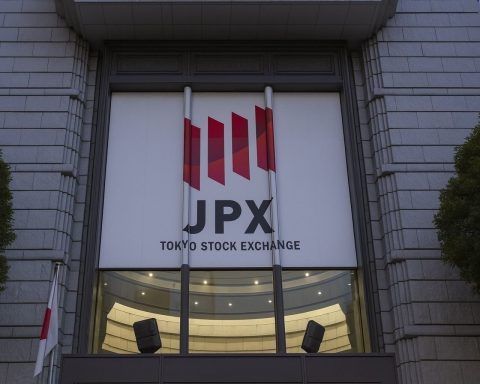
TOKYO — Japan’s equity market heads into Friday’s open with an unusual mix of “holiday-thin” global liquidity and genuinely market-moving domestic catalysts. While many overseas desks are still operating on reduced staffing after Christmas, Tokyo will get a concentrated burst of high-impact data just minutes before the cash session begins — at a time when the yen, bond yields and Bank of Japan expectations are already the central story for Japanese assets.
Below is what investors should know before the Tokyo Stock Exchange opens on Friday, December 26, 2025.
1) Where Japanese stocks left off: Nikkei near record territory, but trading has been thin
Japan’s benchmark Nikkei 225 closed Thursday (Dec. 25) at 50,407.79, extending a year that has already delivered outsized gains and kept the index hovering near record levels. FRED
The broader TOPIX ended at 3,417.98. Businessinsider
Thursday’s session took place during thin holiday trading, with many global markets closed for Christmas — a backdrop that can dampen volume but also amplify price swings when a real catalyst hits. AP News
2) Early directional cue: Nikkei futures slightly above the cash close
The cleanest pre-open temperature check is often the offshore futures market. As of this morning, SGX Nikkei 225 futures were indicated around 50,475, a touch above Thursday’s cash close. Investing
That modest premium suggests a cautiously positive bias — but with a big caveat: Japan’s inflation and activity data hit right before the open, meaning the “futures mood” can flip quickly in the final minutes.
3) Yen watch: the currency is still the market’s steering wheel
For Japanese equities, the yen remains the single most important macro variable because it can reshape earnings expectations quickly — especially for exporters.
Overnight pricing showed USD/JPY around 155.9. Investing
A separate snapshot of recent moves shows the dollar-to-yen rate hovering around 155.8, with the past week’s range roughly spanning the mid‑155s to the high‑157s. Wise
Why the yen is so sensitive right now
In the last several days, Japanese officials have repeatedly warned they are prepared to respond to “excessive” FX moves — language markets often interpret as raising the risk of yen-supporting intervention if moves become too abrupt or one-sided. Reuters
For Tokyo stocks, the “yen narrative” matters in two opposing ways:
- A weaker yen typically supports exporters (autos, machinery, some tech hardware) via translation gains and improved overseas competitiveness.
- A stronger yen can pressure exporters’ near-term earnings sentiment — but may help domestic demand and reduce imported inflation stress for households.
Given the government’s sharper FX rhetoric, traders are likely to stay alert for sudden yen jolts that can rapidly reprice equity leadership.
4) The big pre-open catalyst: Tokyo CPI and a cluster of Japan data minutes before trading starts
The most important “today” story isn’t overseas — it’s the Japan data calendar, with releases packed into the final half-hour before the open.
08:30 JST — Tokyo CPI (December)
Market attention is locked on Tokyo inflation because it’s one of the timeliest reads on Japan’s price trend — and it feeds directly into expectations for what the Bank of Japan does next.
Consensus estimates before the release pointed to:
- Tokyo CPI (headline) around +2.4% y/y
- Tokyo CPI ex-fresh food (core) around +2.5% y/y
- Tokyo CPI ex-fresh food & energy (core-core) around +2.9% y/y CME Group
08:30 JST — Unemployment rate (November)
At the same time, investors will see the latest labor-market signal, with the unemployment rate expected to remain stable at 2.6% — consistent with a still-tight jobs backdrop. CME Group
08:50 JST — Retail sales + industrial production (both for November)
Just 10 minutes before the cash open, Japan’s Ministry of Economy, Trade and Industry (METI) publishes:
- Retail sales (Current Survey of Commerce) Ministry of Economy, Trade and Industry
- Industrial production (Indices of Industrial Production, shipments, inventories) Ministry of Economy, Trade and Industry
Market consensus ahead of the releases:
- Retail sales seen rising about +0.7% y/y CME Group
- Industrial output expected -1.3% m/m (a pullback after October’s surprise resilience) CME Group
Why this data burst matters for stocks today
Because these releases land right before the bell, they can drive a fast “macro-to-sector” rotation at the open:
- Hotter inflation / firmer activity could lift expectations that the BOJ stays on a tightening path → potentially stronger yen and higher yields, which tends to favor banks/insurers over exporters.
- Softer inflation / weaker activity could ease BOJ pressure → potentially weaker yen and lower yields, which tends to support exporters and growth stocks.
5) BOJ signals are still reverberating — and today’s inflation read can reinforce or challenge them
The Bank of Japan has already moved away from its ultra-easy era, and policymakers’ recent messaging keeps markets focused on the next steps.
BOJ Governor Kazuo Ueda said this week that underlying inflation is steadily approaching the BOJ’s 2% target, and he signaled the possibility of further interest rate hikes. He also framed Japan’s real rates as still very low — language that markets often interpret as keeping the door open to additional tightening if the data cooperate. Reuters
That matters because Japanese equities are now trading in a regime where:
- The yen can strengthen on BOJ repricing (a headwind for some exporters),
- Financial-sector stocks can react positively to higher yields,
- Equity multiples can become more sensitive to rates than they were during the “free money” years.
A Tokyo CPI surprise — in either direction — is therefore one of the most direct ways today’s session can reshape market leadership.
6) Fiscal policy and the bond market: the second major pressure point
Alongside BOJ normalization, investors have also been tracking Japan’s fiscal stance and the knock-on effects for government bonds — especially super-long JGB yields, which have been a recurring market stress signal.
Record budget, but “discipline” messaging
Prime Minister Sanae Takaichi has emphasized fiscal discipline while presenting a draft budget totaling 122.3 trillion yen, and she has highlighted efforts to keep new bond issuance below 30 trillion yen and reduce the “debt reliance” ratio. Reuters
Government forecasts: growth upgraded, stimulus still central
Japan’s government recently raised its growth forecast for the current fiscal year and expects growth to accelerate next year, with the outlook tied to a large stimulus program (including support for households and strategic investment areas such as AI and semiconductors). Reuters
Debt supply signals: potential relief for the long end
Reuters has also reported that Japan is likely to reduce new issuance of super-long government bonds next fiscal year — an important point because supply fears have been one driver behind pressure on long-dated yields. Reuters
Why equities should care about bonds today
Higher long-end yields can:
- Support banks (net interest margin narrative),
- Pressure high-duration growth stocks,
- Add volatility through portfolio rebalancing (including life insurers and pension allocations),
- Interact with the yen by shifting rate differentials and FX hedging costs.
Even if today’s headline is “stocks,” the bond-yen-BOJ triangle remains the deeper engine underneath many equity moves.
7) Global backdrop: Wall Street records, but holiday conditions still apply
Even with Tokyo’s domestic catalysts dominating, global risk appetite still matters — particularly for Japan’s tech-heavy and export-linked segments.
Wall Street: records into the holiday
U.S. stocks drifted to more record highs in the most recent session before the Christmas closure, with the S&P 500closing at 6,932.05, the Dow at 48,731.16, and the Nasdaq at 23,613.31. AP News
Oil: relatively subdued
Oil prices referenced in the latest regional market coverage showed U.S. crude around $58 and Brent around $62, a level that can be a mixed signal for Japan: supportive for transport and energy import costs, but potentially less supportive for some energy producers. AP News
China liquidity tone: supportive, but not the main driver today
China’s central bank has reiterated a supportive liquidity stance in recent days, which can help broader Asia sentiment at the margin — though Tokyo’s focus this morning is much more domestic (inflation, BOJ, yen). AP News
Stocks and sectors to watch at the open
With the macro catalyst cluster arriving minutes before the bell, many moves may be sector-led. Here are the most important watchlists going into the session.
Exporters: yen sensitivity is back at the center
Autos, industrials and large-cap exporters can swing quickly with USD/JPY. With officials emphasizing readiness to act against excessive FX moves, yen volatility risk remains elevated. Reuters
Banks and insurers: rates and the curve drive the trade
Any inflation surprise that pushes expectations of further BOJ tightening can translate into higher yields — often supportive for bank earnings narratives. Separately, long-end yield pressure has been a major macro theme, and super-long issuance expectations are now a key input. Reuters
AI/tech complex: SoftBank and data-center infrastructure are in focus
Japan’s AI-linked ecosystem has multiple catalysts:
- SoftBank is racing to fulfill a $22.5 billion funding commitment to OpenAI by year-end through cash-raising steps, according to Reuters — a headline that can influence sentiment toward Japan’s biggest AI proxy stock. Reuters
- Japan is also planning what could become its largest data-center hub in Toyama prefecture (3.1 GW total capacity planned), reflecting the scale of AI infrastructure demand and potentially benefiting a range of construction, power, and digital-infrastructure names over time. Reuters
Utilities/energy: TEPCO nuclear restart timeline
Tokyo Electric Power (TEPCO) plans to restart a unit of the Kashiwazaki-Kariwa nuclear power plant on January 20, 2026, with commercial operations planned for February 26, according to Reuters. While longer-term in nature, nuclear restart milestones can affect utilities sentiment and Japan’s broader energy-cost narrative. Reuters
Corporate actions / restructuring: another pillar under Japan equities
Japan’s market has been supported by governance reform momentum and a stronger restructuring and M&A cycle.
Recent examples include:
- Sapporo Holdings selling its real estate business to a consortium led by KKR and PAG for 477 billion yen, a deal that fits the “unlock value / refocus core business” theme. Reuters
- Daiwa Securities aiming to raise its M&A revenue target, reflecting a broader Japan dealmaking boom (Reuters cited total Japan M&A value near $319 billion in 2025). Reuters
These developments matter for Tokyo trading because they keep investors alert for additional carve-outs, buybacks, strategic sales and activist-driven change — themes that can outperform even on macro-noisy days.
Industrials/materials: steel and trade policy headlines
Japan’s steel sector is navigating a mix of overseas supply pressure and trade policy uncertainty. Reuters reported commentary that China’s planned export license system is unlikely to materially reduce excess steel exports, while also noting tariff-related profit impacts for Japanese producers. Reuters
A practical “before the bell” checklist for Dec. 26
Here’s the tight timeline that matters most this morning:
- 08:30 JST — Tokyo CPI (December) + unemployment rate (November) CME Group
- 08:50 JST — Retail sales (November) + industrial production (November), METI preliminary releases Ministry of Economy, Trade and Industry
- 09:00 JST — Tokyo Stock Exchange cash session opens
- Watch USD/JPY and index futures as the data hits, because reactions can be immediate. Investing
Also note: Japan’s market is open today (JPX holidays list Dec. 31 as the late-December closure), even though many overseas markets are still in holiday mode. Japan Exchange Group
Bottom line
Tokyo’s December 26 open is set up to be more consequential than a typical “post‑Christmas” session because Japan’s inflation and activity data arrives in a compressed window just before trading begins. With BOJ tightening expectations, yen intervention risk, and fiscal/bond-market concerns all tightly linked, the early minutes of the session may decide whether leadership tilts toward exporters, banks, or rate-sensitive growth.