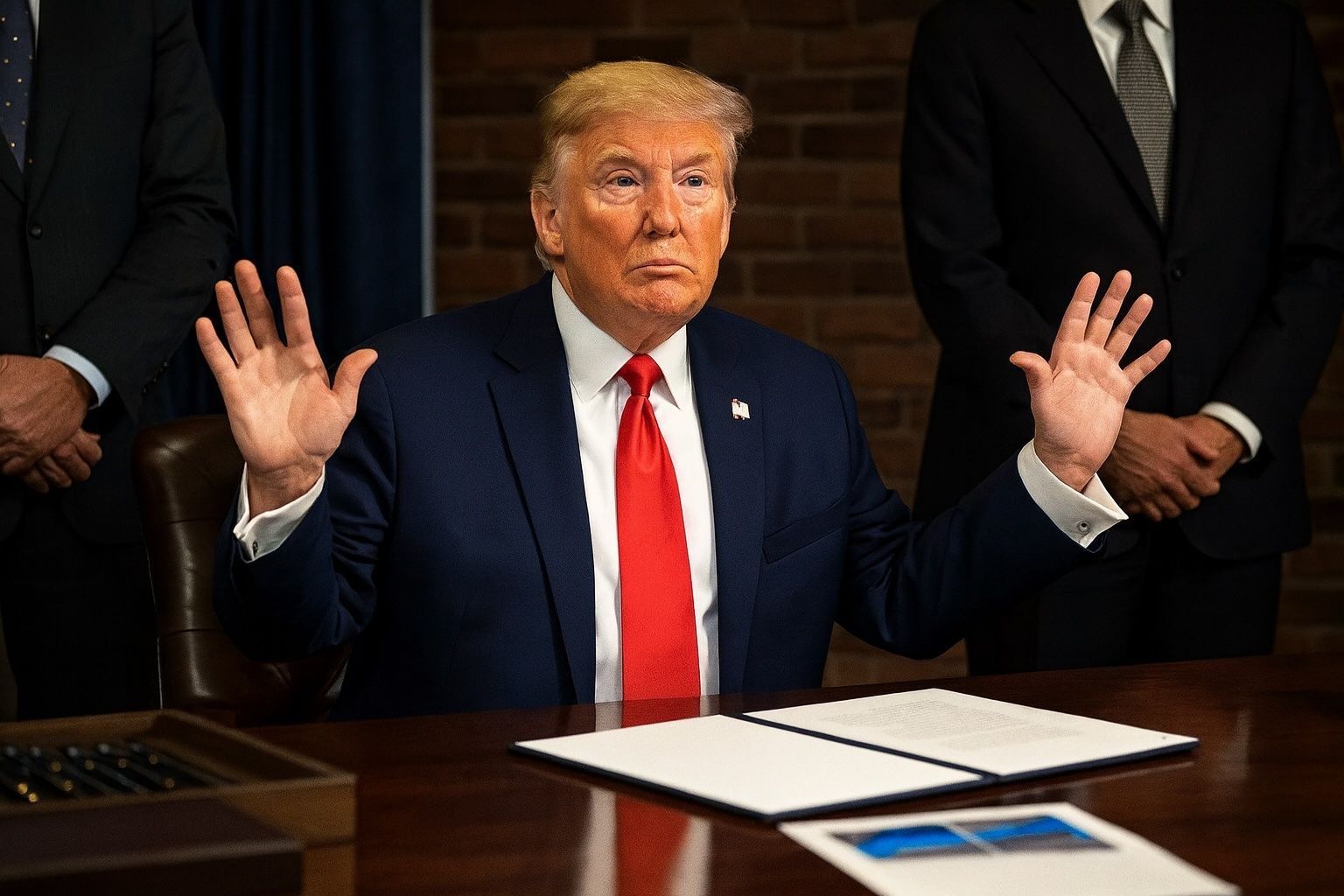
WASHINGTON — President Donald Trump signed a new executive order Thursday aimed at accelerating the federal reclassification of marijuana, a rare, headline-grabbing shift in U.S. drug policy that could ripple across medical research, the cannabis industry, and state-by-state enforcement. WHEC.com+1
But the marijuana move isn’t happening in isolation. On Dec. 18, 2025, multiple executive-order-driven storylines collided across Washington—from federal efforts to curb state AI regulation, to sweeping health-policy proposals tied to an earlier Trump order, to continued fallout from a proxy-voting order reshaping corporate governance debates. My Journal Courier+3The White House+3HHS+3
The big news today: Trump signs an executive order to fast-track marijuana’s federal reclassification
Trump’s order is designed to speed a long-running federal review that could move marijuana from Schedule I—the most restrictive category under the Controlled Substances Act—into Schedule III, a classification reserved for substances viewed as having legitimate medical uses and lower abuse potential than Schedule I drugs. WHEC.com+1
Why that matters: Schedule I currently places marijuana alongside drugs such as heroin and LSD; Schedule III includes drugs such as ketamine and some anabolic steroids. Shifting marijuana to Schedule III would not legalize recreational cannabis nationwide, but it could significantly change how the federal government regulates research, taxation, and enforcement. WHEC.com
What the executive order does, according to today’s reporting
Because the administration has not released the full text publicly yet, the most detailed picture so far comes from reporting and senior administration officials briefed on the directive. Reuters
Based on that reporting, the order:
- Directs the attorney general to move quickly on the federal process to reclassify marijuana. Reuters+1
- Targets expanded medical research on marijuana and related products to better understand risks and potential therapeutic use. Reuters+1
- Calls for expanded research and access to CBD (cannabidiol), a hemp-derived product widely sold in the U.S. while still debated by health experts. WHEC.com+1
- Signals a Medicare-related CBD policy change: Reuters reported that the Centers for Medicare & Medicaid Services (CMS) plans to allow some beneficiaries to use hemp-derived CBD products. Reuters
- Separate reporting described a possible pilot program exploring Medicare reimbursement for CBD through CMS’s innovation authority, with details still in flux. The Washington Post
What changes if marijuana moves to Schedule III—and what doesn’t
What could change:
- Research barriers could ease. Federal scheduling rules have long been cited as a major obstacle to large-scale, high-quality research into marijuana’s potential benefits and harms. WHEC.com+1
- A major tax pressure point for the cannabis industry could soften. The Associated Press reported the shift could reduce a hefty tax burden on cannabis businesses—one reason the industry has pushed for rescheduling. WHEC.com
- Capital and banking access could improve—indirectly. Reuters noted that rescheduling could “open doors long closed to banks and investors,” even while marijuana remains federally illegal. Reuters
What won’t change overnight:
- It is not federal legalization. Even under Schedule III, marijuana would remain a controlled substance at the federal level, and recreational use would not automatically become legal nationwide. WHEC.com+1
- The DEA still has to complete its process. The Drug Enforcement Administration must review the recommendation and decide on reclassification through an administrative pathway that typically includes a public comment period. WHEC.com+1
- State laws still vary widely. The U.S. would remain a patchwork of regimes—from states where adult use is legal to states where it remains illegal. Reuters+1
The politics: a rare cross-partisan issue—with sharp GOP resistance still visible
The marijuana shift comes as public opinion has steadily moved toward legalization. The AP cited Gallup polling showing support for legalization rising to 68% last year. WHEC.com
At the same time, Trump’s move lands in the middle of ongoing Republican debate. AP reported that more than 20 Republican senators urged Trump earlier this year to keep marijuana as a Schedule I substance, arguing it remains dangerous and warning against loosening policy. WHEC.com
What’s next: DEA timeline questions and the missing text of the order
Two things can be true at once in the hours after an executive order signing: the political signal is immediate, while legal and regulatory change can take months.
- Reuters reported that the text of Trump’s marijuana order was not yet public at the time of publication, limiting certainty about timelines and agency directives. Reuters
- AP noted that rescheduling typically involves a lengthy process and that the order is expected to speed things up, though it remained unclear how long it might take. WHEC.com
That means today’s order is best understood as a powerful instruction to federal agencies to move faster—rather than a switch that flips nationwide cannabis policy immediately.
The other Trump executive-order storylines making news today
While marijuana dominated the day’s breaking headlines, Dec. 18 also saw major developments tied to other executive orders—and those stories help explain why the administration’s use of executive power is becoming a defining feature of late 2025.
1) HHS proposes sweeping limits on gender-affirming care for minors—citing a Trump executive order
The U.S. Department of Health and Human Services announced proposed regulatory actions Thursday designed to implement President Trump’s executive order directing HHS to end what the department calls “sex-rejecting procedures” for children. HHS
According to HHS:
- CMS will release a proposed rule that would bar hospitals from performing the targeted procedures on children under 18 as a condition of participation in Medicare and Medicaid. HHS
- CMS will also release a proposed rule to prohibit federal Medicaid funding for the targeted procedures for those under 18, with a similar prohibition applying to CHIP funding for those under 19. HHS
AP reporting emphasized that these are proposals, not final rules—meaning they would typically require a formal rulemaking process, including public comment, before becoming binding, and would likely face legal challenges. AP News
The AP also reported that these proposals run counter to recommendations of most major U.S. medical organizations, and that advocates said the moves would put lives at risk. AP News
2) Trump’s AI executive order continues to draw state pushback—while the White House outlines funding and litigation leverage
Although Trump signed the AI executive order last week, it remained a major political story on Dec. 18 as state leaders—particularly in Illinois—signaled they will resist the federal push. My Journal Courier+1
The executive order itself frames state-by-state AI regulation as a barrier to U.S. innovation, arguing that a “patchwork” of state laws burdens compliance and can push models toward “ideological bias.” The White House
Key directives include:
- Creating an AI Litigation Task Force at the Justice Department within 30 days to challenge state AI laws the administration views as conflicting with the order’s policy. The White House+1
- Directing the Commerce Department to evaluate state AI laws and, per the White House fact sheet, withhold certain non-deployment BEAD broadband funds from states with laws deemed to conflict with national priorities—while encouraging other agencies to consider grant-related conditions as well. The White House
- Instructing federal agencies such as the FTC and FCC to take actions the White House says would limit states’ ability to force AI companies into consumer deception, and to consider federal reporting/disclosure standards. The White House
Illinois officials, in turn, described the order as overreach and vowed to defend state-level AI safeguards. My Journal Courier
3) Proxy advisors and shareholder votes: a Trump executive order keeps reshaping the ESG and corporate-governance fight
Another Trump executive order still driving headlines this week—and referenced in Reuters reporting on Dec. 18—targets the proxy advisory industry, with the White House alleging that foreign-owned proxy advisors exert outsized influence over shareholder voting and corporate governance. The White House+2Reuters+2
The order and accompanying White House fact sheet outline a broad menu of potential actions:
- Directing the SEC to review and potentially revise or rescind rules and guidance related to proxy advisors and shareholder proposals, particularly where they intersect with DEI and ESG priorities. The White House+1
- Pushing for increased enforcement scrutiny (including anti-fraud provisions), possible registration requirements, and greater transparency around conflicts of interest. The White House
- Directing the FTC, in consultation with the attorney general, to examine whether proxy advisors engage in unfair competition or deceptive practices. The White House
- Directing the Labor Department to strengthen ERISA fiduciary rules and increase transparency regarding the use of proxy advisors. The White House
The issue also surfaced inside a separate Reuters story today about a shareholder group pressing major companies to disclose operational impacts of Trump’s immigration policies—where Reuters noted the push comes amid broader regulatory moves that could make it easier for companies to ignore shareholder proposals. Reuters
4) Fentanyl “weapon of mass destruction” order hits the Federal Register today
One of the administration’s most controversial recent executive orders—designating illicit fentanyl as a “weapon of mass destruction”—also gained a new procedural milestone on Dec. 18: it was published in the Federal Register today as Executive Order 14367, signed on Dec. 15. Federal Register
The White House fact sheet says the order directs multiple agencies to intensify criminal, sanctions, and national-security tools against fentanyl trafficking networks, including instructions for the attorney general on charges and sentencing, and for State and Treasury on actions against assets and financial institutions linked to illicit fentanyl. The White House
The throughline on Dec. 18: executive orders as fast-moving signals—followed by slow, high-stakes implementation
Today’s marijuana executive order is a vivid example of how Trump is using presidential authority to signal direction quickly and force agency momentum—especially in areas where Congress remains gridlocked or where the administration wants to seize the initiative. WHEC.com+1
But the other headlines on Dec. 18 underscore the second half of the executive-order story: the implementation phase, where rules are proposed, funding levers are tested, courts are engaged, and states or industries push back.
For readers tracking “Trump executive orders today,” the practical question in the days ahead won’t just be what gets signed in the Oval Office—it will be what survives rulemaking, litigation, and political resistance across the country. Reuters+3AP News+3The White House+3