Dec. 18, 2025 — A new U.S. move targeting Venezuela’s oil lifeline is rippling far beyond Caracas, jolting energy markets, rattling shipping routes in the Caribbean, and drawing warnings from global powers—including Russia and China—about the risk of escalation.
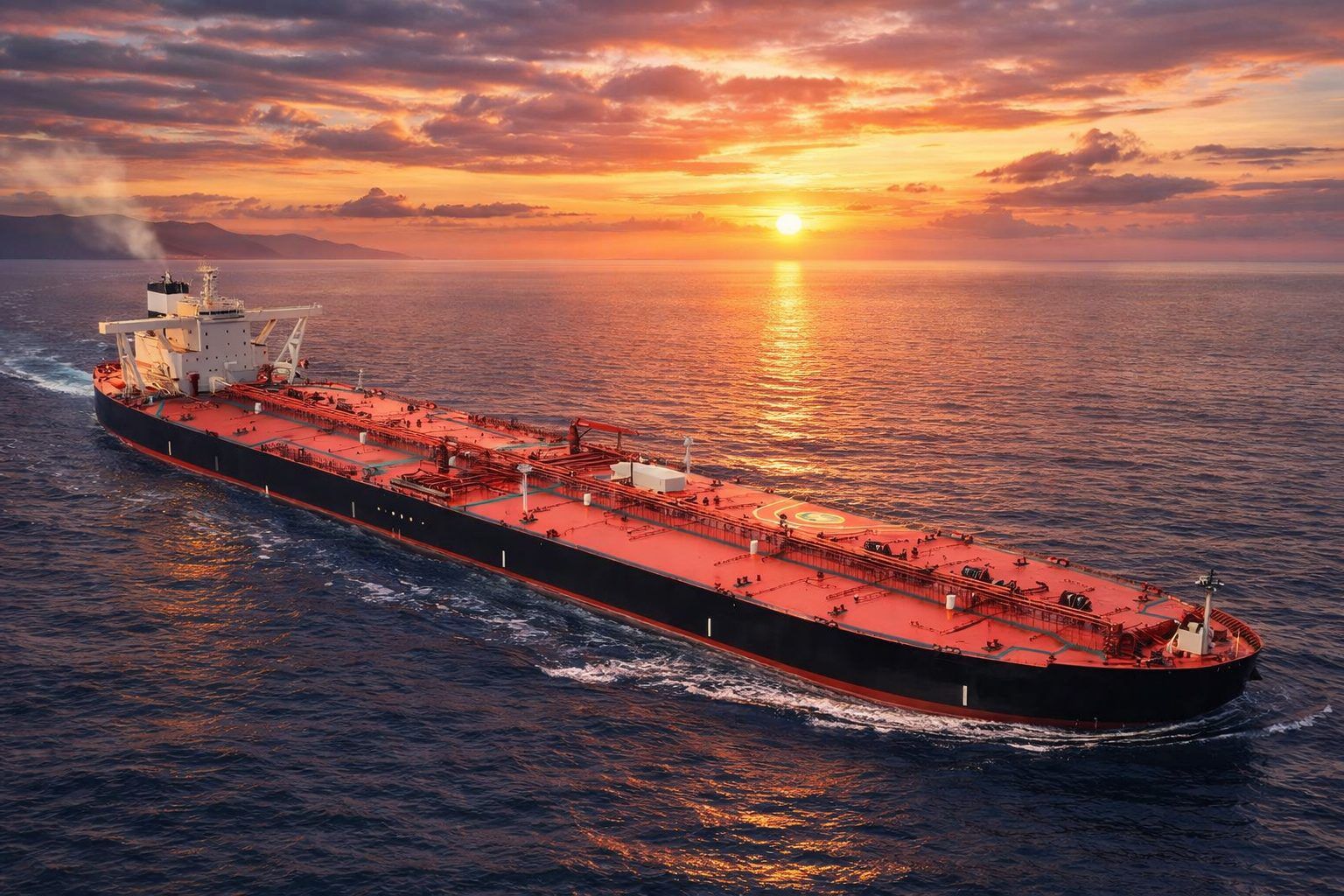
Late this week, President Donald Trump said he is ordering a “total and complete blockade” of sanctioned oil tankers moving into and out of Venezuela, intensifying Washington’s effort to choke off revenue for President Nicolás Maduro’s government. The announcement has already changed tanker behavior near Venezuelan ports and pushed crude prices off recent lows, even as traders debate what the policy means in practice—and how far the U.S. is prepared to go to enforce it. Reuters+2AP News+2
What’s emerging on Dec. 18 is a fast-moving story at the intersection of geopolitics and markets: an oil crackdown aimed at Maduro, a shipping “shadow fleet” under pressure, and a global crude market trying to price the risk without overreacting to headlines.
What Trump ordered—and why it matters
According to Reuters, Trump ordered a “blockade” of all sanctioned oil tankers entering and leaving Venezuela, describing the action as part of a broader pressure campaign against Maduro’s government. In the same message, Trump said the Venezuelan “regime” had been designated a foreign terrorist organization and pointed to allegations including terrorism, drug smuggling, and human trafficking. Venezuela’s government responded by rejecting what it called a “grotesque threat.” Reuters+1
The key qualifier—one that shapes the legal, diplomatic, and market fallout—is the focus on sanctioned vessels. The Washington Post notes that a true “complete blockade” would be illegal under international law, but Trump’s stated measure, as described, applies to tankers already under U.S. sanctions, making it something closer to an aggressive enforcement action than a blanket naval quarantine. The Washington Post
Still, the distinction may not matter to shipowners and insurers making real-time decisions about risk. In practice, even a targeted crackdown can create a chilling effect: tankers hesitate, cargoes stall, and buyers demand bigger discounts to compensate for the possibility of delay—or seizure.
Oil prices: a spike, then a pause as traders weigh enforcement
Energy markets reacted quickly to the announcement. Reuters reported that oil rose more than 1% in early trading after Trump’s statement, with Brent and U.S. WTI rebounding from levels near multi-year lows. Reuters+1
By Thursday, Dec. 18, prices were steady rather than surging, reflecting a market that’s still skeptical about the scale of real-world disruption. Reuters said Brent hovered near $60 a barrel and WTI near $56, as investors assessed how a blockade would be enforced and weighed other supply-and-demand forces. Reuters
That “other forces” list is important. Reuters also reported that traders were watching:
- Potential U.S. sanctions on Russia’s energy sector (reported by Bloomberg, with Reuters noting a White House official said Trump had not made decisions), and
- European moves against Russia’s shadow fleet, including EU sanctions on additional vessels and UK sanctions on Russian oil-related targets. Reuters
In other words, the Venezuela story is landing in a crude market that’s already navigating uncertainty: a tug-of-war between geopolitical risk and broader concerns about global demand and supply.
The immediate reality at sea: tankers divert, loiter, and rethink Venezuelan calls
The fastest signs of impact are not in official communiqués—they’re in ship movements.
The Associated Press reported that some sanctioned vessels began diverting away from Venezuela after Trump’s threat, citing maritime intelligence tracking that showed tankers deviating, loitering, or changing course. One example: a vessel approaching Venezuela’s Jose port reportedly made a sharp turn and headed away, behavior consistent with ships avoiding heightened enforcement risk. AP News
The Washington Post similarly reported that more than 30 sanctioned tankers operating in the Caribbean could be affected immediately, with analysts pointing to tactics used to evade sanctions—false flags, ship-to-ship transfers, and obscured ownership structures. The Washington Post
This matters because Venezuela’s oil trade has increasingly relied on precisely those opaque methods. When enforcement rises, the “shadow” system becomes more expensive and less reliable—raising costs for PDVSA and reducing cash flow to the state.
How much Venezuelan oil is at risk
Venezuela is not a top-tier global producer today—but it is still meaningful at the margins, and critically important to its own economy.
Reuters assessed that the tanker crackdown could affect roughly 600,000 barrels per day of Venezuelan exports, mostly destined for China, while exports to the United States would likely continue under existing authorizations tied to Chevron. Reuters
AP, citing industry analysis, put Venezuela’s production around 900,000 barrels per day, and noted that sanctioned tankers have carried a growing share of shipments in the second half of this year—making the “sanctioned vessel” focus potentially far more consequential than it sounds. AP News
And China is central to the story. Reuters reported that Venezuela accounts for roughly 4% of China’s crude imports, with December shipments on track to average more than 600,000 barrels per day—a relationship that gives Beijing a direct stake in the outcome, even if it remains cautious about overt involvement. Reuters
Maduro’s weak spot: cash flow from oil—and the price of risk
Fox News framed the blockade as a direct hit on Maduro’s most vulnerable point: oil revenue. The outlet cited analysts and industry figures describing cargoes stranded offshore and steep discounts demanded by buyers. Fox News
Reuters reporting supports the broader picture of concessions and financial pressure. In a separate dispatch focused on Venezuela’s economy, Reuters said oil customers have been demanding steeper discounts and contract changes following the seizure of a vessel and the blockade threat, with about 80% of exports going to Asia. Reuters
As risk rises, the mechanics are straightforward:
- Buyers push for lower prices (risk discount).
- Shipping and insurance costs increase (risk premium).
- Cargoes slow down (cash conversion delay).
- And the state’s access to usable foreign currency tightens.
That tightening can have a rapid domestic impact—especially in an economy where imports dominate everything from food supply chains to industrial inputs.
Venezuela’s inflation risk: fewer dollars, fewer imports, higher prices
Reuters’ economic reporting on Dec. 18 described a growing fear inside Venezuela’s private sector: a decline in the inflow of foreign currency—both in cash and cryptocurrency—that many businesses rely on to pay for imports. Reuters
Key details from Reuters’ reporting include:
- Government allocations of foreign currency to companies were about $5 billion from January through November, down 16% from the same period in 2024. Reuters
- Analysts warned the U.S. measures could affect up to half of oil exports, tightening the supply of dollars/crypto used for commerce. Reuters
- Venezuela’s official exchange rate was described as depreciating at about 1% daily, pushing up prices in an import-dependent economy. Reuters
- Reuters cited an IMF estimate that annual inflation could end the year at 548%, and noted the central bank had not published price data since October 2024. Reuters
The result is a familiar Venezuelan pattern—only faster: currency stress feeds import stress, which feeds inflation and household hardship.
Chevron and U.S. refineries: why some flows continue
Not all Venezuelan crude is treated equally under U.S. policy.
AP reported that roughly 143,000 barrels per day of Venezuelan heavy crude shipped to U.S. refineries along the Gulf Coast was unaffected for now, much of it transported by Chevron, which operates under a U.S. waiver/license framework. Chevron said operations continued “without disruption” and in compliance with U.S. law and sanctions rules. AP News
Reuters similarly noted that exports to the U.S. were expected to continue under existing authorizations, even as flows to China and other destinations faced greater uncertainty. Reuters
For oil markets, this detail helps explain why the price reaction has been significant but not explosive: the policy is disruptive, but not necessarily a clean shutoff valve—especially if major barrels keep moving to U.S. refiners.
Global reaction on Dec. 18: UN, Germany, Russia, China—and Caracas
International response on Dec. 18 has been swift, and revealing.
Venezuela turns to the UN Security Council
Reuters reported that Venezuela requested a UN Security Council meeting to address what it described as “ongoing U.S. aggression.” A UN diplomat said the Council was likely to meet next Tuesday (Dec. 23). Reuters
The UN urges restraint
Also via Reuters, UN Secretary-General António Guterres called for restraint and urged both sides to de-escalate, emphasizing obligations under international law and the UN Charter. Reuters
Germany warns about destabilization
Germany publicly warned against steps that could jeopardize peace and security in the region, saying it was watching the situation with concern. Reuters
Russia issues a blunt warning
Reuters reported that Russia’s foreign ministry said it hoped the Trump administration would not make a “fatal mistake” and expressed concern about threats to international shipping—while reaffirming support for Maduro and calling for restraint across the hemisphere. Reuters
China backs Venezuela rhetorically—without promising help
Reuters reported that China opposed what it called “unilateral bullying”, supported Venezuelan sovereignty, and noted that its foreign minister raised support for Venezuela’s “dignity.” But the same report emphasized that Beijing did not specify any concrete aid, reflecting China’s balancing act: Venezuela is a key crude supplier, but the U.S. remains China’s most important trading partner. Reuters
Legal and political questions: is this a blockade, an embargo, or something else?
Even as tankers change course, a core question remains unresolved: How is the United States defining—and enforcing—this “blockade”?
Reuters noted legal uncertainty around the move, describing it as a new test of presidential authority, while other coverage has highlighted the gap between political language and the narrower focus on sanctioned vessels. Reuters+1
Domestically, the move is also fueling political pushback. TIME reported that Rep. Joaquin Castro said the House would vote on a bipartisan war powers resolution, arguing that a naval blockade is an act of war that Congress did not authorize. TIME
Those debates could influence how far enforcement goes—especially if seizures, interdictions, or broader maritime confrontations accelerate.
Can Maduro survive? The pressure is real—but so are his buffers
The central strategic question driving the news cycle is the one Fox News put plainly: Can Maduro survive a full-force squeeze on oil revenue? Fox News
On one hand, the U.S. is targeting the most important economic lever in Venezuela, and early indicators suggest the move is already raising costs and uncertainty across PDVSA’s export chain. AP News+1
On the other hand, Reuters reported that Maduro appears to retain firm support from the military and maintains backing from key allies—including Russia—while China’s position, though supportive in tone, remains cautious in action. Reuters+2Reuters+2
Historically, sanctions pressure can degrade an economy without necessarily producing rapid political change. What’s different this time is the maritime enforcement dimension—a shift from financial restrictions to operational risk at sea.
What to watch next
As of Dec. 18, the situation is moving from announcement to implementation, and the next signals will likely come from actions—not speeches:
- Enforcement clarity: Whether U.S. agencies define the scope narrowly (sanctioned tankers only) or widen it via secondary enforcement and interdictions. Reuters+1
- Shipping behavior: Continued diversion/loitering by sanctioned vessels, changes in ship-to-ship transfers, and insurance availability. AP News+1
- UN Security Council session (expected Dec. 23): Whether Venezuela’s complaint produces any diplomatic movement—or simply hardens positions. Reuters
- China’s next move: Whether Beijing limits itself to rhetoric or quietly adjusts buying and logistics to keep crude flowing. Reuters
- Oil market sensitivity: Traders will keep weighing Venezuela supply risk against broader forces—including potential Russia sanctions and shifting expectations around global demand. Reuters