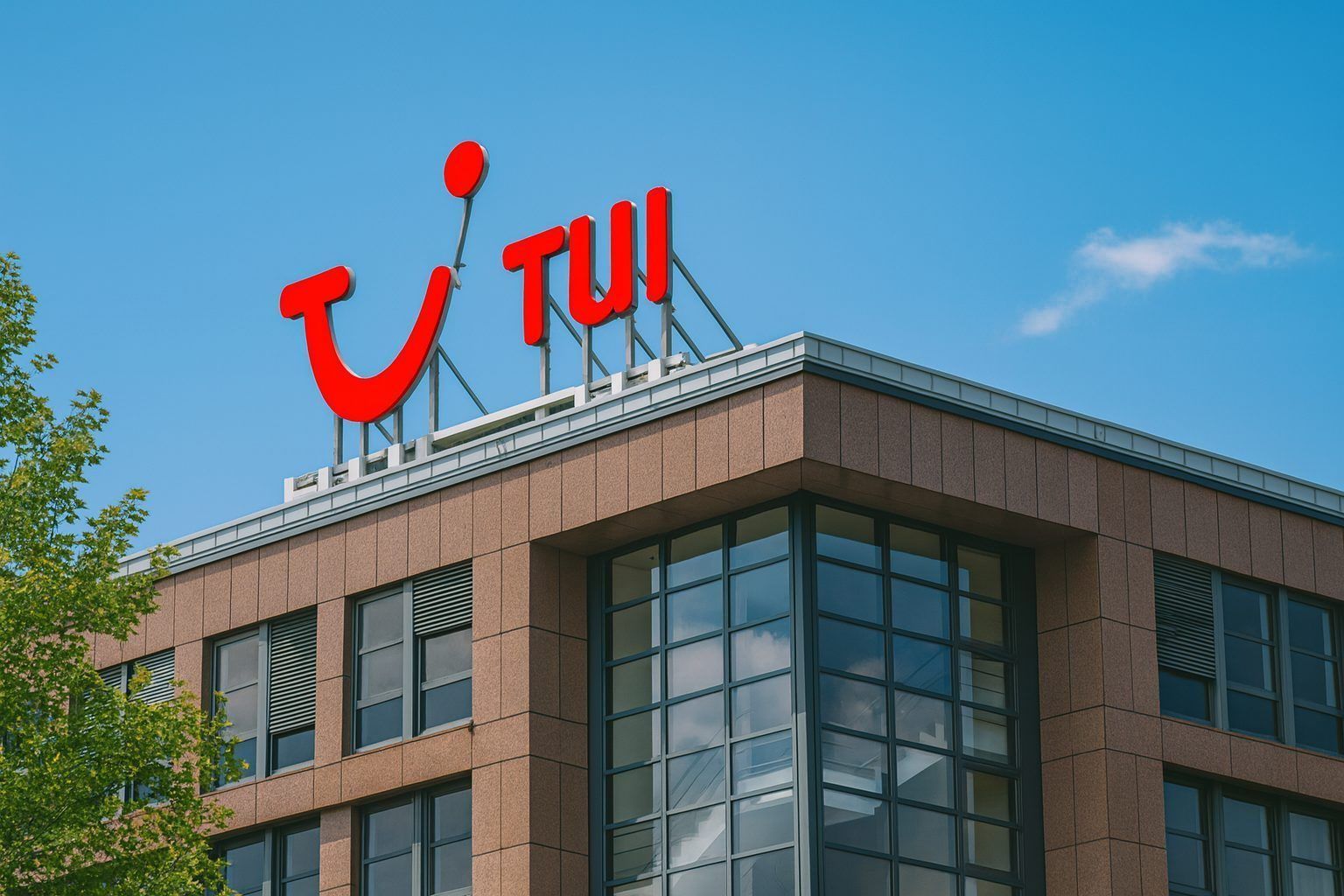
TUI AG, the world’s largest integrated tourism group, has reported record results for its 2025 financial year and confirmed the long-awaited return of dividends. At the same time, the share price has slipped on 10 December 2025 as investors digest conservative guidance for 2026 and a still‑fragile multi‑year share performance.
On the Frankfurt exchange, TUI AG (ticker: TUI1) traded around €8.2 on Wednesday morning, down roughly 3–4% at one point after the earnings release before paring losses.MarketScreener+2MarketScreener+2 This pullback comes after a strong rally of more than 20% from just under €7 at the start of November, suggesting that much of the good news may already have been priced in.MarketScreener
Below is a breakdown of the key numbers, the new dividend policy, analyst forecasts, and the main risks investors are debating today.
Share price reaction: strong run, cautious day
Market commentary on 10 December is remarkably consistent: the results were good, but not quite good enough to propel the stock higher after a multi‑week surge.
- A DPA-AFX report notes that after “five strong weeks,” TUI shares fell by up to 4.7% in early trading before the decline narrowed to under 1%.MarketScreener
- Nasdaq’s European market wrap highlights TUI among the day’s notable movers, stating that shares “tumbled 3 percent” as the company forecast more modest sales growth in the coming year against a challenging trading backdrop.Nasdaq
The key message from early analyst and news commentary: TUI has delivered the best operating result in its history, but investors are now focused on how sustainable that performance is and how much of it is already reflected in the share price.
FY 2025 results: best operating profit in TUI’s history
For the financial year ended 30 September 2025, TUI delivered record earnings at the Group level.
Headline numbers
According to the company’s full‑year release and accompanying presentations:MarketScreener+2TradingView+2
- Revenue rose 4.4% to around €24.2 billion (from €23.2 billion a year earlier).
- Underlying EBIT (earnings before interest and tax) at constant currency increased by 12.6% to a record €1.46 billion, exceeding already‑raised guidance of +9–11%.
- A total of 34.7 million guests travelled with TUI during the year, underlining robust demand for travel and holidays.MarketScreener+1
- Net debt fell from about €1.6 billion to €1.3 billion, a reduction of nearly 20%, supported by higher profitability and stronger cash generation.MarketScreener+1
Hargreaves Lansdown’s summary of the results broadly matches these figures, pointing to a 12.6% rise in underlying operating profit to a record €1.5 billion, an improvement in underlying free cash flow to €0.5 billion, and confirmation that almost all segments grew earnings, with one notable exception.Hargreaves Lansdown
Segment performance
TUI’s performance in 2025 was driven by its “Holiday Experiences” businesses:
- Hotels & Resorts, Cruises and TUI Musement together generated underlying EBIT of €1.31 billion, up from €1.09 billion the prior year.MarketScreener
- Hotels & Resorts reached a record EBIT of €759 million, supported by higher occupancy and room rates.MarketScreener
- The cruise brands (TUI Cruises, Hapag-Lloyd Cruises, Marella Cruises) delivered record results, with EBIT rising to €482 million, supported by high load factors (around 99%), more passenger days and slightly higher day rates.MarketScreener
- TUI Musement, the experiences and activities arm, increased underlying EBIT to €71 million, selling around 10.6 million excursions and experiences and handling more than 30 million transfers.MarketScreener
The main drag was the Markets & Airline segment — essentially TUI’s tour operators and airlines — where underlying EBIT fell to €217 million from €304 million. Management attributes this to intense competition in core European markets and heavy investment in transforming the group into a more flexible “curated marketplace” with more dynamically packaged products.MarketScreener+1
Q4 snapshot: softer top line, solid underlying earnings
RTT News highlights that in the fourth quarter (to 30 September 2025):RTTNews
- Net income slipped to €844 million (from €872 million).
- EBIT fell to €1.21 billion from €1.24 billion, though underlying EBIT edged up to €1.25 billion.
- Revenue dipped marginally to €9.40 billion (from €9.43 billion).
The quarter illustrates a recurring theme: underlying profitability is improving, but headline profit and revenue figures are more volatile, and the airline-heavy parts of the business remain sensitive to pricing, competition and macroeconomic headwinds.
Dividend returns after full repayment of German state aid
One of the most symbolic developments for TUI shareholders in 2025 is the return of dividends.
An Alliance News report notes that TUI has proposed a “starter dividend” of €0.10 per share in respect of the 2025 financial year, subject to approval at the AGM on 10 February 2026, with payment expected on 13 February 2026.Fintel+1
Crucially, the same report confirms that the company has completed the “full hand-back of German state aid” received during the Covid‑19 pandemic, which had previously restricted dividend payments.Fintel This marks a psychological turning point for investors still haunted by pandemic-era bailouts and repeated equity raises.
TUI’s own release outlines a new dividend policy:MarketScreener+1
- For FY 2025: proposed dividend of €0.10 per share.
- From FY 2026 onwards: target payout of 10–20% of underlying earnings per share (EPS), assuming a solid balance sheet is maintained.
At current prices and based on consensus estimates, Hargreaves Lansdown calculates a prospective dividend yield of around 3.1% for the next 12 months — slightly above TUI’s 10‑year average yield of 2.9%.Hargreaves Lansdown
Guidance for 2026: modest growth, “much better” summer
Management’s guidance for the 2026 financial year is cautious but still points to continued growth.
TUI expects for FY 2026:MarketScreener+2Fintel+2
- Revenue growth of 2–4% year‑on‑year.
- Underlying EBIT growth of 7–10%, implying further margin improvement.
- Medium‑term ambition for underlying EBIT growth of 7–10% per year (compound annual growth) at constant currency.
Bookings for Winter 2025/26 are described as solid, with booked revenue up around 1% versus the prior year and a positive early start for Summer 2026.MarketScreener+1
However, several newswires highlight why this guidance failed to ignite the share price:
- Hargreaves Lansdown notes that the midpoints of the revenue and profit growth ranges are “a touch short of market expectations.”Hargreaves Lansdown
- DPA-AFX points out that analysts saw the guidance as “roughly as expected” and focused on how to interpret management’s comments about a “much better” summer business, which leave room for differing assumptions.MarketScreener
- RTT News and Nasdaq emphasise that TUI is forecasting only “more modest” sales growth in a challenging trading environment, even as it aims for stronger profit growth.RTTNews+1
In short, 2026 guidance supports the narrative of a gradual, profit‑led recovery, rather than a rapid post‑pandemic boom.
Balance sheet and credit profile: from survival to optimisation
TUI’s balance sheet has improved significantly compared with the height of the pandemic:
- Net debt reduced to about €1.3 billion, down almost €300 million year‑on‑year.MarketScreener+1
- The net debt / underlying EBITDA ratio improved from roughly 0.8x to 0.6x according to management commentary.MarketScreener+1
- CFO Mathias Kiep highlights that major rating agencies have upgraded TUI’s credit rating, enabling the group to move into a new phase of capital allocation centred on dividends and growth investment rather than pure deleveraging.MarketScreener
At the same time, investors have not forgotten that the company had to rely heavily on state support and multiple capital increases during the pandemic. DPA’s long-term chart commentary notes that TUI’s share price remains well below pre‑Covid levels, reflecting years of dilution and crisis.MarketScreener
Analyst ratings and TUI stock forecast
Despite the volatile history, professional analysts are broadly constructive on TUI AG after the FY 2025 results.
Consensus price targets
Different data providers show slightly different numbers, but all point to potential upside from current levels:
- MarketScreener’s consensus for TUI AG (TUI1) shows 14 analysts with a mean rating of “Outperform” and an average target price of €11.13. With the last close at €8.36, this implies about 33% upside. The target range runs from €7.90 to €16.00.MarketScreener+1
- TradingView reports a 1‑year price target of €11.25 based on 15 analysts, again with a high estimate of €16 and a low of €7.90. The overall rating over the past three months is described as “buy”, with most analysts leaning towards a strong buy or buy stance.TradingView
- TipRanks, which focuses on broker recommendations and their track records, shows an average target price of €10.34 from six analysts over the last three months, representing roughly 25% upside from a recent price of €8.30. The current month’s breakdown is 4 Buy ratings and 2 Hold ratings, with no Sells.TipRanks
Earnings expectations
Analyst estimates for profitability are also moving higher:
- TipRanks and TradingView both indicate that the next‑quarter EPS estimate is around €1.71, compared with a reported €1.74 for the latest quarter, suggesting expectations for continued strong profitability rather than a sharp slowdown.TipRanks+2TradingView+2
- Hargreaves Lansdown cites a forward price/earnings ratio of about 5.9x (based on the next 12 months’ earnings) versus a 10‑year average of 6.0x, implying that the market is still pricing TUI at a small discount to its historical valuation despite the record results and resumed dividends.Hargreaves Lansdown
Overall, the analyst community appears to view TUI as a recovery and re‑rating story: profits are back at record levels, leverage is lower, and dividends are returning, but the share price still reflects some scepticism.
Key debates and risk factors for TUI shareholders
Investor discussions following the 10 December results revolve around a few core themes.
1. Can Holiday Experiences keep carrying the group?
The hotel, cruise and experiences businesses are delivering record profits and high margins.MarketScreener+1 They are less exposed to the brutal competition in airline ticket pricing and benefit from TUI’s ability to bundle flights, hotels and activities under its own brands.
The bullish case is that these capital‑intensive, branded assets will continue to support premium pricing and strong occupancy, even in a competitive environment, giving TUI a structural advantage versus pure online travel agencies.
The bear case is that growth may normalise after the post‑pandemic travel boom, making it harder to keep growing EBIT in the high single digits while also investing in the fleet and hotel portfolio.
2. Markets & Airline: structural headwind or temporary drag?
The Markets & Airline segment saw profits fall despite healthy demand, as TUI invested heavily in its “curated marketplace” platform and faced strong price competition in its core European markets.MarketScreener+1
Management argues these investments are necessary to offer more flexible, dynamically packaged trips and to open new channels beyond traditional tour operators. If this strategy works, it could unlock volume growth and better utilisation of TUI’s hotels and aircraft. If not, this segment could remain a low‑margin, capital‑intensive drag on group returns.
3. Macro, geopolitics and regulation
TUI’s guidance explicitly references a “challenging trading environment” and acknowledges macroeconomic and geopolitical uncertainties.RTTNews+1
Key external risks include:
- Pressure on consumer spending in core markets such as Germany and the UK.
- Geopolitical tensions or security concerns affecting specific destinations.
- Regulatory changes, including ongoing EU work on strengthening travellers’ rights for package holidays, which could raise compliance costs or shift risk back onto tour operators.MarketScreener
None of these are unique to TUI, but given its scale and asset intensity, shocks to demand or repeated airspace disruptions can have outsized earnings impacts.
4. Legacy of the pandemic: dilution and sentiment
Even after this year’s rally, TUI’s share price is still significantly lower than pre‑pandemic levels. DPA notes that the multi‑year chart remains dominated by the fallout of Covid‑19, government aid and multiple capital measures that diluted existing shareholders.MarketScreener
For some investors, that history is a permanent scar; for others, it is part of the attraction, on the assumption that if earnings and dividends normalise sustainably, today’s share price could still underestimate long‑term value.
Investment takeaway: a turnaround recognised, but not fully rewarded
The news flow around 10 December 2025 paints a fairly coherent picture:
- TUI has delivered record underlying earnings, reduced debt, repaid state aid and re‑introduced dividends.MarketScreener+2Fintel+2
- Management is signalling further, albeit modest, revenue growth and stronger profit growth in 2026, with a clear emphasis on expanding the higher‑margin hotel, cruise and experiences businesses.MarketScreener+1
- Analysts are generally positive, with consensus target prices implying roughly 25–35% upside from current levels and ratings clustering around Buy/Outperform.MarketScreener+2TradingView+2
- Yet the share price reaction today is muted to negative, reflecting lingering scepticism after years of crises, dilution and a still competitive, cyclical industry backdrop.MarketScreener+1