A major new UK rail timetable is now in force from Sunday, 14 December 2025, bringing the biggest shake-up to East Coast Main Line (ECML) services in more than a decade — alongside a wide package of changes across the national network. The rail industry says the new schedule is designed to deliver more trains, more seats, and quicker journeys, with particular benefits for passengers travelling between London, Yorkshire, the North East and Scotland.
But for many travellers, the most important message is practical: your regular train times may have changed, and some operators are explicitly urging passengers to check before travelling as the new timetable beds in.
The headline change: a new era on the East Coast Main Line
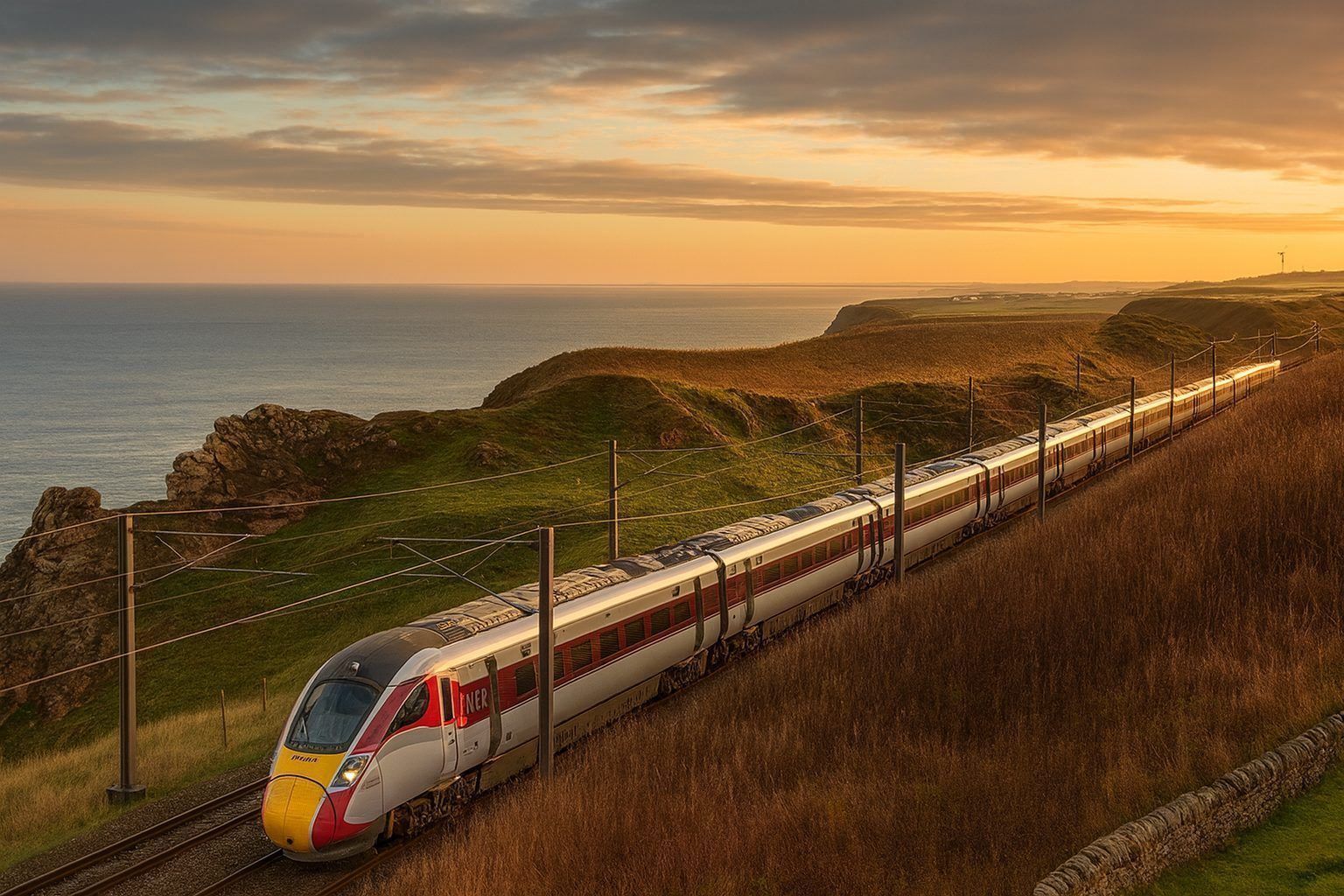
The centrepiece of the December 2025 update is the ECML timetable, which Network Rail describes as the largest change on the route in over 10 years, following £4 billion of investment across the past decade.
Key upgrades highlighted by the rail industry include:
- More London–North East services: Network Rail says there are nearly double (46%) the number of weekday trains between Newcastle and London King’s Cross during the day.
- Faster long-distance journeys: The industry says some services will be around 15 minutes quicker London–Edinburgh, 10 minutes quicker London–Newcastle, and 10 minutes quicker Edinburgh–York.
- More Sunday links for West Yorkshire: The timetable includes six LNER services on Sundays in each direction between Bradford Forster Square and London King’s Cross.
- More seats and capacity: Network Rail says the changes “unlock thousands more seats,” and points to more than 60,000 extra seats per week across the route, while also promoting faster services such as London–Edinburgh in just over four hours and London–Leeds in just over two hours. Network Rail Media Centre
There’s also a forward-looking piece built into the plan: when Cambridge South station opens (expected in summer 2026), Network Rail says passing services run by operators including Greater Anglia, Great Northern, Thameslink and CrossCountry are set to call there.
New regional links tied to the ECML upgrade
While the ECML dominates the headlines, several regional improvements are being promoted as part of the same wider December timetable package.
Network Rail highlights:
- A new hourly fast service (Northern) between Leeds and Sheffield, plus additional services between Middlesbrough and Newcastle.
- More TransPennine Express trains between Newcastle and Edinburgh Waverley (with increased frequency across the week).
- More East Midlands Railway services between Nottingham and Lincoln, described as doubling from one to two trains per hour on Monday–Saturday, with additional seats.
National Rail Enquiries’ timetable guidance adds more detail on some Northern changes — including hourly Newcastle–Middlesbrough services (instead of every two hours) and a linked through-service pattern designed to improve east–west connectivity.
What the £4bn investment paid for: the infrastructure behind the timetable
Major timetable rewrites only work if the railway can physically handle them — and Network Rail has repeatedly linked the new ECML pattern to the engineering and capacity projects delivered under the “East Coast Upgrade” banner. Network Rail Media Centre+1
On its ECML timetable-change page, Network Rail says the “ambitious timetable” was developed with train operators and the Department for Transport and is intended to introduce around 16,000 extra seats per day (around six million seats per year). Network Rail
It also lists the kinds of enabling works that make extra paths possible, including:
- King’s Cross station track remodelling and reopening a disused railway tunnel to reduce congestion and improve reliability
- A new turnback platform at Stevenage to enable more services
- A new tunnel at Werrington to stop freight trains crossing the main line at grade
- A new platform at Doncaster to reduce congestion and improve performance
This is the “hidden” story behind the timetable launch: the most visible passenger benefit is a faster train or a new direct service — but it rests on years of construction, testing, and the hard arithmetic of squeezing more trains onto a route without breaking it.
Kent and Southeast England: extra Southeastern trains as the timetable changes
For commuters in Kent and Southeast London, one of the most tangible day-to-day impacts is on Southeastern, where National Rail’s official timetable-change summary spells out several service increases, extra peak options, and longer trains on selected routes.
Among the key Southeastern changes starting 14 December 2025:
Metro routes: more frequent evening trains and longer formations
- Bexleyheath Line: Extra weekday evening services are listed that increase frequency to half-hourly at key times, plus weekend services between London Victoria and Dartford / Gravesend being lengthened to eight carriages.
- Hayes Line: Services are retimed to improve spacing, and an additional 08:02 service from London Charing Cross to Hayes is listed (calling at London Waterloo East and London Bridge).
Mainline routes: earlier arrivals and extra peak services
- Bromley South Line (Victoria to Orpington via Herne Hill): National Rail notes an earlier arrival into Victoria for shift workers on an early service, plus an additional early-morning train from Orpington.
- Maidstone East Line to London Charing Cross (Mon–Fri): Additional peak services are listed to create a half-hourly service throughout both the morning and evening peak periods, with specific extra departures named in the summary.
- Maidstone East Line to London Victoria (Mon–Fri): Additional services are listed on the Victoria–Ashford via Maidstone East route, including one in the morning and one late evening.
Highspeed services: stronger St Pancras–Faversham links
National Rail’s summary also highlights extra weekday highspeed services and additional Saturday highspeed trains, stating that combined services can deliver a half-hourly St Pancras International–Faversham service all day until late evening.
For Kent passengers, this is the kind of change that can quietly reshape routines: later evening options, denser peak timetables, and more “turn up and go” frequency on a route that previously could thin out at off-peak times.
Other changes across Great Britain: what else is new today
Although the ECML has the loudest fanfare, Network Rail and National Rail both point to a broader patchwork of improvements around the country in the December 2025 timetable.
Network Rail’s round-up highlights include:
- More Avanti West Coast services from Euston, including more London–Liverpool trains
- More services from independent operators such as Grand Central, Hull Trains and Lumo, with additional provision for new/expanded routes
- Transport for Wales moving to two trains an hour between Chester and Wrexham (Mon–Sat), plus changes on the Heart of Wales line and new Sunday coverage on selected routes
Meanwhile, National Rail’s timetable-change page also flags something many commuters care about as much as service frequency: contactless fares expanding to additional stations from 14 December 2025, with a published list of newly added stops.
Why this timetable launch matters — and why the industry is on edge
Big timetable days can feel technical, but their impact is immediate: changed departure times, different stopping patterns, revised connections, and altered crowding.
And there’s another reason this launch is being closely watched: the rail industry still remembers the May 2018 timetable change, which became synonymous with disruption and cancellations. Recent commentary in the UK press has pointed to that history as the backdrop to today’s launch — and explains why there has been extra emphasis on testing, planning, and operational readiness this time.
The Guardian, for example, notes that while the December 2025 revamp is being sold as a passenger boost — more services, faster journeys, more seats — the “spectre” of 2018 is part of why today’s change is seen as a high-stakes moment for the railway’s credibility. The Guardian
Network Rail’s own statement stresses long preparation and coordination across the industry, and also indicates that while “the vast majority” of services begin now, some services will be introduced in a phased way in 2026 to support a smoother rollout. Network Rail Media Centre
What passengers should do today (and this week)
If you’re travelling on or after 14 December 2025, here’s the practical checklist that matters most:
- Check your train times before you leave — even if you travel the same route every week. The timetable has changed across multiple operators.
- Double-check first/last trains and key connections, especially on Sundays and late evenings, when stopping patterns are more likely to shift.
- If you commute in Kent or Southeast London, look specifically for Southeastern updates on your line (Bexleyheath, Hayes, Maidstone East, and Highspeed services are all highlighted in National Rail’s summary).
- If you travel long-distance on the ECML, expect new options — but also keep an eye on reliability in the first days as the railway settles into new train paths.
The bottom line
Today’s timetable change is more than a seasonal tweak. It is a full-network reset with a clear flagship: a rebuilt, higher-capacity East Coast Main Line intended to support more frequent services, faster headline journey times, and more seats after a decade of investment.
For Kent and Southeastern passengers, the change shows up in a more local way — extra trains, strengthened peaks, and improved highspeed frequency on some key corridors.
Whether it becomes the “new normal” passengers have been promised will depend on how smoothly the industry executes this first week — and whether the railway can deliver the reliability that past timetable overhauls sometimes failed to achieve. The Guardian+2The Week+2