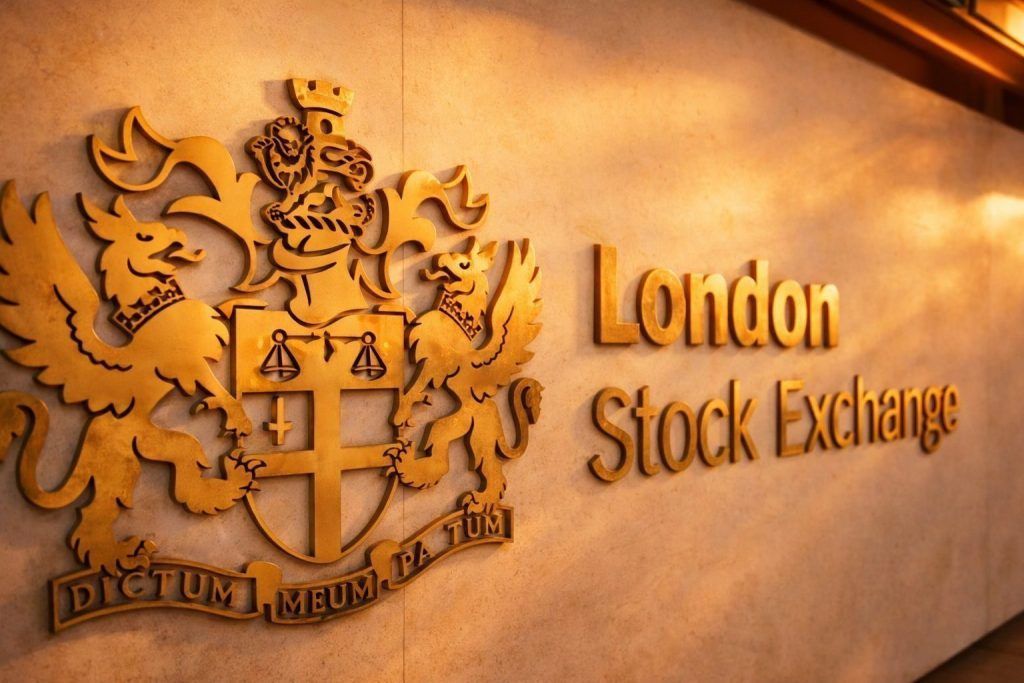
London — Thursday, 25 December 2025. The United Kingdom stock market is closed today for Christmas Day, putting a temporary pause on trading after a holiday-shortened run into the break. With the London Stock Exchange (LSE) also shut on Friday for Boxing Day, the next meaningful read on UK risk appetite will come when markets reopen after the long weekend.
Even with the screens dark, investors are still digesting a busy late-December backdrop: a Bank of England rate cut to 3.75%, a strong year for UK large caps, record-setting moves in industrial metals that boosted miners, and headline corporate deals—most notably BP’s agreement to sell a majority stake in Castrol.
UK stock market closed today: what’s shut, and when trading resumes
The LSE is not trading today (25 December) and remains closed on 26 December. The exchange ran a half-day session on 24 December, with the closing process beginning from 12:30 London time, before the two-day holiday halt.
This matters for investors watching UK shares “today” because the latest price action is effectively Wednesday’s close (Christmas Eve), and the next catalysts—company updates, commodity swings, global macro and currency moves—will be reflected when London reopens. Reuters
What happened in the last UK session: FTSE 100 dips in quiet Christmas Eve trade
In the final, shortened session before the holiday, the FTSE 100 fell 0.2% and the FTSE 250 slipped 0.07%, with Reuters describing trading as quiet as investors wound down positions ahead of the break.
Two familiar heavyweights were a drag: AstraZeneca and GSK both fell about 0.5%, highlighting how a small move in megacaps can sway headline index performance—especially on thin holiday volumes.
Despite the subdued finish, the bigger story is the year’s direction of travel. Reuters reported the FTSE 100 is set to close out a fifth straight year of gains and was up 20.7% for 2025, supported by strength in miners, financials and defence shares.
The headline corporate story: BP agrees to sell 65% of Castrol for about $6 billion
The most eye-catching UK corporate development into the holiday was BP’s agreement to sell a 65% stake in its Castrol lubricants business to Stonepeak for about $6 billion, a deal that Reuters said values Castrol at $10.1 billion.
BP will retain 35% in a new joint venture and can sell that stake after a two-year lock-in period. The transaction also includes $800 million in accelerated dividend payments and is expected to complete by the end of 2026, with proceeds aimed at reducing debt as BP pursues a broader divestment plan.
Why investors care: beyond the obvious “deal headline,” the Castrol sale feeds directly into the long-running debate over BP’s strategy, capital returns, and portfolio simplification. Reuters also reported that RBC analysts questioned the rationale of selling a “highly cash generative” business, even as the deal provides near-term capital flexibility. Reuters
M&A in the mining complex: SolGold takeover agreed as copper demand narrative builds
Elsewhere in UK-listed stocks, Reuters reported that SolGold agreed to be acquired by its largest shareholder Jiangxi Copper in a deal valuing the miner at £867 million ($1.17 billion). The 28 pence per share offer represents an almost 43% premium to SolGold’s 19 November close (the day before Jiangxi first approached).
The deal gives Jiangxi control of SolGold’s Cascabel project in Ecuador, with Reuters linking the strategic logic to the race for copper supply as demand rises from electric vehicles and AI infrastructure—a theme that has increasingly connected commodity markets to the broader equity narrative.
Commodities helped write the UK market story in 2025—especially miners
The UK market’s heavy exposure to global commodities has been a feature, not a bug, during 2025’s rally. Earlier in the week, Reuters reported copper surged to a record high, crossing $12,000, lifting major London-listed miners including Anglo American, Antofagasta and Rio Tinto.
That price action matters because resource companies have an outsized influence on FTSE performance and sentiment—particularly when global investors are looking for inflation hedges, real-asset exposure, or earnings leverage to commodity prices.
The Bank of England’s rate cut is the macro anchor going into 2026
The macro backdrop for UK equities shifted meaningfully just before Christmas. The Bank of England cut Bank Rate to 3.75%, following a 5–4 vote at the meeting ending 17 December 2025. The BoE noted inflation had fallen to 3.2% (still above target), and said the extent of further easing will depend on the outlook—but that Bank Rate is likely to continue on a “gradual downward path,” while future decisions are becoming a “closer call.” Bank of England
Market pricing and economist forecasts have leaned toward more easing in 2026. In a Reuters poll earlier this month, around two-thirds of economists expected a follow-up cut to 3.50% by end-March 2026, while the median forecast saw rates bottoming around 3.25% in Q3 2026 (though Reuters noted no clear majority for additional cuts beyond March).
For equities, the logic is straightforward: lower rates can raise the present value of future cash flows, ease financing costs, and—crucially for UK midcaps—help domestically exposed companies if consumer confidence and activity stabilise.
Sterling is strong—and that can be a headwind for multinationals in the FTSE 100
Currency moves are another key input into UK equity performance because the FTSE 100 earns a large share of revenue overseas. On 22 December, Reuters reported sterling rose to around $1.3438, up more than 1% in December and around 7% for the year, supported by the BoE’s messaging that “raised the bar” for rapid further cuts. Reuters
A stronger pound can reduce the value of foreign earnings when translated back into sterling, which is why UK stocks sometimes rise when sterling falls. Strategists frequently flag this push-pull as a defining dynamic for the FTSE: global growth and commodity strength can support earnings, but FX can change how those earnings look in local-currency terms.
2026 forecasts: what strategists are saying about FTSE 100 and FTSE 250
With the UK stock market closed today, the focus naturally turns to the forward view—and several late-December strategy notes have a common thread: midcaps may have more room to run if rates drift lower and earnings broaden beyond a narrow group of winners.
Interactive investor highlighted that the FTSE 250 is valued at about 12.4x forward earnings versus 13.1x for the FTSE 100 (with the S&P 500 cited at 22.4x), while the FTSE 250’s dividend yield was cited at 4.3% versus about 3.5% for the FTSE 100.
The same piece summarised UBS’s base case for the FTSE 100 at 10,000 by end‑2026, with an upside scenario of 10,800 and a pessimistic scenario of 7,200—a wide range that reflects how dependent the index can be on global risk appetite, commodity prices, and currency moves.
UBS also pointed out a key composition issue: commodities contribute a significant share of FTSE 100 earnings, and outcomes can hinge on commodity trends and confidence in richly valued US equities.
Sector view: what drove 2025—and what could change next year
One reason UK stocks surprised many global allocators in 2025 is that leadership came from sectors that were either cheap, cyclical, or geared to global policy priorities:
- Mining and metals: boosted by strong commodity prices.
- Aerospace & defence: supported by increased defence spending commitments.
- Banks: helped by earnings resilience and shifting rate expectations.
Interactive investor’s year-end sector review noted the FTSE 350 rose 16% in 2025 (data cited as at 10 December), with the FTSE 100 up 18% at that point and sector leadership led by areas including Precious Metals & Mining, Aerospace & Defence, and Banks.
The important forward-looking angle: the more the BoE (and other central banks) cut rates, the more investors may rotate toward rate-sensitive domestic cyclicals—including UK consumer and housing-adjacent stocks—if growth holds up.
What to watch when the UK stock market reopens
With London closed today and tomorrow, the first post-holiday sessions will have to absorb a backlog of signals. The most practical watchlist for UK equities looks like this:
1) Rates, yields and BoE expectations
Investors will continue to recalibrate around the BoE’s message: rates are likely moving down, but not necessarily quickly. Any repricing in gilts can ripple across banks, homebuilders and real estate.
2) Sterling vs dollar and euro
A firm pound can cap FTSE 100 upside in local terms even when global equities are strong, because of translation effects on overseas revenues.
3) Commodities, especially copper and energy
A commodity-driven bid helped miners and supported the index earlier this week, with copper’s record move a clear example. Commodity volatility can quickly change the tone for London’s heavyweight resource names.
4) Big-cap corporate strategy stories
BP’s Castrol transaction is likely to stay in focus as analysts debate the trade-off between near-term balance-sheet repair and longer-term earnings mix.
5) Midcap “catch-up” narrative
Strategists see a plausible 2026 setup where the FTSE 250 benefits from lower rates and valuation support—provided UK growth avoids a sharper slowdown and fiscal politics remain orderly. Interactive Investor
Bottom line for UK stock market today
The UK stock market may be closed on 25 December 2025, but the story isn’t on hold. The FTSE 100 heads into the final stretch of the year with strong gains behind it, buoyed by miners, financials and defence names, while investors weigh a pivotal BoE rate cut, a strengthening pound, and headline corporate deals led by BP’s Castrol sale.
When trading resumes after the Christmas and Boxing Day shutdown, the key question for UK equities won’t simply be “Santa rally or not”—it will be whether 2026 brings a broader, more domestic-led market advance (midcaps and rate-sensitive sectors) without derailing the global earnings engines that have powered the FTSE 100. Interactive Investor