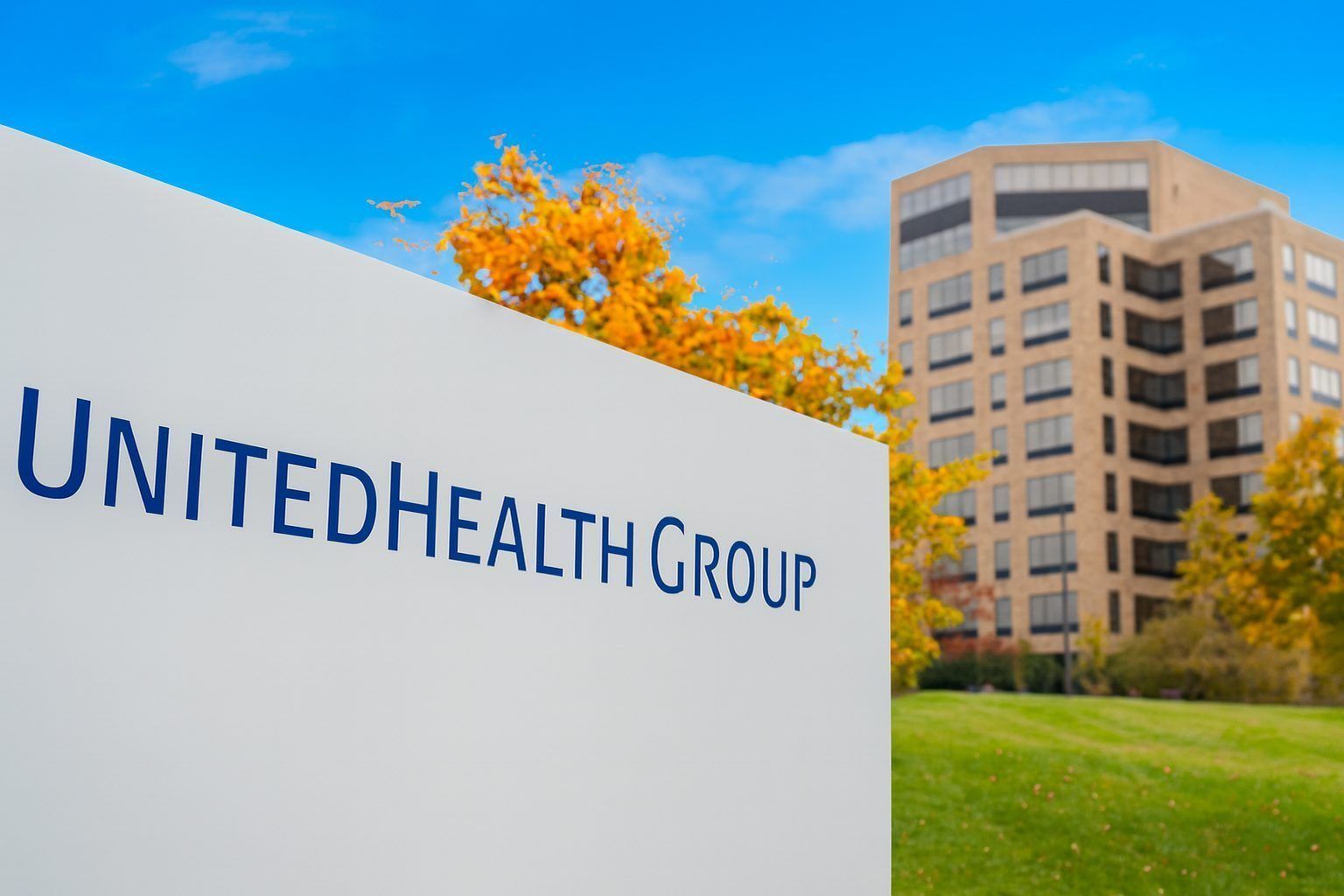
New York – December 4, 2025 – UnitedHealth Group Incorporated (NYSE: UNH) has turned into one of Wall Street’s most closely watched recovery stories. After losing nearly half its value earlier this year, the stock is rallying hard into year‑end as management raises guidance, exits non‑core businesses and analysts upgrade their price targets ahead of an expected earnings rebound in 2026. StockAnalysis+2UnitedHealth Group+2
Below is a detailed look at where UNH stock stands today, what has changed in the business, how analysts are modeling the next few years, and the key risks investors are watching.
UNH stock today: price, performance and valuation
UnitedHealth closed at $339.71 on December 3, up about 4.7% on the day, with pre‑market trading on December 4 showing a small additional gain around $340.22. StockAnalysis
At that level:
- Market cap: roughly $308 billion
- Trailing 12‑month revenue: about $435 billion
- Trailing net income: about $17.6 billion
- Trailing EPS:$19.22
- Trailing P/E: about 17.7x
- Forward P/E: about 20x
- Beta: around 0.43 (less volatile than the broader market) StockAnalysis
The stock has traded in an extremely wide 52‑week range of $234.60 to $622.83 – meaning today’s price is roughly 45% below the peak but also about 45% above the lows, underscoring just how violent the 2025 drawdown and subsequent rebound have been. StockAnalysis+1
Dividend investors have also taken notice. UnitedHealth’s board recently approved a quarterly dividend of $2.21 per share, payable on December 16, 2025 to shareholders of record on December 8, equivalent to $8.84 per year and a dividend yield in the mid‑2% range at current prices. Management has kept a payout ratio around the mid‑40% area, signaling that they still see room to reinvest heavily in the business. MarketBeat+3UnitedHealth Group+3UnitedHeal…
Why UnitedHealth is rallying again
A wave of analyst upgrades
The latest leg of the rally has been driven by a coordinated shift in tone from Wall Street:
- Wolfe Research just lifted its UNH price target from $330 to $375, reiterating an Outperform rating and arguing that UnitedHealthcare (the core insurance business) is positioned to regain target margins, which could support both earnings growth and multiple expansion. Investing.com UK
- Wolfe’s note also sketches out 2028–2029 earnings power of about $30 per share, and at least $27 per share even if certain Optum businesses underperform, highlighting the upside they see from margin repair and growth in Medicare Advantage and Medicaid. Investing.com UK
- The Wolfe upgrade sits alongside earlier hikes from Mizuho, UBS, Truist, JPMorgan and Bernstein, with several firms now carrying targets in the $375–$440 range and generally positive ratings. MarketBeat+2MarketBeat+2
An Investing.com summary noted that Wolfe’s higher target is broadly in line with data showing UNH trading below what many models consider fair value, with the stock viewed as undervalued given its returns on equity and gross margins. Investing.com UK
Consensus: “Buy” with ~20% upside
Across major data providers:
- StockAnalysis aggregates 25 analysts with an average rating of “Buy” and a 12‑month price target of about $407.88, implying roughly 20% upside from the latest close. StockAnalysis+1
- MarketBeat shows a similar picture: a “Moderate Buy” consensus and an average target around $397, based on dozens of analyst reports. MarketBeat+1
- TickerNerd and TradingView compilations put median or average targets in the high‑$390s to low‑$400s, with the highest targets at $440 and the lowest around $198. Ticker Nerd+1
In short, the Street sees UnitedHealth as a damaged but fundamentally strong franchise trading at a discount to its long‑term earnings power — if management can execute on the turnaround.
From crisis to reset: what went wrong in 2025
The bullish tone today stands in sharp contrast to the panic earlier this year.
Profit warning and historic share price plunge
In April, UnitedHealth stunned investors by slashing its 2025 profit forecast, citing much higher‑than‑expected medical costs across its insurance lines. The company cut its earnings outlook from the high‑$20s per share to the mid‑$20s (on its then‑framework), triggering a single‑day share price drop of around 22% and wiping out more than $100 billion in market value. Financial Times
Soon after, management suspended full‑year guidance altogether as it tried to get a handle on surging utilization and the impact of Medicare funding cuts. UnitedHealth Group
A Forbes analysis later emphasized that the share price collapse from above $600 to roughly $310–$320 – almost a 50% drawdown – wasn’t just broad market volatility; it reflected a fundamental reset of profit expectations, especially at Optum Health and in Medicare Advantage. StockAnalysis+1
Margin compression and the Change Healthcare hangover
The shock came after several years of rising regulatory and operational risks:
- The Change Healthcare cyberattack in early 2024 forced UnitedHealth to spend an estimated $2.3–2.45 billion on response efforts and advanced payments to providers, with total individuals impacted later reported at nearly 193 million. Hyperproof
- Optum Health and UnitedHealthcare both faced medical cost trends running well ahead of pricing assumptions. UnitedHealth’s July 2025 outlook, for example, flagged Medicare Advantage medical cost trends heading toward ~7.5% in 2025 against prior pricing built on just over 5%, with 2026 pricing now assuming trends closer to 10% to catch up. UnitedHealth Group
Taken together, the cyberattack fallout, an “unprecedented” spike in medical cost trends and mis‑priced Medicare Advantage products drove margins sharply lower and shook investor confidence.
Rebuilding the earnings base: Q2–Q3 2025 and new guidance
Re‑establishing 2025 outlook
On July 29, 2025, UnitedHealth re‑established its full‑year 2025 outlook after the earlier suspension. The company guided to: UnitedHealth Group
- UnitedHealthcare 2025 revenue:$344–$345.5 billion, up more than 15% year‑on‑year.
- UnitedHealthcare operating margin:2.6–2.7% (well below historical levels, but a floor from which to rebuild).
- Optum 2025 revenue:$266–$267.5 billion, with operating margin around 4.7–4.8%, down from past highs but still profitable.
Management openly acknowledged that margins, especially at Optum Health, were far below target as a result of underpriced risk contracts, reduced Medicare funding and lingering Change Healthcare impacts, but argued that repricing and benefit redesign for 2026 would reset the baseline. UnitedHealth Group+1
Q3 2025: stabilisation, not yet a full recovery
On October 28, 2025, UnitedHealth reported third‑quarter 2025 results and raised its full‑year profit guidance, signaling that the reset was gaining traction: AP News+3UnitedHealth Group+3UnitedHealth …
- Revenue:$113.2 billion, up 12% year‑over‑year.
- Earnings from operations:$4.3 billion with a 2.1% net margin – much lower than historical norms but broadly in line with the reset plan.
- Adjusted EPS:$2.92 (GAAP EPS $2.59).
- Medical care ratio:89.9%, consistent with the company’s updated expectations.
- UnitedHealthcare revenue:$87.1 billion, up 16%, serving 50.1 million U.S. members.
- Optum revenue:$69.2 billion, up 8%, driven mainly by pharmacy services at Optum Rx.
Crucially, UnitedHealth raised its 2025 earnings outlook to at least $14.90 GAAP EPS and $16.25 adjusted EPS, and CEO Stephen Hemsley reiterated that the company is now focused on “durable and accelerating growth in 2026 and beyond.” UnitedHealth Group+1
Reuters reported that management expects growth to resume in 2026 and accelerate in 2027, even as it continues to work through pressure in Medicaid and Medicare lines where reimbursement hasn’t kept pace with costs. Reuters
Strategic moves: divestments, plan exits and premium hikes
Exiting Latin America: sale of Banmédica
Just days ago, UnitedHealth agreed to sell Banmédica, its last South American business, to Brazilian private equity group Patria Investments for about $1 billion. Reuters
Key points from Reuters’ reporting:
- UnitedHealth has been working to exit Latin America since 2022, having already sold operations in Brazil and Peru.
- Banmédica, which operates in Colombia and Chile, has around 1.7 million health plan members, seven hospitals and dozens of clinics.
- UnitedHealth previously booked an $8.3 billion loss related to its South American operations, mostly tied to the Brazil exit, making the Banmédica sale the final step in sweeping away a major distraction from the U.S. turnaround. Reuters
Analysts see the exit as consistent with a broader shift toward simplifying the portfolio and focusing capital on U.S. insurance and Optum businesses where UnitedHealth believes it has durable competitive advantages. StockAnalysis+1
Dropping 1 million Medicare Advantage members and raising ACA premiums
Perhaps the most controversial – but financially important – move has been in Medicare Advantage and Affordable Care Act (ACA) exchange plans.
A recent MarketWatch/Dow Jones report detailed that UnitedHealth plans to drop about 1 million seniors from its Medicare Advantage plans and exit unprofitable Medicare Advantage and ACA products while simultaneously raising premiums, in some cases by roughly 26% for certain ACA policies. MarketWatch+1
According to that reporting and company commentary:
- Insurance margins across the business fell from around 5.6% to 2.1%, and Optum Health margins dropped from roughly 8.3% to 1%, contributing to about $16 billion in lost earnings versus prior expectations. MarketWatch+2StockAnalysis+2
- The decision to aggressively prune unprofitable plans and reprice others is designed to restore those margins rather than simply chase membership growth. MarketWatch+1
While critics have blasted the impact on vulnerable seniors, from a capital markets perspective the moves are central to the 2026–2027 recovery thesis: fewer, better‑priced products should translate into higher per‑member profitability, even if total lives covered grow more slowly.
Governance and regulatory backdrop: board changes, lawsuits and investigations
Former FDA Commissioner Scott Gottlieb joins the board
In mid‑November, UnitedHealth added Dr. Scott Gottlieb, former Commissioner of the U.S. Food and Drug Administration and a long‑time Medicare policy expert, to its board of directors. UnitedHealth Group+2Reuters+2
Company statements and Forbes/Reuters coverage point out that Gottlieb’s regulatory experience is expected to be particularly valuable as UnitedHealth navigates:
- Ongoing Department of Justice antitrust scrutiny of its vertical integration (insurer, pharmacy benefits manager and large physician networks under one roof). MarketWatch+1
- Investigations into prior‑authorization practices, including the use of AI‑driven tools that sharply increased denial rates for post‑acute care, which drew criticism in Senate reports. MarketWatch
CEO murder, backlash and shareholder lawsuit
The company is still dealing with the fallout from the December 2024 killing of UnitedHealthcare CEO Brian Thompson, an event that remains in the headlines as the criminal case proceeds through pre‑trial hearings in late 2025. StockAnalysis+2Axios+2
A separate shareholder lawsuit filed in May 2025 alleges that UnitedHealth misled investors about how changes to claims processes and benefit management – reportedly made in response to political outrage following the killing – would affect profits, arguing that these changes contributed to the surprise profit shortfall and April guidance cut. Reuters+1
UnitedHealth denies wrongdoing, but the litigation adds another layer of uncertainty for investors already focused on regulatory risk and public scrutiny of insurance practices.
Change Healthcare cyberattack: ongoing regulatory and reputational risk
Regulatory attention also continues around the Change Healthcare ransomware attack:
- A detailed timeline compiled by Hyperproof and government documents shows response costs rising to $2.3–2.45 billion by July 2024, with UnitedHealth later reporting $2.457 billion in total costs by Q3 2024 and more than $2 billion advanced to providers to keep cash flowing. Hyperproof
- By mid‑2025, Change Healthcare reported that 192.7 million individuals had been impacted, and the U.S. Office for Civil Rights has a large‑scale investigation under way. Hyperproof+1
While much of the direct financial damage is already recognized, the episode has heightened scrutiny of UnitedHealth’s cyber‑risk controls and could influence future compliance costs, fines or settlement obligations.
UNH stock forecasts: what Wall Street expects through 2027
Putting together company guidance, analyst models and recent notes, a rough consensus picture emerges:
2025: trough margins, stabilising earnings
- UnitedHealth now targets 2025 GAAP EPS of at least $14.90 and adjusted EPS of at least $16.25, down sharply from pre‑crisis expectations but higher than mid‑year fears. UnitedHealth Group+1
- At the current share price, that implies a forward P/E in the high‑teens to ~20x range, depending on which earnings definition analysts use. StockAnalysis
Most analysts see 2025 as a repair year, with elevated medical costs, muted margins and a heavy focus on repricing and pruning unprofitable lines.
2026: inflection year
Both company commentary and external research point to 2026 as the key inflection point:
- Reuters reports that UnitedHealth plans to provide a formal 2026 forecast in January, but Hemsley has already told investors he is confident the company can return to “solid earnings growth” next year thanks to more conservative pricing and operational discipline. Reuters
- Several Wall Street models, cited in AP and Motley Fool coverage, suggest earnings growth resuming in 2026 as the new higher‑priced Medicare Advantage and Medicaid contracts roll in and Optum margins begin to normalize. AP News+1
2027 and beyond: margin recovery scenarios
The most explicit long‑term scenarios have come from Wolfe Research, summarized by Investing.com: Investing.com UK
- Base case: earnings power around $30 per share by 2028–2029, assuming UnitedHealthcare margins normalize and Optum reaches updated long‑term targets.
- More cautious case: earnings around $27 per share if Optum Health and Optum Insight fall short of those targets, but UnitedHealthcare alone recovers.
Those numbers, if achieved, would make today’s sub‑$340 share price look inexpensive in hindsight. But they hinge on a long list of “ifs,” from regulatory stability to the success of premium hikes and plan exits.
Key risks investors are watching
Even as analysts turn more optimistic, the UNH story remains highly complex. Major risks include:
- Medical cost trend stays higher for longer
If utilization and per‑patient costs continue to outpace pricing, particularly in Medicare Advantage and Medicaid, the margin repair narrative could be delayed or derailed. Management has already raised its assumed trend for 2026 to near 10% in some lines – a sign of how aggressive the cost environment has become. UnitedHealth Group+1 - Regulatory and political backlash
UnitedHealth’s vertical integration and plan design strategies are under heavy scrutiny from the DOJ, Congress and state regulators. MarketWatch’s deep dive on the Medicare Advantage cuts highlighted calls from some policymakers for more aggressive oversight or even structural remedies. MarketWatch+1 - Litigation and cyber‑risk overhang
The Change Healthcare breach and shareholder suits could result in additional settlements, fines or mandated changes that weigh on profitability. The reputational impact may also complicate negotiations with providers and regulators. Hyperproof+2Reuters+2 - Execution risk in plan exits and repricing
Dropping roughly a million Medicare Advantage members and exiting unprofitable ACA products may help margins but could also invite competitive responses, brand damage and short‑term revenue volatility. MarketWatch - Macro and rate environment
Higher interest rates and market volatility can change how investors value long‑duration cash flows, even for defensive health insurers. The multiple assigned to UNH could compress again if risk‑free yields rise or recession fears intensify.
Dividend, balance sheet and institutional ownership
Despite the turmoil, UnitedHealth continues to present itself as a blue‑chip dividend and cash‑flow story:
- The latest $2.21 quarterly dividend represents another step up in a long record of payout growth, and data from MarketBeat and StockAnalysis suggest a payout ratio around 46% of earnings. StreetInsider.com+4MarketBeat+4MarketBeat+…
- Debt‑to‑capital stands in the mid‑40% range, including the impact of the Amedisys acquisition, and management has paused share buybacks to prioritize balance‑sheet flexibility and the turnaround plan. UnitedHealth Group+2StockAnalysis+2
- Institutional investors still own close to 88% of the float, and recent 13F filings show both hedge funds trimming positions (to de‑risk after the drawdown) and others adding on weakness. MarketBeat+2MarketBeat+2
Bottom line
As of December 4, 2025, UnitedHealth Group stock sits at the intersection of deep‑value recovery story and high‑risk regulatory lightning rod:
- The company has reset expectations, raised 2025 guidance, and laid out a roadmap for margin repair into 2026–2027. UnitedHealth Group+2Reuters+2
- It is simplifying its footprint by exiting Latin America and culling unprofitable insurance products, while raising premiums and tightening networks to protect profitability. Reuters+2MarketWatch+2
- Wall Street’s consensus is broadly constructive, with a “Buy” rating and roughly 20% average upside to 12‑month price targets. Ticker Nerd+3StockAnalysis+3MarketBeat+3
At the same time, the company faces unusually high execution, legal and political risk, and its reputation among patients and policymakers is being tested by the very measures designed to restore margins.
For readers following UNH, the next key catalysts will be:
- The January 2026 guidance update, where management is expected to give detailed 2026 targets. Reuters
- Regulatory and legislative developments around Medicare Advantage, AI‑driven prior authorizations and vertical integration. MarketWatch+2Financial Times+2
- Ongoing lawsuit and cyber‑investigation updates related to the Change Healthcare breach and shareholder claims. Hyperproof+2Reuters+2
Disclaimer: This article is for information purposes only and does not constitute investment, legal or tax advice. Stock prices and analyst estimates change frequently. Always do your own research and consider consulting a qualified financial advisor before making investment decisions.