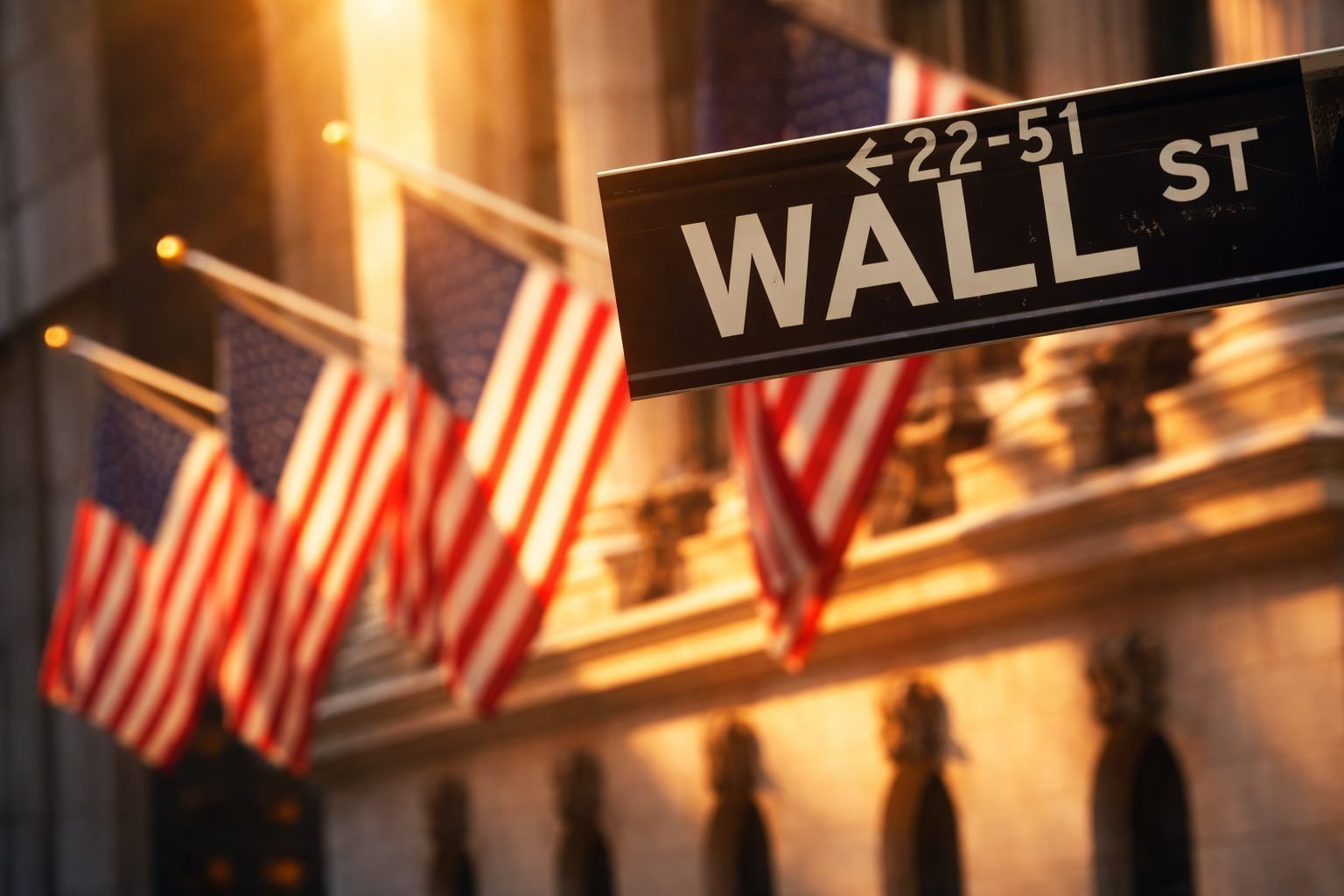

Updated: 10:18 a.m. ET, Thursday, December 25, 2025 — The U.S. stock market is closed today for Christmas Day, with the New York Stock Exchange and Nasdaq both observing the holiday shutdown. Regular trading resumes Friday, Dec. 26.
Even with cash markets dark, Wall Street is far from quiet. Investors are digesting a record-setting Christmas Eve session, tracking a fresh batch of corporate headlines that broke into the holiday, and debating whether the year-end “Santa Claus rally” can extend gains into the final stretch of 2025—and possibly set the tone for 2026. Reuters
Market status today: why you won’t see U.S. stock quotes move
- NYSE: Christmas Day is a market holiday; NYSE markets are closed today.
- Nasdaq: U.S. markets are closed on Dec. 25, following an early close at 1:00 p.m. ET on Dec. 24.
- U.S. fixed income: SIFMA recommended an early close at 2:00 p.m. ET on Dec. 24 and a full close on Dec. 25 for U.S. dollar-denominated fixed-income markets (recommendations, though firms can decide individually).
In other words: today is a pause in cash equities and much of the traditional U.S. market plumbing, which often amplifies the importance of the last full/partial session and increases attention on what might happen when liquidity returns.
What happened in the last session: Dow and S&P 500 finished at record highs
On Wednesday, Dec. 24 (Christmas Eve)—a holiday-shortened session—U.S. stocks closed higher, with two major benchmarks notching record closing highs:
- Dow Jones Industrial Average: 48,731.16 (+0.60%)
- S&P 500: 6,932.05 (+0.32%)
- Nasdaq Composite: 23,613.31 (+0.22%) Reuters
The tone was broadly constructive heading into the holiday break, helped by a rebound in AI-linked names after a bout of valuation/capex anxiety earlier in the month and by the market’s ongoing bet that rate cuts remain part of the 2026 story.
Holiday liquidity was extremely thin—and that matters
Trading volume underscored just how “holiday” the session really was: 7.61 billion shares changed hands on U.S. exchanges versus a 20-day average of 16.21 billion, according to Reuters. Reuters
Thin liquidity can make market moves look deceptively calm (or suddenly jumpy) and is one reason many strategists caution against over-reading late-December price action—especially when positioning and rebalancing flows can dominate the tape.
The drivers: AI optimism, rate-cut expectations, and “resilient economy” signals
Reuters attributed the late-year climb partly to a bounce back in AI-related names, after last week’s selloff sparked by concerns that heavy capital expenditures could pressure profitability—an issue that remains a key debate into 2026.
On the macro side, recent data has kept the “soft landing” narrative alive. Reuters noted that markets were still pricing roughly 50 basis points of Federal Reserve rate cuts next year (while expectations for a January cut were described as low). Reuters
Meanwhile, AP reported that initial jobless claims for the week ending Dec. 20 fell to 214,000 (down 10,000), and also highlighted a surprisingly strong 4.3% annualized GDP print for the third quarter—data points that feed the view that the economy has remained sturdier than many feared earlier in the cycle.
Today’s big stock stories (even with the market closed)
With no U.S. cash session today, the “stock market news” spotlight shifts to what happened in the final pre-holiday session—and to company announcements that can shape sentiment going into Friday.
1) Big deal: Sanofi agrees to buy Dynavax for about $2.2 billion
Dynavax surged in the shortened session after Sanofi said it would acquire the vaccine maker for roughly $2.2 billion, a move aimed at strengthening Sanofi’s adult vaccine portfolio.
2) Chips and AI: Nvidia’s Groq licensing deal is the latest “deal-spree” twist
Nvidia made headlines with a strategic non-exclusive technology licensing agreement tied to AI inference chip technology, alongside executive hires from Groq—an approach Reuters framed as part of a broader Big Tech shift toward licensing/acqui-hire structures rather than straightforward acquisitions.
Why it matters for markets: This reinforces a key late-2025/early-2026 theme: Wall Street increasingly treats “AI infrastructure and inference” as a multi-year capex cycle—bullish for parts of semiconductors and data-center supply chains, but also a source of valuation risk if returns on spending disappoint. Reuters
3) Micron: another signal that the AI hardware cycle is still driving winners
Micron shares rose again and ended at a record close of $286.68 in the holiday session, extending a rally after issuing a strong forecast the prior week, according to Reuters.
4) Nike and Intel: notable single-stock headlines from the shortened session
- Nike jumped after disclosure that Apple CEO Tim Cook (a Nike board member) bought roughly $3 million of Nike shares, Reuters reported.
- Intel slipped after a report that Nvidia halted tests related to Intel’s 18A process, according to Reuters.
5) GLP-1 and healthcare: Novo Nordisk’s “Wegovy pill” approval
Novo Nordisk announced that Wegovy® pill was approved in the U.S. as an oral GLP‑1 option for weight management, with the company expecting a launch in early January 2026.
Healthcare and weight-loss drug competition remains a major market narrative—particularly given how much earnings growth and index leadership have concentrated in a relatively small group of mega-cap and high-growth themes.
The Federal Reserve backdrop: where policy stands heading into 2026
The Fed’s policy path remains one of the market’s main “macro levers.” In its Dec. 10, 2025 statement, the Federal Open Market Committee said it lowered the target range for the federal funds rate to 3.50%–3.75%. Federal Reserve
From there, the market debate turns to how far and how fast additional cuts might come. Reuters’ late-December reporting emphasized that investors are still watching for a dovish-enough Fed stance in 2026 to support risk assets without reigniting inflation.
And in one example of the kind of “street-level” forecasting investors track into year-end: UBS said it maintained a view for a 25-basis-point cut by the end of the first quarter of 2026. Korea
Volatility, oil, and the “feel” of the market: what cross-asset signals are saying
Even without a live U.S. cash session today, cross-asset indicators are shaping the narrative investors will bring into Friday.
Volatility remains subdued
Reuters described the VIX—the market’s “fear gauge”—as holding near levels not seen since December 2024, a sign of calmer implied volatility heading into year-end. Reuters
Schwab’s market update also showed the VIX around 13.96 during the pre-holiday period.
MarketWatch similarly highlighted a VIX dip below 14 around the Christmas Eve record close.
Oil stayed soft
AP reported U.S. crude closing around $58.35 a barrel and Brent around $61.80, levels that help keep a lid on headline inflation pressure—even as investors remain sensitive to geopolitics and supply risks.
Santa Claus rally watch: what history says about Dec. 26
With markets reopening Friday, the calendar itself becomes a talking point.
Reuters noted that the “Santa Claus rally” is typically defined as gains in the last five trading days of the year and the first two of January—and said the period began on Dec. 24 and runs through Jan. 5 this year. Reuters
One statistic getting fresh attention on Dec. 25: MarketWatch cited Bespoke Investment Group data indicating Dec. 26 has historically been the most consistently positive trading day of the year for the S&P 500 (with the index down only a handful of times in decades of observations and with relatively small declines).
Important context for readers: Seasonal patterns can influence sentiment, but they don’t override fundamentals. With liquidity often still light between Christmas and New Year’s, headlines and positioning can exaggerate moves in either direction.
2026 outlook: what strategists are forecasting—and what could derail it
With the S&P 500 on track for another strong year (Reuters said it’s up over 17% in 2025 with only a few sessions left), the big question becomes whether the market can deliver a fourth straight year of sizable gains.
The bullish case: earnings breadth + AI demand + rate cuts
Reuters framed three pillars many bulls point to for 2026:
- Earnings growth: LSEG projections cited by Reuters put S&P 500 earnings up over 15% in 2026, following a projected 13% rise in 2025.
- AI spending momentum: continued infrastructure buildout and deployment.
- More Fed cuts: not too many, not too few—enough to support valuation without signaling recession.
UBS echoed a constructive stance, forecasting S&P 500 EPS of $305 in 2026 and projecting the index could reach 7,700 by end‑2026 (UBS CIO house view).
The “consensus-ish” view: still higher, but with real risks
A Reuters poll of brokerage expectations said the S&P 500 could rise nearly 12% to 7,490 by end‑2026, while also flagging risks including inflation, stretched valuations, and tariff tensions that could trigger corrections.
Reuters also pointed to a familiar constraint for 2026: valuations are already elevated enough that markets may need profits—not just multiples—to do the heavy lifting from here.
Wildcards investors are watching
Late-December Reuters reporting highlighted several swing factors:
- AI capex vs. AI payoff: if companies pull back spending or investors lose confidence in returns, the market could flatten or dip.
- Tariffs and U.S.–China relations: less dominant than earlier in 2025, but still capable of moving markets quickly.
- Fed leadership and independence questions: Reuters reported that investors are watching for a potential Fed chair choice early in 2026 and are sensitive to how that could shape perceived policy independence.
What to watch next when Wall Street reopens Friday
With today’s closure, Friday’s open becomes the next key “checkpoint” for market tone—even if the economic calendar is quiet.
Here are the practical catalysts to track as trading returns:
- Liquidity and volatility at the open: after a holiday shutdown, spreads and intraday swings can behave differently than in a typical session.
- No major scheduled U.S. releases on Dec. 26: Schwab’s “week ahead” noted no major earnings or economic data expected on Dec. 26 (and none on Dec. 25). Schwab Brokerage
- Late-December positioning: watch whether leadership broadens beyond mega-cap tech/AI and whether financials keep contributing (a tailwind noted by Reuters in the final pre-holiday session).
- Santa rally narrative vs. reality: Dec. 26’s historical pattern is supportive, but the market will ultimately follow positioning, rates, and earnings expectations.
Bottom line for Dec. 25: the market is closed, but the story is still moving
As of 10:18 a.m. ET on Dec. 25, U.S. stocks aren’t trading—but Wall Street is still very much in “price-discovery mode” through the lens of record closes, AI and chip headlines, and a growing body of 2026 forecasts that hinge on earnings delivery and a Fed that can ease without reigniting inflation. Korea
When the bell returns on Friday, Dec. 26, investors will be looking for confirmation that the late-December momentum is more than a holiday mirage—and that the path into 2026 can justify today’s optimistic pricing.



![Australia Stock Market Today 28/08/2026 [UPDATE: 13:36 AEST] [Banks and BHP Lift ASX as WAM, PEXA Sink 18%]](https://ts2.tech/wp-content/uploads/2026/08/AU-market-dashboard-2026-08-28-1334-480x384.jpg "Australia Stock Market Today 28/08/2026 [UPDATE: 13:36 AEST] [Banks and BHP Lift ASX as WAM, PEXA Sink 18%]")