
New York, May 4, 2026, 07:02 EDT
- U.S. stock-index futures edged lower ahead of the bell after Iran’s Fars news agency claimed a U.S. warship was struck near the Strait of Hormuz. Reuters said it couldn’t confirm the report, while Axios quoted a U.S. official who denied it.
- Oil surged roughly 5%, sustaining pressure on inflation and the Federal Reserve even as the S&P 500 and Nasdaq finished Friday’s session at fresh records.
- eBay shares climbed ahead of the open, buoyed by GameStop’s massive $56 billion offer. Berkshire’s record cash hoard, though, continued to put a spotlight on market valuations.
U.S. stock futures slipped early Monday, with a new burst of tension in the Middle East sending oil prices up and putting Wall Street’s record streak at risk. Dow futures dropped 181 points, or 0.36%, S&P 500 futures edged down 0.08%, and Nasdaq 100 futures hovered near flat at about 6:50 a.m. ET, according to market data.
This jump is front and center as investors weigh robust earnings against the sudden flare-up in oil prices. Brent and U.S. West Texas Intermediate each surged roughly 5% after Iran’s Fars news agency claimed two missiles struck a U.S. warship near Jask, along the Strait of Hormuz — a critical chokepoint for oil. Reuters couldn’t verify the report, and Axios pointed to a senior U.S. official who denied any U.S. ship had been hit.
This dip follows a stretch of sharp gains. On Friday, the S&P 500 and Nasdaq both finished at fresh records, fueled by solid earnings numbers. That marked the sixth week in a row of advances for both indexes. Analysts polled by LSEG expect S&P 500 earnings to have jumped 27.8% in the first quarter from a year ago, according to Reuters.
Oil held above $100 a barrel, a threshold that’s still pushing up bond yields, lifting fuel prices, and complicating the Fed’s attempts to rein in inflation. “The path for prices remains skewed to the upside as long as flows through the Strait remain restricted,” UBS analyst Giovanni Staunovo told Reuters. Reuters
Federal Reserve jitters reemerged after Minneapolis Fed President Neel Kashkari flagged that the war was curbing the central bank’s ability to offer clear rate guidance. He cautioned that if inflation heats up, policymakers could be forced to reverse course. Barclays, meanwhile, scrapped its expectation for a 2026 rate cut, citing sticky oil prices that would keep inflation elevated and put some drag on growth.
Brian Jacobsen, chief economic strategist at Annex Wealth Management, put it this way: “Markets can look through the fog of war if the fog is likely to lift within a reasonable amount of time,” he told Reuters. For investors, he said, the task is figuring out whether the shock sticks around or fades. Reuters
eBay soared 10% premarket, but shares stayed far under GameStop’s $125 bid—investors aren’t buying the idea that the much smaller retailer can pull off a $56 billion deal. Bernstein analysts pointed to tough financing odds, adding they’d be “even more surprised if anything became of it.” GameStop dropped about 3%. Reuters
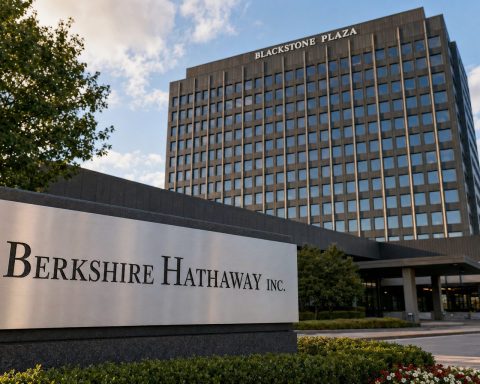
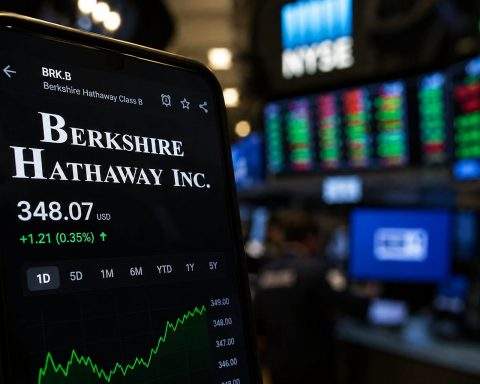
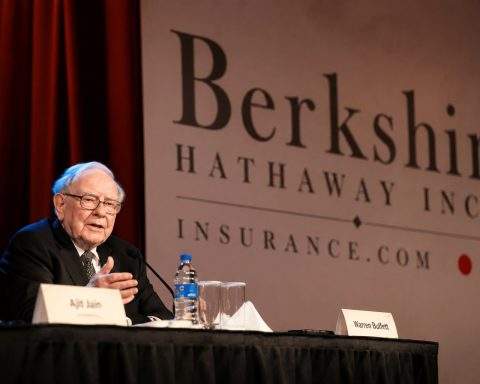
Berkshire Hathaway drew attention after first-quarter operating profit jumped 18%, while its cash pile reached a new high—$380.2 billion. During the quarter, the company sold $8.1 billion more in stocks than it purchased, extending its run as a net seller to 14 quarters. Investors frequently see that streak as a readout on market valuations.
Tech sector confidence couldn’t quite hold up Friday, with Investopedia noting that most of the “Magnificent Seven” megacap tech names pointed lower ahead of the open—even after Apple’s more than 3% climb led gains the previous session. Investors were also on the sidelines, looking ahead to Palantir Technologies’ results after the bell Monday. Investopedia
The big concern? Oil spikes sticking around. If the Strait of Hormuz stays shut or new attacks flare up, fuel inflation could heat up, bond yields might climb, and investors may wind up trimming earnings multiples—right at a time when indexes are hovering near their peaks. But if there’s clear, confirmed de-escalation, focus would likely swing back to earnings as the main driver.
Related articles: NYSE:BRK.B