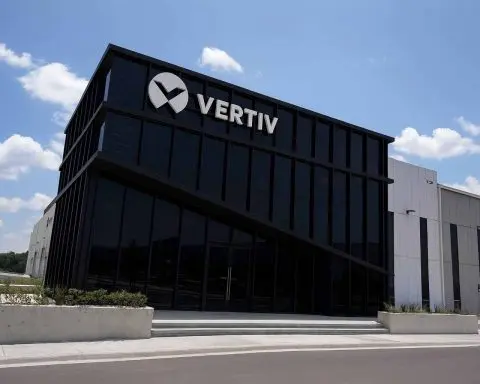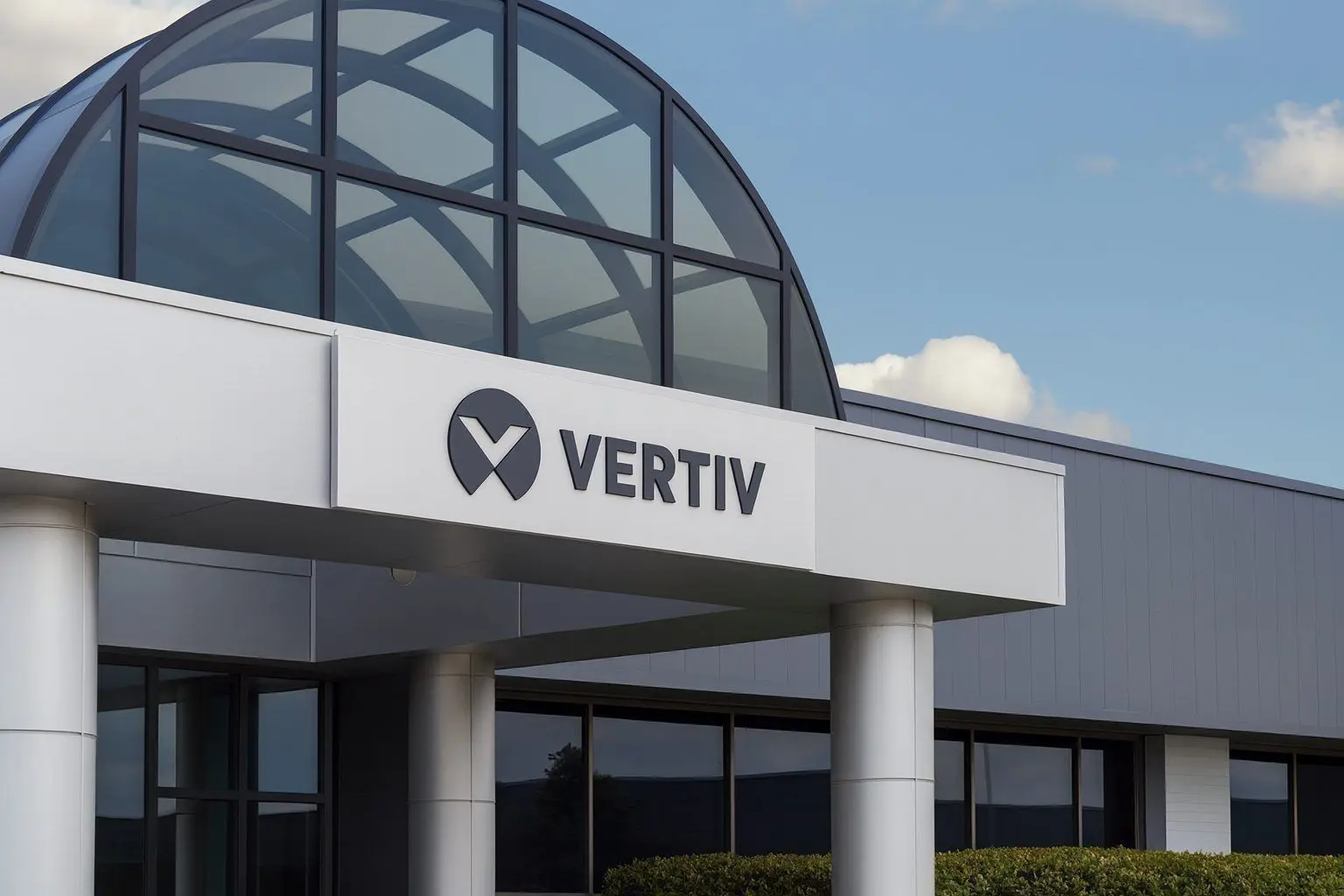
Vertiv Holdings Co. (NYSE: VRT) trades near $179 as it unveils plans for a new manufacturing facility in Malaysia aimed at AI-ready data center demand—here are the latest headlines, Wall Street forecasts, and the catalysts investors are watching into 2026.
Dec. 12, 2025 — Vertiv Holdings Co. (NYSE: VRT), a major supplier of power and thermal infrastructure used in data centers, is back in focus on Friday after announcing an Asia manufacturing expansion while analysts continue to debate valuation after a powerful run tied to AI-driven data center spending.
Shares of Vertiv were trading around $178.66 in the latest update available Friday, down about 1.8% versus the prior close.
Below is a comprehensive roundup of the current news and analysis circulating on Dec. 12, 2025, plus the most important forecasts shaping the bull-and-bear debate.
What’s happening with Vertiv stock on Dec. 12, 2025
Today’s Vertiv coverage clusters around three themes:
- A new manufacturing facility announcement in Malaysia (company news)
- Forecast-driven commentary (company guidance + analyst targets)
- Secondary headlines like institutional ownership updates and research-list features (market chatter)
While the stock has cooled from recent highs, Vertiv remains one of the most watched “picks-and-shovels” names in AI infrastructure—because every high-density compute buildout ultimately runs into the same constraint: power delivery and heat removal.
Big headline today: Vertiv plans a new manufacturing facility in Johor, Malaysia
Vertiv announced plans to expand its Asia manufacturing footprint through a new facility in Johor, Malaysia, which it expects to be fully operational in the first quarter of 2026. The company said the site will manufacture a range of power and thermal management solutions, including coolant distribution units (CDUs), as well as modular and prefabricated data center deployment solutions. Vertiv
Key details from the company’s release:
- The facility is positioned as a capacity expansion tied to surging demand for AI-ready, high-density computing infrastructure. Vertiv
- Vertiv expects it could create up to 500 skilled jobs locally. Vertiv
- The location is framed as strategically useful given Johor’s logistics and proximity to major regional tech hubs (including nearby Singapore). Vertiv
Why markets care: for Vertiv, supply capacity and lead times are not “back office” issues. In AI-era data centers, delivery timing can matter almost as much as specs—because infrastructure has to arrive in sequence with racks, networking, and compute.
This announcement also reinforces a broader storyline investors have been tracking all year: Vertiv’s push to scale production and services to meet demand for liquid cooling and other next-gen thermal solutions.
Forecasts that matter most: Vertiv’s own 2025 outlook (and why it anchors the debate)
For stock investors, the most material “forecast” is usually the company’s guidance.
In its Q3 2025 results (released Oct. 22, 2025), Vertiv reported rapid growth and raised full-year expectations. Among the headline figures the company disclosed:
- Backlog: increased to $9.5 billion
- Book-to-bill: approximately 1.4x
- Full-year 2025 guidance:
- Net sales $10.160B–$10.240B
- Organic net sales growth 26%–28%
- Adjusted diluted EPS $4.07–$4.13
- Adjusted free cash flow $1.470B–$1.530B
- Q4 2025 guidance: adjusted EPS $1.23–$1.29 and net sales $2.810B–$2.890B Vertiv Investors
Why this matters today (Dec. 12): the Malaysia facility announcement fits neatly into what management already told investors—Vertiv is scaling production capacity to capture demand that it believes extends through the remainder of 2025 and into 2026. Vertiv Investors
Today’s research/analysis: Zacks spotlights Vertiv as a “sales growth pick”
One of the most-circulated market notes today comes from a Zacks commentary distributed via Nasdaq. In that piece, Zacks highlights Vertiv among a list of stocks selected for expected revenue growth, stating that Vertiv’s expected 2025 sales growth rate is 27.5% and noting a Zacks Rank #1 at the time of publication. Nasdaq
This kind of list-driven research rarely moves a mega-cap stock on its own, but it can amplify short-term attention—especially when it aligns with the company’s own guidance trajectory.
Wall Street price targets: the consensus is bullish, but dispersion is wide
Even on a quiet news day, Vertiv can trade on “forecast momentum”—especially price targets and rating changes—because valuation has become the central argument.
Consensus snapshot (as reflected by widely followed market trackers):
- MarketWatch’s analyst page shows an average price target around $199.73, with a high of ~$246 and a low of ~$112, alongside a mix of Buy/Hold/Sell ratings that leans positive overall. MarketWatch
- Zacks also lists an average target of about $195.75 (based on a large group of analysts). zacks.com
What the dispersion says: even among bulls, investors disagree on how much upside is left after the stock’s sharp rerating—because a meaningful portion of the “AI data center buildout” narrative is already priced in.
The key near-term pushback: valuation concerns after a massive run
A major reason Vertiv remains volatile is that some analysts argue the stock’s risk/reward has become more balanced.
Recent coverage highlighted that Wolfe Research downgraded Vertiv to a Hold/Peerperform on valuation concerns—pointing to the scale of the stock’s multi-year rise and arguing that the near-term setup is less asymmetric than before. Yahoo Finance+1
The “valuation vs. growth” tug-of-war is also why Vertiv can drop sharply even when the fundamental narrative (AI-driven demand for power/cooling) remains intact.
Another headline investors track: dividends and capital return
Vertiv isn’t widely owned for income, but its dividend policy has become a signaling device for confidence and cash generation.
The company announced in November that its board raised the regular annual cash dividend by 67%, from $0.15 to $0.25 per share, to be declared and paid quarterly. The company said the fourth-quarter dividend is $0.0625 per share, payable Dec. 18, 2025 to shareholders of record as of Nov. 25, 2025. Vertiv Investors
For growth investors, the bigger takeaway isn’t the yield—it’s the implication that Vertiv sees durable cash flow even while investing to expand capacity.
How Vertiv fits the AI data center trade (and why “cooling” has become a stock catalyst)
Vertiv sits in the infrastructure layer that turns AI ambition into operational reality. As data centers densify, cooling transitions from a facilities concern to an architecture constraint—pushing demand toward more advanced systems, including liquid cooling approaches.
Vertiv’s business profile—critical digital infrastructure across power, thermal, and integrated solutions—is outlined in standard market references like Reuters’ company overview. Reuters
On the financial side, Reuters’ summarized financials show Vertiv at multi-billion-dollar scale (with 2024 revenue reported around $8.0B in that dataset), reinforcing that this is not a niche supplier but a global infrastructure platform. Reuters
M&A watch: the PurgeRite deal expands liquid cooling services exposure
Another thread that continues to influence sentiment is Vertiv’s expansion in services around liquid cooling.
Reuters reported in early November that Vertiv agreed to acquire PurgeRite for about $1 billion, positioning it as a way to strengthen Vertiv’s liquid cooling services portfolio amid AI-driven data center demand. Reuters
In a later SEC filing summary, Vertiv disclosed that the acquisition closed on Dec. 4, 2025, and described the structure as including potential additional cash consideration tied to post-closing performance metrics (as outlined in the filing narrative and deal terms). Stock Titan
Why this matters for VRT stock: services can be stickier than equipment, and liquid cooling services can become a recurring “attach” opportunity as customers move from pilot deployments to scaled AI clusters.
Secondary headlines today: institutional positioning and ownership chatter
A chunk of today’s “news flow” comes from filings-based headlines. For example, MarketBeat published updates highlighting institutional ownership changes, including State Street and other firms increasing stakes based on 13F and related disclosures. MarketBeat+1
These items usually don’t change the fundamentals, but they can contribute to the narrative that Vertiv is widely institutionally held and heavily watched—sometimes amplifying price swings when sentiment turns.
Risks investors are weighing right now
Even with strong demand tailwinds, the market’s focus has shifted toward the fragility of expectations:
- Valuation sensitivity: after a big run, any sign of slowing orders, margin pressure, or delayed projects can trigger sharp pullbacks (the core argument behind recent “risk/reward is balanced” takes). Yahoo Finance+1
- Competitive pressure: Vertiv operates in a crowded landscape across power, racks, and infrastructure systems—often discussed alongside peers and adjacent suppliers in broader data center infrastructure coverage. Nasdaq
- AI capex narrative volatility: AI-linked infrastructure stocks can move on macro tech sentiment and hyperscaler spending headlines, even without company-specific news. (This dynamic has been visible repeatedly across the AI trade’s rallies and pullbacks.) Investors
- Execution risk: manufacturing expansions (like the Johor facility) are positive strategically, but execution—ramp timing, cost control, quality—matters. Vertiv
What to watch next for Vertiv stock
Here are the most concrete upcoming signposts investors are tracking from today’s vantage point:
- Malaysia facility timeline: Vertiv says the Johor site is scheduled to be fully operational in Q1 2026. Vertiv
- Next earnings window: market calendars widely project Vertiv’s next report around Feb. 11, 2026 (date not always officially confirmed far in advance). zacks.com
- Dividend payment: the increased quarterly dividend is payable Dec. 18, 2025. Vertiv Investors
- 2026 setup: the company’s raised 2025 guidance and comments around backlog and pipeline keep attention on whether demand remains strong as AI infrastructure scales. Vertiv Investors
Bottom line
On Dec. 12, 2025, Vertiv stock is being pulled by two opposing forces:
- Fundamental momentum: capacity expansion (Malaysia), raised guidance, large backlog, and continued positioning in high-density data center power and cooling. Vertiv+1
- Valuation and sentiment risk: after a strong run, analysts and investors are increasingly split on whether near-term upside justifies the volatility. Yahoo Finance+1
For readers following VRT as an AI infrastructure play, today’s Malaysia announcement strengthens the operational story: Vertiv is still investing to meet demand. The next big question—likely answered over the next earnings cycle—is whether growth and margins keep pace with what the stock’s premium valuation implies.