
San Francisco, April 28, 2026, 14:04 PDT
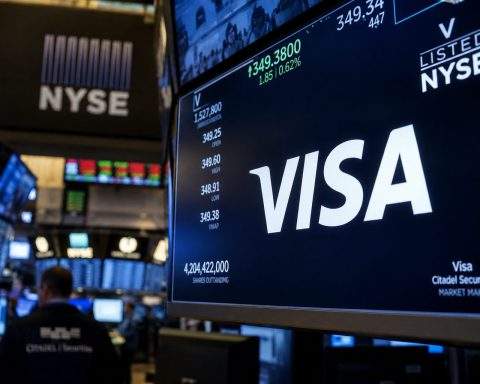
Visa climbed 4.1% in after-hours action Tuesday, boosted by better-than-expected fiscal Q2 numbers and the rollout of a fresh $20 billion buyback program. The payments giant beat Wall Street estimates and announced the multiyear repurchase plan, according to Seeking Alpha.
Visa’s report is in focus largely because its payment volumes give an early peek at spending trends. According to Reuters, Visa managed to post higher payment volumes, even as economic uncertainty lingered. March saw U.S. consumer spending beat expectations, helping to lift Visa’s results.
The company posted adjusted earnings of $3.31 a share, topping the $3.10 analyst consensus tracked by Bloomberg. Revenue climbed 17% from the prior year—marking the fastest growth since 2022.
Visa turned in GAAP net income of $6.0 billion, translating to $3.14 per share. Adjusted net income hit $6.3 billion. Net revenue climbed to $11.2 billion, a 17% increase—16% if you back out currency effects.
Visa’s latest operating figures landed across a wide front. Payments volume climbed 9%, with processed transactions—those run through the company’s network—also up 9% to 66.1 billion. Total cross-border volume increased 12%. Strip out Europe-only activity, and cross-border volume rose 11%.
Chief Executive Ryan McInerney noted that “consumer spending remained resilient.” He highlighted gains across consumer payments, commercial and money-movement solutions, and value-added services—key segments Visa has leaned on to push beyond traditional card swipes. MarketScreener
Capital returns took center stage as well. Visa reported $9.2 billion sent back to shareholders this quarter via repurchases and dividends, with $7.9 billion of that going toward snapping up around 25 million Class A shares. The board’s latest filing showed a 67-cent quarterly dividend set for payout on June 1 to those holding shares by May 12.
Most of the top-line numbers pushed higher. Service revenue picked up 13% to $5.0 billion. Data-processing revenue jumped 18%, reaching $5.5 billion. International transaction revenue added 10% to hit $3.6 billion. Client incentives, those are the rebates and payments Visa uses to secure or retain business with banks and merchants, increased 14% to $4.2 billion.
No surprise for competitors. American Express outpaced profit forecasts thanks to affluent cardholders spending more, and now attention shifts to Mastercard—Visa’s main rival—with results due later this week.
Visa sounded a more upbeat note on its guidance. For the third quarter, it’s looking for net revenue growth in the low double digits. On an adjusted constant-dollar basis, the company is targeting low double-digit to low-teens revenue growth for the full year, and adjusted EPS climbing in the low teens.
Still, that earnings beat doesn’t eliminate the key risk. If travel or trade stumbles, cross-border volume could slip. Reuters flagged those data points as real-time signals for global commerce and movement. Visa, for its part, also highlighted threats ranging from regulatory and legal battles to cyber risks, rivals, and shocks to the broader economy or politics. This quarter, it booked a $311 million litigation charge related to interchange—the merchant fees on card acceptance.
Investors locked in on the basics—bigger volumes, revenue climbing at a quicker pace, and more room for share repurchases. The real challenge hits in the third quarter. Visa’s calling for low double-digit revenue gains, but adjusted EPS is only set to climb in the mid- to high-single-digit range. That’s not as strong as what the company managed in Q2.
Related articles: NYSE:V