Perth, Western Australia — December 3, 2025
Western Australia has entered one of its biggest environmental reset moments in decades, with the state government announcing sweeping new bans on demersal fishing along the West Coast while police confirm a suspicious ignition point in the devastating Geraldton bushfire that destroyed at least one home and forced hundreds to flee.
The twin stories unfolding on land and sea share a common thread: authorities say immediate, hard decisions are needed to protect vulnerable ecosystems and communities in a rapidly warming, increasingly fire‑prone state.
900km of WA Coastline to Become Demersal Fishing Recovery Zone
On Wednesday, the WA Government confirmed “new statewide reforms for demersal fishing” aimed at protecting iconic species such as WA dhufish, pink snapper and red emperor “so there are fish for future generations”. Western Australian Government+1
At the heart of the reforms is the West Coast bioregion, a stretch of nearly 900 kilometres from Kalbarri to Augusta, encompassing the Perth metropolitan coast. This zone will undergo the most dramatic overhaul:
- Boat‑based recreational demersal fishing in the West Coast bioregion will not reopen on 16 December 2025 as previously scheduled.
- Instead, it will stay closed for a 21‑month “recovery closure” and reopen in spring 2027 as an exclusively recreational demersal fishing zone.
- Commercial fishing for demersal species in the West Coast bioregion will cease from 1 January 2026, supported by a compulsory buyback of commercial line and gillnet licences.
- Charter fishing for demersals in the Perth metropolitan area will be shut down from 16 December 2025, with limited charter demersal fishing allowed elsewhere in the West Coast bioregion under a reduced 25‑tonne annual quota and tag system.
Officials describe the package as “important management changes across the state to protect at‑risk demersal fish and help stocks recover for future generations”. DPIRD+1
Why WA Dhufish and Other Demersal Species Are in Trouble
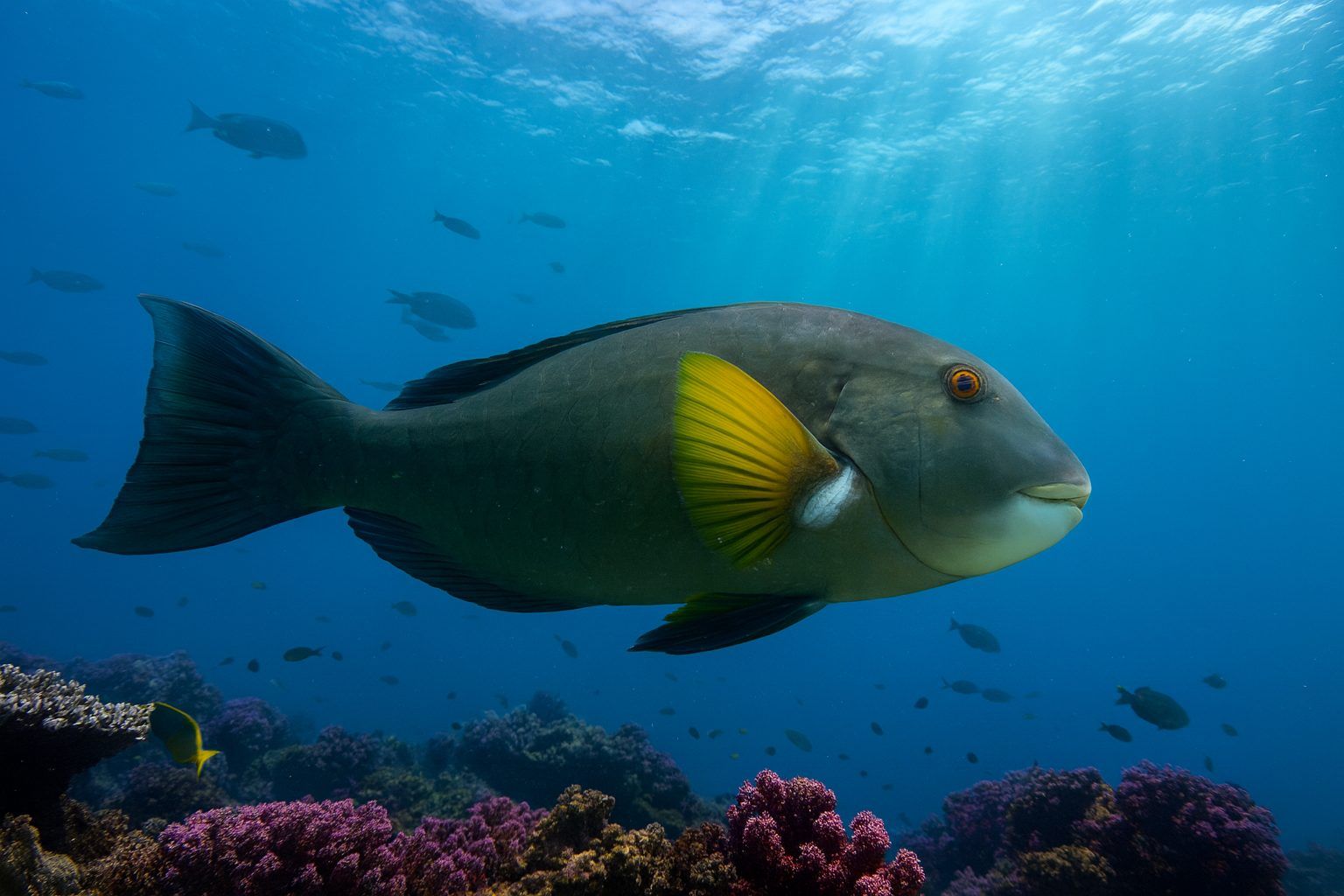
Demersal scalefish are long‑lived, slow‑growing species that live near the seabed, including WA dhufish, pink snapper, red emperor and baldchin groper. Their biology makes them particularly vulnerable to sustained fishing pressure: once stocks are depleted, they can take many years — even decades — to recover.
Recent stock assessments by the Department of Primary Industries and Regional Development (DPIRD) found that spawning biomass for WA dhufish off the Perth metropolitan coast has fallen to as low as 7 per cent of unfished levels. For fisheries scientists, anything below 20 per cent indicates a severe risk of collapse.
The government says the latest science shows several demersal species are “under serious threat” from continued fishing pressure, and that past measures — such as seasonal closures and bag limits — have not been enough to turn things around, especially in parts of the West Coast and Pilbara. DPIRD+1
Compounding this pressure, marine scientists have warned that marine heatwaves off WA’s coast, made significantly more likely by climate change, are stressing ocean ecosystems and contributing to mass fish deaths and habitat loss — further undermining the resilience of already‑overfished stocks.
What Changes for Recreational, Charter and Commercial Fishers?
Recreational Fishers: 21 Months Off Demersal in the West Coast
The biggest shock for everyday anglers is the extended closure on boat‑based recreational demersal fishing in the West Coast bioregion:
- The fishery will stay closed past 16 December 2025 and not reopen until spring 2027.
- When it does reopen, it will be an exclusively recreational demersal zone — no commercial demersal fishing at all.
Beach and land‑based fishers, however, can continue to fish, and recreational fishers can still target non‑demersal species such as tuna, mackerel and other pelagic fish that are not considered at risk.
From 2026, statewide measures will also tighten:
- Real‑time reporting of at‑risk demersal catches by recreational fishers.
- Revised bag and size limits for demersal species across WA.
Charter Sector: Metro Shutdown, Limited Operations Elsewhere
Charter operators — tourism businesses that take paying customers fishing — face a mixed outcome:
- Perth metropolitan demersal charters will be closed from 16 December 2025.
- Charter fishing for demersal species will still be possible elsewhere in the West Coast bioregion, but only under a tag system and a reduced annual catch limit of 25 tonnes.
For many metro‑based charter operators, that could mean relocating, reinventing their businesses around other species, or exiting the industry altogether.
Commercial Fleets: Permanent Closure and a $29.2m Support Package
For commercial fishers, the shift is even more dramatic:
- The West Coast bioregion will be permanently closed to commercial demersal fishing from 1 January 2026, including line and gillnet fisheries south of Kalbarri.
- Commercial demersal catch in the Kimberley, Pilbara and South Coast regions will be cut by 50 per cent from 1 January 2026, with fisheries transitioning to quota‑based management by 2028.
- In the Pilbara, the only WA zone where demersal trawling still occurs, commercial trawl fishing for demersal scalefish will be permanently shut down.
- The Gascoyne — where earlier reforms have already boosted recovery — will not see further restrictions on commercial demersal fishing for now.
To soften the blow, the government has announced a $29.2 million fisheries support package, including:
- $20 million for compulsory buyback of West Coast commercial line and gillnet licences.
- $3.3 million and additional funding to support alternative recreational fishing experiences and tackle‑shop rebates to nudge fishers toward less‑pressured species.
- Investments in education campaigns, monitoring (including remote cameras) and infrastructure to enforce the new rules.
“Biggest Reset in WA Fisheries History”: Reactions on All Sides
Reactions from the fishing community have ranged from shock and anger to reluctant support.
Commercial Sector Fears for Its Future
The WA Fishing Industry Council (WAFIC), representing commercial operators, says businesses were blindsided by the scale of the crackdown. CEO Melissa Haslam told ABC Radio Perth that industry received only about an hour’s warning before the announcement, describing the sector as “in a state of shock”. ABC
Haslam argues the $20 million buyback is “nowhere near” enough for more than 70 affected licences and associated businesses, warning of job losses and higher prices for premium species such as dhufish, pink snapper and red emperor. ABC+1
Some commercial fishers interviewed by ABC said the changes likely spell “the end” of their fisheries, accusing the government of shifting the burden of recreational overfishing onto professional operators who rely on the West Coast demersal stocks. ABC
Recreational Fishers: Pain Now, Benefits Later?
On the recreational side, Recfishwest CEO Andrew Rowland has called the move the “biggest reset in fisheries management in WA history”, acknowledging it will be “bloody tough” for many fishers but arguing that dhufish are “the winner today” and that short‑term pain is necessary to secure long‑term fishing opportunities. ABC+1
Recreational groups have long pushed for stronger controls on commercial catches, but many everyday anglers will now feel the direct impact of a 21‑month demersal shutdown on their own trips.
Government: “On the Verge of Extinction” in Parts of WA
Premier Roger Cook has framed the reforms as a last chance to save WA’s unique demersal stocks, warning that species like dhufish and snapper are “on the verge of extinction in some parts of WA” if action is not taken. Yanchep News Online+1
Fisheries Minister Jackie Jarvis says the government is following “independently reviewed and international best‑practice science”, and insists that sustainability must come first, even when the short‑term economic consequences are severe. ABC+1
The WA Greens have backed the closures as necessary to prevent “disappearing forever” some of the state’s most loved fish, while the WA Nationals and some regional MPs accuse the Cook Government of heavy‑handed decision‑making and failing to give businesses adequate time to adjust. ABC+1
Geraldton Blaze: Ignition Point Found, Arson Investigation Under Way
While the fishing sector digested the reforms, Geraldton, about 420 kilometres north of Perth, continued counting the cost of a destructive bushfire that roared through the city’s northern suburbs earlier this week.
The fire, which authorities say appears to have been deliberately lit, destroyed at least one home in Waggrakine and a small outbuilding, scorched bushland and came dangerously close to schools and hundreds of properties in suburbs including Moresby, Bluff Point, Sunset Beach, Spalding and Glenfield.
Up to 200 firefighters, including reinforcements rushed from Perth, battled the blaze in temperatures reaching 42°C and wind gusts up to 80km/h. At the height of the emergency, more than 3,000 homes and businesses lost power, schools were closed and residents were ordered to evacuate or prepare to shelter in place.
Ignition Point Near Golf Course
On Wednesday, arson detectives from Strike Force Vulcan confirmed they had identified the ignition point in bushland near a golf course on Heal Street, in Geraldton’s north. Police say the cause is being treated as suspicious, with evidence pointing to human activity at the site when the fire began on Friday afternoon.
Key details from the investigation so far include:
- The fire was initially contained but reignited and rapidly spread across several suburbs on Sunday, driven by powerful easterly winds.
- A formal bushfire warning has been downgraded to an “advice” level, but crews remain on patrol to prevent flare‑ups.
- More than 100 career and volunteer firefighters from across WA helped keep the blaze from destroying many more homes and at least one school that came under direct ember attack.
Emergency Services Minister Paul Papalia has condemned the suspected arson as “appalling behaviour”, and authorities have offered a reward of up to $25,000 for information leading to a conviction. Police are urging anyone who saw suspicious activity around Heal Place, Green Street and Tappak Street on Friday afternoon, or who has CCTV or dashcam footage from the area, to contact Crime Stoppers. News.com.au+1
Fire on Land, Pressure at Sea: A Climate and Risk Backdrop
The Geraldton blaze is not occurring in isolation. Last week’s national summer bushfire outlook flagged increased fire risk for parts of southern WA, including around the Geraldton Sandplains, due to dry soils and forecast hotter‑than‑average conditions.
Climate and fire researchers have repeatedly warned that climate change is increasing the number of days with dangerous bushfire weather across southern and eastern Australia, with hotter temperatures, more frequent heatwaves and prolonged drying cycles all contributing to more intense fire seasons.
In the marine environment, WA has also been experiencing recurrent marine heatwaves, with research this year finding that a recent extreme event off WA’s coast — linked to climate change — killed tens of thousands of fish and made such heatwaves up to 100 times more likely.
For fisheries managers, that means fishing pressure is no longer the only variable: warming oceans, habitat loss and extreme events can erode stock resilience faster than past models assumed. The demersal bans announced this week are being pitched not just as a response to overfishing, but as part of a broader push to “build resilience” into WA’s marine ecosystems in a rapidly changing climate. DPIRD+2Recfishwest+2
Key Dates and What Happens Next
For readers trying to keep track, here are the major dates to watch:
- 16 December 2025
- Boat‑based recreational demersal fishing in the West Coast bioregion stays closed instead of reopening.
- Perth metropolitan demersal charter fishing shuts down.
- 1 January 2026
- Commercial demersal fishing permanently closed in the West Coast bioregion, with compulsory buyback for line and gillnet licences.
- 50% catch reductions begin for commercial demersal fisheries in the Kimberley, Pilbara and South Coast, plus a permanent ban on Pilbara demersal trawling.
- Early 2026
- Launch of a demersal reform program to transition all commercial demersal fisheries to quota‑based management by 2028.
- Roll‑out of statewide recreational measures, including real‑time catch reporting and new bag/size limits.
- Spring 2027
- Planned reopening of West Coast boat‑based recreational demersal fishing as an exclusively recreational zone, subject to recovery progress and final management settings.
Meanwhile in Geraldton, the arson investigation continues, with police yet to identify the person or people responsible for igniting the blaze near Heal Street. Fire crews will keep patrolling the fireground in coming days as hot, dry and windy conditions persist across much of WA.
Quick FAQ: WA Demersal Bans and the Geraldton Fire
Which species are most affected by the new fishing bans?
Primarily demersal scalefish such as WA dhufish, pink snapper, red emperor and baldchin groper, which stock assessments show are under serious pressure in parts of WA.
Can I still go fishing off Perth?
Yes — but not for demersal species from a boat in the West Coast bioregion from 16 December 2025 until at least spring 2027. You can still target species that aren’t considered at risk (for example, many pelagic fish) and fish from beaches and jetties, subject to existing rules.
What support is available for affected fishers and businesses?
The state has outlined a $29.2m package, including a $20m licence buyback, plus funding for alternative recreational experiences, tackle‑shop rebates and education campaigns to help sectors adapt to the new regime.
What do we know about who lit the Geraldton fire?
Police believe human activity caused the blaze, have identified an ignition point near a golf course on Heal Street, and are treating the cause as suspicious. No suspects have been publicly named, and the investigation is ongoing.
Is bushfire risk likely to stay this high?
Seasonal forecasts point to a hotter‑than‑average summer and elevated fire danger for parts of WA, including the Geraldton region, while climate research shows a long‑term trend toward more frequent days of dangerous fire weather.