NEW YORK, Jan 2, 2026, 10:42 ET
- Walmart shares hovered near $112 in early trade as new bullish commentaries circulated.
- Recent columns pointed to e-commerce and advertising gains, while flagging a premium valuation.
- A PYMNTS Intelligence report said Walmart is still far behind Amazon in U.S. online spending share despite faster growth.
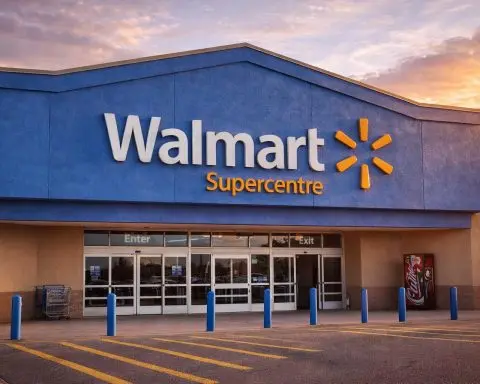
Walmart shares traded around $111.56 on Friday morning, little changed as fresh investor commentaries kept attention on the retailer’s online push and expanding profit streams.
The debate matters at the start of 2026 as investors look for companies that can hold up if shoppers stay price-conscious, while still posting growth in digital sales. Walmart’s scale gives it room to gain share across groceries, general merchandise and delivery.
Walmart has leaned into “omnichannel” retailing — selling through stores and online — and the story has increasingly centered on whether it can grow e-commerce profitably as it battles Amazon on speed and convenience.
In a Jan. 1 column, The Motley Fool’s Catie Hogan argued Walmart’s online business is growing at double-digit rates and highlighted 27% e-commerce growth in its latest quarter, alongside a 33% jump in U.S. advertising revenue at Walmart Connect. She also noted the stock trades at a forward price-to-earnings ratio — a valuation based on expected earnings — above 36 and near a 52-week high.
A separate Motley Fool piece, syndicated by Yahoo Finance, called Walmart a “Dividend King” — a label for companies with at least 50 straight years of dividend increases — and pointed to $179.5 billion in quarterly revenue and $6.1 billion in net income. The column compared Walmart’s momentum with Target’s weaker results and warned that Walmart’s valuation metrics sit above their five-year averages.
Walmart’s recent results helped fuel that optimism. The company said online sales climbed 28% in the August-through-October quarter and “expedited deliveries” rose 70%, while U.S. comparable sales — sales at stores open at least a year plus online — increased 4.5%. “Walmart’s performance signals a bifurcated consumer landscape,” said Bryan Hayes, a strategist at Zacks Investment Research. Reuters
Walmart has also highlighted higher-margin businesses that can lift profitability beyond traditional retail. In its third-quarter release, it reported global e-commerce sales growth of 27% and said its global advertising business rose 53%, including VIZIO, with Walmart Connect in the U.S. up 33%.
A PYMNTS Intelligence report framed the contest with Amazon as a sprint versus a marathon. It said Amazon accounted for 55.7% of U.S. online spending in the third quarter of 2025 versus Walmart’s 9.6%, but estimated Walmart’s global e-commerce sales grew 27.2% between July and September compared with Amazon’s 9.6%.
That gap is why Walmart’s store footprint remains central to its pitch. Stores double as pickup and delivery hubs, a structural advantage that Amazon has tried to replicate through logistics investments and a growing physical footprint.
The stock’s rise has also sharpened scrutiny of what investors are paying for stability. Value-focused buyers often gravitate to Walmart for its steady cash generation, but recent commentaries stressed that much of the strength may already be reflected in the share price.
Management change is approaching as well. Walmart has said John Furner will become chief executive on Feb. 1, 2026, as Doug McMillon retires at the end of January, a transition investors will watch for signals on capital spending and priorities in tech and retail operations.