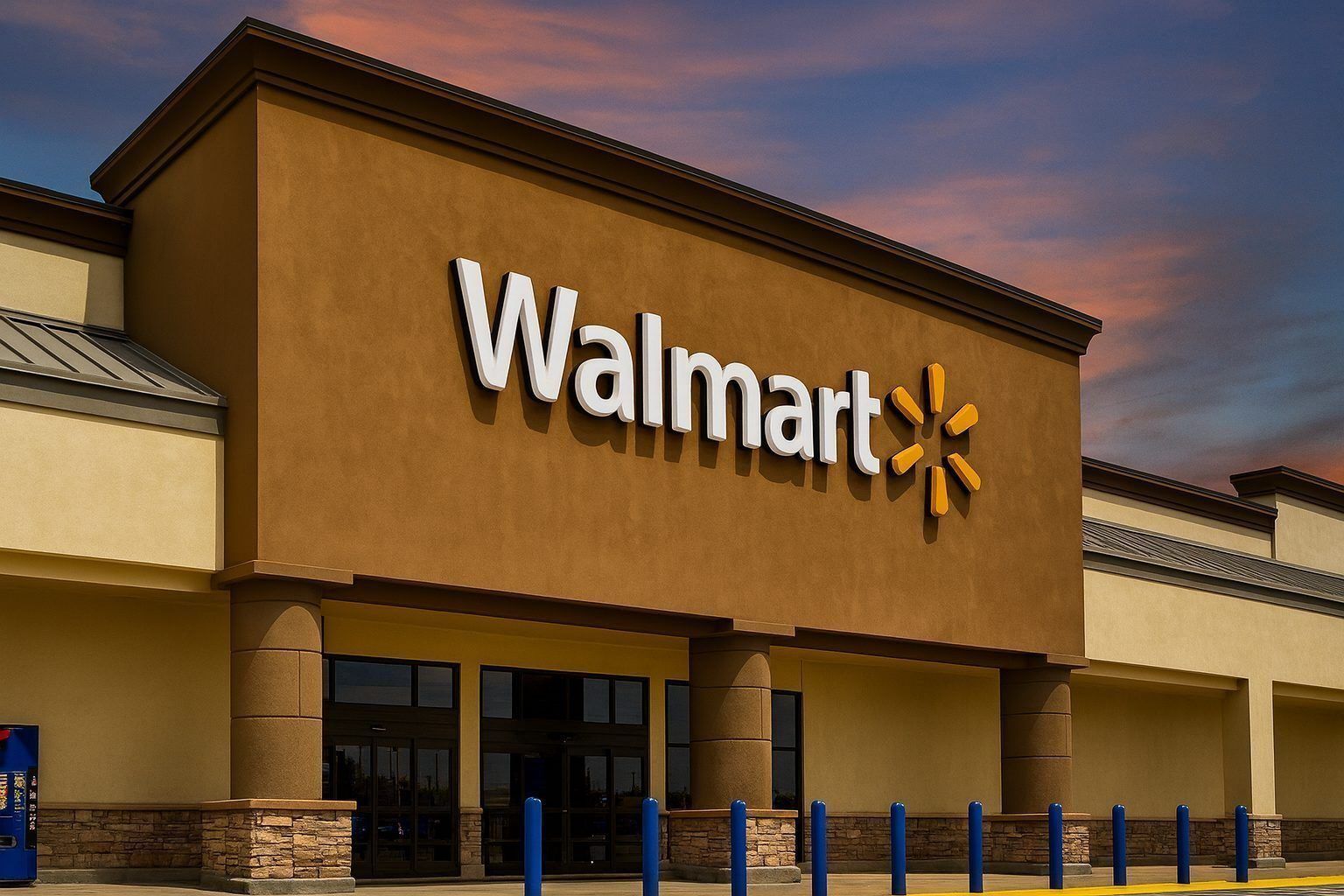
As of December 5, 2025, Walmart Inc. (NYSE: WMT) is trading near all‑time highs and edging toward the trillion‑dollar club, powered by strong earnings, a robust holiday start and an upcoming move to the Nasdaq.
This article pulls together the latest news, Wall Street forecasts and fundamental analysis on Walmart stock as of today, with a focus on what matters for investors watching WMT in Google News and Discover.
Disclaimer: This article is for informational purposes only and is not personalized investment advice. Always do your own research or consult a licensed advisor.
Walmart Stock Today: Price, Performance and Valuation
At midday on December 5, 2025, Walmart shares trade around $115–116 per share, up roughly 0.8% on the day and sitting just above their 52‑week high of about $114.9.StockAnalysis+1
Key snapshot:
- Market cap: ≈ $920–925 billionFinviz
- 12‑month performance: about +24% vs roughly +17% for the S&P 500, according to a recent Motley Fool analysis.Nasdaq
- Year‑to‑date performance: roughly +28% in 2025.Finviz
- 52‑week range:$79.81 – $114.89; the stock is now trading just above that prior high.StockAnalysis+1
- Trailing EPS (TTM): about $2.85–2.86; trailing P/E ≈ 40x.Finviz+1
- Forward P/E: just under 39x, based on next‑year EPS estimates.Finviz+1
- Dividend yield: around 0.8%, with a quarterly dividend of $0.23 (ex‑dividend date December 12, 2025).Finviz+1
- Volatility profile: 10‑year share performance of nearly +480%, with a beta (volatility vs market) of about 0.66, underscoring its role as a defensive large cap.Finviz
Walmart is also a Dividend King, having raised its dividend for 52 consecutive years, a fact analysts repeatedly highlight as part of the stock’s appeal for income‑oriented investors.Nasdaq
Earnings Beat, Guidance Hike and the Holiday Setup
Q3 2026 (fiscal) results
Walmart’s latest reported quarter (fiscal Q3 2026, ended October 31, 2025) set the tone for the current rally:
- Revenue: about $177–180 billion, up roughly 5.8–6% year over year, beating Wall Street estimates.Reuters+1
- Same‑store sales: U.S. comparable sales grew around 4.5%, ahead of expectations.Reuters
- E‑commerce: online sales jumped about 27–28%, confirming digital as a major growth engine.Nasdaq+1
- EPS: adjusted earnings per share came in at $0.62, vs $0.58 a year earlier and ahead of consensus around $0.60.Nasdaq+1
On the back of that performance, Walmart:
- Raised full‑year sales guidance to roughly 5% growth, up from the mid‑4% range.Reuters+1
- Lifted FY 2026 EPS guidance to about $2.58–2.63, signaling confidence in margin resilience despite wage and logistics pressures.MarketBeat+1
Management tone: cautiously upbeat
On the Q3 call, CFO John David Rainey described Walmart as “optimistic” about holiday spending, even as executives kept a close eye on more financially stressed customers.Business Insider
A few nuances from that commentary and subsequent coverage:
- Upper‑ and middle‑income households continue to spend at Walmart, offsetting some softness among lower‑income shoppers.Business Insider
- Early seasonal events — back‑to‑school, Halloween and smaller sales days — suggested solid momentum heading into November and December.Business Insider
- Analysts at Fitch and others see Walmart’s sheer scale, broad assortment and focus on value as giving it an advantage over more narrowly focused retailers in this environment.Business Insider+1
Holiday 2025: Record Black Friday, Strong Online Sales – But a Fragile Consumer
Walmart’s own data and broader industry reports point to a powerful but nuanced start to the 2025 holiday season.
Walmart’s Black Friday and Cyber Monday update
In a December 2 corporate release, Walmart reported:Walmart News Leadership
- “Consistently strong” sales growth during the period Nov. 25 – Dec. 1, led by digital channels.
- 57% more orders fulfilled from stores on Black Friday than last year.
- 44% more orders delivered in under three hours, thanks to its same‑day delivery network that now reaches about 95% of the U.S. population.
- The fastest recorded Black Friday delivery: 10 minutes for a home appliance order in Utah.
Merchandise trends skewed toward electronics, toys, apparel and home goods, with items like Apple AirPods and large‑screen TVs among the top sellers.Walmart News Leadership
Industry context: shoppers are spending, but more carefully
Adobe and Bank of America data cited by Reuters show that:Reuters+1
- U.S. online spending over the Thanksgiving–Cyber Monday stretch hit new records, but underlying card spending per household rose only about 0.2% versus last year.
- Customers at Walmart and Target cut back on impulse purchases and leaned more on “buy now, pay later” financing.
- Operation HOPE’s Q4 2025 survey found around 79% of lower‑ and moderate‑income respondents plan to spend less on holidays this year, even though many remain optimistic about 2026.AccessWdun
Taken together, this suggests:
- Walmart is winning traffic and share, particularly online and in value‑focused categories.
- The macro backdrop is still fragile, and future quarters could see pressure if lower‑income households tighten spending further.
Strategic Moves: Supply Chain, Vertical Integration and Sustainability
$350 million milk processing facility in Georgia
On December 2, Walmart announced the opening of its second owned and operated U.S. milk processing plant in Valdosta, Georgia:Walmart News Leadership+1
- Investment: about $350 million into a 300,000+ square‑foot facility.
- Jobs: more than 400 new roles plus indirect employment via local sourcing.
- Scope: processes Great Value and Sam’s Club Member’s Mark milk products for over 650 stores and clubs across the Southeast.
This continues Walmart’s push into vertical integration in key grocery categories (milk and case‑ready beef), aimed at:
- Tightening control over costs and quality.
- Supporting private‑label growth, where margins can be higher.
- Increasing supply chain resilience after years of logistics disruptions.Walmart News Leadership+1
ESG and regenerative agriculture push
Today (Dec 5), a new report highlighted Walmart’s partnership with Kellanova (the Pringles and cereal company) and Indigo Ag to support regenerative rice farming in Arkansas.Carbon Credits
Key elements:
- The program aims to boost farmer income while encouraging practices that improve soil health and reduce emissions.
- It sits alongside Walmart’s broader climate agenda, including a net‑zero emissions target by 2040, increased use of renewable energy, and the Project Gigaton initiative to cut supply‑chain emissions.Carbon Credits
For ESG‑focused investors, these moves support the narrative of Walmart as a long‑term sustainability leader in big‑box retail, which some research outfits argue is becoming part of the stock’s valuation premium.Carbon Credits
Leadership Transition and the Nasdaq Listing
Two structural changes are shaping how investors view Walmart into 2026:
CEO succession
Walmart has announced that long‑time CEO Doug McMillon will retire in early 2026, with John Furner, currently head of Walmart U.S., slated to take over.Nasdaq+1
The handoff is widely seen as:
- A continuity move rather than a strategic reset, given Furner’s role in driving Walmart’s U.S. omnichannel and merchandising strategy.
- A chance to double down on technology, automation and high‑income urban formats, where Walmart has been rolling out smaller, sometimes “dark” stores focused on pickup and delivery.Finviz
Switch from NYSE to Nasdaq
Walmart will move its primary listing from the New York Stock Exchange to the Nasdaq on December 9, 2025.Reuters+1
Why that matters:
- Symbolically, it reinforces Walmart’s self‑image as a “people‑led, tech‑powered” retailer, emphasizing AI, data and automation.Walmart News Leadership+1
- Practically, it could shift index and ETF ownership as the stock becomes fully embedded in Nasdaq‑branded indices, potentially adding incremental demand over time.StockAnalysis+1
This exchange move has helped fuel headlines asking whether Walmart now “trades like a tech company”, reflecting its high valuation relative to traditional retailers.Finviz+1
Wall Street Forecasts: Price Targets and Earnings Outlook
12‑month price targets
Different aggregators largely agree that WMT’s near‑term upside from here is modest:
- StockAnalysis (30 analysts):
- Consensus rating: “Strong Buy”.
- Average 12‑month target:$118.27, about 2–3% above recent prices.
- Target range: $91 (low) – $130 (high).StockAnalysis
- MarketBeat:
- 31 Buy ratings, 1 Hold; average rating “Moderate Buy”.
- Average target: about $119, with several brokers — like Tigress Financial and UBS — at $130 on the high end.MarketBeat
- Finviz / TradingView‑style consensus:
- Implied average target near $120–121, again suggesting low‑single‑digit upside vs today’s price.Finviz+1
In short: analysts like the business, but most of the near‑term optimism is already in the price.
Revenue and EPS forecasts (2026–2028)
Analyst models imply steady, not spectacular, growth:
- Revenue:
- FY 2026 revenue expected around $720 billion, up ≈5.7% from FY 2025.
- FY 2027 revenue forecast near $755 billion, up ≈4.9%.StockAnalysis
- EPS:
- FY 2026 EPS forecast around $2.66, up ≈10.5% from FY 2025.
- FY 2027 EPS expected around $2.99, another ≈12% increase.StockAnalysis
A deeper long‑term look from Simply Wall St sees Walmart’s outlook pointing to:Simply Wall St+1
- 2028 revenue: ≈ $789.9 billion (about 4.5% annual growth).
- 2028 net earnings: ≈ $27.4 billion, up $6.1 billion from around $21.3 billion today.
- A fundamental “fair value” estimate around $118.38 per share – roughly 7% above recent trading levels at the time of that analysis.
Zacks, meanwhile, expects current‑quarter EPS near $0.72, up about 9% year‑over‑year, with revenue growth in the mid‑single digits, underlining a pattern of moderate but consistent earnings expansion.Finviz+1
Why the Market Is Paying a Tech‑Like Multiple for Walmart
Walmart now trades at around 40x trailing earnings and just under 40x forward earnings, levels that historically would have been reserved for faster‑growing retailers or tech names.Finviz+1
What’s driving that premium?
1. E‑commerce and omnichannel dominance
- Online sales are growing around 27% year over year, and Walmart now leverages its 4,600+ U.S. stores as fulfillment hubs for same‑day delivery and pickup.Nasdaq+1
- That mix gives Walmart a cost and convenience edge versus pure‑play e‑commerce rivals: orders can ship from nearby stores, not distant warehouses.
2. High‑margin growth vectors
Management and analysts consistently flag three profit engines:
- Advertising: Walmart Connect, the company’s retail media business, monetizes search and display ads on its site and app.
- Membership: Sam’s Club and Walmart+ deepen customer loyalty and raise average spend.
- Financial and ancillary services: from credit and BNPL partnerships to health services and micro‑formats.Reuters+1
3. Safe‑haven status in a choppy consumer environment
- Classed as a consumer defensive stock, Walmart tends to benefit when shoppers “trade down” from more expensive retailers.
- This defensive profile has historically produced strong returns with lower volatility, which investors often reward with higher multiples when macro risks are elevated.Finviz+1
4. ESG and long‑term resilience story
- Investments in regenerative agriculture, renewable energy and vertical integration (like the Valdosta milk plant) support a narrative of durable competitive advantage and lower long‑run risk, which some ESG and institutional investors are willing to pay up for.Walmart News Leadership+1
Risks and Red Flags Investors Are Watching
Despite the bullish consensus, several risks feature prominently in recent research:
1. Valuation stretch
- With a P/E around 40x and PEG above 4, Walmart trades at a premium to its own history and to most other big‑box retailers.Finviz+1
- The average 12‑month price target implies only low‑single‑digit upside, so any stumble on earnings or guidance could trigger a pullback.StockAnalysis+1
2. Margin pressure from wages, logistics and mix
- Analysts at Simply Wall St and others caution that rising labor and logistics costs may cap operating leverage, particularly if more growth comes from lower‑margin essentials rather than higher‑margin general merchandise.Simply Wall St+1
3. Consumer fatigue at the low end
- Surveys and retailer commentary suggest financial strain among lower‑income consumers, who form a critical part of Walmart’s base.Business Insider+1
- Reuters reporting notes that shoppers at Walmart and Target are already cutting impulse buys and relying more on BNPL – not a disaster yet, but a sign of fragility.Reuters
4. Execution and partner risk in automation
- Walmart’s automation partner Symbotic has seen sharp stock swings, including a recent drop of about 15% after a secondary offering and cautious analyst commentary.Finviz+1
- While Walmart is the customer rather than the vendor here, heavy reliance on a small set of robotics partners introduces technology and execution risk if deployments don’t deliver expected efficiencies.
5. Operational and reputational issues
- A recent multi‑retailer cheese recall affecting some Walmart‑carried brands underscores ongoing food safety and supply‑chain risk, though the direct financial impact is likely minor.ABC News+1
Is Walmart Stock a Buy After the 2025 Rally?
From the standpoint of December 5, 2025, the investment case around WMT looks something like this:
The bullish view
Supporters argue that Walmart is:
- A dominant, tech‑enabled retailer with powerful omnichannel capabilities and rapidly growing e‑commerce.Nasdaq+1
- A defensive compounder, combining low volatility with mid‑single‑digit revenue growth and low‑double‑digit EPS growth.StockAnalysis+1
- A long‑term dividend and ESG story, backed by 50+ years of dividend increases and ambitious environmental commitments.Nasdaq+1
On that view, paying a premium multiple is justified, particularly in a world where many investors are seeking quality, scale and resilience.
The cautious view
Skeptics counter that:
- At near 40x earnings, Walmart is effectively priced like a mature growth or “light tech” stock, leaving little room for disappointment.Finviz+1
- Consensus targets only point to a few percentage points of upside over the next 12 months, suggesting the risk/reward is less attractive for short‑term traders.StockAnalysis+1
- A tougher macro backdrop, especially for lower‑income shoppers, could pressure comps and margins just as expectations are highest.
A reasonable synthesis
Anchored in today’s data, a balanced takeaway might be:
- For long‑term, risk‑aware investors: Walmart still looks like a solid core holding — a dominant retailer with durable advantages, credible growth drivers and a strong balance sheet, though future returns may skew more toward steady compounding than explosive gains at current valuations.StockAnalysis+1
- For value hunters and short‑term traders: After a big 2025 run and with the stock already reflecting much of the good news on earnings, guidance, the Nasdaq move and holiday momentum, waiting for a better entry point or a pullback might be more attractive than chasing new highs.
Either way, Walmart’s combination of defensive stability, digital growth and sustainability initiatives means WMT is likely to remain a central character in both the retail sector and the broader stock market narrative well beyond this holiday season.