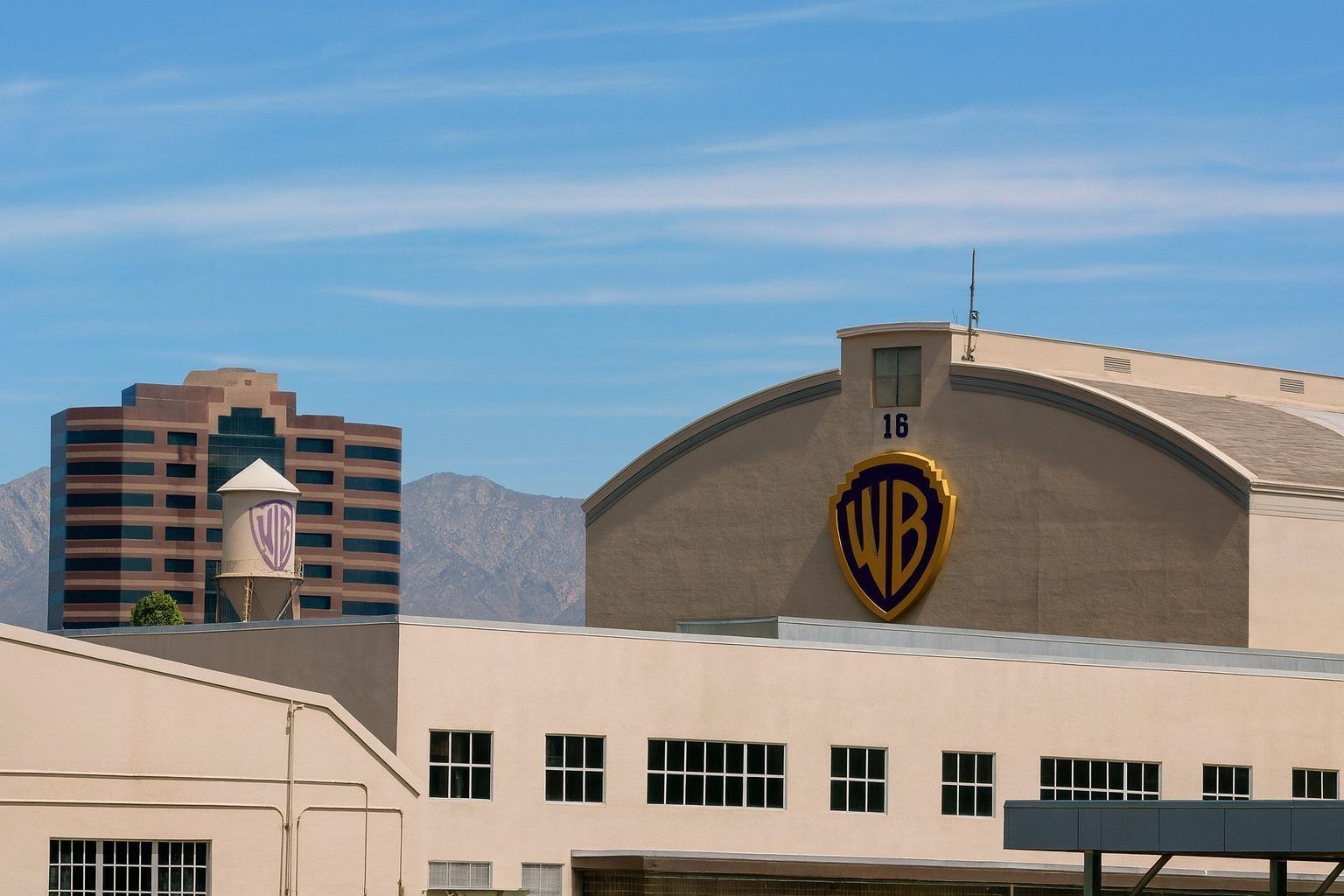
Warner Bros. Discovery, Inc. – Series A (NASDAQ: WBD) has become the most dramatic story in global media and entertainment markets. On December 9, 2025, the stock is trading near takeover prices as Netflix and Paramount Skydance battle in public for control of the company, while analysts begin to turn more cautious and regulators circle.
Below is a detailed, news-focused and SEO-optimized look at WBD stock today, including the latest bid details, analyst forecasts, financial fundamentals and what investors will be watching next.
WBD Stock Today: Price, Performance and Momentum
As of the close on December 9, 2025, Warner Bros. Discovery’s Series A shares trade around $27.70, up roughly 1–2% on the day, with an intraday range between about $27.32 and $27.86 and heavy trading volume above 22 million shares.
Recent market coverage notes that WBD has:
- More than doubled from levels seen before takeover talks began earlier this year.
- Delivered a “strong bull run” in 2025 and ranked among the best performers in the Nasdaq 100, as the bidding war intensified. Invezz
- Closed around $27.23 on Monday with a 52‑week high near $28.16, and a Relative Strength Index (RSI) above 80, a classic “overbought” signal. Benzinga
In other words, WBD stock is already trading very close to the takeover prices now on the table, with momentum indicators flashing that the move has been both fast and extreme.
Deal #1: Netflix’s $82.7 Billion Bid for Warner’s Studios and Streaming
The current frenzy started on December 5, 2025, when Netflix announced an agreement to acquire Warner Bros. Discovery’s studios and streaming division – including HBO, Max, and DC Entertainment – in a cash-and-stock transaction valued at about $82.7 billion in enterprise value and $72 billion in equity value.
Key terms of the Netflix–WBD deal
- Structure:
- Warner Bros. Discovery would first spin off its global networks business (“Discovery Global”) into a separately listed company, currently targeted for completion in Q3 2026. Reuters
- Netflix would then acquire the studios and streaming assets (film and TV studios plus HBO/Max and related IP).
- Consideration for WBD shareholders:
- Each WBD share would be exchanged for approximately $23.25 in cash plus about $4.50 in Netflix stock, implying a headline value of roughly $27.75 per WBD share at announcement.
- Break-up fees and commitment:
- Netflix reportedly offered $5.8 billion in break-up fees if it walks away, while Warner Bros. Discovery would owe $2.8 billion if it chooses a different buyer.
- Netflix estimates $2–3 billion in annual cost synergies by year three after closing.
Netflix’s leadership has publicly said they are “super confident” about closing the deal and has described rival bids as “entirely expected,” signaling that the company still views itself as the favorite despite new competition. Fortune+1
Financing and credit risk on the Netflix side
The deal is largely cash-funded, and that matters for WBD shareholders because it affects regulatory risk and closing certainty:
- Analysts estimate Netflix would assume nearly $11 billion of Warner Bros. Discovery’s existing debt and raise roughly $50–59 billion in new debt to finance the transaction.
- Credit analysts have warned that Netflix’s debt‑to‑EBITDA could rise from about 1.1x to above 4x, potentially pressuring its single‑A credit ratings and prompting a downgrade in its debt recommendation to “Underperform.” Barron’s+1
From a WBD stock perspective, that means the value of the Netflix stock component and the odds of deal approval now depend heavily on how markets and regulators react to this new leverage.
Antitrust and a new consumer lawsuit
Beyond financing, antitrust scrutiny is mounting:
- A consumer class action was filed today in federal court in California by an HBO Max subscriber seeking to block Netflix’s $72 billion purchase of WBD’s studio and streaming operations.
- The suit argues that folding HBO/Max into Netflix would reduce competition in the U.S. subscription streaming market and give Netflix control of franchises like Harry Potter, DC, and Game of Thrones.
Legal experts note that consumer suits alone rarely stop mega‑mergers, but this case adds another layer of headline risk and regulatory pressure around the Netflix offer.
Deal #2: Paramount Skydance’s $108 Billion All-Cash Hostile Bid
Just days after the Netflix agreement, Paramount Skydance, led by CEO David Ellison, stunned Hollywood by launching a hostile, all‑cash takeover bid for the entire Warner Bros. Discovery group.
Terms of the Paramount Skydance offer
- Offer price: Paramount Skydance is offering $30 per WBD share in cash, valuing the company at approximately $108–108.4 billion.
- Scope: Unlike Netflix’s asset deal, Paramount’s proposal targets all of Warner Bros. Discovery, including linear TV networks such as CNN and Discovery, as well as studios and streaming.
From a pure price standpoint, Paramount’s $30 per share offer is about 8–9% above today’s trading level around $27.70 and comfortably higher than the roughly $27.75 implied by the Netflix mix of cash and stock at signing.
Who is financing the Paramount bid?
The financing structure is as eye‑catching as the price:
- Paramount has lined up an estimated $54 billion in debt financing from major banks including Bank of America, Citi and Apollo.
- A consortium of Gulf sovereign wealth funds – Saudi Arabia’s Public Investment Fund, Qatar Investment Authority and Abu Dhabi’s L’imad Holding – is contributing around $24 billion of equity, while Jared Kushner’s Affinity Partners is also backing the deal.
- Reuters’ Breakingviews commentary argues that the Gulf contribution looks “mostly non‑financial” in motivation, suggesting a heavy geopolitical component to the investment given WBD’s debt load and modest projected returns. Reuters
In total, the bid is widely seen as a politically backed, high‑stakes attempt to create a media giant rivaling Disney, with deep-pocketed Gulf investors waiving voting rights to mitigate U.S. regulatory concerns about foreign control of media assets.
Board reaction and newsroom anxiety
Warner Bros. Discovery has confirmed it will review the Paramount Skydance proposal and advise shareholders within roughly two weeks.
Meanwhile, the bid has thrown the future of CNN and other cable networks back into limbo. Initial relief that Netflix’s partial asset deal would leave news networks separate has been replaced by new uncertainty, as Paramount’s plan could pair CNN with CBS News under one corporate umbrella if regulators approve.
December 9, 2025: Today’s Fresh Developments Around WBD Stock
1. Seaport Global downgrades WBD to Neutral
On December 9, Seaport Global Securities downgraded Warner Bros. Discovery, Series A from Buy to Neutral, highlighting the sharp rally and limited upside relative to current price targets.
According to Fintel’s summary of analyst data:
- The average 12‑month price target for WBD is about $23.07 per share, with estimates ranging from roughly $10.10 to $31.50.
- That average implies approximately 15% downside from a recent closing price of $27.23.
This downgrade arrives on top of a prior cut from Barrington Research, which moved WBD from “outperform” to “hold” last week even as the shares hit a 52‑week high near $26.10, after a quarter where earnings missed expectations and revenue fell about 6% year‑over‑year. MarketBeat
2. Momentum warnings and overbought signals
A Benzinga piece today places WBD among the “Tech and Telecom stocks that may keep you up at night”, pointing to: Benzinga+1
- A 14‑day RSI above 80,
- A roughly 18% gain over the past month,
- And prices close to the top of the recent 52‑week range.
This reinforces the idea that a lot of the takeover premium is already priced in, at least relative to where fundamental analysts had expected WBD to trade before the bidding war escalated.
3. More pressure around the Netflix deal
On the same day:
- Reuters reports that Netflix now faces a consumer antitrust lawsuit over the WBD deal, adding incremental legal risk.
- Separate Reuters and Barron’s coverage highlights that the proposed transaction could quadruple Netflix’s leverage ratio, raising concerns about its credit rating and potentially forcing changes to the deal structure if markets worsen.
These developments are not directly negative for WBD in the short term—the premium offers remain—but they do cast doubt on the certainty and timing of a Netflix‑led outcome.
Under the Hood: WBD’s Debt, Free Cash Flow and Planned 2026 Split
Strip away the takeover drama and the story of Warner Bros. Discovery stock is still about debt, cash flow, and restructuring.
Debt levels and deleveraging progress
Recent quarterly filings show:
- Gross debt of around $34.5 billion and about $4.3 billion in cash at the end of Q3 2025, implying net leverage of roughly 3.3x.
- WBD repaid about $1.2 billion of debt in Q3 alone, and roughly $2.2 billion back in Q1 2025, emphasizing management’s focus on deleveraging.
- Across the first three quarters of 2025, the company generated free cash flow in the hundreds of millions per quarter, with Q3 free cash flow at roughly $701 million, though this was partially reduced by separation‑related costs tied to future restructuring.
On a trailing twelve‑month basis, independent valuation sites estimate free cash flow of about $4.1 billion, with projections rising to approximately $4.2 billion in 2026 and $4.7 billion by 2035 if the business stabilizes and grows modestly.
Despite progress, credit‑risk analytics from martini.ai show:
- A B2‑equivalent credit rating as of November 2025, down sharply from an A‑range rating pre‑merger.
- A 1‑year default probability near 0.23% and a 5‑year credit spread around 2.9%, still wider than many media peers.
This backdrop explains why both Netflix and Paramount must grapple with WBD’s heavy debt in any final structure—and why some strategists question whether current bids are economically attractive for the buyers.
The planned 2026 break‑up
Well before the takeover war, Warner Bros. Discovery had already signaled a strategic split by mid‑2026:
- The plan would separate WBD into two public companies:
- A high‑growth unit focused on streaming and studios (Max, HBO, WB film/TV).
- A legacy networks and sports business housing linear channels like Discovery, CNN and sports rights.
- Internal and third‑party analyses suggest the split is designed to:
- Simplify the balance sheet and capital structure,
- Support deleveraging toward a 2.5–3.0x net‑leverage target,
- And let investors value the faster‑growing streaming assets separately from declining cable networks.
Both the Netflix and Paramount Skydance proposals need to slot into or replace this 2026 plan, making execution risk around the restructuring another key part of the WBD equity story.
What Do Analysts Forecast for WBD Stock Now?
Given the takeover frenzy, it’s not surprising that analyst views are all over the map.
Short- to medium-term price targets
Recent aggregators and research summaries suggest:
- A consensus 12‑month price target near the low‑to‑mid $20s:
- StockAnalysis tracks about 18 analysts with an average target around $19.17, with a range from roughly $10 to $30 per share, and a “Buy” consensus. StockAnalysis
- Fintel’s compilation (drawing on a similar underlying dataset) points to an average near $23.07, again with a $10.10–31.50 range, implying mid‑teens downside from late‑last‑week prices.
- TradingView’s forecast page shows a current average target around $25–25.3, with most estimates between $15 and $30 per share.
- A mix of “Hold” to “Strong Buy” ratings:
- Some aggregators describe the overall stance as “Moderate Buy” or “Strong Buy,” but the majority of price targets sit now below the market, reflecting that the share price has surged past what many models assumed pre‑bidding war. MarketBeat+2ValueInvesting+2
In short, analyst targets haven’t yet fully caught up with the takeover premiums, and several firms—like Seaport Global and Barrington—have responded by cutting ratings rather than racing to raise targets.
Longer-term projections and fair-value models
Some quantitative and DCF‑based services take a more cautious stance:
- One forecast model sees an average 2027 price target near $13 per share, more than 50% below today’s price, assuming the current bidding war is an outlier and that WBD eventually trades closer to stand‑alone cash‑flow valuations.
- Equity research tools like SimplyWall.st and Webull highlight that, after the recent rally, WBD trades at or above many fair‑value estimates based on projected free cash flow growth, even though those same models recognize significant upside if debt is reduced and streaming continues to scale.
These models underline a key point: without a completed takeover, current prices may be hard to justify purely on fundamentals, especially given WBD’s leverage and the structural pressures on linear TV.
Scenario Analysis: What the Takeover Battle Could Mean for WBD Stock
For investors following Warner Bros. Discovery Series A stock today, everything boils down to how the takeover saga ends. While no outcome is guaranteed, three broad scenarios are being discussed in the market.
Scenario 1: Netflix deal closes as planned
If Netflix’s proposal prevails:
- Each WBD share is currently slated to receive roughly $23.25 in cash + $4.50 in Netflix stock, valued at about $27.75 per share at signing.
- Between now and closing, the actual value of the stock component will move with Netflix’s share price—and regulators could still demand concessions or structural changes.
For current WBD holders, that means the upside from today’s ~$27.70 price is marginal in a pure Netflix‑wins scenario, and some investors may weigh switching into Netflix if they want continued exposure to the combined streaming giant rather than waiting through a potentially long approval process.
Scenario 2: Paramount Skydance wins with a $30 all‑cash deal
If shareholders reject Netflix and accept Paramount Skydance’s hostile bid:
- WBD investors could receive $30 in cash per share, a premium of roughly 8–9% to today’s market price.
- Some analysts argue that the bid undervalues the planned Discovery Global spin‑off, suggesting there might be room for a slightly higher price if the board negotiates hard or if other bidders re‑emerge.
In this scenario, the risk lies less in the headline consideration and more in the complex financing and political backdrop—Gulf funds, heavy leverage, and U.S. regulatory agencies will all have a say.
Scenario 3: Both deals collapse and WBD remains independent
This is the outcome most fundamental models implicitly assume and the one that could be most painful in the short term for WBD’s stock:
- Without a takeover, investors are left with a highly leveraged media conglomerate in the middle of an ambitious but risky 2026 split, facing secular declines in linear TV and intense competition in streaming.
- In that world, many of today’s $20–25 price targets and some of the more conservative $13–19 models regain relevance, implying significant downside from current, bid‑inflated prices.
On the flip side, if management continues to pay down debt, grow free cash flow, and execute the split well, WBD could over time earn its way into a higher valuation even without a buyer—especially if the market begins to reward profitable streaming at scale.
Key Risks and Opportunities for WBD Shareholders
Major risks
- Deal uncertainty and timeline risk
- Both the Netflix agreement and the Paramount Skydance bid face intense regulatory, financial and political scrutiny, which could delay or derail any transaction.
- High leverage and credit pressure
- WBD’s own $30+ billion debt load and sub‑investment‑grade rating remain a structural overhang, especially if no deal closes and if advertising or box office trends weaken.
- Structural decline in linear TV
- Even with streaming growth, WBD’s traditional networks segment is under pressure, and the company must navigate cord‑cutting while funding content and debt service.
- Execution risk on the 2026 split
- Separating into two businesses, allocating debt between them, and keeping both investment‑grade (or improving ratings) is a complex project that could go wrong operationally or financially.
Potential opportunities
- Takeover premium and optionality
- With two live bids at prices at or above current trading levels, WBD shareholders have unusual downside protection in the near term—at least as long as both suitors remain at the table.
- Unique content library and franchises
- Warner Bros. owns some of the world’s most valuable IP—Harry Potter, DC, HBO’s prestige shows—which remain attractive whether WBD stays independent or joins a larger group.
- Deleveraging and improved cash generation
- Recent quarters show steady debt repayment and strong free cash flow, which could gradually strengthen the balance sheet and support a higher standalone valuation over time.
- Structural simplification via the split
- If executed well, the 2026 split could unlock value by letting investors choose between a growth‑oriented streaming/studios company and a cash‑generative but slower‑growth networks business.
What to Watch Next for Warner Bros. Discovery Stock
For readers following Warner Bros. Discovery, Inc. – Series A (WBD) stock on Google News and Discover, the next few weeks and months could be decisive.
Key near‑term catalysts include:
- Formal board response to Paramount Skydance’s hostile bid, expected within roughly two weeks of the December 8 offer.
- Any revised terms from Netflix or Paramount, including price changes, different financing structures, or asset swaps.
- Regulatory developments, including reactions from the U.S. Department of Justice and competition authorities abroad, plus the progress of the consumer antitrust lawsuit against Netflix.
- WBD’s next earnings updates in early 2026, where investors will be watching free cash flow, debt repayment and progress on the planned split.
Final word: Information, not investment advice
Warner Bros. Discovery’s Series A stock has moved from a deeply discounted, heavily indebted media turnaround to the center of a multi‑billion‑dollar takeover war in just months. Today’s price already reflects a great deal of that drama.
This article summarizes current news, forecasts and analyses as of December 9, 2025 based on publicly available sources. It is not investment advice. Anyone considering trading WBD, Netflix, Paramount Skydance or related securities should do their own research, consider their risk tolerance, and consult a qualified financial adviser before making decisions.