
UPDATE: New York, April 8, 2026, 11:20 (EDT).
As of the latest quoted trades around 11:01 a.m. EDT, IonQ was at $28.83, D-Wave at $14.17, and Rigetti at $14.25, leaving all three above their previous closes but below the session’s highs.
On April 7, Rigetti announced general availability of its 108-qubit Cepheus-1-108Q system through QCS and Amazon Braket, with current median two-qubit gate fidelity of 99.1% and a 99.5% target later this year.
On March 16, IonQ said it had formed a South Korea alliance with KISTI to integrate its quantum hardware with HPC infrastructure using NVIDIA NVQLink.
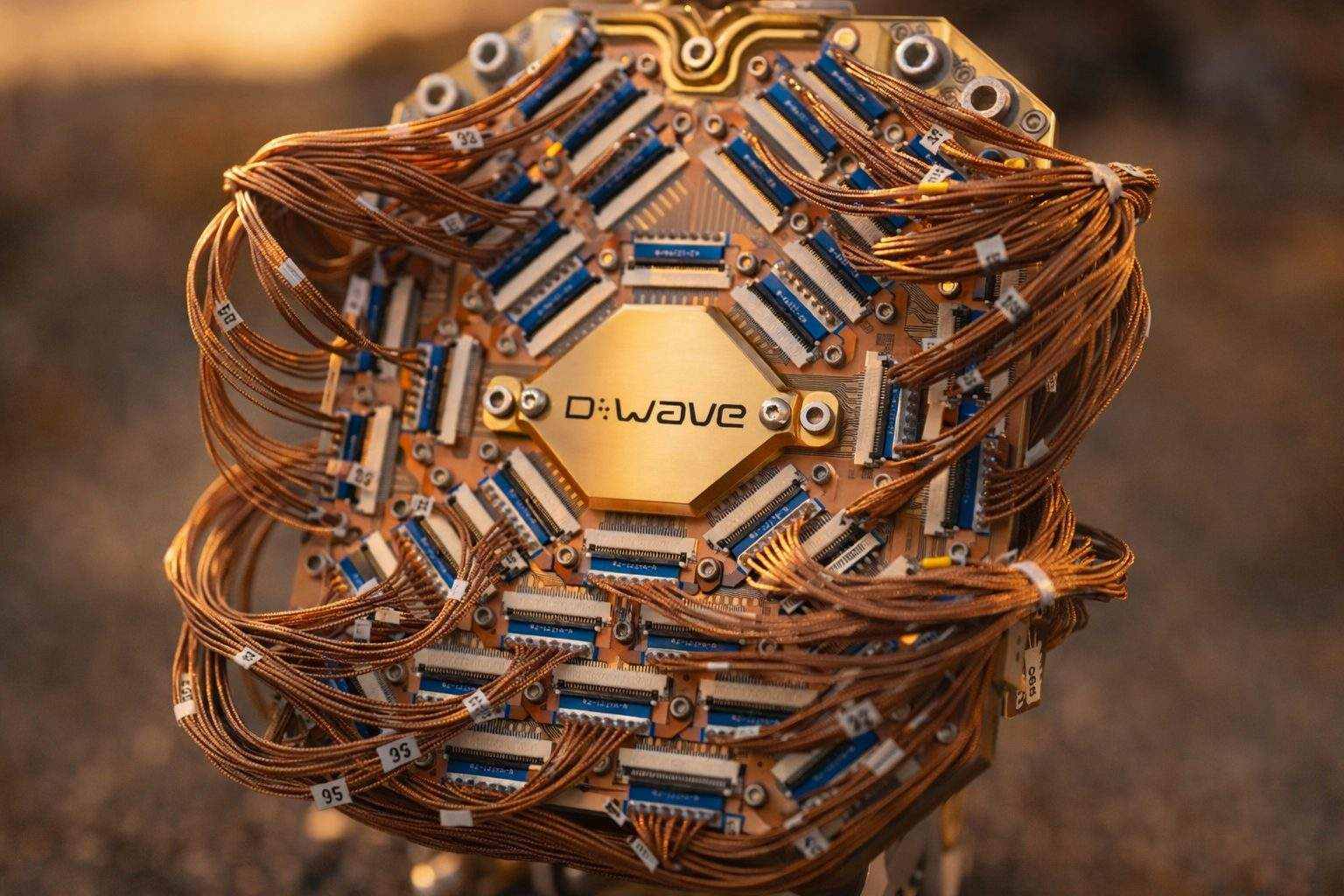
In January, D-Wave said Advantage2 usage had climbed 314% over the prior year and that it planned to bring an initial gate-model quantum computing system to market in 2026.
New York, April 8, 2026, 07:02 EDT
Shares of IonQ, D-Wave Quantum, and Rigetti Computing dropped on Wednesday, following a round of price target cuts from Mizuho’s Vijay Rakesh. The analyst took his targets down to $61 for IonQ, $31 for D-Wave, and $33 for Rigetti—previously set at $80, $40, and $43—while sticking with Outperform ratings. The trio already shed about 4% on Tuesday.
Mizuho’s latest cuts come after a fresh look at the sector, prompted by Nvidia’s GTC conference and a string of recent industry updates. Wall Street isn’t backing out; it’s just dialing down short-term hopes. The broker pointed to the increasing adoption of NVQLink — tech that connects quantum processors with conventional accelerated computing — as a possible boost for quantum error correction, which tackles errors in unstable qubits. Competition to surpass 200 logical qubits, meaning error-corrected qubits reliable enough for practical tasks, is picking up speed for the 2027-2029 window.
D-Wave’s fresh disclosures shed some light on why the broker held onto its bullish view. On Feb. 26, the company reported it wrapped up 2025 with $884.5 million in cash and marketable securities, after pulling in over $800 million over the year. Even after spending $250 million on the Quantum Circuits buyout, D-Wave said its remaining liquidity should carry it through to profitability.
D-Wave reported that its 2026 bookings so far have already topped any previous full-year result, with the sales pipeline for 2026 almost 1,500% higher. Kicking off the year, D-Wave landed a $20 million system sale with Florida Atlantic University and also secured a $10 million, two-year QCaaS deal—cloud-based quantum computing access—with a Fortune 100 firm. According to CFO John Markovich, operating expenses are projected to climb roughly 15% each quarter through 2026. CEO Alan Baratz described 2026 as “a defining year for D-Wave.” D-Wave
IonQ posted $130 million in 2025 revenue and sat on $3.3 billion in cash, cash equivalents, and investments. Looking ahead, the company guided for 2026 revenue of $225 million to $245 million. “Continued momentum” toward that 2026 goal, CEO Niccolo de Masi said. IonQ Investors
Rigetti isn’t pulling in big revenue, but the balance sheet looks sturdy. The company reported $1.9 million in fourth-quarter revenue and held $44.9 million in cash as of March 4, with $398.7 million in short-term investments and $146.3 million in long-term holdings. About three weeks out from those numbers, Rigetti announced plans to put as much as $100 million into the UK, where the government’s quantum roadmap includes up to £2 billion in funding. Chief Executive Subodh Kulkarni pointed to what he called “strong alignment” between Rigetti and the UK’s strategy. Rigetti & Co, LLC
But risks in the short run are clear enough. D-Wave warned investors its system sales might not show up as revenue for months or even quarters, given the lengthy installation timeline. Rigetti’s sales numbers are still on the small side. Over at IonQ, the company is forecasting an adjusted EBITDA loss between $310 million and $330 million for 2026, despite revenue growth.
Mizuho isn’t backing down from its optimism, maintaining bullish ratings and pointing to more than 100% upside across the sector. Investors, though, face the usual picture: quantum companies flush with cash and lofty plans, while real commercial momentum remains elusive.
Related articles: NYSE:IONQ