
New York, April 21, 2026, 10:37 EDT
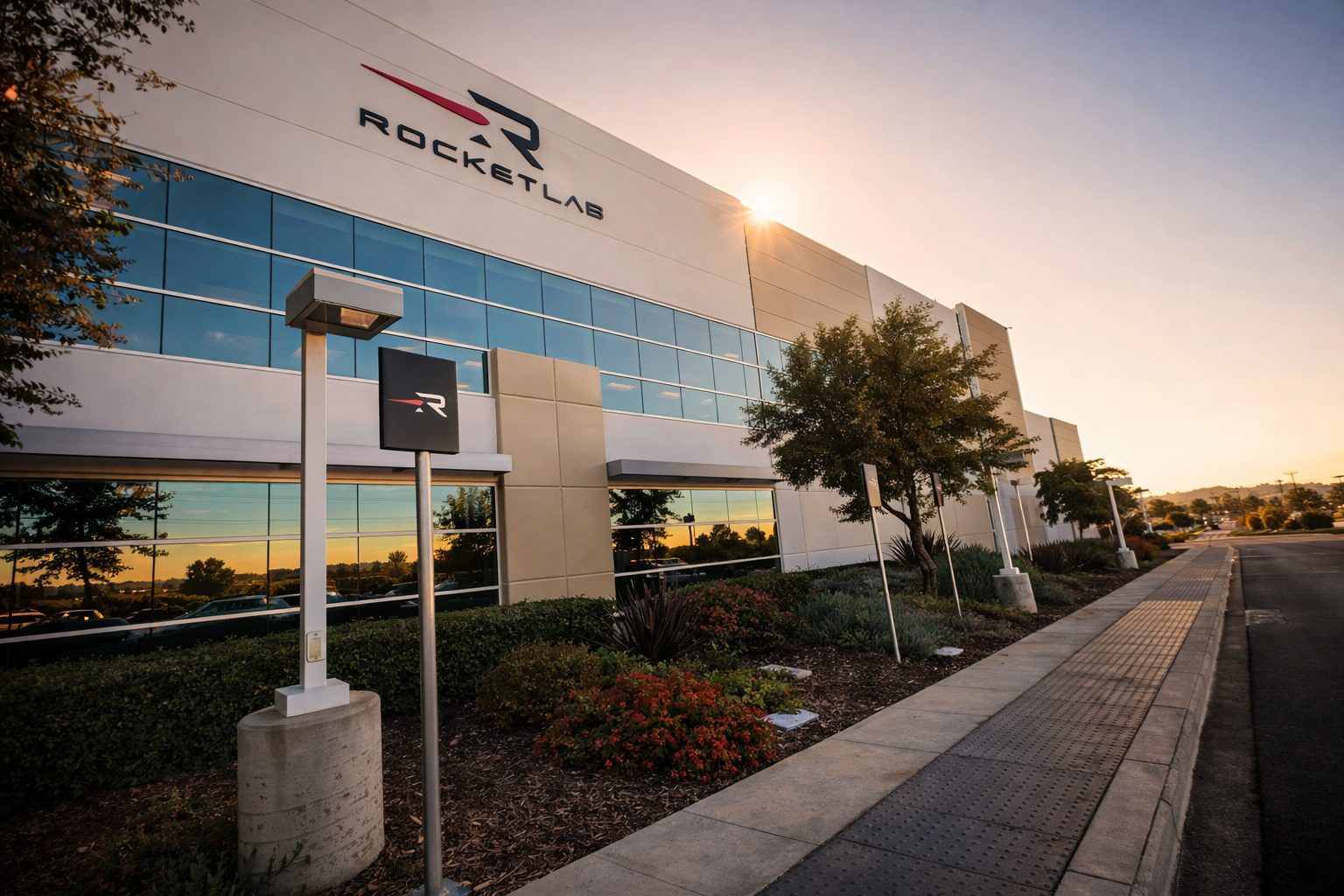
Rocket Lab shares added nearly 2% in early Tuesday action, hitting $91.12 after wrapping up Monday at $89.46—well above Friday’s $84.80 finish. The stock has drawn attention as new Wall Street price targets and updated Pentagon budget numbers put the company’s defense-focused space segment in the spotlight.
Rocket Lab’s role here is significant: it stands out as one of the scant publicly traded options for investors looking to ride the wave of increased U.S. military spending in orbit. On Tuesday, the Pentagon flagged “presidential priorities” in President Donald Trump’s $1.5 trillion fiscal 2027 defense proposal. Among them: Golden Dome, a missile-defense system that would integrate sensors, command infrastructure, and data networks across space and terrestrial platforms. Reuters
Monday’s drop seemed driven by fallout elsewhere rather than anything tied directly to the company. According to TipRanks, shares slipped almost 2% before the bell, and there wasn’t any fresh Rocket Lab news. The move followed AST SpaceMobile’s announcement that BlueBird 7 ended up in a lower orbit than planned, after launch on Blue Origin’s New Glenn upper stage, and is set for de-orbit.
Analyst calls shifted sentiment. Stifel’s Erik Rasmussen bumped his price target on Rocket Lab up to $105 from $90 after talking with management at the Space Symposium, and he’s still “high conviction” on the name. Rasmussen described Rocket Lab as a “well-positioned” vertically integrated prime contractor in the space sector. Over at Roth Capital, Sujeeva De Silva raised his target to $100 from $90 after discussions with CFO Adam Spice, citing further momentum in both launch and space systems. TipRanks
Rocket Lab had more to report for shareholders. Just last week, it wrapped up its $155.3 million purchase of Mynaric, a German laser-communications firm—most of it paid with 2.28 million Rocket Lab shares, plus a small cash component. CEO Peter Beck called laser links a “supply chain pain point” for satellite operators. Earlier in the month, the company disclosed it had already pulled in roughly $474 million in gross proceeds from an at-the-market share sale. That program lets Rocket Lab sell shares bit by bit into the market, and there are forward-sale commitments covering another $474 million to $642 million expected by April 2028. GlobeNewswire
Defense contracts drive the bullish outlook here. Rocket Lab landed its largest launch deal to date in March—a $190 million order covering 20 HASTE missions tied to a Pentagon hypersonic test program. That pushed the company’s backlog, or signed but undelivered work, past $2 billion. Hypersonic: we’re talking speeds topping five times the speed of sound.
Rocket Lab’s overall business is on a tear, but the road’s hardly smooth. The company set a new high with $601.8 million in revenue for 2025 and reported a hefty $1.85 billion backlog. Looking ahead, it expects first-quarter 2026 revenue in the $185 million to $200 million range. Still, that Neutron rocket—pitched for heftier launches—won’t fly before late 2026 after a tank mishap halted earlier plans.
Rocket Lab’s position looks sturdier than several other space players when sentiment sours. Blue Origin, for instance, is grounded—New Glenn flights are on hold pending the FAA’s mishap investigation. SpaceX holds onto its spot as the chief launch competitor, while Lockheed Martin, RTX, and Northrop Grumman have locked in roles as prime contractors with Golden Dome.
Risks remain. Neutron’s timeline is key—Rocket Lab needs it for larger payloads. The Golden Dome funding? Just a budget request for now, still awaiting Congressional approval. And that April equity raise? More expansion, but it’s coming with fresh shares.
Investors don’t have long to wait. Rocket Lab plans to post first-quarter results after U.S. markets shut on May 7, with a call set for that afternoon. Updates on launch cadence, margins, and Neutron’s schedule are all on deck.
Related articles: NASDAQ:ASTS