Updated: December 19, 2025
As winter settles in across the U.S., one thing is showing up fast—higher heating bills. New federal forecasts point to a colder-than-expected December and shifting fuel prices, while utilities and consumer reporters from the Mid-Atlantic to Florida are urging customers to act now: tighten up your home, fine-tune your thermostat habits, and take advantage of assistance and bill-management programs before the deepest cold arrives. U.S. Energy Information Administration+2De…
The good news: the most effective money-saving steps are also some of the simplest—and they don’t require a major renovation. Below is a practical, journalist-style roundup of the latest guidance circulating this week, plus what’s new on consumer protections and help programs as of Dec. 19, 2025.
Why heating bills are getting more attention in December 2025
Federal forecasters have been revising winter expectations upward as real-world weather and price signals come in. In a Dec. 15, 2025 update, the U.S. Energy Information Administration (EIA) said its winter household expenditure forecasts (covering November 2025 through March 2026) have increased since October, citing colder expectations and higher retail price forecasts—especially for natural gas and propane. The EIA noted NOAA was expecting December to be about 8% colder than the average of the previous 10 Decembers, and also highlighted that Henry Hub natural gas prices rose from near $3.00/MMBtu in October to more than $4.00/MMBtu by late November. U.S. Energy Information Administration
Electric heat users are watching bills particularly closely. EIA’s Winter Fuels Outlook base-case figures show winter electricity-heating expenditures averaging about $1,130, roughly 4% higher than last winter in the base case. U.S. Energy Information Administration
Consumer outlets are echoing the same story: early winter bills are landing, and many households are looking for immediate ways to cut costs without sacrificing safety or comfort. Good Housekeeping cited EIA’s expectation that electricity rates could rise about 4% and pointed to a NEADA projection placing the overall household increase above 9%. Good Housekeeping
Utilities are also seeing higher usage tied to cold. In the Mid-Atlantic, a Baltimore Gas and Electric spokesperson told WTOP that customer electricity use was up 9% between Nov. 10 and Dec. 10 compared with the same billing period in 2024, attributing much of that increase to colder weather and more heating at home. WTOP News
The biggest lever is still your thermostat—use it strategically
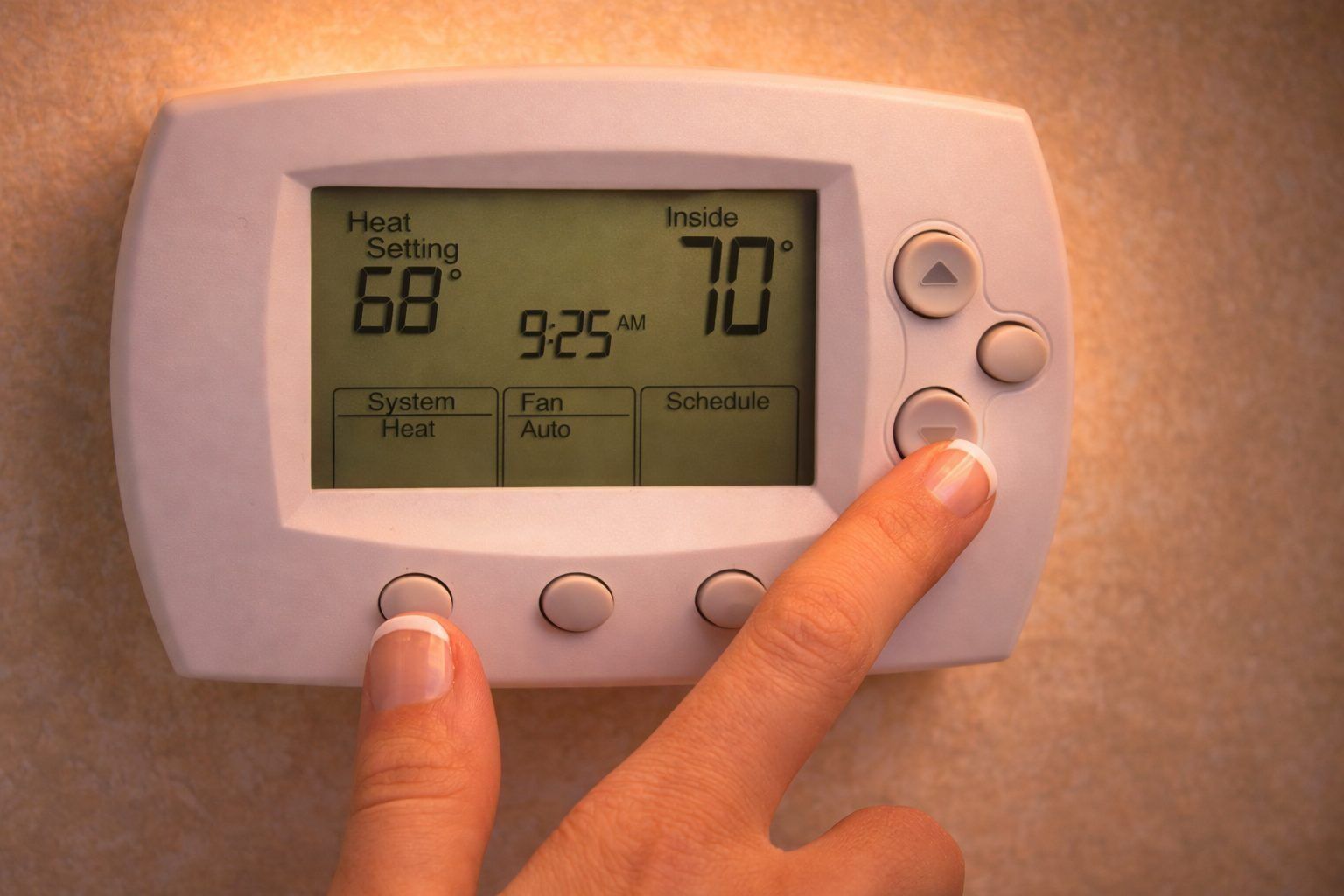
Heating is often the heavyweight on winter bills, so small thermostat changes can deliver outsized savings.
A Florida Power & Light (FPL) energy-efficiency expert warns that many Florida heating systems—especially “strip” or electric resistance heat—can be expensive to run, saying it “can cost two to three times more energy than air conditioning.” Their advice: set your thermostat as low as comfortably possible. FPL also says that lowering the thermostat by two degrees (for example, 68°F to 66°F) can save about 9% on heating costs. FPL Newsroom
National consumer guidance aligns with the same principle: lower temperatures when you’re asleep or away, and automate the schedule if you can. Good Housekeeping cautions that “cranking the heat” while sleeping or out is one of the most expensive habits, recommending setbacks and smart thermostats to reduce waste. Good Housekeeping
The Federal Trade Commission (FTC) also recommends lowering your thermostat in winter before bed or heading out, and considering a programmable thermostat to do it automatically. Consumer Advice
A practical approach that doesn’t feel miserable:
- Choose a “home and awake” temperature that’s comfortable.
- Set a lower “sleep/away” temperature on a schedule.
- Use extra blankets or warmer layers before you touch the thermostat again.
If you live in a colder climate, keep safety in mind—especially if your plumbing is vulnerable to freezing—and aim for a consistent plan rather than big swings.
Use free heat during the day—and trap it at night
One of the most repeated tips in this week’s coverage is also one of the cheapest: use the sun like a space heater.
KPQ and Good Housekeeping both recommend opening curtains on south-facing windows during daylight hours to let in solar warmth, then closing curtains at night to reduce chill from cold glass. News Radio 560 KPQ+1
WTOP reported similar advice from Baltimore Gas and Electric: open curtains during the day so sunshine helps warm the home. WTOP News
FPL adds a detail many people forget: keep those south-facing windows clean to maximize sunlight and heat gain. FPL Newsroom
Make it work better in real life:
- Prioritize the rooms you actually use (living room, kitchen, home office).
- Close doors to rarely-used rooms so you’re not heating the whole house evenly.
- Close curtains promptly at dusk—this is where many households lose the benefit.
Stop drafts and air leaks—this is the “hidden bill” in your walls
When your home leaks air, you pay to heat the outdoors. Multiple outlets and agencies agree that sealing leaks is one of the highest-impact, low-cost moves.
KPQ’s roundup highlights sealing air leaks around windows and doors as a key step for efficiency and comfort. News Radio 560 KPQ
Good Housekeeping recommends finding leaks with a simple test—moving a candle or incense stick around frames on a windy day—and then sealing with caulk, expanding foam, and weatherstripping where appropriate. Good Housekeeping
The FTC similarly urges consumers to use caulk and weatherstripping around windows, doors, and where pipes and wires enter walls, noting that a lot of energy is wasted through leaks and under-insulated areas. Consumer Advice
WTOP also points to a behavioral version of the same idea: close and block doors to prevent heat loss and cold air intrusion. WTOP News
Quick checklist for tonight:
- Feel around exterior doors and window frames for cold air movement.
- Check the bottom of doors (a draft stopper can help).
- Look for gaps where cables/pipes enter the house.
- Seal what you can safely; consider a professional for bigger issues or ductwork.
Reverse ceiling fans to push warm air back down
Warm air rises—so your ceiling can become a “heat storage shelf” unless you circulate it back into the room.
KPQ and Good Housekeeping both recommend reversing ceiling fans so blades spin clockwise at a low speed in winter, creating an updraft that pushes warm air off the ceiling and back into the room. News Radio 560 KPQ+1
New York’s Department of Public Service includes similar guidance in its winter energy-efficiency tips. Department of Public Service
Close the fireplace damper when you’re not using it
Fireplaces can be cozy—but they can also act like a giant open vent if the damper is left open.
KPQ flags “close the fireplace damper” as a key heat-loss prevention step. News Radio 560 KPQ
Good Housekeeping adds that an open damper can let heated air go straight up the chimney, so it should stay closed unless a fire is burning. Good Housekeeping
The FTC includes the same recommendation in its consumer checklist. Consumer Advice
Don’t ignore water heating—small tweaks can add up
Space heating gets the headlines, but hot water can quietly drain your budget, especially in winter when showers run longer.
WTOP cites a Baltimore Gas and Electric spokesperson recommending 120°F as a good water-heater temperature setting, warning that higher settings can mean the unit is “working overtime.” WTOP News
FPL says many water heaters are set to 140°F, but that 115°F to 120°F can still provide plenty of hot water. FPL also recommends insulating hot water pipes and, for older tanks, adding a wrap to reduce heat loss. FPL Newsroom
Good Housekeeping notes that water heating represents about 18% of a home’s energy use (citing the U.S. Energy Department) and recommends insulating the tank to improve efficiency. Good Housekeeping
Simple ways to cut hot water costs without “going cold”:
- Lower the tank temperature into the recommended range.
- Take shorter showers (or reduce flow with an efficient showerhead).
- Run laundry in cold water when possible.
- Insulate pipes in colder areas (garage, crawl space, attic).
Run major appliances smarter—yes, even the dishwasher
WTOP highlighted a tip that surprises many people: a utility spokesperson said it generally takes less energy to run a dishwasher than to wash dishes by hand. WTOP News
This doesn’t mean you should run half-loads constantly. It means you should:
- Run full loads.
- Use energy-saving/eco cycles where available.
- Avoid unnecessary pre-rinsing if your dishwasher and detergent don’t require it.
Maintenance that saves money: change filters and tune up equipment
If your HVAC system is working harder than it needs to, you’ll feel it in the bill.
FPL recommends cleaning or replacing your air conditioner/heating system filter every month to improve efficiency. FPL Newsroom
Good Housekeeping also emphasizes replacing filters during heating season to keep forced-air systems running efficiently and to improve indoor air quality when homes are sealed tight. Good Housekeeping
New York’s Department of Public Service similarly encourages regular servicing of furnaces/boilers and replacing filters. Department of Public Service
Bigger savings (and longer comfort): audits, insulation, and utility programs
If you’ve already done the “easy wins,” the next layer of savings comes from knowing where your home wastes energy and taking advantage of incentives.
The FTC recommends getting a home energy assessment (often available free or low-cost through your utility), sealing leaks, improving insulation, and asking about rebates, low-interest loans, and incentive programs before buying efficiency upgrades. Consumer Advice
FPL points to attic insulation as a major cost-saver and mentions its On Call® demand-response style program, which it says can save customers up to $137 on their electric bill by allowing brief, occasional shutoffs of selected equipment when necessary. FPL Newsroom
If bills are already overwhelming: where help and protections kick in (as of Dec. 19, 2025)
For many households, the problem isn’t optimization—it’s affordability. The most important move is to contact your utility early, before balances snowball.
The FTC recommends asking about budget-billing (levelized payment plans that smooth costs across the year) and checking eligibility for federal help such as LIHEAP (Low Income Home Energy Assistance Program). Consumer Advice
In New York, the Department of Public Service outlines a wide range of consumer resources—financial assistance, deferred payment agreements, energy affordability discounts, and protections related to extreme cold events. It also publishes a 2025–2026 holiday moratorium schedule showing when certain utilities suspend terminations for non-payment around Christmas and New Year’s; several of those dates begin December 19, 2025. Department of Public Service
Even if you’re not in New York, that’s a useful reminder: rules and protections vary by state, but many states and utilities have special winter procedures, assistance programs, or shutoff restrictions. Don’t assume you’re out of options—call your utility and ask what applies where you live.
Watch out for utility scams during high-bill season
When bills spike, scammers often spike too.
The FTC warns that impostors may pose as utility companies and threaten shutoffs, especially pushing unusual payment methods (like gift cards, cryptocurrency, or wire transfers). The agency recommends contacting your utility directly using a verified phone number if you’re unsure. Consumer Advice
The “do this today” plan: three moves that can make the fastest difference
If you want the shortest path to a lower bill and a warmer home, experts and utilities keep returning to the same trio:
- Set a thermostat schedule (lower when sleeping/away; automate if possible). FPL Newsroom+2Consumer Advice+2
- Seal drafts and manage sunlight (weatherstripping + curtains open by day, closed at night). Consumer Advice+2Good Housekeeping+2
- Lower water-heater temp and reduce hot-water waste (115–120°F range; shorter showers; insulate pipes). FPL Newsroom+2WTOP News+2
Winter bills can feel inevitable—but a few targeted changes, backed by utilities and federal agencies, can reduce waste quickly. And if the bill is already too high to manage, the most important “energy-saving tip” may be the least talked about: contact your utility now to ask about payment plans, discounts, and local assistance before you miss a payment and lose leverage. Department of Public Service+1