New York, May 13, 2026, 04:09 EDT
- Wolfspeed finished Tuesday at $53.72, climbing 6.8%. Early premarket trading showed a sparse quote at $77.00, as traders went after a balance-sheet turnaround with a big short position in play.
- No sign of an operating turnaround last quarter: revenue dropped, gross margin remained in the red, and executives projected another stretch of negative gross margins. Investors are focusing now on debt cutbacks, liquidity, and whether AI data-center demand can help.
- As of April 30, short interest clocked in at 16.1 million shares—roughly a third of the public float. The setup adds a squeeze angle to the rally, with short sellers potentially needing to cover as prices move higher.
Regular U.S. trading is still ahead, making Tuesday’s close the reference point for now. Wolfspeed ended the session at $53.72, a gain of 6.8%, after hitting $53.98 during the day on volume of 12.28 million shares. But premarket screens early Wednesday flashed $77.00—a jump of 43.3% from the close. That’s a big leap in a premarket stretch where thin liquidity can make prices swing hard.
This shift is key: Wolfspeed’s share price isn’t just a bet on silicon-carbide demand anymore. Investors are now watching to see if a company fresh out of Chapter 11 has managed to buy itself enough time to squeeze cash from its plants. For bulls, the most recent quarter checked some boxes—debt costs fell, liquidity hit $1.2 billion, that Renesas equity move closed, and there’s still enough short interest around to amplify any rally beyond the actual headlines.
Results didn’t impress: fiscal Q3 revenue dropped 19% to $150.2 million, and gross margin stayed below zero. But the net loss shrank sharply to $119.9 million from the prior year’s $285.5 million, while interest expense came down 39%.
That’s what’s driving the chart. With WOLF, sometimes a narrower loss and trimmed-down interest expense outweigh sluggish sales—at least for a stretch. CFO Gregor van Issum pointed to “$1.2 billion in liquidity” after slashing the company’s highest-cost first-lien debt by 43%. It’s a detail aimed straight at the funding concern that had been dogging the shares. SEC
Renesas, meanwhile, isn’t front and center but holds a notable seat: the company’s May 11 filing disclosed it owns 18.75 million Wolfspeed shares, though its stake is capped at 39.9% following the restructuring equity deal. That mix of strategic alignment and a big ownership number gives fast-money desks another factor as the refreshed share count shakes out.
The bull thesis is pretty clear. Wolfspeed stands out as a pure-play on silicon carbide—a key material for power chips in EVs, industrial gear, and high-voltage infrastructure. Management reported AI data-center applications up about 30% sequentially. CEO Robert Feurle listed power supplies, battery backup, cooling, and—looking ahead—solid-state transformers as areas seeing traction. That’s why investors aren’t dismissing AI infrastructure as just hype here.
The bear case doesn’t pull any punches. Materials revenue plunged 35.7% year-over-year, and power products slid 6.9%. The company pinned the declines on softer end-market activity, sluggish auto sales, and ongoing pricing squeeze. On top of that, Wolfspeed faced steeper underutilization charges, so its plants aren’t running hard enough to cover those fixed bills. That’s trouble for a business this tied to manufacturing.
Short bets have muddied the tape. By April 30, short interest had surged 45.7%, hitting 16.1 million shares—33.31% of the public float. That doesn’t confirm a turnaround in the business. What it does is set the stage for outsized price swings if buyers step in and shorts scramble to cover.
No clear read-across from peers either. onsemi, STMicroelectronics, and Infineon all target automotive, industrial, and power chips—but Infineon, for its part, has tacked its silicon carbide story to AI data-center power and EV charging. The move in Wolfspeed shares? More idiosyncratic than thematic; competitors have diversified models, but WOLF stands out for its pure silicon-carbide leverage and factory throughput after restructuring.
Rates aren’t center stage here—but they aren’t out of the picture. Wolfspeed needs to outpace a heavy debt load, and borrowing costs could tip the scale. On Polymarket, bets showed a 68% probability the Fed won’t cut rates at all in 2026, with a 27% shot at at least one hike. For Wolfspeed, that mix means current interest savings count for more, while the next round of refinancing could easily get tougher.
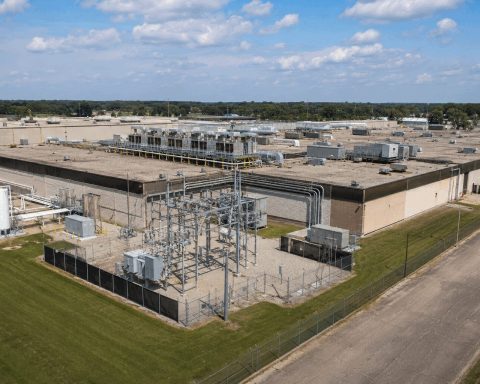
The next hurdle doesn’t make for much of a spectacle on the stock chart. Management’s forecast puts fiscal fourth-quarter revenue somewhere between $140 million and $160 million, with gross margins still stuck in the red. About 90% of Wolfspeed’s power revenue is now tied to its Mohawk Valley 200mm fab, so the focus shifts to whether that facility can boost volume and still escape negative margins.
The tape’s showing solvency risk moving quicker than operating risk—makes sense, but there’s clear danger in that. Wolfspeed’s got more runway after the restructuring, yet now the stock wants to see management turn liquidity, that AI demand, and 200mm capacity into real margins. Without that, this rally’s just a battleground. Not a verdict.
Related articles: Technology