
Toronto, May 1, 2026, 17:02 (EDT)
Xanadu Quantum Technologies Ltd. plans to report Q1 results on May 14, dropping the numbers after the bell. Management will host a call at 4:30 p.m. EDT to break down the figures and share their outlook. Standard procedure, except for the timing: the Toronto quantum-computing player only recently hit the public markets.
The date is key here. XNDU only started trading a few weeks back. Its U.S. shares most recently changed hands at $36.12—$7.05 higher than the prior close—after hitting $38.31 earlier in the session. Roughly 4.28 million shares traded.
There’s not much of a public track record here. Xanadu Quantum Technologies Inc. posted $4.6 million in revenue for 2025, weighed against a net loss of $70.7 million. The merger with Crane Harbor brought in $302 million in gross proceeds, according to the company’s April update.
The May call isn’t just about first-quarter revenue—spending levels and runway are just as much in focus. Investors want to know if government grants, research deals, or new partnerships will keep the long technical push funded, ideally without the pressure of raising more cash soon.
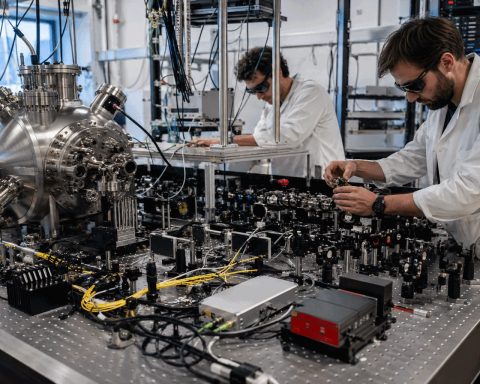
Xanadu calls itself a photonic quantum-computing company—its focus: building quantum hardware with photons, the fundamental particles of light. Unlike regular computers, which run on binary bits, quantum machines rely on qubits. Still, those qubits are delicate, frequently error-prone.
Earlier this week, Xanadu and Oak Ridge National Laboratory announced that Frontier supercomputer users now have access to Xanadu’s PennyLane quantum software via its Lightning simulator. Christian Weedbrook, founder and CEO of Xanadu, described the tool as ready to “push the limits of quantum computing simulation.” OLCF engineer Michael Sandoval called it a way for users to “simulate quantum programs at scale.” Xanadu Quantum Technologies Limited
It’s a slim, though critical, competitive angle. This week, Reuters Breakingviews lumped Xanadu in alongside quantum players like IonQ and Rigetti, pointing out the industry’s ongoing struggles—fragile technology, steep costs, and commercial uptake that’s still lagging.
Xanadu opted for the SPAC path—a merger with a publicly traded shell—which let the company move quickly and secure funding in one go. “Large, single-tranche capital infusion” is how Kat Liu, vice president at IPOX, described it to Reuters back in November, adding that it can stretch the R&D runway at a time when venture money isn’t as plentiful. Reuters
The risks are right there in black and white. Xanadu’s 20-F makes it clear: no commercially scalable, fault-tolerant quantum machine yet. The company pointed to operating losses, negative cash flow, and flagged the chance it’ll need much more capital. Hitting that 100,000 physical qubit, 500 logical qubit goal by 2029-2030? Not a sure thing, Xanadu warned.
Government backing could still tip the scales. In March, Xanadu disclosed it had started talks with both Canada and Ontario, seeking as much as C$390 million to back Project OPTIMISM—a manufacturing effort. But talks don’t guarantee money will land in the account.
Don’t expect the May 14 call to crown a winner in photonic quantum computing. What investors should watch for: clearer details on Xanadu’s cash burn, order backlog, and whether its debut valuation is tracking with actual milestones—or just surfing the quantum hype cycle.
Related articles: Quantum Computing