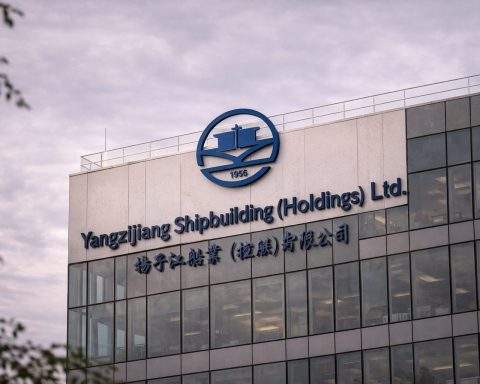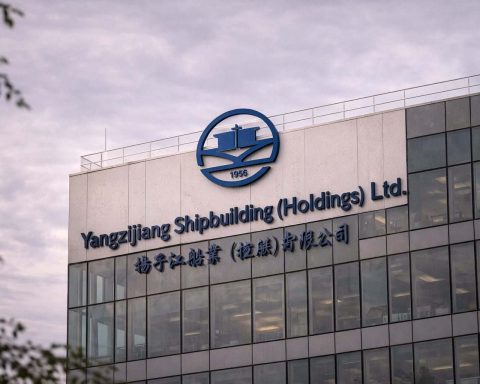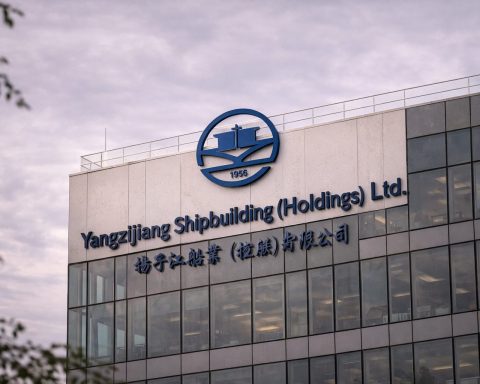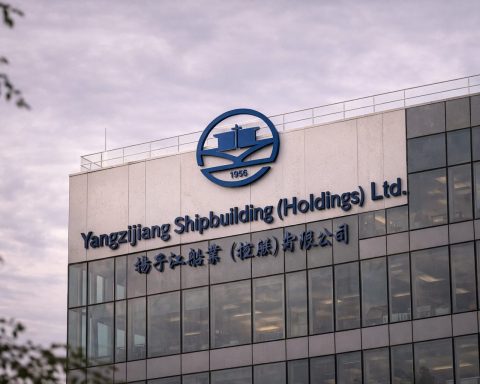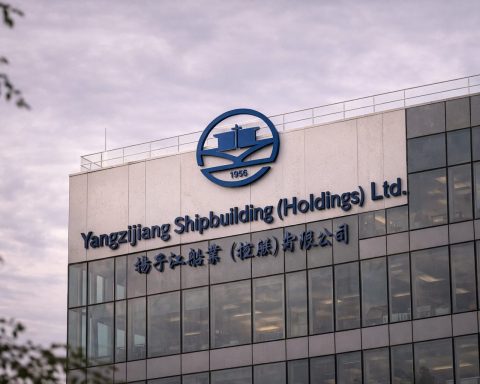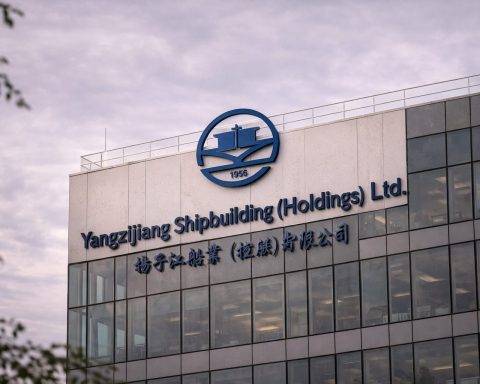

Yangzijiang Shipbuilding (Holdings) Ltd SGX:BS6 is ending 2025 near the top of its recent trading range, with investors weighing two forces that rarely coexist so neatly: a still-massive multi‑year orderbook that supports earnings visibility, and a more complicated external backdrop shaped by geopolitics, ship-financing friction, and stop‑start policy signals around shipping trade measures.
As of Dec 26, 2025, the stock was last indicated around S$3.45, down 0.86% on the day (in a S$3.45–S$3.48 range) on about 2.0 million shares traded—typical of thinner year‑end liquidity.
Yangzijiang Shipbuilding share price today: near highs, but not without nerves
Multiple market data feeds put BS6 in the mid‑S$3.40s on Dec 26:
- S$3.45 (SGX-linked snapshot, 14:17 SGT), -0.86% on the day
- S$3.47 (delayed quote, 11:33 a.m. SGT), -0.29%
- Investing.com also showed S$3.45, with an intraday range of S$3.45–S$3.48
Crucially for momentum‑minded investors, BS6 is trading close to the upper end of its 52‑week range (S$1.80–S$3.58), and it’s within striking distance of the S$3.58 peak seen this year.
That “near highs” positioning is why the next part matters: when a stock is priced like a success story, it tends to demand proof—either fresh order wins, sustained margins, or a de‑risking narrative on external shocks.
The fundamental core: an orderbook built for visibility, not just headlines
Yangzijiang’s latest operational messaging (and the research built on it) is still anchored by a backlog that extends well beyond the next quarter or two.
In its Nov 17, 2025 business update coverage, the company disclosed:
- ~US$2.2 billion in order wins year‑to‑date (YTD)
- Those wins were about one‑fifth of the US$11.6 billion recorded in the same period a year earlier
- Orders were “largely” small‑ to mid‑sized vessels, scheduled for 2027–2029 deliveries
- Outstanding orderbook ~US$22.8 billion across 245 vessels
- Green vessels ~71% of outstanding orderbook value
- Container ships remained dominant: US$16.2 billion across 126 vessels
- 46 vessels delivered YTD, against a full‑year target of 56
In other words: the engine room is still running hot, but the forward sales pipeline (new orders) has been less explosive than 2024—partly because global yard slots are tight and partly because shipowners have been cautious about committing too far out past 2030.
DBS Research, in a Nov 18, 2025 note focused on the 3Q25 business update, reinforced the same structure:
- YTD order wins ~US$2.17 billion, with about 75% secured in the past three months
- Outstanding orderbook ~US$22.8 billion, with ~71% “green vessels,” supporting visibility into 2029+ (and described as visibility “through FY2030”)
- 46 vessels delivered YTD, 82% of the annual target of 56
- Management noted no delays/cancellations except the September termination of four MR tanker contracts (more on that below)
The punchline: for 2026, the story is less “will they have work?” and more “how profitable will the work be, and can they keep winning the right kind of work?”
Margins and “green mix”: why analysts keep circling back to execution quality
The market is not treating Yangzijiang like a generic industrial. It’s being priced like a high‑execution manufacturer with pricing power—which is why research keeps returning to margins, steel costs, and vessel mix.
UOB Kay Hian’s Nov 19, 2025 research note framed Yangzijiang heading into 2026 “in a position of strength,” highlighting:
- The Clarkson Newbuild Price Index had eased over the prior quarter but remained historically elevated (only about 3% below its 2008 peak)
- Most of the company’s steel requirements and prices were locked in for 2026, supporting elevated margins
- UOB raised shipbuilding margin assumptions to 31% (2026) and 30% (2027), upgrading 2026/2027 earnings estimates by 7%
That “steel locked + pricing still high” combo is analyst catnip: it implies less variance and fewer nasty surprises—if execution stays clean.
DBS also pointed to mix shift: dual‑fuel and gas‑carrier exposure, plus repositioning into higher‑end LPG/VLAC units, as a margin support.
New orders: slower than 2024, but not a collapse
It’s easy to misread the “US$2.2b vs US$11.6b” comparison as demand vanishing. In reality, the shipbuilding cycle is lumpy, and 2024’s order surge created a high base effect.
Yangzijiang itself attributed improved customer sentiment to “greater clarity” in the macro outlook, but also stressed that global backlog lead times are near five years and delivery slots for large vessels at tier‑one yards are limited—pushing both shipowners and shipyards toward prudence for deliveries beyond 2030. The Business Times
So the market’s near‑term question becomes tactical: Does Yangzijiang win enough incremental orders in 2026 to keep the backlog healthy beyond the currently visible window—without sacrificing price or taking credit/geopolitical risk?
The September shock: contract termination tied to U.S. sanctions concerns
One of the more “stock‑specific” headline risks in late 2025 wasn’t freight rates or ship prices—it was compliance and counterparty risk.
On Sep 29, 2025, Business Times reported Yangzijiang shares fell after the company terminated ~US$180 million worth of contracts for four 50,000 DWT MR oil tankers, after it received information that the buyer’s sole shareholder was allegedly involved in circumvention of U.S. sanctions. The company said it had not recognized revenue/profit related to those contracts up to Jun 30, 2025, and detailed deposits/instalments collected.
While that episode created immediate volatility, it also signaled something important for longer‑term investors: risk controls and willingness to walk away—which matters in a world where shipbuilding is increasingly tangled with geopolitics, end‑users, and financing structures.
Analyst forecasts: where price targets sit going into 2026
Across brokers and data aggregators, the consensus view remains broadly constructive—but the exact target price depends on the dataset.
Here’s what’s current heading into the last week of 2025:
- UOB Kay Hian (Nov 19, 2025): BUY, target price S$4.10
- DBS Research (Buy, target price S$3.80) in its Nov 18 note
- CGS International (Nov 19, 2025): target price S$4.51, kept at “Add” (per a MarketScreener/MT Newswires summary) MarketScreener
On the aggregator side:
- Investing.com showed an average 12‑month price target ~S$3.80 (high ~S$4.51; low ~S$1.60) and a “Strong Buy” consensus based on 11 analysts (10 buy, 1 sell). Investing
- Simply Wall St also displayed an average target around S$3.80 with a high of S$4.51 and low of S$1.60 (11 analysts), with the snapshot dated Dec 24, 2025.
- TipRanks listed an average target around S$4.00 (high S$4.53, low S$3.81) based on 5 analysts in the last three months.
- Growbeansprout cited a consensus target of S$4.504 as of Dec 26, 2025, implying ~29.4% upside from S$3.48, and noted its “Source: SGX.” Beansprout
How to read the spread (without pretending it’s a prophecy)
The practical takeaway isn’t the second decimal place—it’s the clustering:
- The “base case” for many models sits around S$3.8–S$4.1 (high single‑digit to high‑teens upside from mid‑S$3.40s). Simply Wall St
- The bull case can push to ~S$4.5+ if margins stay >30%, order wins re‑accelerate, and geopolitical/financing pressure eases.
- The bear case is usually some cocktail of weaker order wins, margin compression, policy shocks, or customer risk—not necessarily an operational collapse.
Technical and trading signals: “buy” bias, but not euphoric
Technical dashboards are mixed‑to‑positive, which fits the price action: strong year, but consolidating near highs.
Investing.com’s technical page showed:
- Overall daily signal: Buy
- RSI ~48.36 (Neutral)
- MACD ~0.004 (Buy)
- Some shorter moving averages lean “Sell,” while medium/longer averages (50‑day, 200‑day) were indicated “Buy” Investing
TipRanks’ technical read also leaned neutral‑to‑constructive (e.g., RSI ~54 neutral; some trend/ROC indicators flagged “Buy”). TipRanks
From a volatility standpoint, StockAnalysis listed a beta ~0.82 and noted the stock was up about ~18.9% over 52 weeks, with RSI around the low‑50s—suggesting the name hasn’t been trading like a meme rocket, despite the strong run.
The big macro wildcard: U.S.–China port-fee measures (and the late‑2025 pause)
The shipbuilding sector spent much of 2025 with a policy cloud overhead: U.S. port‑entry fees targeting China‑linked shipping activity. For Chinese yards, the fear wasn’t a direct tariff on shipbuilders—it was second‑order effects: shipowners delaying orders, shifting financing, or seeking non‑Chinese yards to reduce exposure.
Key late‑2025 developments matter for how investors frame 2026:
- The U.S. Trade Representative (USTR) described modifications to its Section 301 “ships action” in an Oct 10, 2025 press release, including changing the basis for certain service fees and noting that payment of certain service fees may be deferred through Dec 10, 2025 while comments were evaluated. United States Trade Representative
- Reuters reported on Nov 4, 2025 that U.S. and Chinese leaders agreed to put tit‑for‑tat port fees on pause for 12 months starting Nov 10, 2025, after fees began Oct 14.
- A subsequent legal analysis summarized the situation as a one‑year suspension effective Nov 10, 2025, with aspects of the October 2025 modification now expected to take effect Nov 10, 2026 if the suspension expires without extension.
Earlier in 2025, industry reporting had warned the fees could affect ordering behavior and described fee structures that would apply from Oct 14, 2025.
Why this matters to Yangzijiang shareholders
Even with a pause, the market will likely treat this as a policy risk that can re‑inflate. If shipowners believe fees could return (or morph), they may alter where they build ships or how they finance them. If the pause extends or the measures soften, that can reduce friction and support order flow into Chinese yards.
That’s why “fresh large-vessel wins” and proof of sustained margins remain the recurring catalysts in broker notes: the company’s operational story is strong, but the external environment can still change the rules mid‑voyage. DBS Bank
2026 catalysts to watch for Yangzijiang Shipbuilding stock
A few near‑term items are likely to dominate investor attention going into 2026:
1) Full-year results timing and guidance
Investing.com lists the next earnings report date as Mar 4, 2026. That event is typically where investors will look for delivery cadence, margin commentary, and updated order-win targets.
2) New order wins (especially higher‑margin “green” tonnage)
UOB explicitly listed new order wins for higher‑margin vessels—dual‑fuel containerships, oil/LPG tankers—as a key catalyst, alongside evidence margins can stay above 30%. SG Investors
3) Yard expansion and capex execution
DBS highlighted capex commitments including a RMB3.0bn new yard project and RMB2.0bn LNG terminal/storage facilities, scheduled for completion in 1H27, with potential revenue contribution from 2H26 for the new yard.
4) Policy signal clarity on port-fee measures
The “pause” reduces near-term heat, but it doesn’t erase the longer-dated uncertainty. Watch for official updates around extensions, exemptions, or reinstatement timelines. Reuters
Bottom line: a high-quality backlog story priced near the top of its range
On Dec 26, 2025, Yangzijiang Shipbuilding stock is trading like a company the market respects: near highs, backed by a ~US$22.8b orderbook weighted toward green vessels, and supported by research that still leans positive on margins and execution.
The balance investors are trying to strike into 2026 is straightforward:
- Bull case: margins remain elevated, order wins re-accelerate (especially in dual‑fuel/gas segments), and policy pressures stay paused or fade.
- Bear case: order wins stay subdued, margins compress, or external policy shocks return and change shipowner behavior.
Either way, the next big “proof points” are likely to be new order announcements, full-year guidance, and whether the market continues to believe Yangzijiang can deliver “margin machine” economics while the geopolitical weather remains… temperamental. SG Investors
Related articles: SGX:BS6