
WASHINGTON, Jan 31, 2026, 05:44 EST
- The U.S. Energy Information Administration projects residential power prices will climb once more in 2026 due to increasing demand.
- States are pushing utilities hard on rates and profits, as Washington uses emergency powers to keep certain plants operational.
- Unpaid bills and shutoffs are climbing, pushing regulators to act as costs get passed on to consumers.
The U.S. Energy Information Administration projects the average residential electricity price will hit 17.9 cents per kilowatt-hour in 2026, climbing from 17.3 cents in 2025. Power-sector generation is set to increase by 1% this year and by 3% in 2027. Much of that growth is expected to come from commercial and industrial demand, especially big computing operations like data centers.
That pressure is mounting on households already struggling. Back in 2017, about a quarter of U.S. households faced a “high energy burden,” meaning they spent over 6% of their income on energy costs. According to Joe Daniel from the Rocky Mountain Institute, the poorest households were paying around 11% of their income just for electricity, based on federal data. “What’s new,” he noted, “is that power prices have now outpaced both inflation and wages, dragging middle-income families into the pinch.” utilitydive.com
The political pushback is picking up steam—not just in Washington. Utilities requested nearly $31 billion in rate hikes for 2025, almost double last year’s total, according to PowerLines’ analysis. Over half of the 83 cases they tracked have already been approved, with many more in the pipeline. “This is what we call the new politics of electricity,” said PowerLines CEO Charles Hua. In New Jersey, Governor Mikie Sherrill hit the ground running on day one with executive orders to freeze rate increases and order regulators to rethink utility profit models. Latitude Media
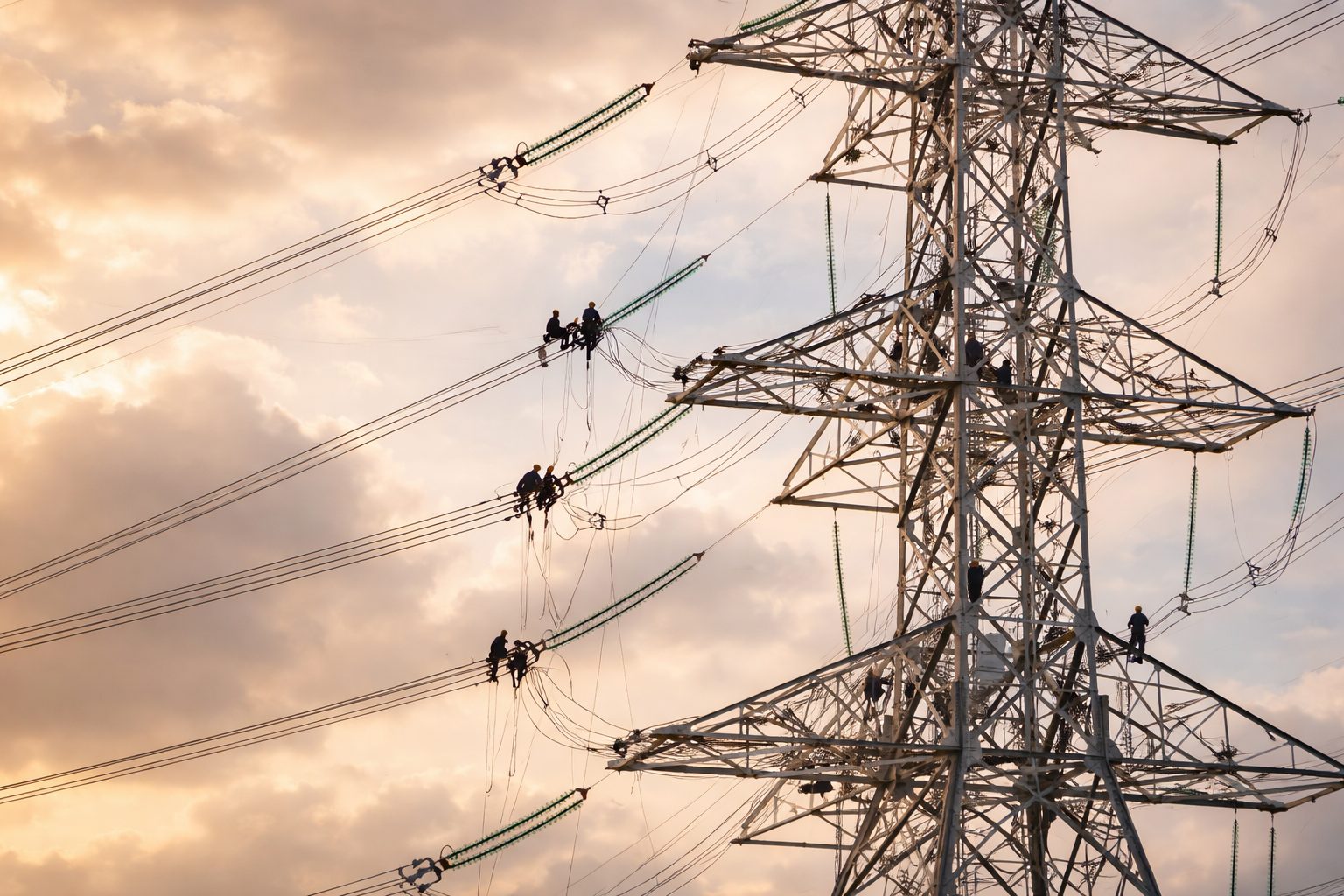
The bill is a growing pile of expenses that won’t fade fast. Customers cover power supply, the poles-and-wires network (transmission and distribution), plus an expanding roster of storm repairs and grid upgrades utilities recoup over decades.
Data centers are caught in a tricky spot: they can drive up short-term expenses by requiring fresh investment, yet they also help dilute fixed costs if sales grow as expected. The real challenge lies in timing and whether current demand projections prove accurate.
Federal intervention is causing more headaches. In Colorado, Tri-State Generation and Transmission Association and Platte River Power Authority asked the U.S. Department of Energy to roll back an emergency order keeping the coal-fired Craig Unit 1 running past its scheduled shutdown. They warn the extra costs will hit their members directly. “It is our members that ultimately are going to pay for the cost of this order,” Tri-State CEO Duane Highley said. CPR noted the order lasts through March 30 and can be extended, adding that past emergency powers were usually invoked at grid operators’ behest during severe weather. The Colorado Sun
The strain is clear at the state level. In New York, an AARP study revealed utility customers owe more than $1.8 billion in unpaid gas and electric bills, with over 1.3 million people behind by at least two months as of late December. The report also noted utilities cut power to more than 400,000 households in 2025. Patrick Stella, a National Grid spokesman, said electric supply costs have surged up to 30% in parts of upstate New York recently, with gas prices up about 20%. He described those market-driven increases as “passed on to customers without markup.” Times Union
Gas plays a double role there — both as a heating fuel and often the price-setter for electricity. New York’s grid operator reported that wholesale natural gas prices in the state nearly doubled in 2025 compared to 2024, driving a surge in wholesale electricity costs, the Times Union reported.
The national picture is messy in a different way: it masks wide disparities. Severin Borenstein, who heads an energy institute at the University of California, Berkeley, pointed out that inflation-adjusted electricity rates since 2014 jumped sharply in places like Washington, D.C. (28%), Maine (37%), and California (46%), while dropping in states such as Nevada (-22%). He argued that national averages no longer reflect what most households actually pay.
Slowing rate increases isn’t without downsides. Holding rates steady or lowering the permitted “return on equity”—the profit margin regulators allow utilities on investments—can tighten financing for upgrades. That’s especially tricky as storms grow fiercer and planners anticipate higher demand. If growth falls short or projects get delayed, customers might end up footing the bill for assets that fail to meet expected savings.
The system is currently designed to pass costs along gradually and steadily. That’s why analysts keep hammering the same blunt truth: the bulk of the expenses are linked to fixed costs and long-term assets, which don’t just vanish with each campaign cycle.
Related articles: Stock Market