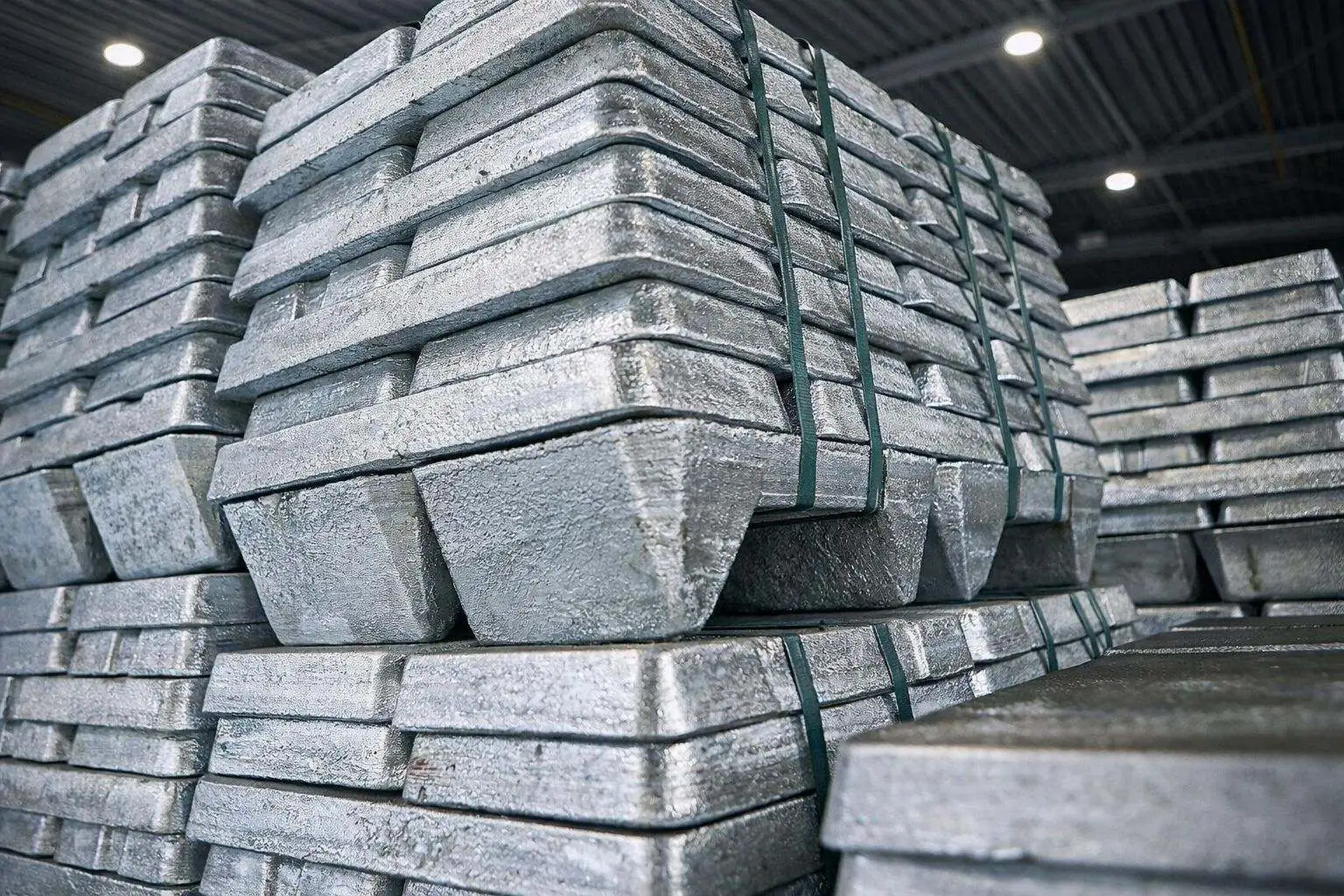
Zinc price today is softer as the market digests fresh warehouse inflows, thin year-end liquidity, and a growing debate over whether 2025’s “availability shock” is fading into a more traditional 2026 surplus story.
On Tuesday, December 16, zinc futures tracked by Investing.com were around $3,056 per metric ton, down about 1% on the day, with trading roughly between $3,036 and $3,097. Investing.com In Shanghai, Shanghai Metals Market (SMM) reported the most-traded SHFE zinc 2601 contract settled around 23,215 yuan/mt, down 0.92%, while its commentary described LME zinc selling pressure as shorts increased positions. Metal
The pullback matters because zinc has spent much of 2025 oscillating between two narratives: tight “deliverable” inventory on the London Metal Exchange (LME) versus global supply growth that could tip balances back into surplus. Today’s price action suggests the market is still trying to decide which story wins going into 2026.
Zinc price today: where the benchmark is trading
Because zinc is traded globally across exchanges and contracts, “zinc price today” can look slightly different depending on the benchmark you follow:
- Global futures indicator (USD/mt): Zinc futures were around $3,056/mt on Dec. 16, down roughly 1%. Investing.com
- LME narrative (USD/mt): SMM’s morning market note said LME zinc closed at $3,095/mt after sliding as bearish positioning increased. Metal
- SHFE (China) pricing (CNY/mt): SMM reported the most-traded SHFE zinc contract ending near 23,215 yuan/mt. Metal
At roughly $3,056/mt, zinc is trading near $1.39 per pound (converted from metric ton pricing), still firmly above the psychological $3,000 level—important for sentiment in physical markets where buyers often benchmark contracts to LME plus regional premiums. Investing.com
Why zinc is down today: inventory build meets year-end positioning
Two themes dominate today’s price discussion: warehouse signals and positioning-driven volatility.
1) LME zinc stocks are rising again—relieving “panic tightness”
SMM reported that LME zinc inventory increased by 2,550 metric tons (up 4.12%) to 64,475 mt on December 15, a notable near-term easing signal for a market that has repeatedly worried about deliverable supply. Metal
This matters because, when exchange stocks are extremely low, the market can flip quickly into backwardation (spot trading above forward prices), stressing consumers and amplifying squeezes. Rising stocks don’t automatically mean the global market is well-supplied—but they do reduce the odds of an immediate LME “availability” shock.
2) China’s physical market remains cautious
SMM’s China-market color reads like classic late-year hesitation: downstream buyers mostly sticking to just-in-time procurement, while traders keep quotes relatively firm and wait for clearer direction. Metal
SMM also noted some zinc ingots being pulled from Guangdong toward east China, which could improve supply in Shanghai and cool localized tightness. Metal
3) Liquidity is thinning, making day-to-day moves feel bigger
A daily report from Sucden Financial published Dec. 16 argues that late-year conditions are making base metals more vulnerable to abrupt swings, with zinc among the metals showing sharper losses versus copper and aluminium. The report explicitly frames the market as positioning- and liquidity-driven rather than purely fundamental on a daily basis. Sucden Financial
The bigger zinc story: from 2025 squeeze risk to 2026 surplus math
To understand today’s move, it helps to separate the LME deliverability story from the global balance story.
2025: deliverability shocks and time-spread stress
In 2025, multiple analyses highlighted how LME zinc stocks became thin enough to create severe volatility. Reuters has previously described dramatic inventory declines and stressed availability dynamics earlier in the year, reinforcing how quickly zinc can lurch into squeeze conditions when “on-warrant” metal evaporates. Reuters+1
That history is why today’s inventory rebuild is getting so much attention: it’s not just about “more metal,” it’s about less chance of a repeat of the wildest spread moves.
2026: supply growth and a forecast surplus
On the other side, the International Lead and Zinc Study Group (ILZSG) is already projecting that refined zinc supply will outpace demand:
- 2025: global refined zinc surplus forecast at 85,000 tonnes
- 2026: larger refined zinc surplus forecast at 271,000 tonnes ILZSG
ILZSG also forecasts global refined zinc demand rising to 13.71 million tonnes in 2025 and 13.86 million tonnes in 2026, while refined zinc production rises to 13.80 million tonnes in 2025 and 14.13 million tonnes in 2026. ILZSG+1
Those are not small numbers—and they anchor why many banks and research shops are reluctant to chase zinc too far above $3,000 for 2026 without a new supply disruption.
Today’s forecast headlines: Morgan Stanley turns cautious on 2026 zinc
One of the most talked-about notes circulating on Dec. 16 came from Morgan Stanley, which revised parts of its base-metals outlook.
Morgan Stanley forecasts zinc prices will fall slightly in 2026 to $2,900/ton, arguing that recovering LME inventories (as China exports more metal) and continued mine supply growth point to “modest downside” next year. TradingView
That forecast lines up broadly with ILZSG’s surplus framework: if refined supply is growing faster than demand, zinc may have a harder time sustaining upside—unless the market again faces deliverable shortages or unexpected demand strength.
Other near-term outlooks: why some analysts still see support above $3,000
Not everyone is bearish outright. Several widely followed market commentaries emphasize that regional imbalances can keep zinc supported even if the “global balance” looks looser.
Fastmarkets: regional disparities could keep zinc firmer into early 2026
Fastmarkets’ latest base metals outlook (published in the days leading into Dec. 16) says China has a surplus in zinc production while the rest of the world faces a shortfall, and notes that Chinese exports hit a three-year high in October, but logistical and margin constraints slow how quickly the market rebalances. Fastmarkets forecasts an average LME zinc price for 2025 of $3,218/tonne, with a slight increase expected in the first half of 2026 due to those regional disparities. Fastmarkets
StoneX: mine supply rebound is real—but timing and location matter
StoneX’s 2026 fundamental outlook argues global mine supply is on track to rebound through 2025 and 2026, supported by growth in Africa (including the DRC’s Kipushi), and rising output across regions such as Peru, China, and parts of Europe. StoneX
That’s the key nuance: supply may be rising, but the zinc market often trades on where the metal is and whether it’s deliverable into the systems consumers and traders actually rely on.
Zinc-related news today: critical minerals supply chains and corporate moves
Zinc pricing doesn’t move only on inventories and charts. Policy, trade, and investment decisions—especially around refining capacity—can shift expectations for future availability.
Korea Zinc and the U.S. “critical minerals” push
Reuters reported that major shareholders in Korea Zinc sought a court injunction on Dec. 16 to block a share sale plan tied to funding a large U.S. project, underscoring governance tension around one of the world’s most important smelting groups. Reuters
That legal clash follows news (also reported by Reuters) that Korea Zinc plans to build a $7.4 billion smelter initiative in the United States, expected to start operations gradually between 2027 and 2029, producing metals including zinc as well as other strategic materials. Reuters
The Financial Times added that the U.S. is backing the project as part of a broader effort to reduce reliance on China for critical materials, highlighting how zinc smelting is increasingly being discussed alongside strategic minerals supply chains. Financial Times
Why it matters for zinc price today: This isn’t a “today-to-tomorrow” supply shock, but it reinforces the longer-term trend of governments treating refining capacity as strategic infrastructure—potentially changing regional flows over time.
Trade barriers are reshaping concentrate flows
Reuters reported that China’s Zhuzhou Smelter Group terminated a supply agreement with Teck Resources’ Red Dog mine earlier in 2025 due to tariffs linked to the U.S.-China trade war, illustrating how policy can abruptly change concentrate sourcing economics. Reuters also cited data showing China’s imports of U.S. zinc concentrate collapsing in 2025 versus 2024. Reuters
Even when global mine supply is rising, trade frictions can create localized tightness (and therefore premiums) in certain regions—again reinforcing why zinc can stay supported even if the global balance points to surplus.
What signals matter most right now for zinc traders and buyers
If you’re tracking zinc price today for purchasing, hedging, or market context, these are the signals professionals tend to prioritize:
1) LME stocks and the “deliverable metal” question
SMM’s report that LME stocks climbed to 64,475 mt is a near-term bearish signal—but the zinc market has repeatedly shown that headline stock numbers don’t always equal available metal at the right time and place. Metal
2) China’s domestic inventory vs. LME inventory
SMM said China’s tracked zinc ingot inventory across seven regions was 125,700 mt, down week-on-week—suggesting domestic tightness can coexist with improving exchange stocks elsewhere. Metal
3) The SHFE/LME arbitrage and export incentives
Morgan Stanley’s logic explicitly references China exporting more zinc as a mechanism for rebuilding LME inventory and easing tightness. TradingView
If the SHFE/LME ratio and profitability shift again, the export picture can change quickly—and so can the availability narrative.
4) Macro volatility and year-end liquidity
Sucden’s Dec. 16 note is blunt: thin liquidity into year-end can exaggerate moves, making zinc vulnerable to sharp daily swings that don’t always reflect a clean change in fundamentals. Sucden Financial
What to watch next: the catalysts that could move zinc this week
Here are the most practical, near-term drivers likely to influence zinc pricing after Dec. 16:
- Further LME warehouse inflows or renewed withdrawals: If stocks keep rising, it strengthens the “tightness is easing” narrative; if withdrawals accelerate again, squeeze fears can return fast. Metal
- China spot premiums and restocking behavior: SMM’s descriptions of cautious downstream buying and inter-regional flows will be watched for signs that physical demand is either stabilizing or deteriorating. Metal
- Updates to 2026 market expectations: ILZSG’s surplus forecast and Morgan Stanley’s $2,900/ton view are becoming reference points. Any revisions—especially tied to mine supply, smelter run rates, or policy shifts—could reset the forward curve. ILZSG+1
- Critical minerals policy and refining investment headlines: Korea Zinc’s U.S. project debate highlights how smelting capacity is becoming politicized and strategic—news that can influence longer-term sentiment even if the tonnage impact is years away. Reuters+2Reuters+2
Bottom line: zinc price today is softer, but the market is still balancing two stories
Zinc price today reflects a market easing off recent highs as LME inventories build and year-end positioning amplifies moves. Metal+2Investing.com+2 But the bigger debate is about 2026: major forecasts increasingly point to surplus refined metal, which caps the bullish case unless something breaks on supply or demand. ILZSG+1
For now, zinc remains a market where the headline global balance matters—but the location and deliverability of metal can matter more, especially when inventories are low enough to make spreads and premiums the real story.
If you want, I can also write a shorter Google Discover-style follow-up (400–600 words) that focuses only on today’s price + 3 catalysts + one-paragraph forecast, using the same sources and keeping it newsroom-tight.